The new-energy vehicle industry is growing rapidly, with global sales of electric vehicles continuing to rise. As a key raw material for lithium-ion batteries, lithium carbonate is required in substantial quantities for each EV battery pack. At current technology levels, for example, the battery for a typical electric vehicle may require several kilograms or more of lithium carbonate. As the EV market continues to expand, demand for lithium carbonate is expected to grow steadily. Automakers are also pursuing longer driving ranges and faster charging, driving continuous advances in battery technology. High-energy-density batteries have become a key development direction, and lithium carbonate plays an important role in improving battery energy density. As manufacturers work toward increasingly demanding performance targets, the amount of lithium carbonate used in batteries may rise further, driving continued demand growth in the EV battery sector.
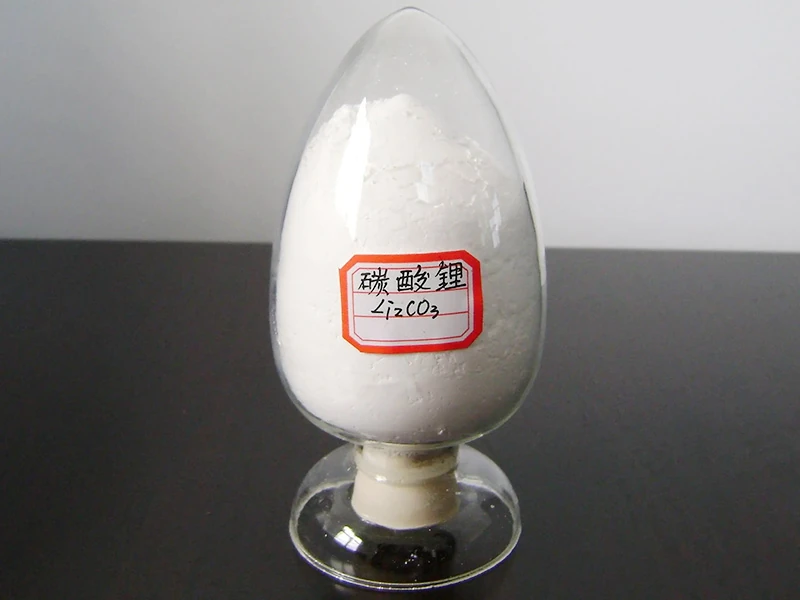
Lithium carbonate is an important raw material for lithium-ion batteries. In these batteries, it serves as a precursor for cathode materials. Following a series of processing steps, it is converted into cathode materials such as lithium cobalt oxide, lithium manganese oxide, and lithium iron phosphate. These cathode materials offer high specific capacity and good cycling performance, helping lithium-ion batteries achieve high energy density and long service life. They are widely used in electric vehicles, smartphones, laptops, and other electronic devices. As technology continues to advance, lithium carbonate production processes will be further refined and optimized. Longxin Smart’s increasingly mature plate dryer technology for lithium carbonate will help improve production efficiency, reduce production costs, and enhance product quality—making lithium carbonate more competitive in battery applications and further supporting its development across the battery industry.
Working Principle of the Lithium Carbonate Plate Dryer
(1) Material Feeding: Wet lithium carbonate is continuously fed by the feeder onto the first drying plate at the top of the dryer.
(2) Material Turnover by Rake Blades: Rake arms fitted with rake blades rotate continuously to turn and move the material. Driven by the rake blades, the material travels across the drying plate along an exponential spiral path. This distributes the material evenly over the plate, increases its contact area with the heated surface, and improves drying efficiency.
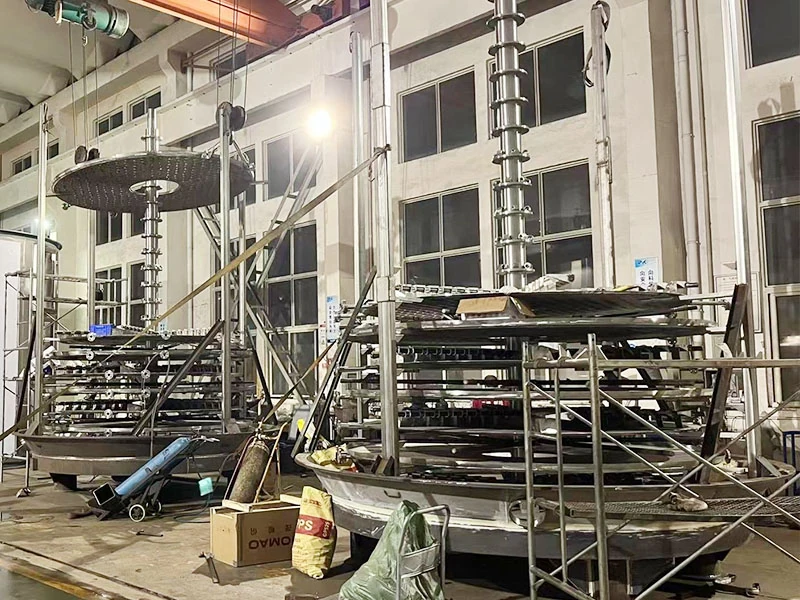
(3) Layer-by-Layer Material Movement: The drying plates are arranged in alternating large and small sizes, one above the other. Material on a small plate is moved to its outer edge and falls onto the outer edge of the large plate below. On the large plate, reverse-acting rake blades move the material inward toward the center discharge opening, through which it falls onto the next small plate. This cycle repeats, allowing the material to move continuously from top to bottom through the entire dryer.
(4) Heating and Drying: A heating medium—such as saturated steam, hot water, or thermal oil—flows through the hollow drying plates. The medium enters at one end of each plate and exits at the other. Heat is transferred indirectly to the material through the plate surface, causing moisture in the material to evaporate.
(5) Discharge and Moisture Removal: The dried material falls from the final drying plate to the bottom of the shell and is then moved by the rake blades to the discharge outlet. Moisture released from the material exits through a moisture-removal port in the top cover. In vacuum plate dryers, moisture is withdrawn through the vacuum-pump port in the top cover.
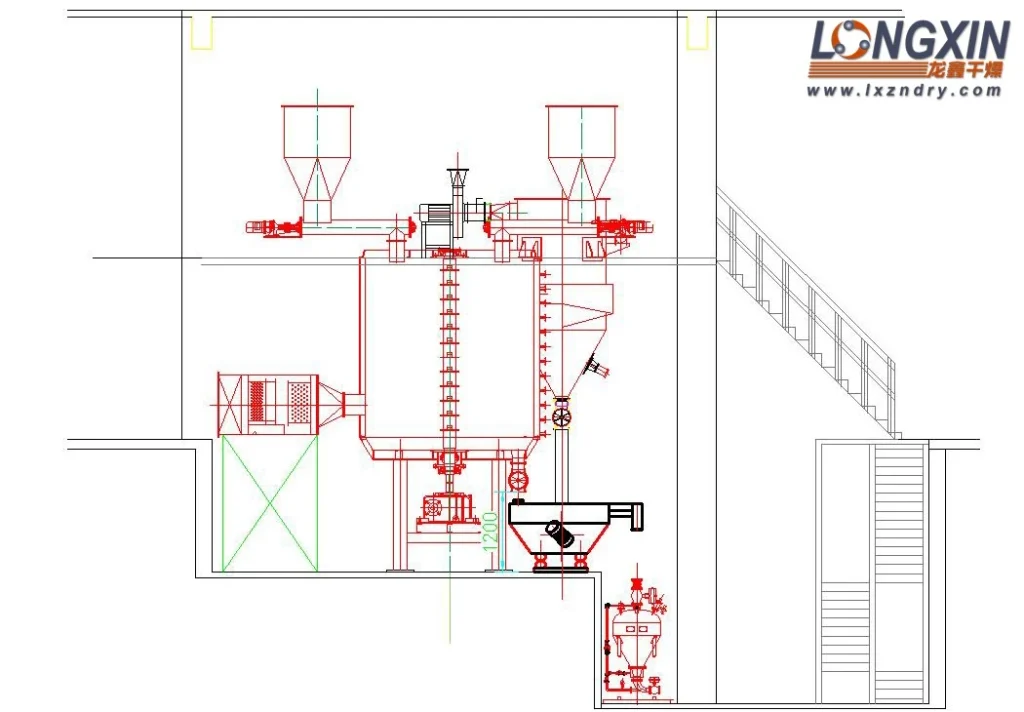
Advantages of the Lithium Carbonate Plate Dryer
(1) High Drying Efficiency
Thorough material turnover: Rake arms fitted with rake blades rotate continuously, turning the material and moving it across the drying plates along exponential spiral paths. This ensures thorough contact between the material and the heated plate surface, substantially increasing the heat-transfer area and improving drying efficiency.
Multi-layer plate design: The drying plates are arranged in alternating layers, allowing material to flow continuously through the entire dryer. This extends the material’s residence time and helps ensure thorough drying.
(2) Simple Operation
Easy start-up and shutdown: The dryer is straightforward to start and stop, with no complex operating procedures or specialized skills required. This reduces operational difficulty and physical workload for operators.
Rapid material discharge: After feeding stops, the rake blades can quickly discharge the material remaining in the dryer, simplifying cleaning, maintenance, and changeovers between material batches.
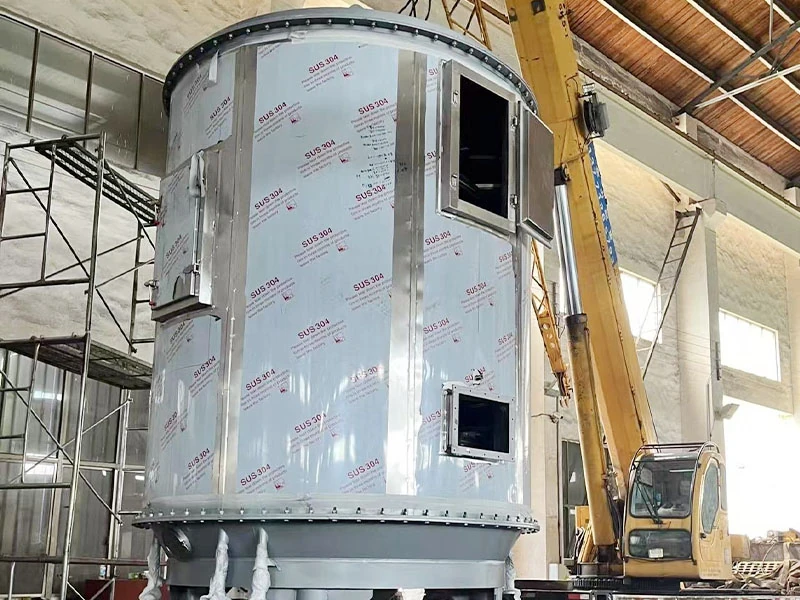
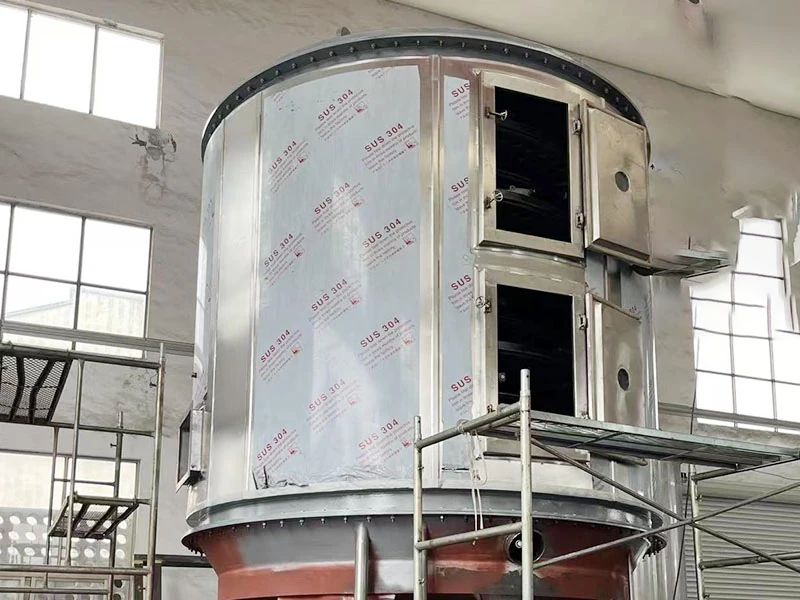
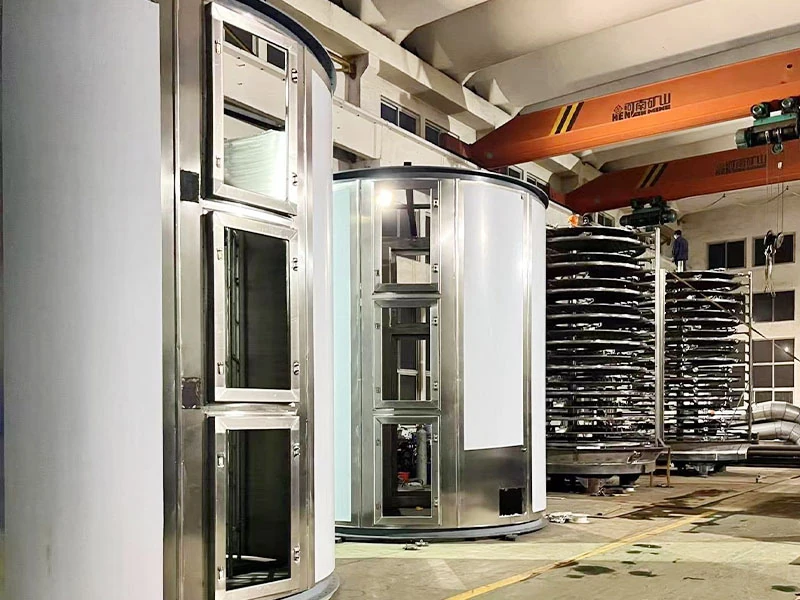
Easy cleaning and inspection: Large inspection doors and sight glasses allow operators to clean and inspect the interior carefully, helping identify internal issues promptly and maintain reliable operation.
(3) High Product Quality
Uniform drying: The material follows a single flow path through the dryer without back-mixing, allowing it to be heated and dried uniformly. This helps ensure consistent product quality and eliminates the need for additional mixing.
Low mechanical damage: Compared with some other drying systems, the lithium carbonate plate dryer applies less mechanical stress to the material. This helps prevent breakage and deformation while preserving the material’s original morphology and particle-size distribution, contributing to higher product quality.
(4) High Energy Efficiency
Conduction-based drying: The dryer uses indirect heat conduction, which minimizes heat loss and supports high thermal efficiency. The heating medium—such as saturated steam, hot water, or thermal oil—flows through the hollow drying plates and exchanges heat efficiently with the material, helping reduce energy consumption.
Precise temperature control: A heating or cooling medium can be supplied independently to each drying plate. This makes it easy to control the material temperature accurately and to adjust the drying temperature according to material characteristics and process requirements, further improving energy efficiency.
(5) Broad Applicability
Wide material compatibility: The dryer can process lithium carbonate in various forms, including powders, granules, and pastes, and can dry materials with different moisture contents and particle-size distributions effectively.
Adaptable to diverse process requirements: Auxiliary equipment—such as finned-tube heaters, solvent-recovery condensers, bag filters, dry-material recycle systems, and induced-draft fans—can be added to increase drying capacity, recover solvents, and support pyrolysis, reaction, and other process requirements.
(6) Good Environmental Performance
Bajas emisiones de polvo: In atmospheric plate dryers, the low internal gas velocity and the moisture profile—higher at the top and lower at the bottom—make it difficult for dust to rise to the top of the unit. As a result, exhaust from the top moisture-removal port contains very little dust, helping reduce environmental impact.
Solvent recovery: Sealed plate dryers can be equipped with solvent-recovery systems to recover organic solvents from moisture-laden exhaust gas. This reduces solvent waste and environmental impact, which is particularly valuable for drying processes that use organic solvents.
(7) Small Footprint: The drying plates are arranged in layers and installed vertically. Even with a large drying area, the system occupies a relatively small floor area, helping customers make efficient use of limited production space.
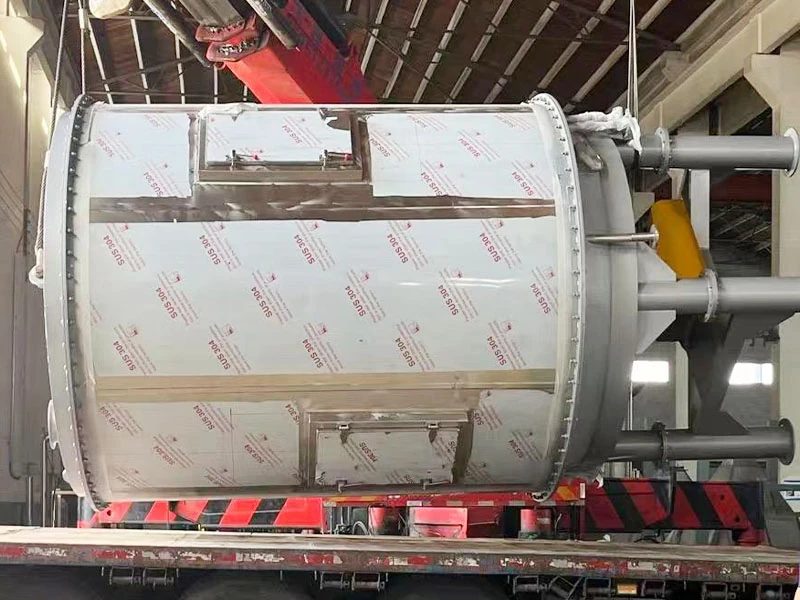
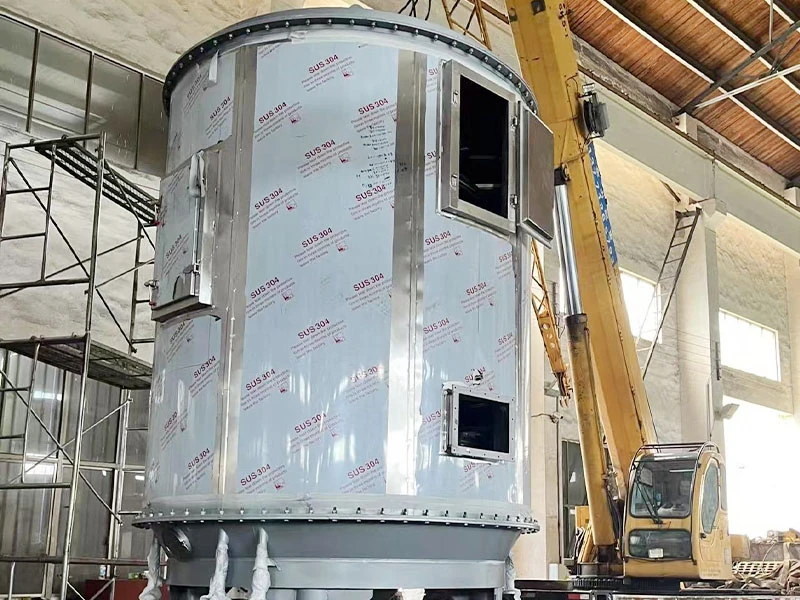
(8) High Equipment Reliability: The dryer has a relatively simple structure and offers stable operation, a low failure rate, and low maintenance costs. The complete unit is factory-assembled and shipped as a whole, requiring only lifting and positioning on site. This simplifies installation and alignment while helping ensure installation quality and reliable operation.