Focusing on the Food Industry’s “Golden Ingredient”: Instant Egg Protein Powder Spray Dryer Drives Innovation and Upgrades in the Egg Products Industry
Why are more food manufacturers choosing egg powder as a replacement for fresh eggs? For many people, eggs are best when used fresh. In industrial production, however, fresh eggs present several critical challenges:
Inconsistent Quality
Egg size, quality, and protein content can vary significantly from batch to batch, causing cake volume and dough stability to fluctuate and making it difficult to reproduce the same quality with the same formulation.
Difficult Cost Control
Egg prices fluctuate sharply with seasonality, disease outbreaks, and farming cycles. Cold-chain transportation, low-temperature storage, manual washing, and sterilization add further costs, keeping the total cost of use high.
High Food-Safety Risk
Fresh eggs are susceptible to Salmonella contamination and can spoil if improperly stored, placing stringent demands on quality-control systems and storage conditions.
Low Efficiency
During peak production periods, manual egg breaking, washing, and filtering drive up labor costs and can also lead to liquid egg losses and waste.
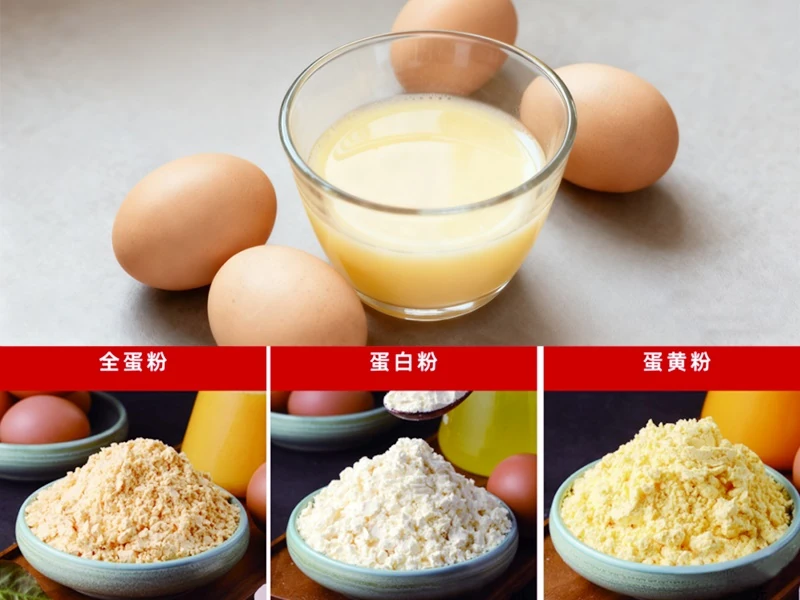
Egg powder was developed specifically to address these challenges. Industry experience shows that spray-dried egg products can integrate seamlessly into fully automated production lines, with highly consistent composition and performance from batch to batch. Functional properties such as baking performance and foaming can be tailored to customer requirements. Egg powder is ready to use without thawing or tempering, significantly reducing transportation and storage costs and enabling long-distance and even international shipping. As a result, demand continues to rise for whole egg powder, egg white powder, egg yolk powder, and other “golden ingredients” in baking, confectionery, pasta and noodles, meat products, institutional catering, and other sectors. Replacing fresh eggs with egg powder has become a clear trend in the transformation and upgrading of the food industry.
Addressing the Pain Points: How Is Egg Protein Powder Produced?
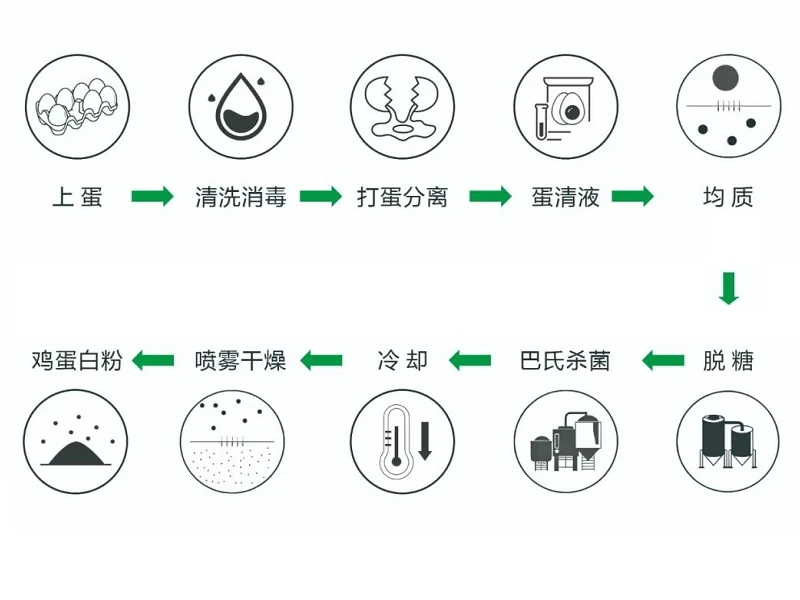
Turning a fresh egg into a package of instant egg powder requires an integrated process chain:
Egg receiving → washing and disinfection → egg breaking and separation → egg white liquid → homogenization → desugaring → pasteurization → cooling → spray drying → egg white protein powder
Several stages in this process chain are critical to finished-product quality.
Desugaring: Fermentation Pretreatment
Residual glucose in liquid egg can undergo Maillard reactions with proteins during drying and storage, causing browning, insoluble matter, reduced foaming capacity, and a shorter shelf life. Research shows that sufficiently fermented and desugared protein liquid can significantly extend the shelf life of egg powder. The main processes include bacterial fermentation, yeast fermentation, and enzymatic desugaring. Enzymatic desugaring uses glucose oxidase to convert glucose into gluconic acid. This process is faster and easier to control, can operate at low temperatures of 2°C to 15°C, and effectively inhibits the growth of contaminating microorganisms. With a fermentation cycle of approximately 10 to 16 hours, enzymatic desugaring is being adopted increasingly widely.
Pasteurization
Serum proteins in egg white are heat-sensitive, while Salmonella and coliform bacteria must be adequately inactivated. Industrial processors often use pretreatments such as ammonia treatment to weaken bacteria or stabilize proteins, allowing pasteurization to be completed at milder temperatures without causing protein coagulation. This balances microbial safety with functional properties.
Spray Drying
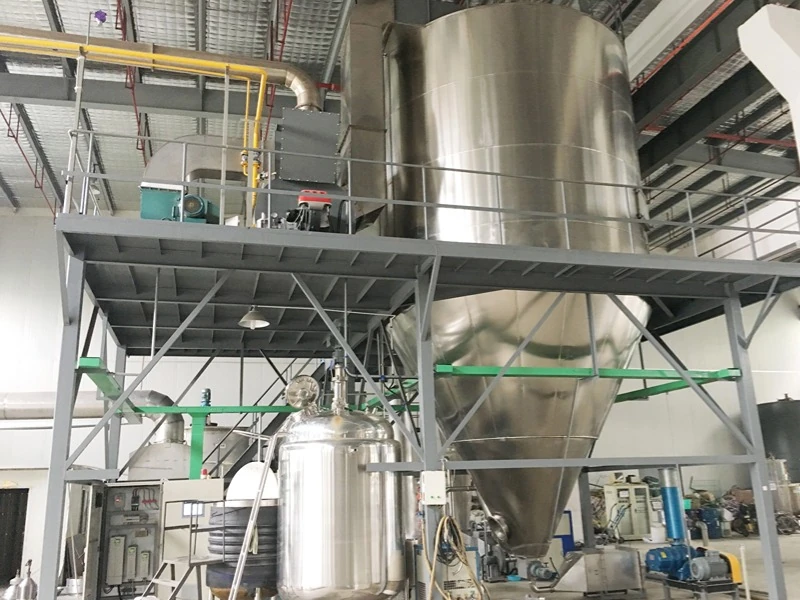
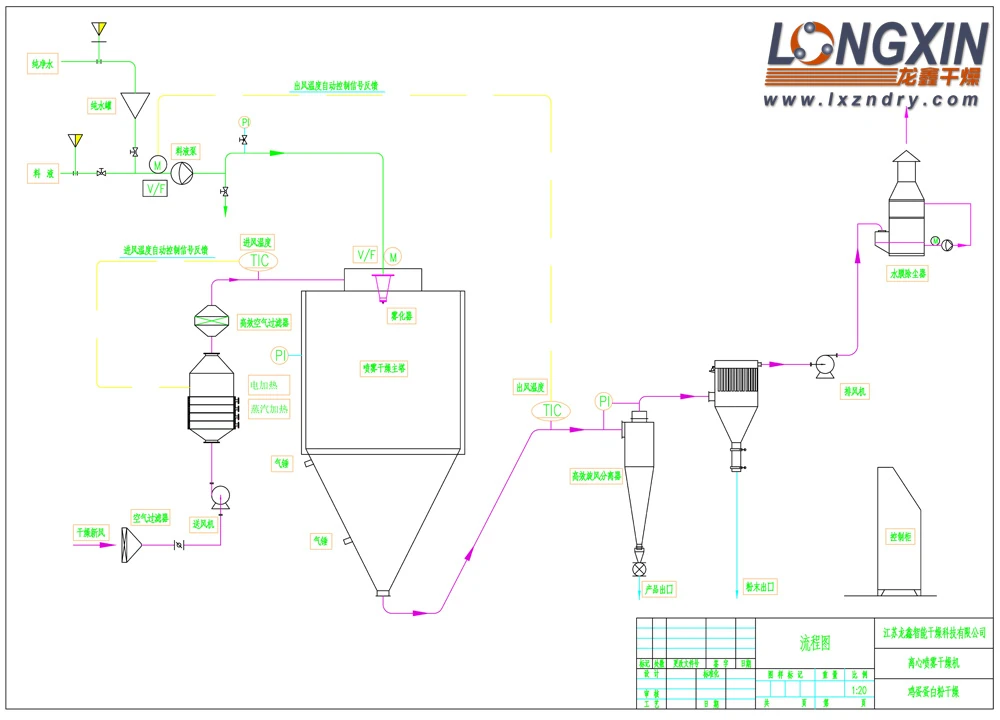
Spray drying is the core of the entire production line. Liquid egg is dispersed by a high-speed centrifugal atomizer into droplets approximately 10 to 50 μm in diameter. Its enormous surface area allows moisture to evaporate almost instantaneously. Although the hot-air temperature is high, the actual temperature experienced by the material remains well below the protein-denaturation threshold, helping preserve the nutritional and functional components of the egg product and potentially contributing to higher product purity. Drying takes place in an enclosed environment, and the resulting powder is fine and uniform, eliminating the need for secondary milling and enabling controlled hygienic quality.
Core Advantages: Process Benefits and Technical Improvements of the Instant Egg Powder Spray Dryer
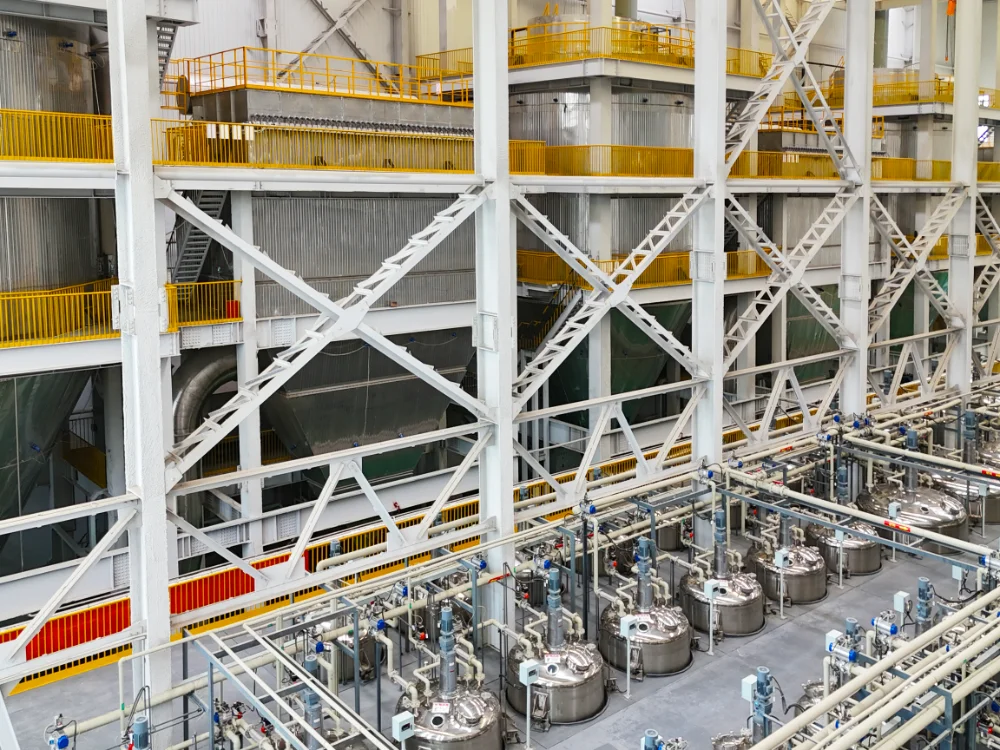
Jiangsu Longxin has extensive experience in spray drying equipment. Its instant egg powder spray drying system for the egg products industry incorporates systematic technical innovations focused on gentle drying, consistent output, energy savings, and reduced consumption.
High-Speed Centrifugal Atomization With Controllable Particle Size
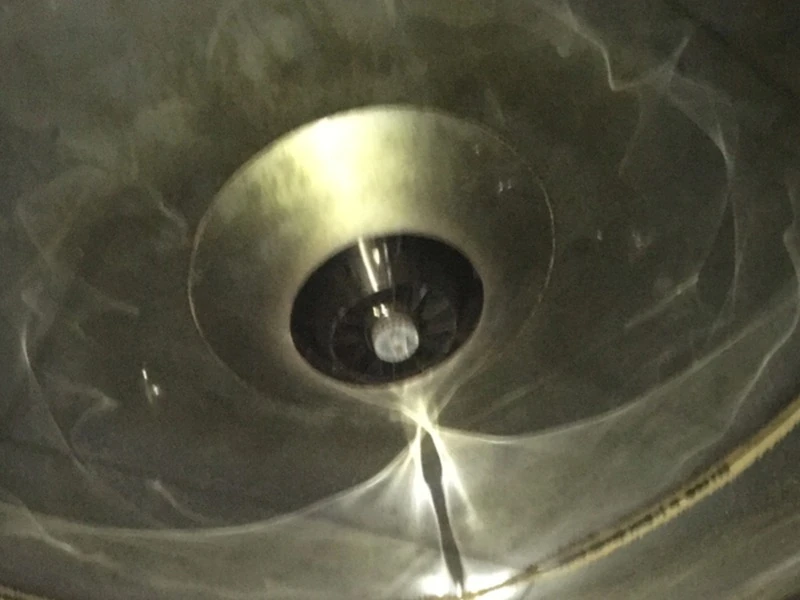
The instant egg powder spray drying system uses a high-speed centrifugal atomizer, such as the R-XH-2000 model operating at approximately 13,000 rpm. The atomizer produces fine, uniform droplets that dry rapidly into spherical powder particles. Process studies indicate that atomizer speed directly affects particle size and porosity: higher speeds produce finer droplets, faster drying, and more uniform particles, improving instant properties and dispersibility. By matching the atomizer diameter and speed, finished-product particle size and bulk density can be tailored to different liquid egg characteristics.
Gentle Thermal Processing
Taking the LPG-1000 system as an example, its design evaporation capacity is approximately 940 kg of water per hour, with an inlet-air temperature of 180°C to 200°C and an outlet-air temperature of 90°C to 95°C. Egg powder output can reach up to 1,000 kg/h. Studies indicate that an excessively high outlet temperature can cause scorching, darker color, increased protein denaturation, and poorer gel-forming properties. Longxin systems use a coordinated design of the hot-air distributor and conical-bottom drying chamber to optimize mixing between droplets and hot air. This provides short, uniform material exposure and balances evaporation intensity with finished-product quality.
Optimized Fine-Powder Recovery and Gas-Solid Separation
Egg white powder has very fine particles and is easily entrained in the airflow. The system is equipped with a multistage recovery system combining cyclone separation and bag filtration. Powder from the bottom of the drying tower and recovered fines are collected through pneumatic conveying at a single discharge point for centralized screening and packaging, reducing powder loss and improving yield.
Food-Grade Sanitary Design
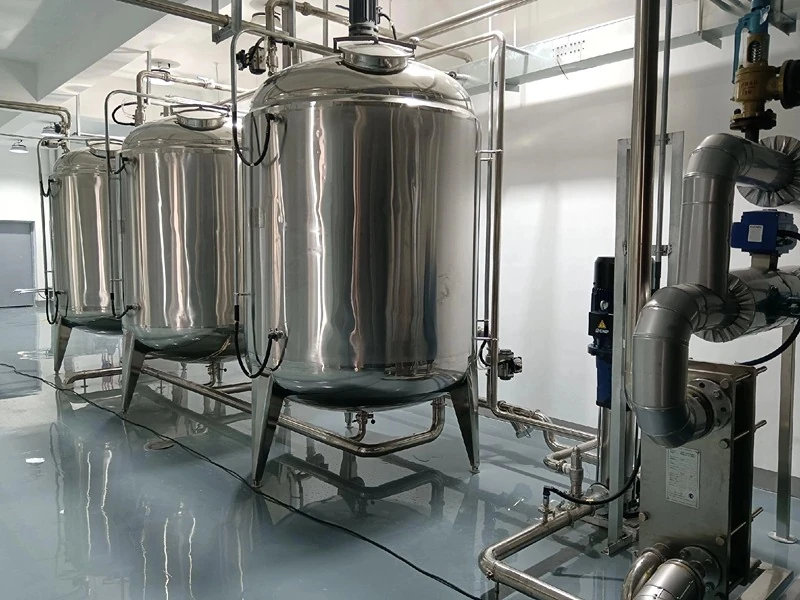
All product-contact components are made from SUS304 stainless steel, and the overall equipment layout meets hygienic requirements for egg processing. The drying tower is tightly sealed with smooth interior surfaces for convenient cleaning and maintenance.
Intelligent Control
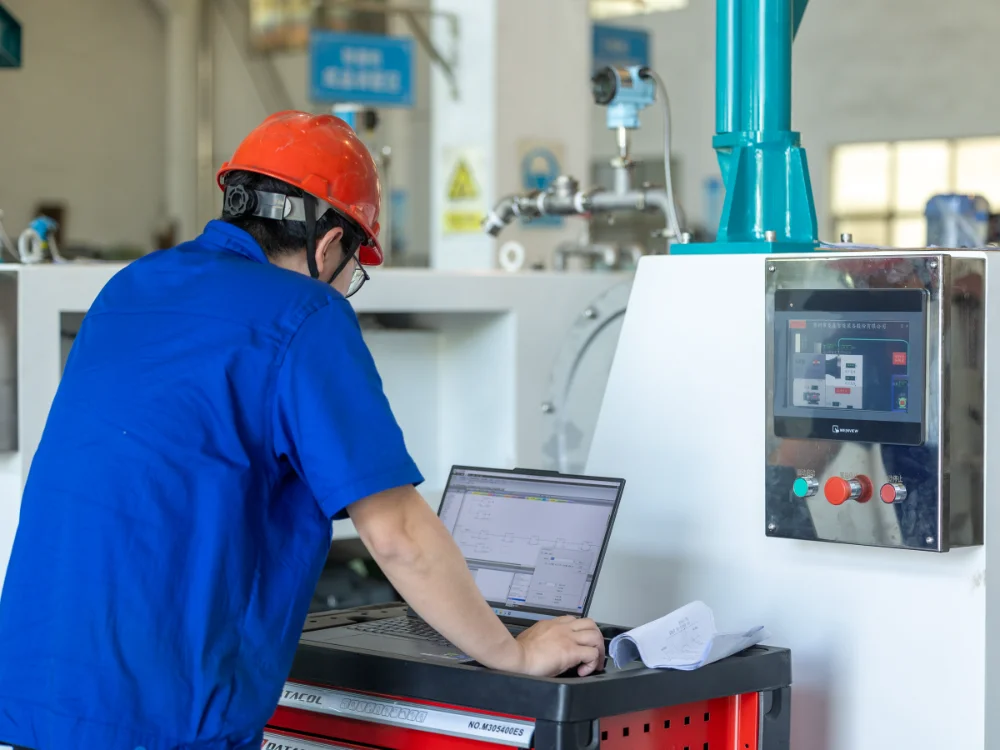
The entire system uses centralized PLC control to monitor and automatically adjust key parameters such as inlet- and outlet-air temperatures, feed rate, and atomizer speed online. This improves batch-to-batch quality consistency, reduces dependence on operator experience, and supports the digitalization and large-scale upgrading of egg-processing operations.
Empowering the Egg Industry: Flexible Applications Across Egg-Product Processing
Longxin instant egg powder spray dryers can be configured flexibly according to the characteristics of different egg products and cover the main applications in egg-product processing.
Whole Egg Powder
Whole liquid egg undergoes enzymatic desugaring for approximately 6 hours, followed by homogenization, pasteurization, and spray drying. The finished powder has low residual moisture and stable baking-volume performance. It is widely used in baked goods, noodles, ice cream, and other products and serves as a standardized base ingredient for the baking industry.
Egg White Powder
Egg white has low solids content, and its proteins are highly heat-sensitive, making it one of the more difficult products to dry. In response to the low bulk density and fine particles of egg white powder, Longxin systems enhance bag-filter recovery and pneumatic cooling conveyance. The resulting protein powder offers strong foaming height, solubility, color, and odor and can meet the demanding requirements of whipped baked goods, protein beverages, and minced-meat products. Membrane concentration as a pretreatment can further increase feed solids and reduce energy consumption per unit of production.
Egg Yolk Powder
Liquid egg yolk requires a relatively short fermentation period of approximately 4 hours and is rich in lecithin and lipids. Drying therefore requires strict control of free fatty acid values. The system’s gentle outlet-temperature range effectively inhibits fat oxidation, and the finished product maintains stable functional properties such as emulsification and coloring. It is suitable for mayonnaise, ice cream, infant complementary foods, and other applications.
The series can also be extended to the drying of protein materials such as hydrolyzed ovalbumin, whey protein, and yeast protein, providing process flexibility for food-ingredient companies pursuing product diversification.
Putting Quality First: Supporting the Transformation and Upgrading of Egg-Processing Companies
Competition in the egg products industry is shifting from a competition for resources to a competition based on technology and quality. Drying equipment designed around the characteristics of egg materials can deliver higher yields, more consistent quality, lower energy consumption, and broader value-added potential.
At Jiangsu Longxin, we are committed to developing sustainable drying technologies for the future, helping egg-processing companies reduce costs, improve efficiency, and manufacture high-value products. From standalone equipment and process parameter packages to installation, commissioning, and operator training, Longxin Drying provides full lifecycle support to help customers transition from fresh egg processing to standardized ingredient manufacturing.
Working together, we are building a better tomorrow—every innovation moves progress forward.