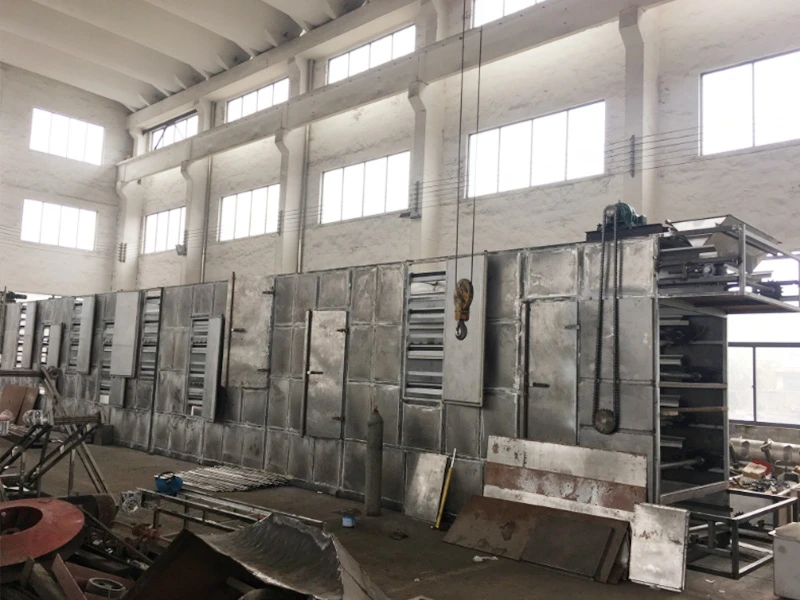
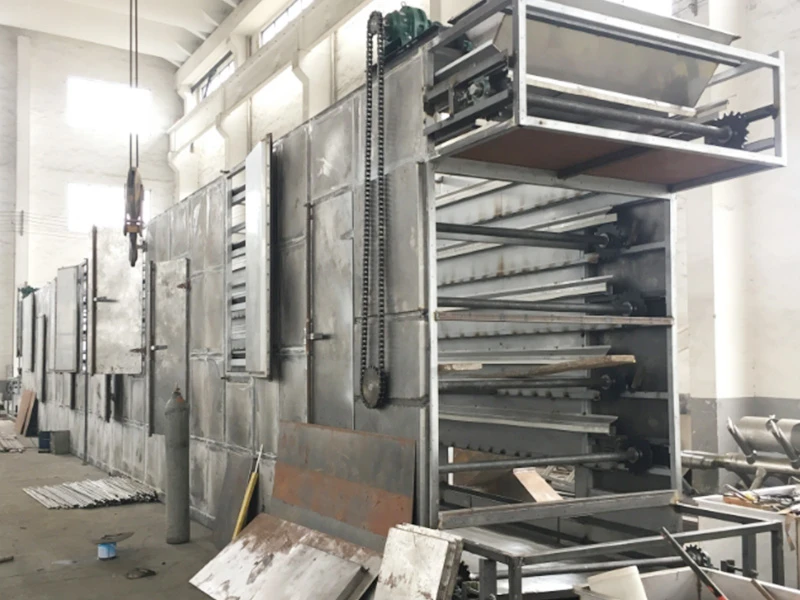
Multilayer Through-Flow Belt Dryer — Equipment Overview
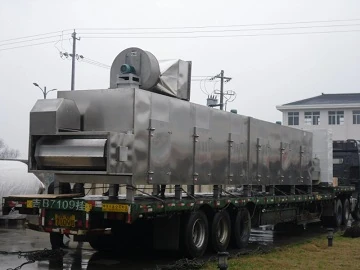
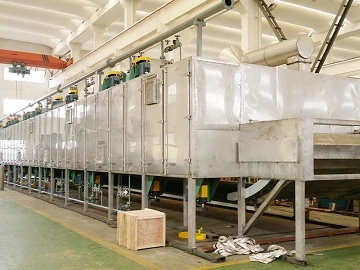
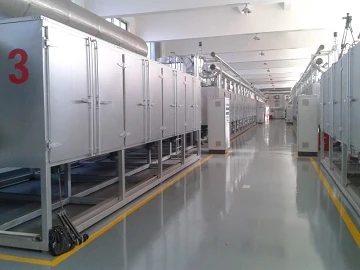
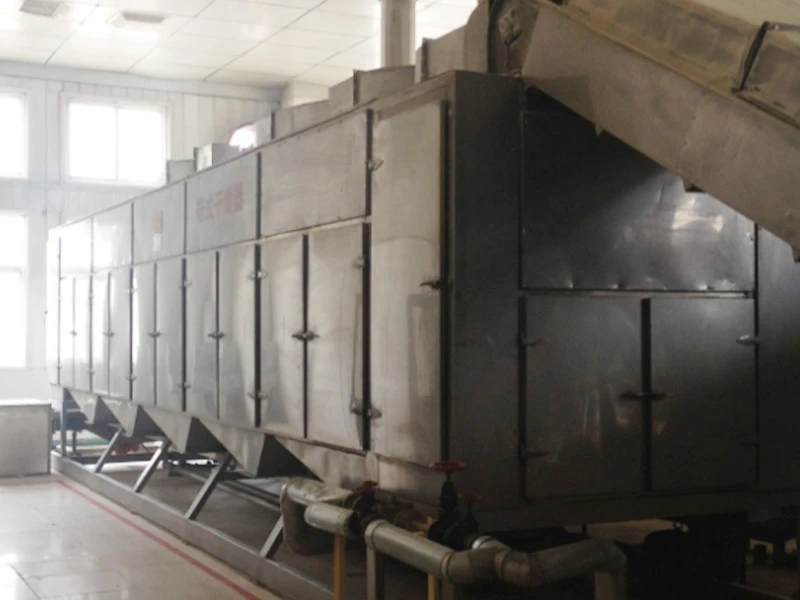
Multilayer through-flow belt dryers are commonly used in applications that require a relatively low drying rate, a longer drying time, and stable process conditions throughout the entire drying cycle. Partition plates between the belt layers direct the drying medium along a controlled airflow path, ensuring uniform material drying. Multilayer belt dryers have a compact footprint and simple structure and are widely used for drying grain materials. Because operation requires repeated loading and unloading, they are not suitable for materials that stick to the conveyor belt or must remain unbroken.
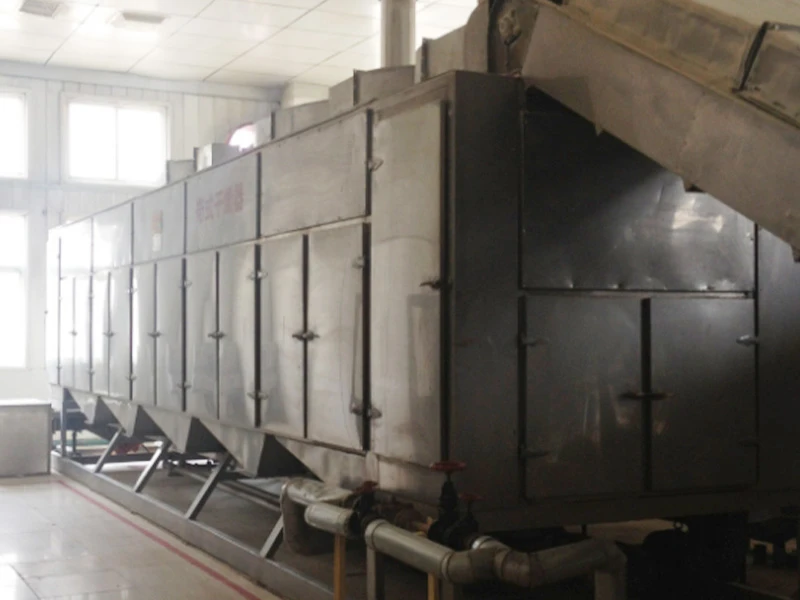
Multilayer Through-Flow Belt Dryer — Working Principle
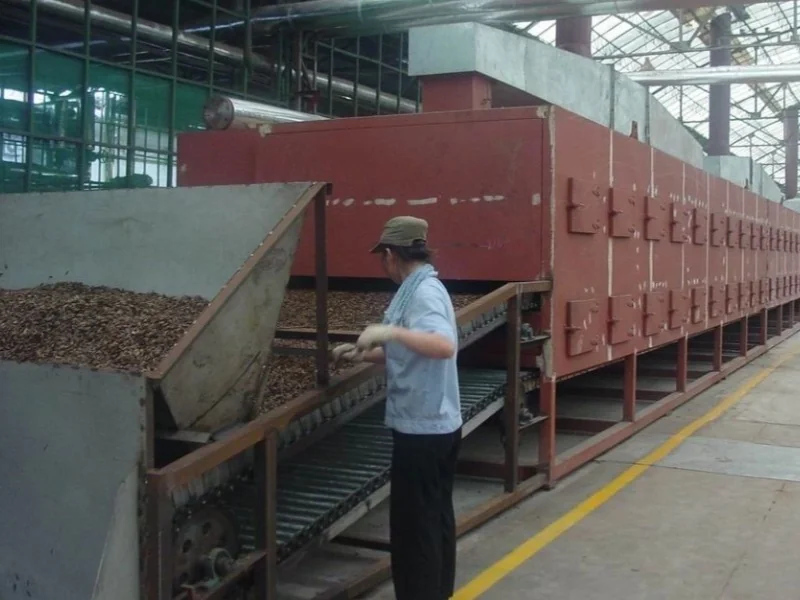
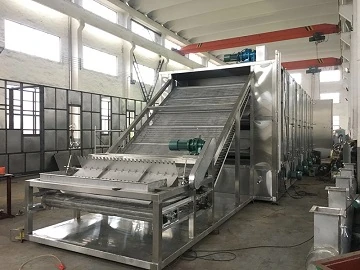
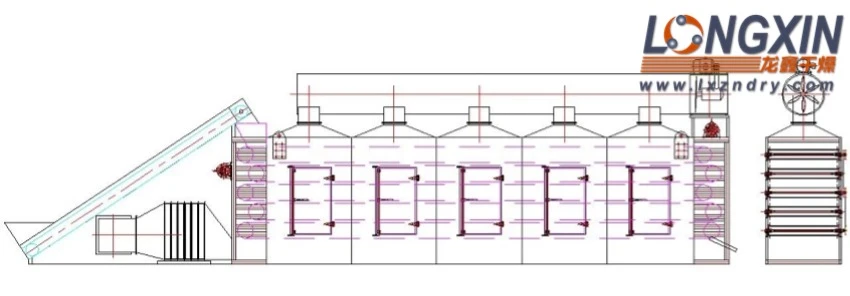
The multilayer through-flow belt dryer is equipped with a feeding device and a discharge outlet at its two ends, and a moisture-exhaust system is installed on top of the equipment. A supply fan and air heater are installed at one end of the feeding device. The main drying unit contains multiple drying mesh belts arranged vertically from top to bottom. Drive shafts are provided at both ends of each drying mesh belt, and drive chains mounted on both sides are fixed to the mesh belt and driven by a sprocket transmission system. Ambient air is drawn in by the supply fan, heated through the heat exchanger, and then blown into the dryer. The hot air passes upward through each mesh belt and material layer in sequence. By the time the airflow reaches the uppermost belt, the humid air is drawn out through the exhaust duct by the exhaust fan.
Multilayer Through-Flow Belt Dryer — Equipment Structure Diagram
Multilayer Through-Flow Belt Dryer — Equipment Features
The GWC-series multilayer through-flow belt dryer is widely used for dewatering and drying sheet, strip, block, and granular materials in industries such as food, agricultural by-products, dehydrated vegetables, Chinese medicinal herbs, aquatic products, specialty agricultural products, feed, and chemical raw materials.
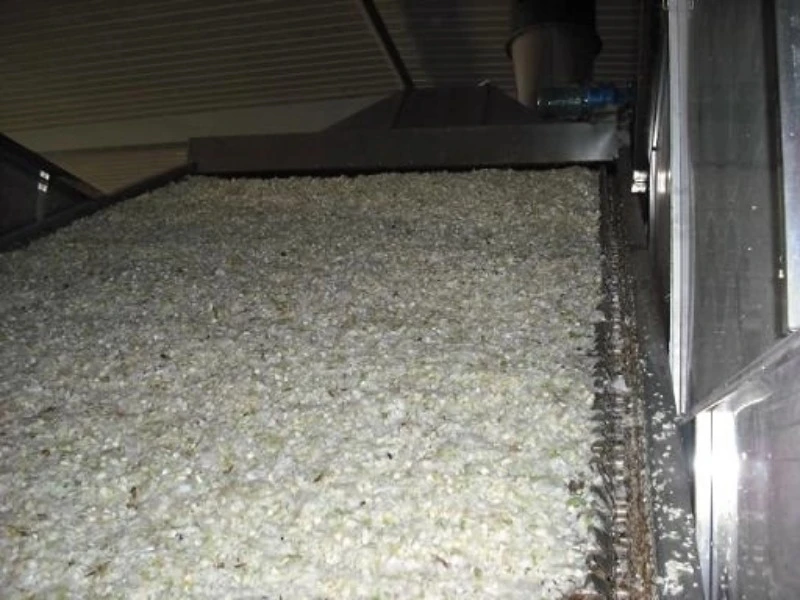
- The dryer uses multiple moving stainless steel mesh belts or vibrating plates to support the material. Hot air passes upward through the mesh belts and material layers, providing uniform and thorough heat exchange, high production efficiency, and good product quality. A cooling layer and rotary discharge device reduce the product discharge temperature, facilitating immediate packaging.
- An elevating conveyor equipped with a material leveling device ensures a uniform material thickness, and the material-bed thickness can be adjusted steplessly.
- Available material-spreading areas range from 25 m² to 120 m² in seven model sizes, meeting the requirements of various materials and production capacities.
- Based on long-term production experience and customer feedback, Longxin Drying has continuously adjusted and optimized the equipment structure and developed multiple structural configurations. These configurations provide targeted designs and effective performance for products with different characteristics. The product series has now been organized into standardized models according to equipment structure.
- Air enters from the bottom, passes through multiple material layers, and the exhaust gas is discharged directly.
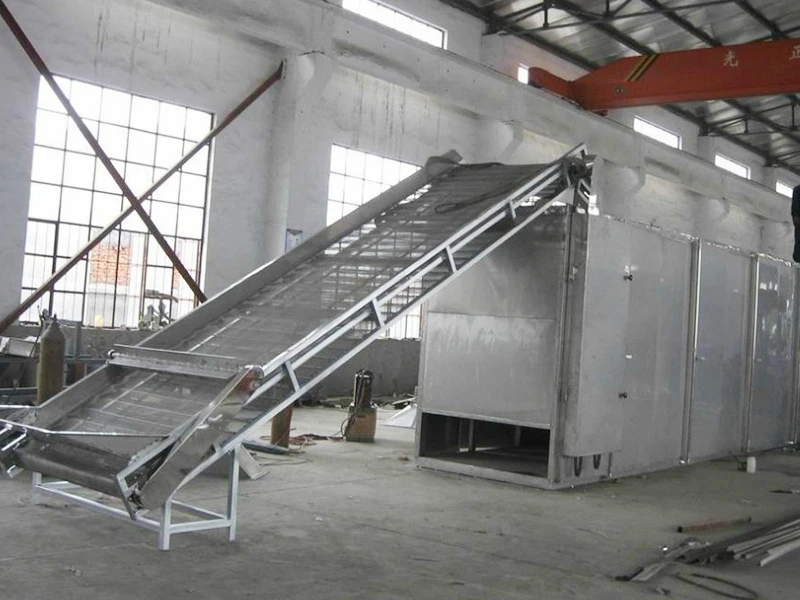
Multilayer Through-Flow Belt Dryer — Multiple Configurations Available
Conveyor Belt
Stainless steel wire mesh is currently the most commonly used conveyor belt material in China. A mesh size of 10–14 is generally used, selected according to material particle size, bulk density, and layer thickness. If a single layer of mesh is insufficiently rigid, two layers can be overlaid. Support rollers beneath the mesh carry the belt and are securely connected to it. The ends of the support rollers are inserted into the hollow shafts of the conveyor chains and move together with the chains.
For sticky materials, a non-stick mesh can be installed over the stainless steel wire mesh.
Perforated steel plates can also be linked together to form a conveyor belt. Plate thickness ranges from 1 mm to 1.5 mm, while the open-area ratio is determined by the rigidity of the perforated plate. Some references cite open-area ratios of 6%–45%, but this range is too broad for practical selection. Based on experience, an open-area ratio of 12%–18% is suitable for a plate thickness of 1.2 mm. Round holes approximately 2 mm in diameter or punched slots can be used. The width of each perforated plate equals the chain pitch, and both ends of the plate can be connected to the inner attachment lugs of a non-standard conveyor chain, allowing the perforated plates to move with the chain.
Feeding Device
If the material layer on the conveyor belt is uneven in thickness, the drying medium may bypass the material through low-resistance paths or create an uneven pressure drop. This can over-dry thin areas while under-drying thick areas, adversely affecting product quality. The design of the feeding device is therefore critical.
Feed hopper:
This is a simple feeding device suitable for non-sticky granular and block materials with good flowability, such as fruit, pellets, and sliced or diced vegetables. The discharge opening is as wide as the effective drying width of the conveyor belt, and a slide gate at the opening regulates the feed rate.
Feed hopper with flat-blade agitator shaft:
A flat-blade agitator shaft can be added to the feed hopper to prevent material from accumulating on the inclined hopper walls. This configuration is suitable for granular materials with relatively poor flowability.
Feed hopper with uniformly toothed blades:
Replacing the flat blades with uniformly toothed blades makes the feeder suitable for fibrous materials such as wool, man-made fibers, and cellulose. The uniformly arranged teeth help maintain a consistent material thickness on the conveyor belt.
Drive System
The drive system consists of a non-standard large-pitch chain, sprockets, sprocket shafts, a six-pole motor (960 r/min), a variable-frequency drive, a two-stage cycloidal-pin reducer, and one gear or sprocket reduction stage.
Non-standard large-pitch chain:
For wire-mesh conveyor belts, the chain pitch is generally 76.2 mm (3 in) or 101.6 mm (4 in). The chain pins are hollow shafts that can accommodate the ends of the support-roller shafts beneath the mesh belt. For perforated-plate conveyor belts, the chain pitch is generally 6–8 in, allowing a wider perforated plate to be used and increasing its rigidity. Attachment lugs on the inner chain plates secure the perforated plates and side material-retaining plates. For hot-air temperatures below 200°C, the chain material is Q235. For hot-air temperatures above 200°C, 16Mn should be considered.
Sprockets:
The sprockets should be made of No. 45 steel, with local hardening of the teeth to improve wear resistance. The keyways in the sprockets at both ends of the same sprocket shaft must be aligned in the same orientation. It is recommended that a pair of sprockets be stacked, spot-welded together, and then machined with their keyways as a matched pair.
Sprocket shafts:
For long sprocket shafts, a carbon steel tube can be used for the middle section, with solid shaft ends welded into the tube by plug welding or circumferential welding. The shaft material is No. 45 steel. The two shaft ends must remain concentric, and their keyways must lie on the same generatrix. Combined with the matching keyway requirements for the sprockets, this prevents the chains on both sides from becoming misaligned and keeps the mesh-belt or perforated-plate conveyor from running at an angle.
Six-pole motor with variable-frequency drive:
For a standard motor, the frequency can be reduced to 15 Hz, lowering the motor output speed to 290 r/min.
Two-stage cycloidal-pin reducer:
A reduction ratio of 289:1–377:1 is used, enabling the reducer output speed to be reduced to 1–0.77 r/min.
Gear or sprocket reduction stage:
The final gear or sprocket reduction stage uses a ratio of 2.5:1–3:1, allowing the minimum conveyor-belt linear speed to be adjusted to 0.4–0.8 m/min. This ensures sufficient drying time for materials that are difficult to dry.
Multilayer Through-Flow Design for Uniform Drying and Efficient Operation
The multilayer through-flow belt dryer uses vertically arranged mesh belts and interlayer airflow guides to direct hot air evenly through each material layer. Stepless adjustment of material-bed thickness and belt speed accommodates different materials and residence-time requirements, while bottom-up through-flow heat exchange and integrated cooling improve drying uniformity, energy utilization, and product consistency.