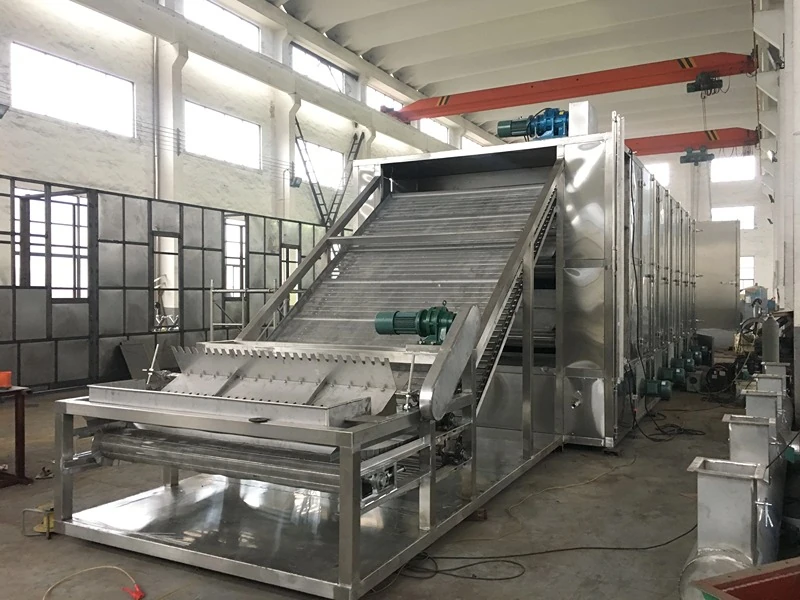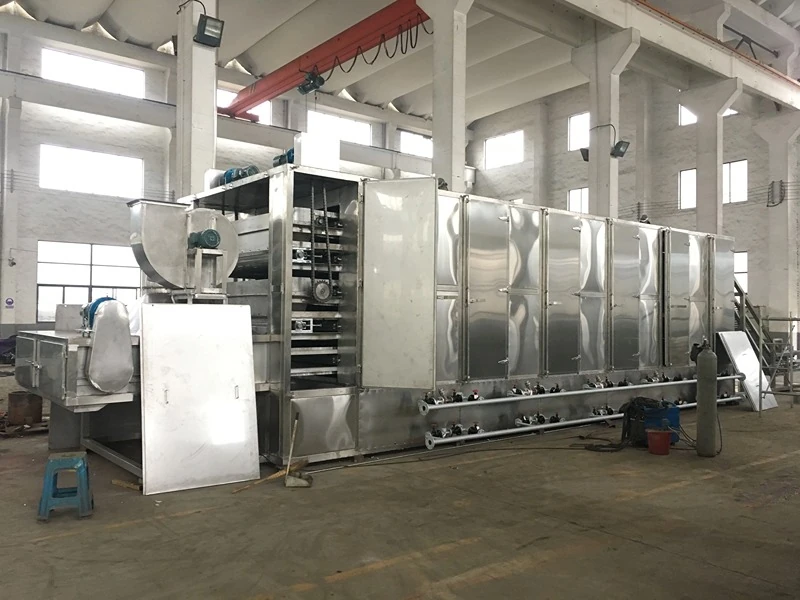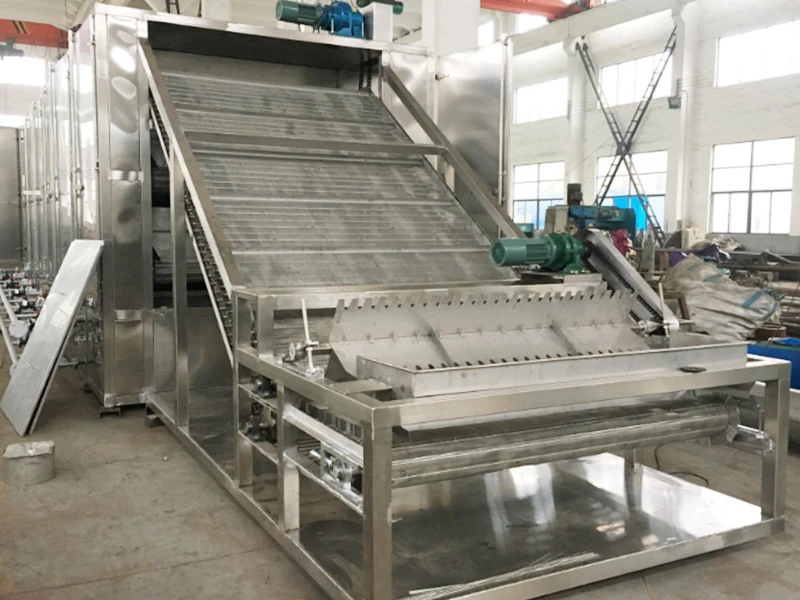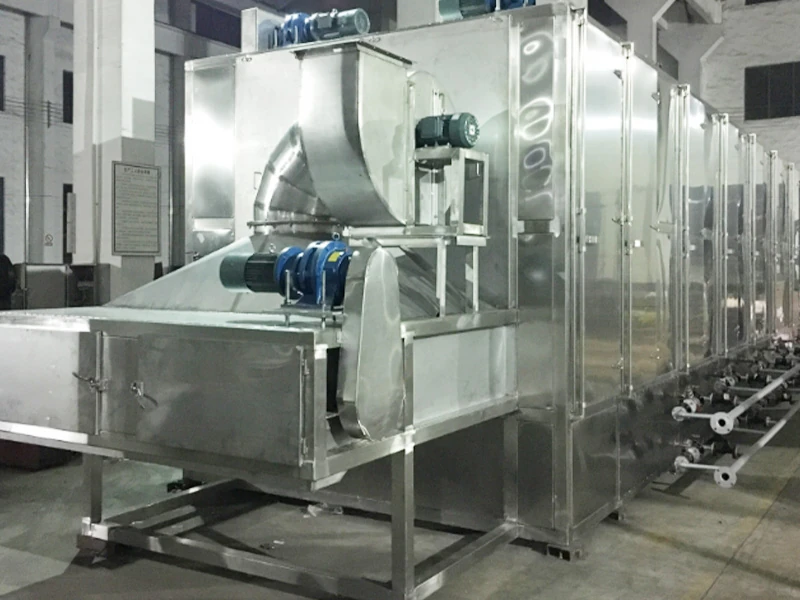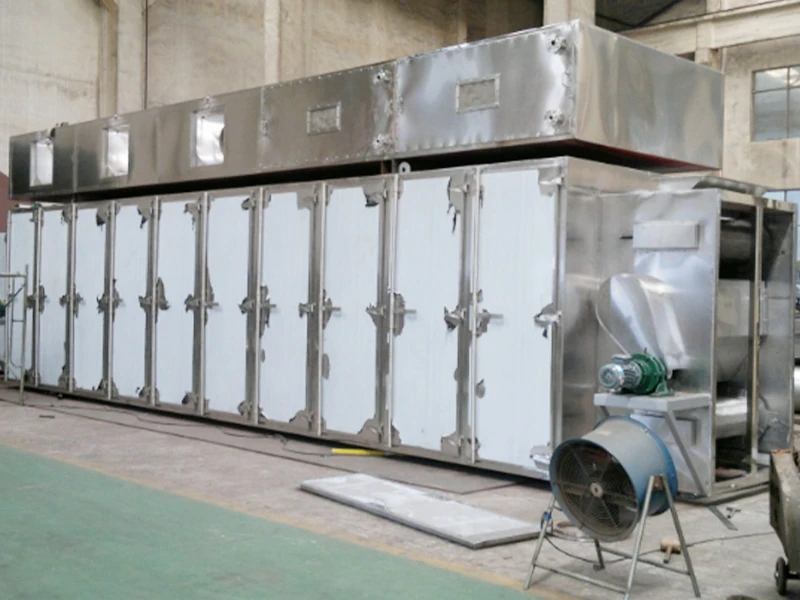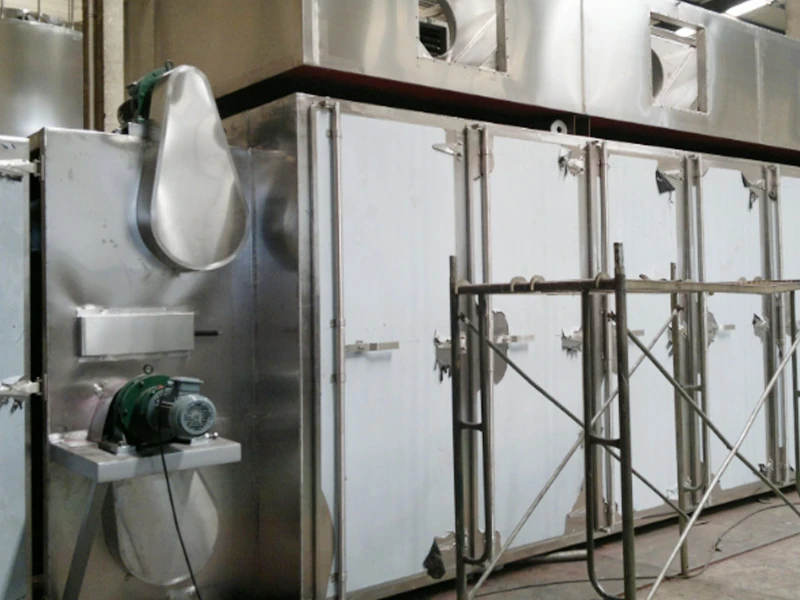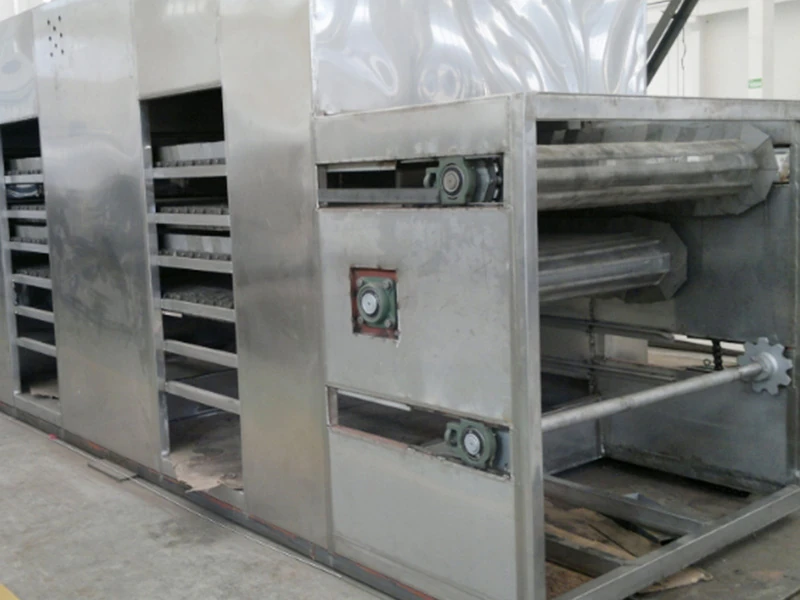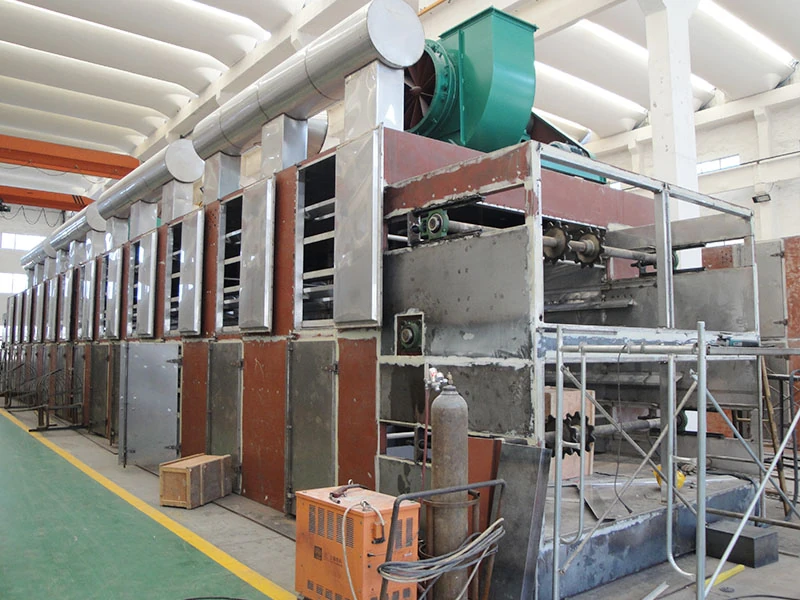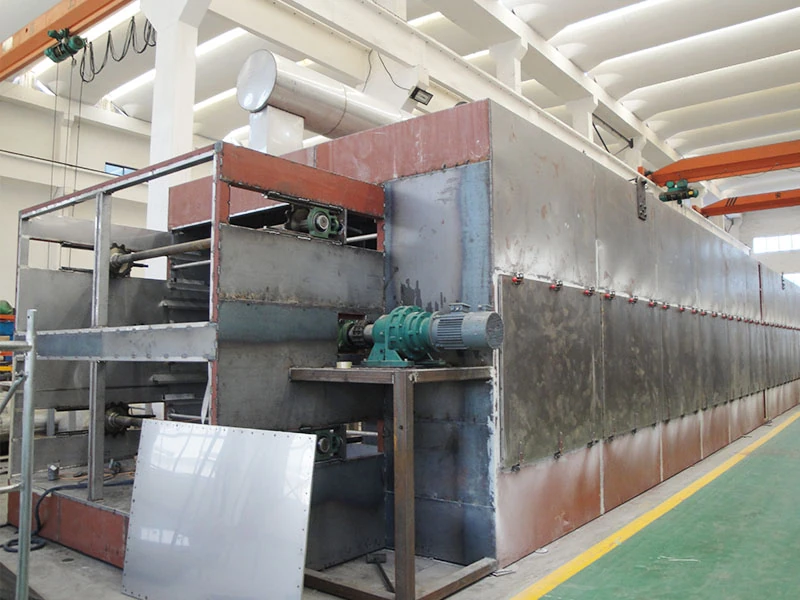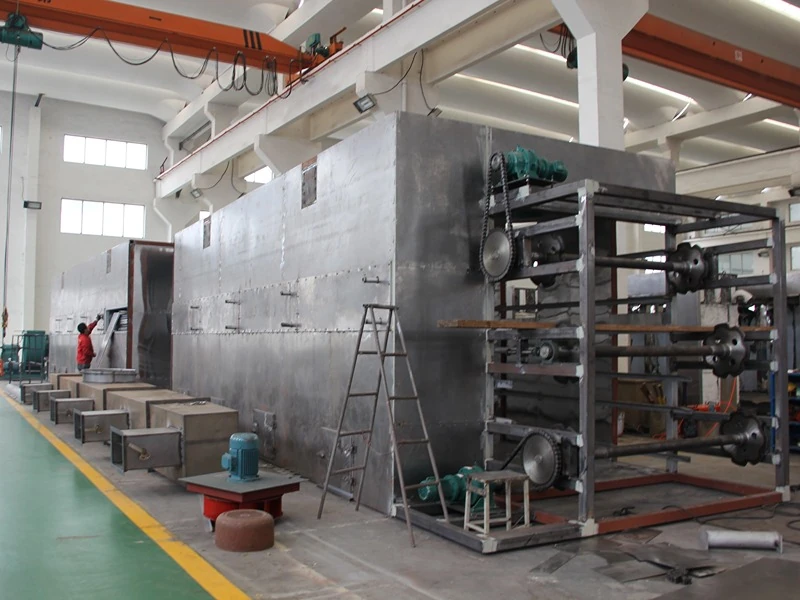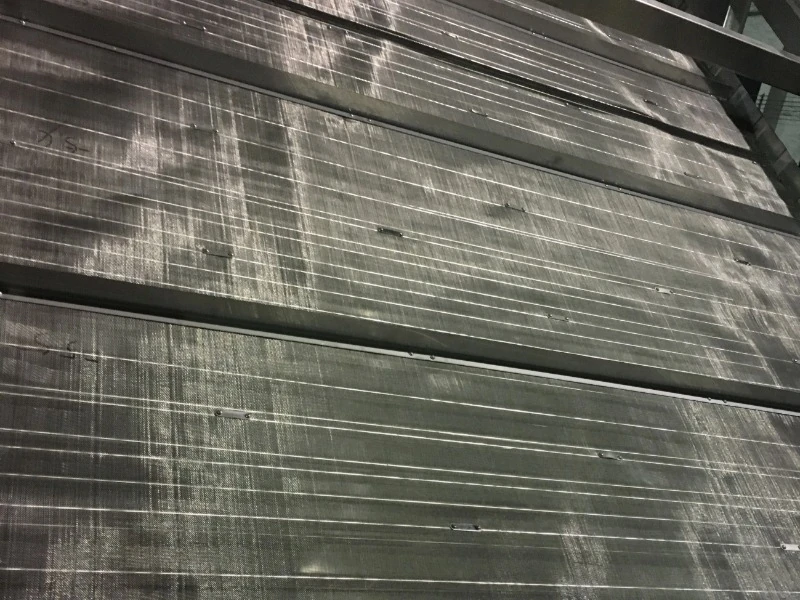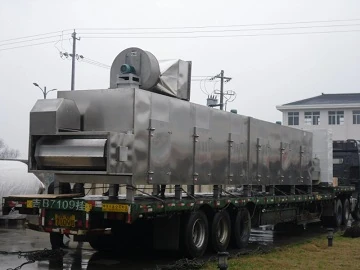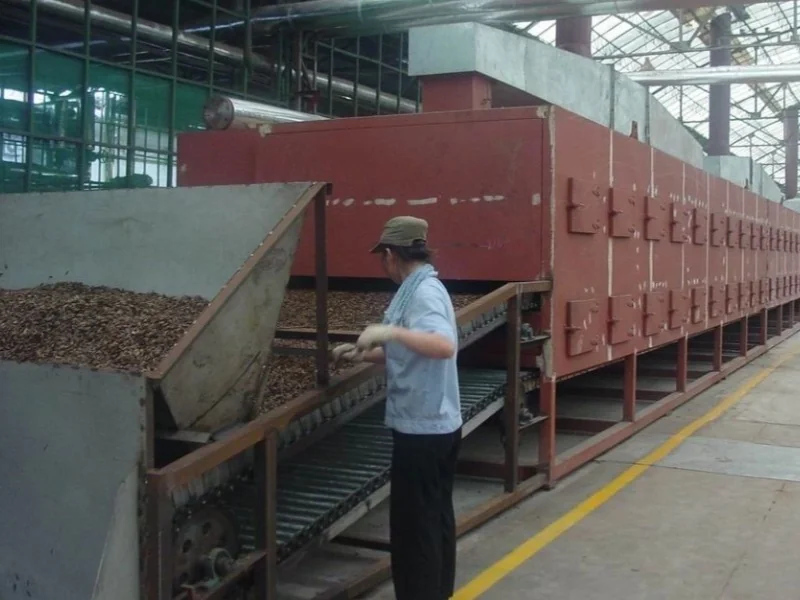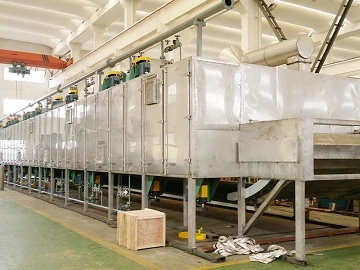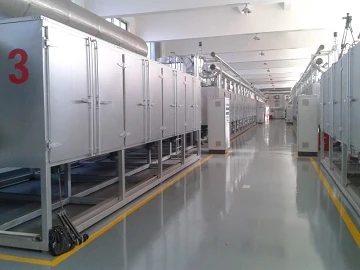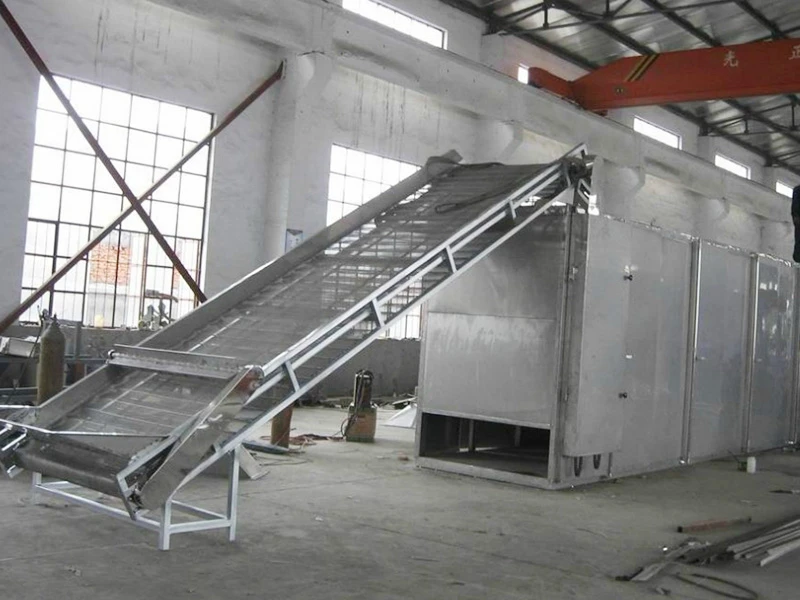
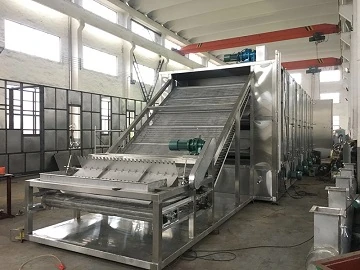
Multilayer mesh-belt dryers are commonly used continuous drying systems for sheet, strip, granular, and other materials with good air permeability. Typical applications include Chinese herbal decoction pieces, dehydrated vegetables, and pigments. Most multilayer belt dryers currently manufactured in China use two-, three-, or five-layer configurations. Material is spread evenly onto the mesh belt, and the chain-driven belt moves slowly through the drying chamber under the action of a gear reducer. Hot air passes upward or downward through the mesh belt and material bed, removing moisture over a predetermined drying period. The main limitations of current designs are as follows:
- Two-layer belt dryers require a large floor area, high civil-construction costs, and high installed power.
- In five-layer belt dryers, uniform air distribution is difficult to achieve, and the air cannot fully penetrate the material bed, resulting in low drying efficiency.
- In existing belt dryers, poorly positioned air distribution at the bottom layer can cause the product to regain moisture.
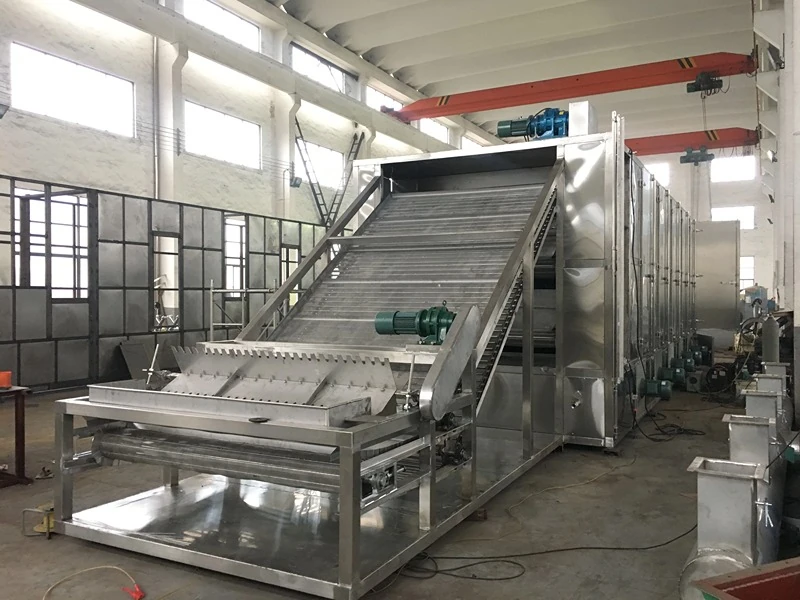
Multilayer Forced-Circulation Belt Dryer — Equipment Overview
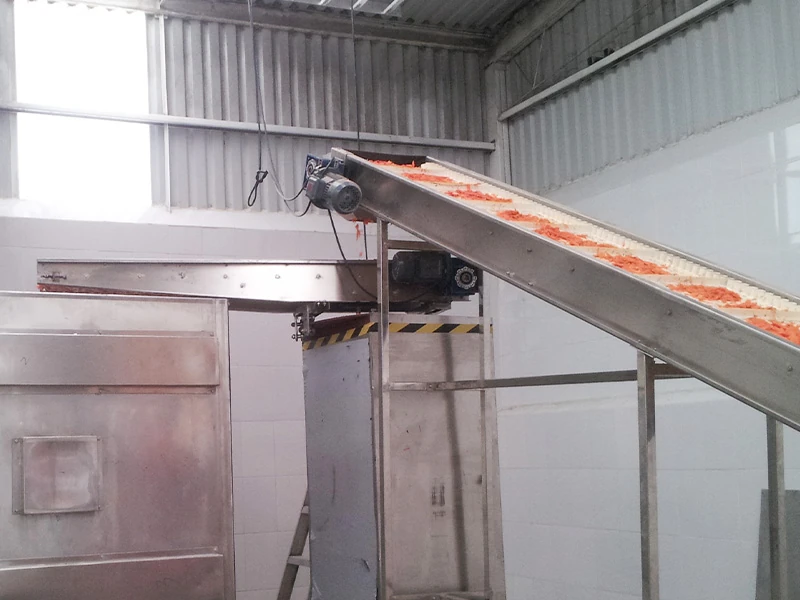
Material is spread evenly onto the upper mesh belt during feeding. Driven by the drive and driven sprockets, the belt moves slowly through the drying chamber. The material falls from the tail end of the upper belt onto the head end of the middle belt, then from the tail end of the middle belt onto the head end of the lower belt, and is finally discharged from the tail end of the lower belt. During this movement, heated air enters the circulation fan through the hot-air supply duct.
The wet material is conveyed into the dryer housing. In each heating unit, airflow supplied by the circulation fan first passes through a baffle into the middle chamber and then moves upward through the heat exchanger. The heated air passes through the material layer to dry the material and enters the upper chamber. From there, it returns to the circulation fan through an air duct and guide pipe connected to the upper chamber. Most of the air is recirculated, while a portion of the cooler, more humid air is discharged through moisture-exhaust ports and an exhaust fan. After drying, the material is transported across the multiple conveyor belts and discharged from the outlet at the tail end of the bottom belt. The system has a fully enclosed structure, high heat-source utilization, and low energy consumption. It also provides uniform high-temperature drying, high drying efficiency, and consistent product quality.
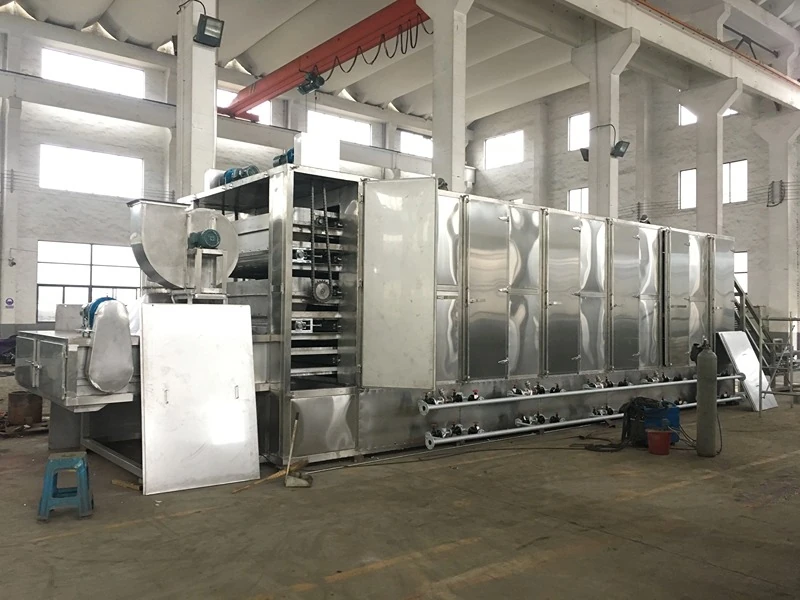
Multilayer Forced-Circulation Belt Dryer — Performance Features
- The multilayer forced-circulation belt dryer provides effective heat transfer, high drying efficiency, and low capital investment while ensuring low final moisture content.
- One end of the moisture-exhaust duct is connected to an exhaust port on the top cover of the housing, and the other end is connected to the exhaust fan. The hot-air supply duct is connected to the circulation fan. The gear reducer drives the mesh-belt layers through the drive sprocket, driven sprocket, and chain-driven mesh belt. The belt system consists of upper, middle, and lower layers.
- The circulation fan is connected at both ends to a main return-air duct and a lower circulation-air duct. The lower duct is connected to the lower-level air distributor inside the lower belt layer, while the middle circulation-air duct is connected to the middle-level air distributor inside the middle belt layer.
- The dryer uses a three-layer configuration to reduce floor space and engineering investment. Air is supplied through the middle and lower layers and then returned to the upper layer for recirculation, substantially improving heat transfer and drying efficiency.
- The mesh belts use stepless speed regulation, allowing the material residence time to be adjusted as required and ensuring low final moisture content. Only a very small amount of circulation air enters the lower layer, helping prevent moisture regain in the product.
Multilayer Forced-Circulation Belt Dryer — Technical Improvements
- The forced-circulation multilayer mesh-belt dryer includes multiple heating units and multiple transverse conveyor belts inside the housing. Each heating unit is equipped with an independent heating device and heat exchanger, which are installed separately from the belt drying chamber. A dedicated heat-exchanger compartment is provided at the side of the drying chamber. This arrangement effectively prevents material particles from coming into undesirable contact with the heat exchanger, such as powder falling onto the exchanger and impairing heat-transfer performance.
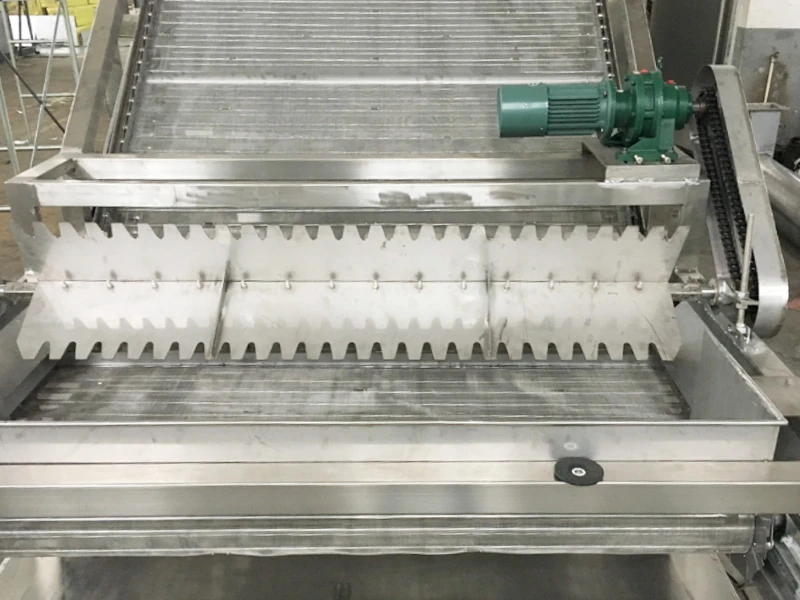
- The dryer housing contains three horizontal conveyor belts, and the belt drive system uses variable-frequency speed control for smooth operation at adjustable speeds. Wet material enters the housing through the feed inlet and is spread evenly onto the conveyor belt by a distributor. As the material is conveyed, it falls from the upper belt onto the next belt below. Each belt is driven independently by a variable-frequency motor, so the speed of each belt can be adjusted individually according to the characteristics of the material being conveyed and the required degree of drying.
- Each drying unit is equipped with an independent heater and temperature-control system. A separate temperature controller is provided for each heating unit, enabling independent temperature control without interference between units.
- An air duct is provided on the side of the housing for each heating unit. The air inlet and outlet of each unit are connected to the circulation fan through these ducts. An inclined baffle at the bottom of each heating unit directs the inlet airflow upward through the mesh belt and material layer. Each heating unit is equipped with moisture-exhaust ports connected to exhaust ducts and the exhaust fan. To ensure uniform removal of humid air from each heating chamber, one exhaust port and connected exhaust duct can be installed in each of the front-middle and middle-rear sections of the heating unit. Most of the air entering the heating unit is recirculated, while a portion of the cooler, more humid air is discharged through the exhaust ducts.
- To prevent heat loss from the heating units, an 80 mm thick insulation layer made of ultra-fine fiber wool is installed inside each unit. The insulation material has low density, allowing the entire insulated sandwich structure to be tightly fitted and sufficiently thick for effective thermal insulation. Multiple observation doors are provided along the upper and lower sides of the housing. The access doors are sealed with high-temperature-resistant silicone rubber strips and use lever-type locks, which offer a sound structure, convenient operation, and good wear resistance.
- The electrical control system is housed in an independent control cabinet and uses intelligent instrumentation. It offers high temperature-control accuracy, strong resistance to vibration and electromagnetic interference, and integrated temperature sampling, regulation, and control output. The temperature-control system provides timed constant-temperature operation, automatic moisture exhaust, and timed shutdown.
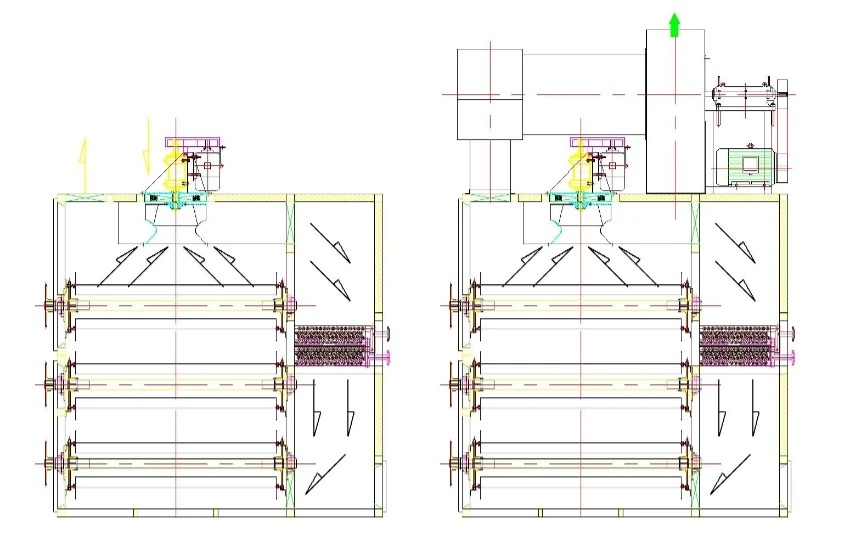
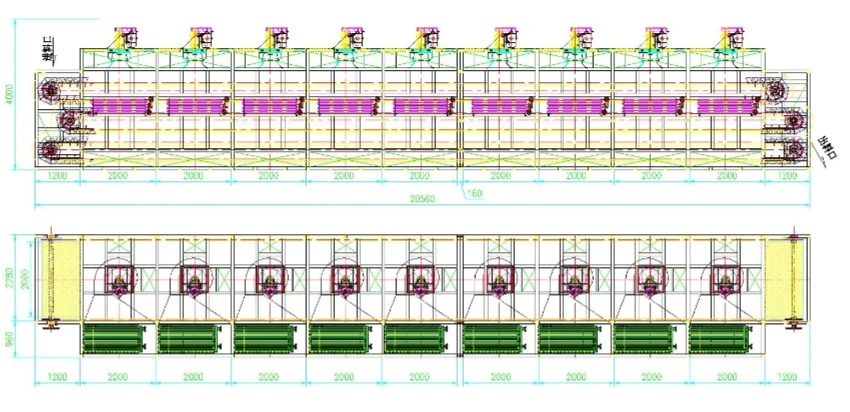
Multilayer Forced Circulation for Uniform Drying and Consistent Quality
The multilayer forced-circulation belt dryer combines independently controlled heating units with middle- and lower-layer air distribution and upper-layer recirculation. Individually adjustable belt speeds optimize residence time for different materials, while controlled airflow helps prevent moisture regain, delivering uniform drying, low final moisture content, high thermal efficiency, and stable product quality.