The highly diverse physical properties of materials to be dried represent a fundamental challenge in dryer design and selection. Materials range from high-moisture traditional Chinese medicine extracts to low-moisture, loose filter cakes; from highly heat-sensitive antibiotics and biological products to inorganic salts that can withstand high temperatures; and from free-flowing, non-sticky materials to highly adhesive, viscous products prone to agglomeration. Processing scales also vary widely, from several tens of kilograms per day to hundreds or thousands of tonnes. Pharmaceutical and fine chemical products are often produced in relatively small volumes, yet they frequently combine high heat sensitivity, high moisture content, and strong adhesiveness, imposing strict requirements on temperature control and crystal-form protection during drying.
Equipment such as hot-air ovens, plate dryers, double-cone vacuum dryers, spray dryers, fluid-bed dryers, and continuous vacuum belt dryers can meet some material-property and production-scale requirements. However, when processing traditional Chinese medicine extracts and strongly adhesive or agglomerating materials, these systems often struggle to simultaneously achieve heat protection, crystal-form retention, enclosed aseptic processing, and complete discharge. As a new generation of agitated vacuum dryers, the vacuum single-cone dryer has continued to evolve in response to these challenges. Through advances in internally heated ribbons, vacuum containment, crystal-form protection, pulsed mixing, and CIP/SIP integration, it is progressively enabling integrated closed processing that combines containment, drying, and mixing.
Market Demand Analysis for the DLG-50 Laboratory Single-Cone Vacuum Dryer
Products in the pharmaceutical industry—including active pharmaceutical ingredients, antibiotics, and amino acids—as well as pharmaceutical intermediates and fine chemicals, are often produced in small batches and have high value and strong heat sensitivity. Their production requires precisely controlled operating conditions and fully enclosed processes. The single-cone vacuum dryer, characterized by batch operation under high vacuum, is well suited to the drying requirements of these materials.
(1) The R&D–pilot–scale-up transition is a key area of demand for laboratory-scale equipment.
Between laboratory testing and industrial production, there is a need for drying equipment that supports scale-up and provides controllable, reproducible performance. The DLG-50 Laboratory Single-Cone Vacuum Dryer is designed specifically for this intermediate stage. By validating process parameters and drying characteristics at laboratory scale, it provides data and practical experience for subsequent production scale-up.
(2) Regulatory and cleanliness requirements also create sustained demand.
Requirements in standards such as GMP and FDA regulations for containment, dead-corner-free design, cleanability, and cross-contamination prevention are driving drying equipment toward aseptic operation, full enclosure, and integrated CIP/SIP. With its fully enclosed structure and in-line cleaning and sterilization capabilities, the laboratory-scale single-cone vacuum dryer provides an equipment foundation for related qualification and validation activities.
مبدأ عمل مجفف الفراغ المختبري أحادي المخروط من طراز DLG-50
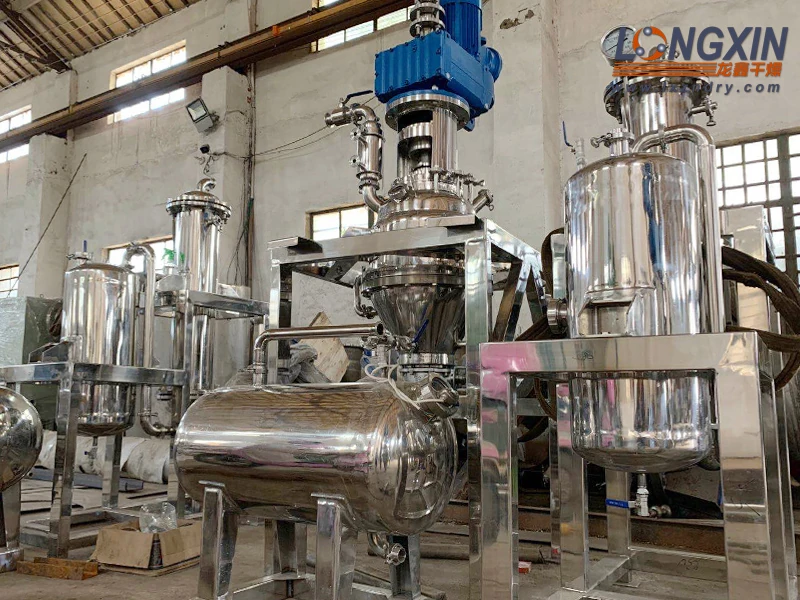
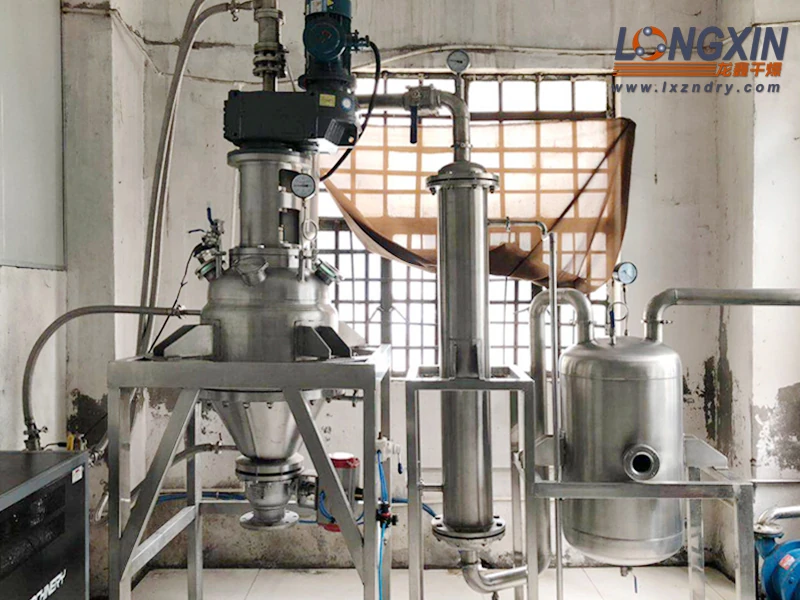
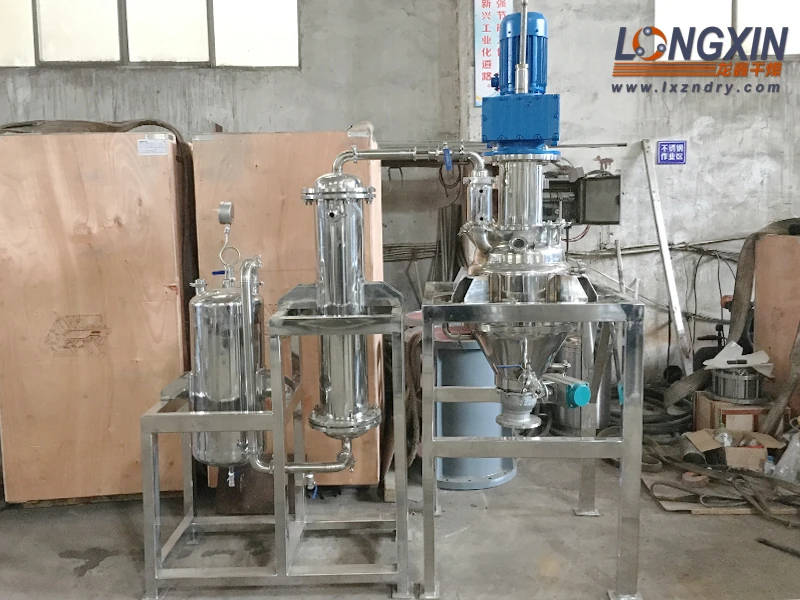
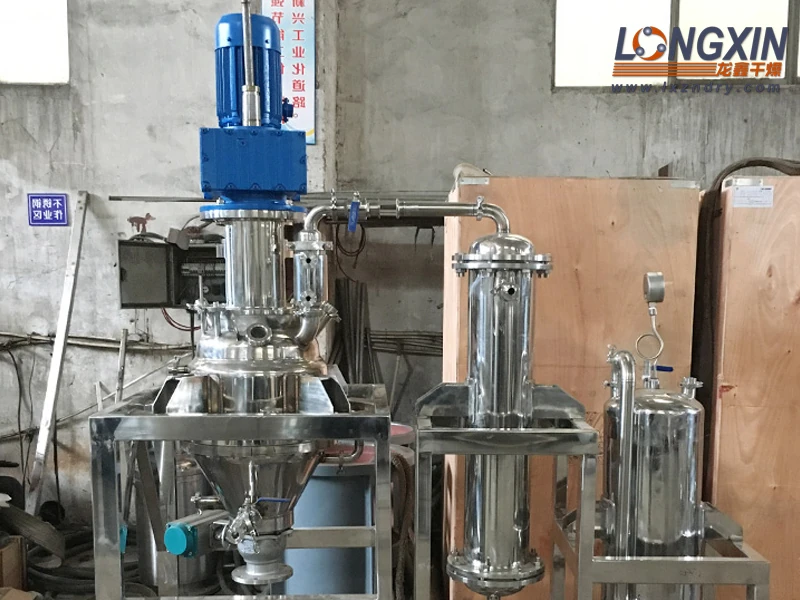
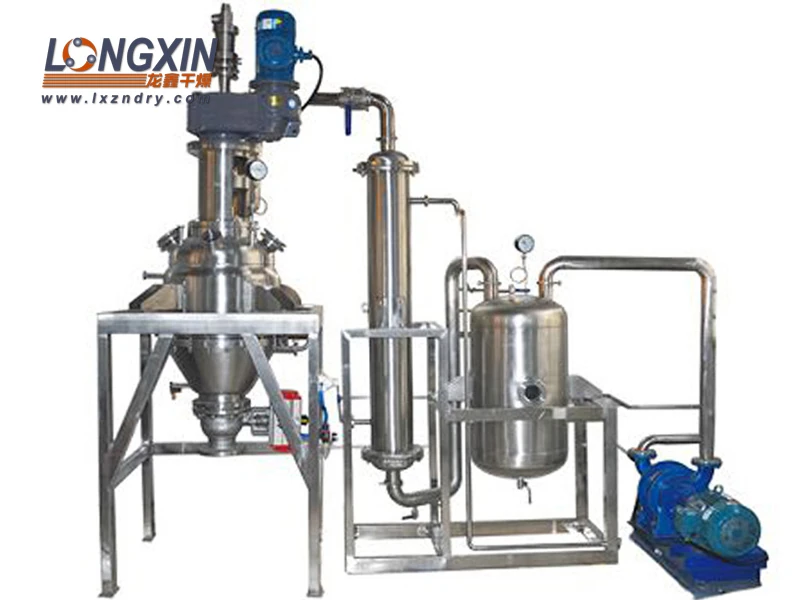
The DLG-50 operates in batch mode. Wet material is loaded into the product vessel, where it is dried under vacuum using heat supplied by the jacket and the heated ribbon agitator. The high-vacuum design offers clear advantages for heat-sensitive materials, combining effective heat conduction and rapid drying with low energy consumption. A filter connected directly to the dryer retains dust particles within the processing area, allowing further processing with minimal material loss.
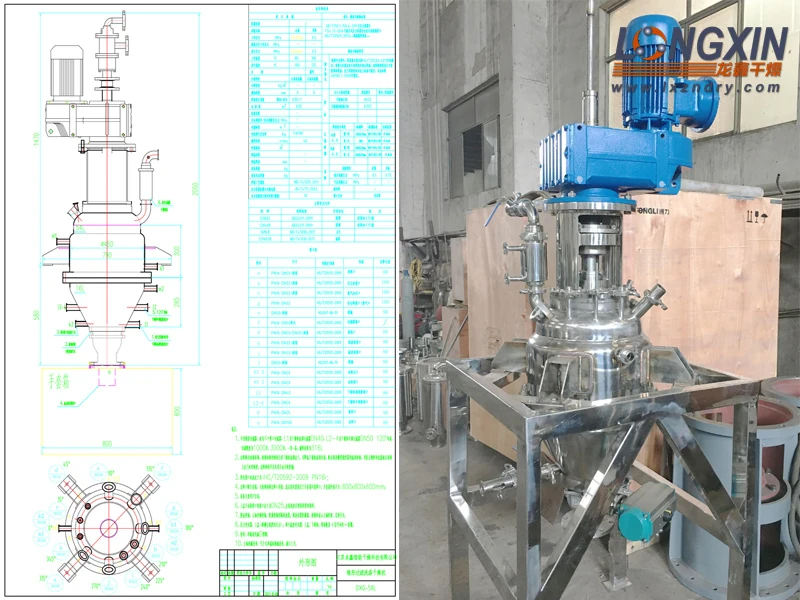
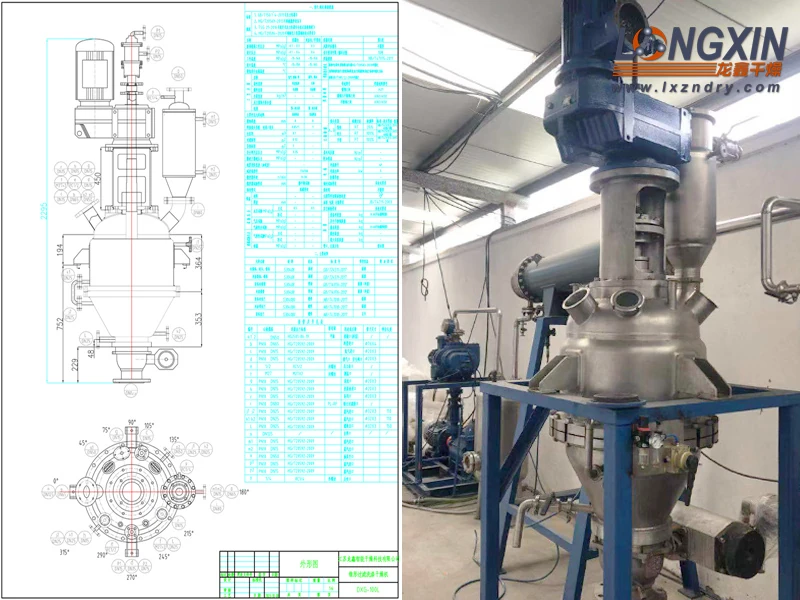
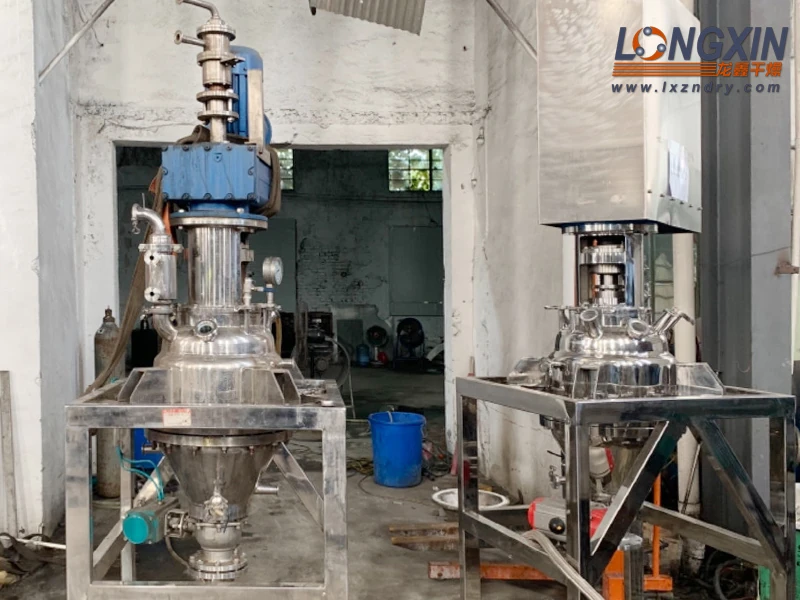
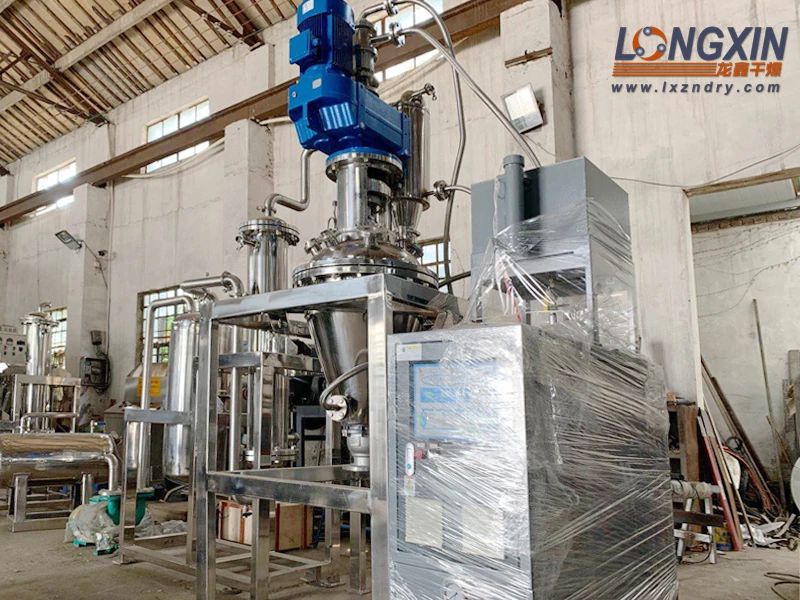
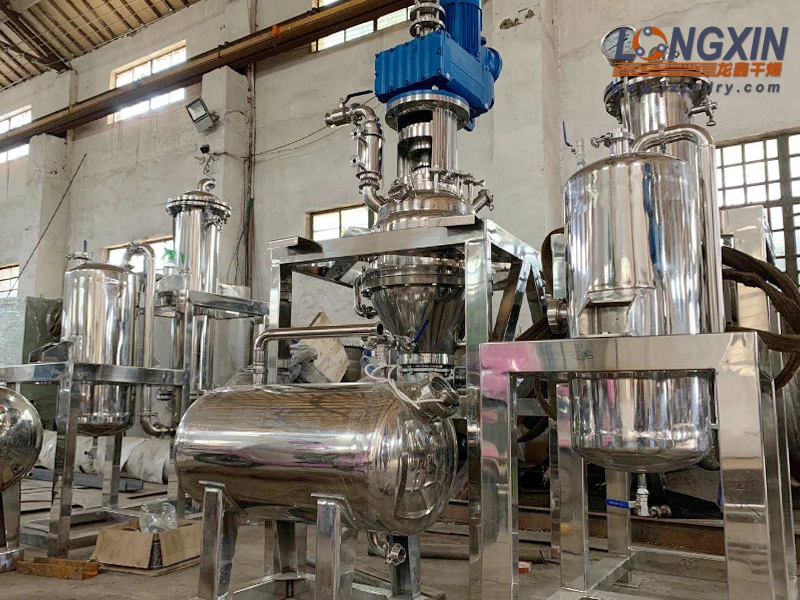
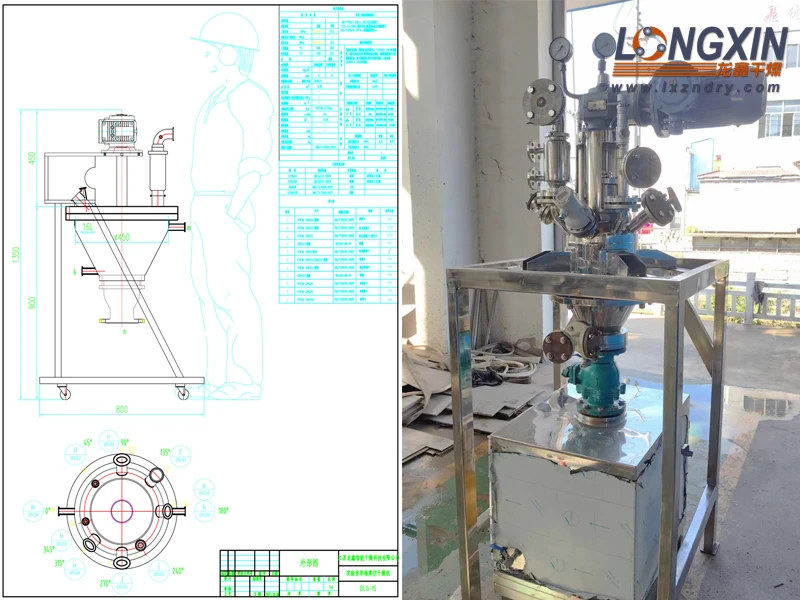
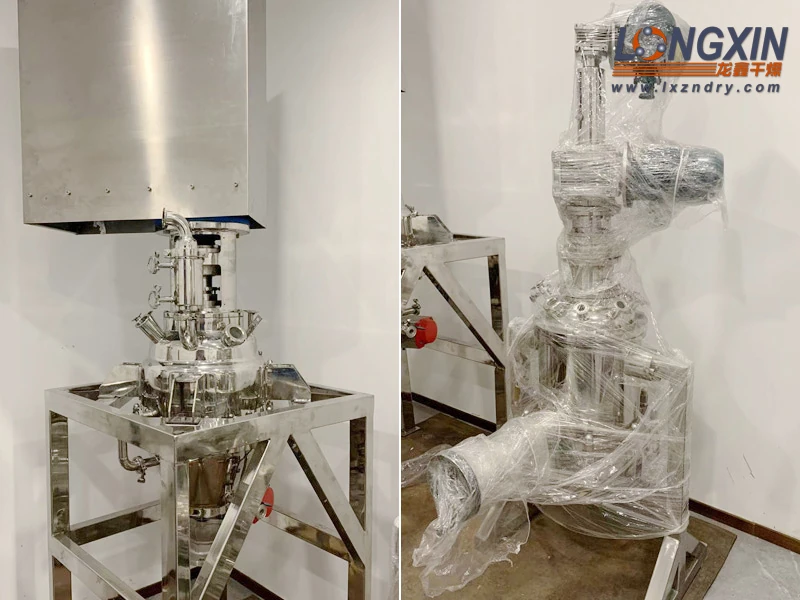
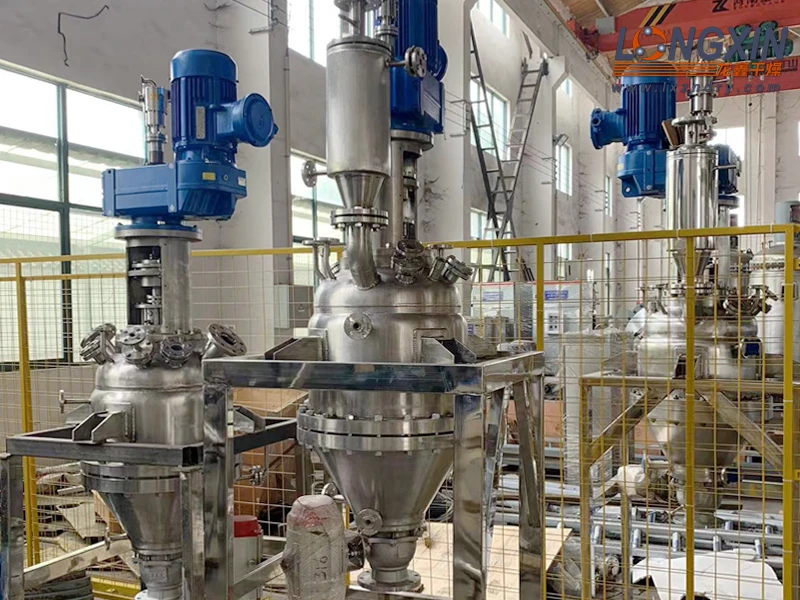
The system mainly consists of a conical vessel, drive mechanism, internally heated ribbon agitator, sampling and discharge devices, electrical control system, and CIP/SIP equipment. The vessel uses a fully enclosed aseptic structure with a simple interior designed without dead corners. For applications requiring explosion protection or contamination prevention, nitrogen can be introduced before operation to maintain a positive pressure of approximately 20–30 mbar relative to the external environment. This helps prevent external particles from entering the system and supports explosion-protection requirements.
خصائص الأداء لمجفف الفراغ المختبري أحادي المخروط DLG-50
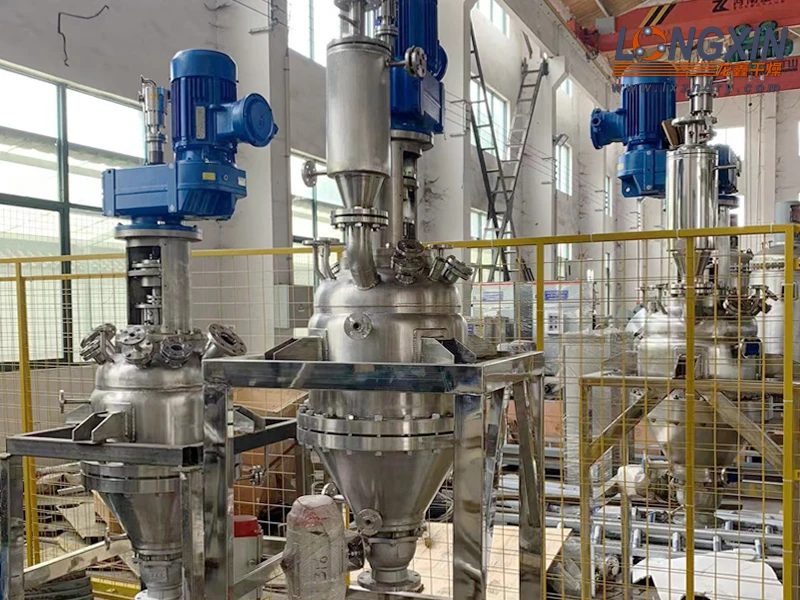
In terms of structural design, the DLG-50 uses a fully enclosed aseptic structure and a simple interior without dead corners, making it suitable for mixing and drying food, biological products, and pharmaceutical materials that are flammable, explosive, toxic, or require aseptic processing. The single-cone ribbon mixing structure provides a high fill rate of more than 70%, helping save floor space and operating costs. The 45° conical vessel supports smooth discharge without material accumulation.
(1) The vessel cone, head, main shaft, and ribbon agitator can all be supplied with a heating medium. The large heating area supports high heating efficiency.
(2) The ribbon agitator uses a two-point support arrangement, minimizing radial runout. This helps maintain a safe clearance between the ribbon and the vessel wall while reducing stress on the mechanical seal.
(3) The pulsed mixing design uses high-pressure nitrogen to impact the material and achieve rapid, uniform mixing.
(4) During operation, the specially designed ribbon agitator provides thorough mixing without applying external compression to the material. This helps avoid ineffective friction among powder particles and between the powder and equipment, effectively protecting the material’s crystal form.
(5) The top-drive configuration helps avoid potential concerns associated with bottom-drive systems regarding shaft-seal reliability and GMP validation.
(6) The equipment has a simple overall structure that is easy to operate and has few wear parts.
(7) Automatic CIP cleaning and in-line SIP sterilization support cleaning and changeover without opening the vessel, making the system suitable for multi-product production.
(8) The system operates with low noise and low energy consumption.
Technical Improvements to the DLG-50 Laboratory Single-Cone Vacuum Dryer
(1) Compared with conventional bottom-side discharge arrangements, the DLG-50 uses a bottom downward-discharge design. This helps prevent residual material accumulation, shorten discharge time, reduce operator workload, and enable automatic discharge while maintaining full containment during powder drying and mixing.
(2) The top-drive configuration improves on conventional bottom-drive designs by eliminating the need for dedicated removal and cleaning of the agitator. It also supports shaft-seal reliability and GMP validation activities.
(3) For internal heating, the ribbon agitator uses a hollow-channel design that can supply heat directly within the material bed, improving drying efficiency.
(4) A vacuum bag filter combined with nitrogen reverse-jet cleaning helps maintain an unobstructed vacuum path, thereby supporting consistent drying time and product quality.
(5) The system can also be integrated with mechanical separation equipment such as an inverting filter centrifuge. This enables a fully enclosed process from solid–liquid separation through drying and mixing, making it suitable for active pharmaceutical ingredient production.