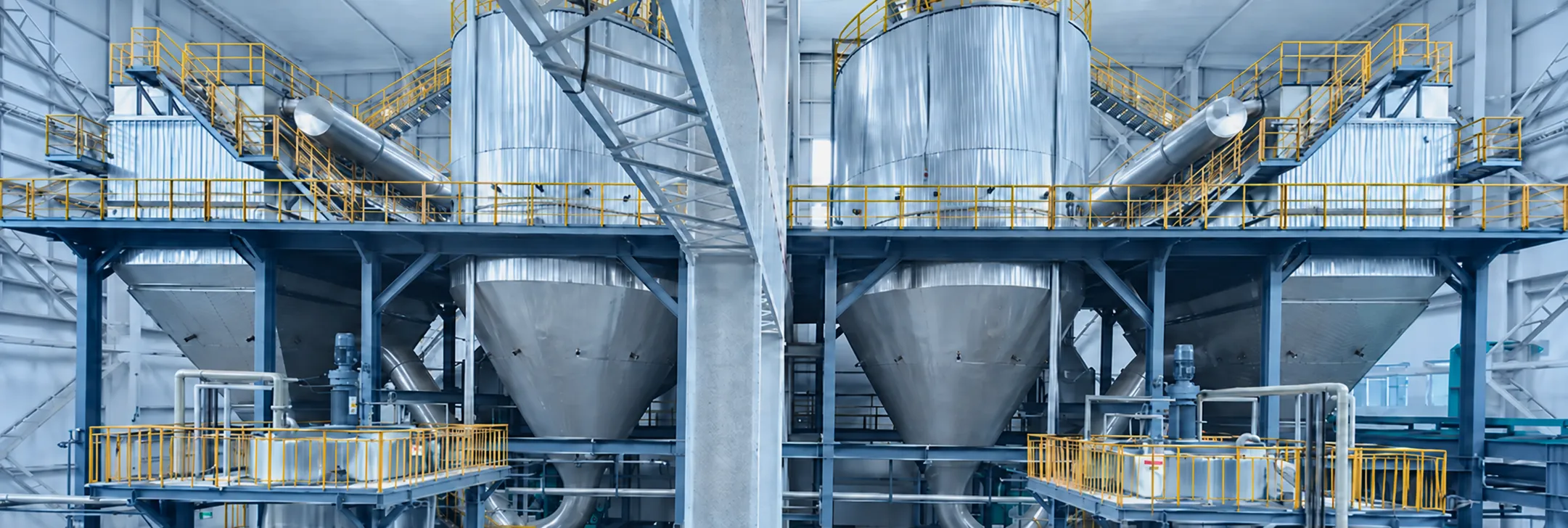
Corn starch is a polysaccharide extracted from corn. As the global population grows and living standards rise, demand for food continues to increase. The sustained development of the food industry is expected to drive further growth in corn starch demand for food processing. In baked goods, for example, corn starch helps make bread and cakes softer and more palatable, and its use as a thickener and stabilizer is expected to expand. In the field of biodegradable materials, corn starch can be used to manufacture disposable tableware and packaging materials. Growing environmental awareness and supportive policies are increasing demand for biodegradable materials, creating substantial market potential for corn starch. Corn starch can also serve as a feedstock for bioethanol and other forms of bioenergy, and demand is expected to expand further as demand for clean energy grows.
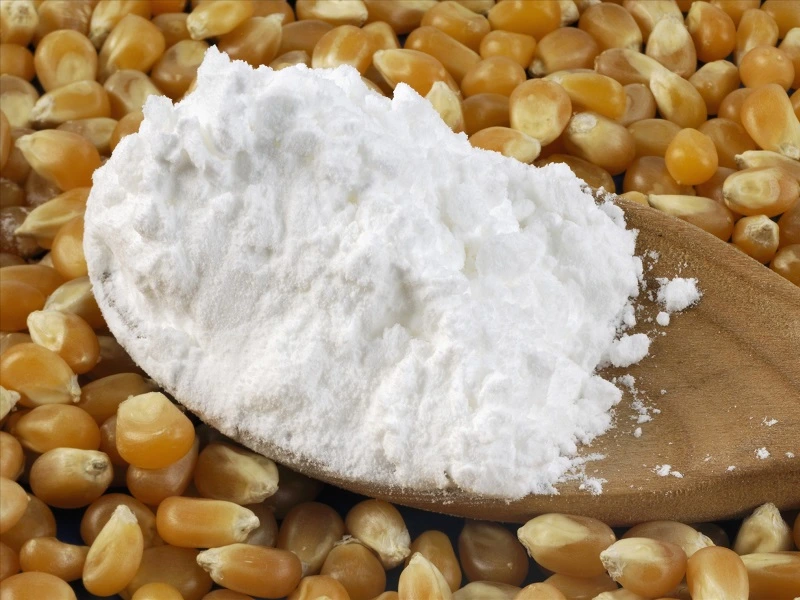
As corn starch production continues to expand, starch manufacturers seeking higher efficiency and lower production costs are increasingly turning to high-efficiency airflow drying technologies to achieve rapid drying and continuous processing. This trend is driving growth in the corn starch airflow dryer market. Jiangsu Longxin continues to develop new technologies and processes—including innovative heating methods, improved airflow dryer structural designs, and advanced dust removal and waste-heat recovery systems—to enhance equipment performance and reduce energy consumption. The company also focuses on improving equipment quality and reliability to ensure stable long-term operation.
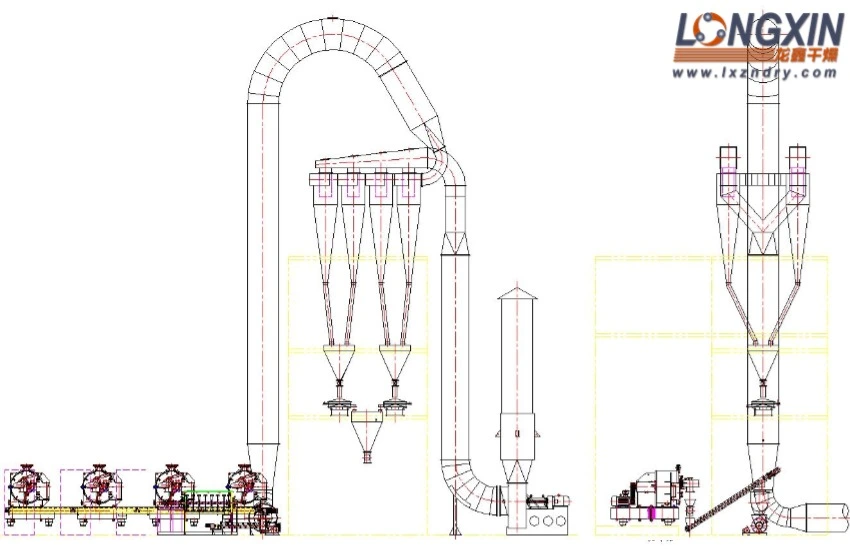
Corn Starch Airflow Dryer — Process Flow
1. Feed Preparation
Wet corn starch first undergoes pretreatment, typically including screening and impurity removal to eliminate large clumps, fibers, and other contaminants. This produces a more uniform particle size, prevents duct blockage, and supports consistent drying performance. Vibrating screens can be used for screening, while magnetic separators can remove magnetic impurities.
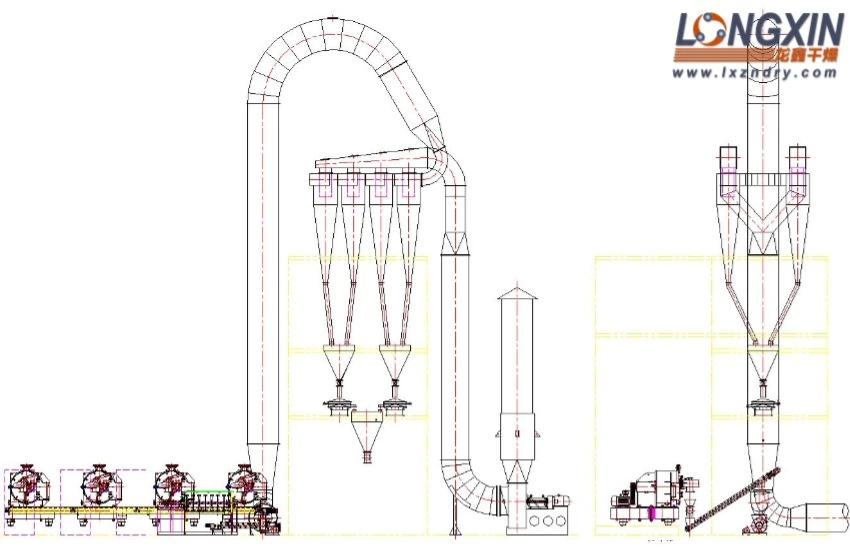
The pretreated wet corn starch is fed continuously and steadily into the drying duct at a controlled rate by a screw feeder or another suitable feeding device.
2. Heating and Drying
Ambient air passes through an air filter to remove dust and other impurities, producing clean air.
The clean air is heated through a heat exchanger. Available heat sources include steam, electric heating, coal-fired hot-air furnaces, and oil-fired hot-air furnaces, allowing selection according to actual production conditions and requirements. The heated air becomes high-temperature hot air.
The high-temperature hot air mixes thoroughly with the wet corn starch delivered by the feeding device inside the drying duct. Heat is transferred rapidly to the starch particles, causing moisture on the particle surfaces and inside the particles to evaporate quickly into water vapor and mix with the airflow, thereby drying the corn starch.
3. Gas–Solid Separation
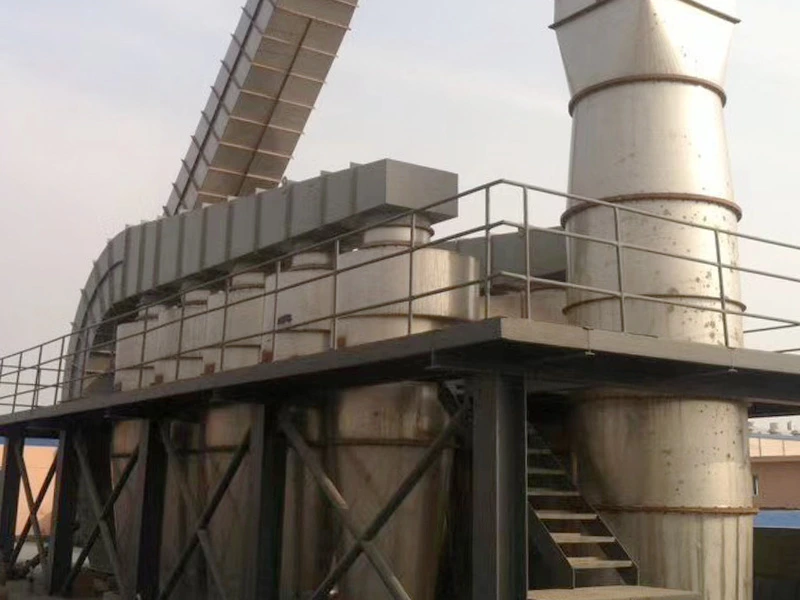
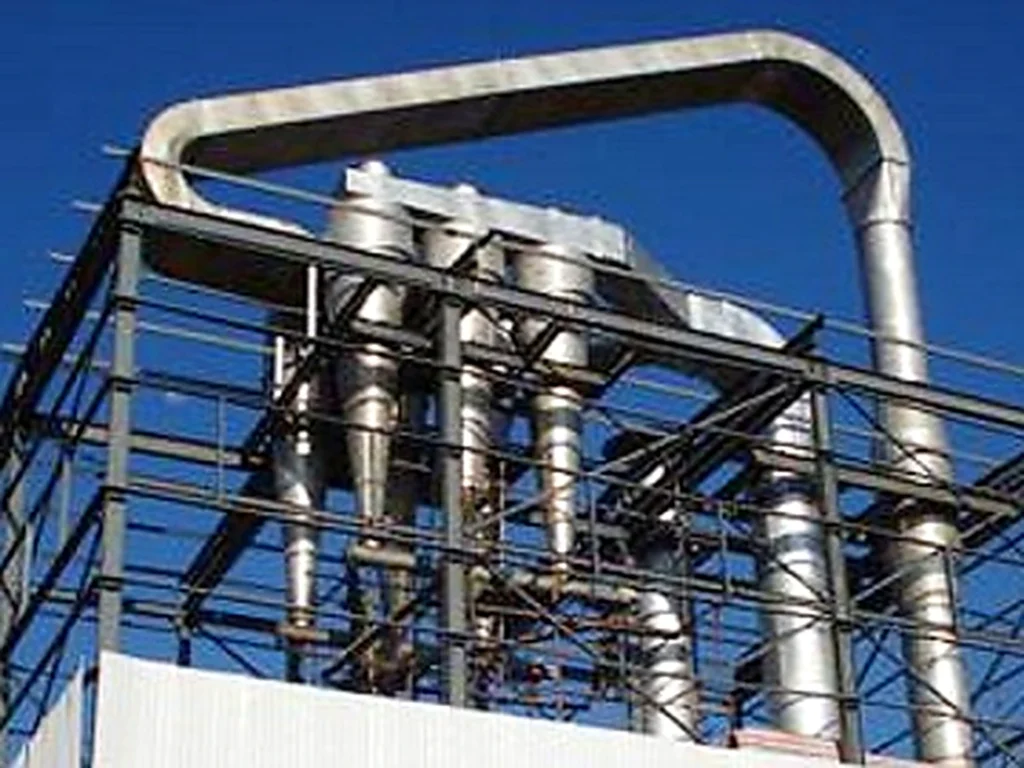
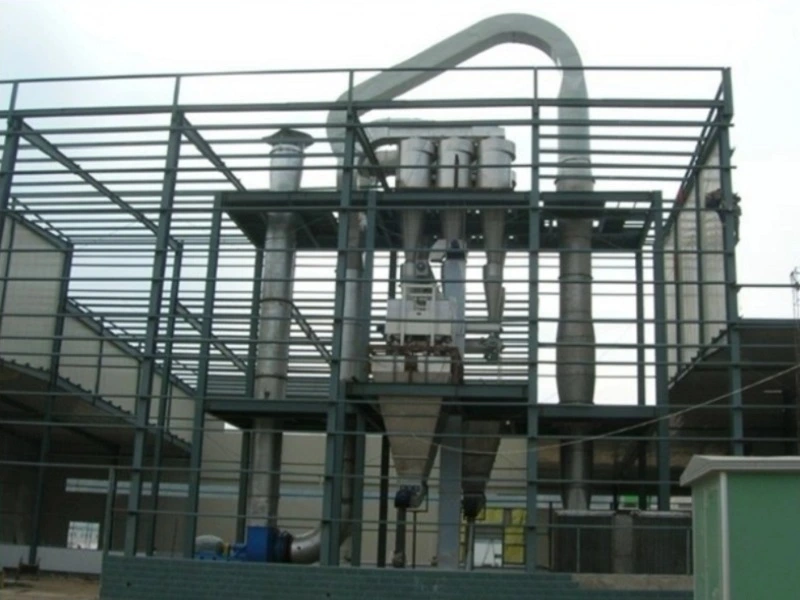
The dried corn starch particles enter a cyclone separator together with the airflow. Centrifugal force throws the larger starch particles toward the separator wall, where they fall and are discharged through a rotary airlock as the dried finished product.
The moisture-laden exhaust gas is discharged to the atmosphere by a fan. A small amount of fine dust can be recovered by a secondary cyclone separator or bag filter to reduce material loss and environmental impact.
4. Discharge and Post-Treatment
Dried corn starch discharged from the rotary airlock at the bottom of the cyclone separator can be sent directly to packaging and storage. It can also undergo further processing, such as milling, screening, or mixing, to meet specific product-quality and application requirements.
5. Equipment Cleaning and Maintenance
After production, the airflow dryer must be cleaned to remove residual material and impurities from the interior, preventing accumulation and deterioration that could affect product quality and normal equipment operation during subsequent production runs.
Regular inspection and maintenance should include checking the operating condition of the heat exchanger, fans, screw feeder, and other equipment, as well as replacing worn components to ensure stable performance and extend service life.
Corn Starch Airflow Dryer — Performance Features
1. High Drying Efficiency
Rapid heat and mass transfer:
Hot air and corn starch particles come into full contact inside the drying duct. The high airflow velocity keeps the particles suspended in the airstream, creating a large gas–solid contact area and a high heat-transfer coefficient. Heat transfer and moisture evaporation therefore occur within a short time, and drying typically takes only a few seconds, substantially improving drying efficiency.
Instant drying:
The negative-pressure drying principle enables rapid drying of the material in the airflow, producing an almost instantaneous drying effect. This is particularly suitable for heat-sensitive materials and helps prevent quality deterioration and gelatinization caused by prolonged exposure to heat, ensuring consistent product quality.
2. High Drying Capacity
High throughput:
The airflow dryer offers strong processing capacity, with water-evaporation capacities ranging from 50 kg/h to 15,000 kg/h. It can meet the requirements of manufacturers operating at different production scales, improving production efficiency and reducing production costs.
Compact equipment:
Compared with some conventional drying systems, the airflow dryer requires a smaller floor area for the same processing capacity. Its compact structure saves valuable space and reduces factory construction costs.
3. Consistent Product Quality
Low material temperature:
Although the heated air entering the dryer is at a relatively high temperature, the material remains in the constant-rate drying stage, during which its surface temperature approaches only the wet-bulb temperature of the air. This prevents quality deterioration, discoloration, and nutrient loss caused by excessive temperature, ensuring product quality and performance. The system is particularly suitable for temperature-sensitive corn starch.
Contamination prevention:
The entire drying process takes place in a relatively enclosed system, preventing direct contact between the material and the external environment. This reduces the possibility of contaminants and dust entering the product, lowers contamination risk, and helps ensure the purity and hygiene of the corn starch.
4. High Automation
Continuous operation:
The system supports continuous and stable feeding and discharge without frequent interruptions for manual intervention. This reduces labor intensity, improves production efficiency, and supports large-scale industrial production.
Precise control:
An advanced control system precisely regulates parameters such as feed rate, hot-air temperature, and air velocity, ensuring stable drying and consistent product quality while reducing the influence of human factors on drying performance.
5. Low Operating Costs
Energy savings:
Hot air comes into full contact with the material for effective heat exchange, achieving high heat utilization. No additional mechanical agitation is required during operation, reducing power consumption and energy costs.
Simple maintenance:
The equipment has a relatively simple structure without complex transmission mechanisms and has few failure points. Routine maintenance costs are low, and the long service life helps reduce equipment investment and operating maintenance expenses.
6. High Operational Safety
Negative-pressure operation:
The drying system operates under negative pressure, with the pressure inside the duct lower than atmospheric pressure. This effectively prevents dust leakage and dispersion and reduces hazards such as dust explosions, providing reliable safety protection during production.
Safety devices:
To protect operators and equipment, the airflow dryer is typically equipped with comprehensive safety devices, including high-temperature alarms, abnormal-pressure alarms, and explosion vents. These devices can issue timely warnings and initiate appropriate protective measures when abnormal conditions occur.
Corn Starch Airflow Dryer — Technical Improvements
1. Upgraded Feeding and Dispersion System
Uniform feeding device:
The structure and control method of the screw feeder have been improved so that wet corn starch enters the drying duct more evenly and consistently. This prevents incomplete drying or localized overheating caused by uneven feeding and improves product-quality consistency.
Material dispersion technology:
Special material-dispersion devices, such as air-distribution plates and agitators, are installed inside the drying duct to disperse the material more effectively in the airflow. This increases the contact area between the material and hot air, improves heat- and mass-transfer efficiency, and accelerates drying.
2. Improved Heating Methods
Hybrid heating:
Multiple heating methods can be combined, such as steam heating with electric heating. Steam can rapidly raise the temperature during the initial drying stage, after which electric heating can be used for precise temperature control. This improves drying efficiency, reduces energy consumption, and ensures consistent product quality.
Waste-heat recovery:
A waste-heat recovery unit recovers heat from the exhaust air and uses it to preheat incoming cold air or wet material. This improves energy utilization and reduces production costs.
3. Optimized Drying-Duct Structure
Pulse-type drying duct:
A pulse airflow drying duct with alternating reduced and enlarged diameters causes material particles to accelerate and decelerate repeatedly. This increases the relative velocity between the air and particles and enlarges the heat-transfer area, enhancing heat- and mass-transfer rates. At the larger-diameter sections, the lower airflow velocity increases drying time and improves drying performance.
Variable-diameter drying duct:
A segmented variable-diameter drying duct can be designed with alternating narrow and wide sections, including two-stage or multistage configurations. This structure allows hot air and wet starch to come into full contact, extends contact time, improves drying efficiency, reduces airflow resistance, and lowers energy consumption.
4. Optimized Gas–Solid Separation System
High-efficiency cyclone separator:
A new high-efficiency cyclone separator with optimized internal structure and dimensional parameters improves separation efficiency, reduces entrainment loss of starch particles, and lowers product loss and environmental impact.
Multistage separation:
Secondary or multistage separation equipment, such as bag filters and electrostatic precipitators, is added to recover fine powder from the exhaust air more effectively. This improves material recovery and helps meet increasingly stringent environmental requirements.
5. Enhanced Automatic Control System
Precise parameter control:
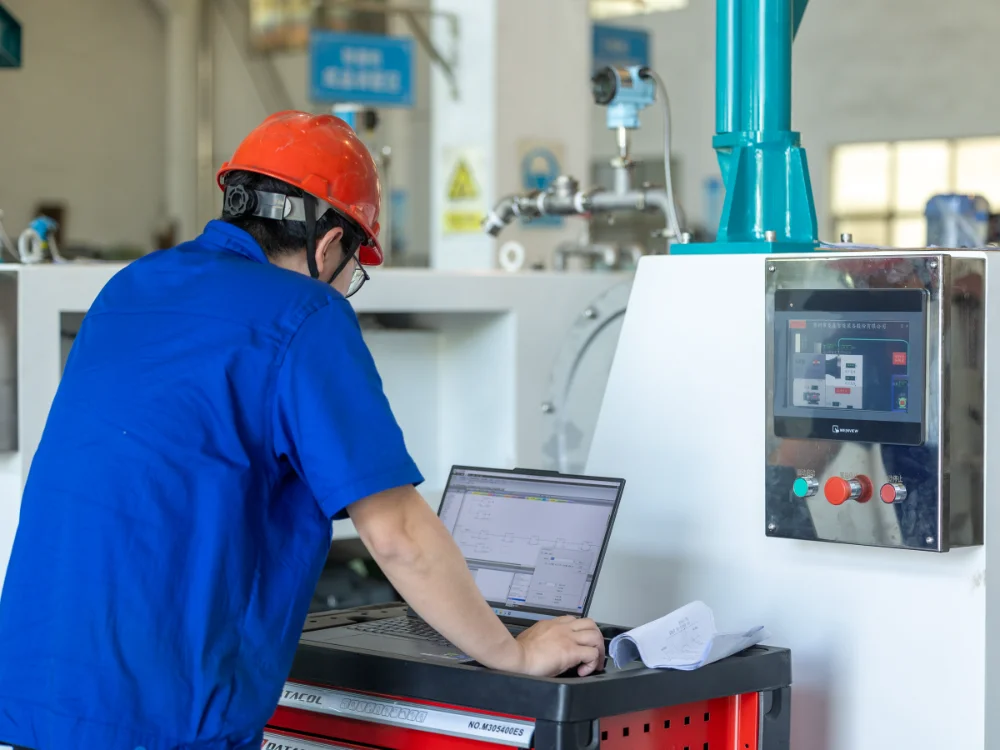
Advanced sensor and automatic control technologies continuously monitor and precisely regulate key drying parameters, including feed rate, hot-air temperature, air velocity, and pressure inside the drying duct. This ensures stable, efficient operation and improves product-quality consistency.
Fault diagnosis and early warning:
A fault-diagnosis system can automatically detect abnormal equipment conditions and issue timely warning signals to prompt operator action. This reduces equipment downtime caused by faults, improves production efficiency, and enhances equipment reliability.
6. Improved Equipment Materials and Insulation
High-quality materials:
Key components of the dryer are manufactured from high-quality materials with corrosion resistance, high-temperature resistance, and wear resistance. This improves equipment service life and stability while reducing maintenance costs and downtime.
Enhanced insulation:
Effective insulation is applied to the external surfaces of the drying duct, hot-air furnace, cyclone separator, and other equipment to reduce heat loss and energy consumption while improving the working environment.
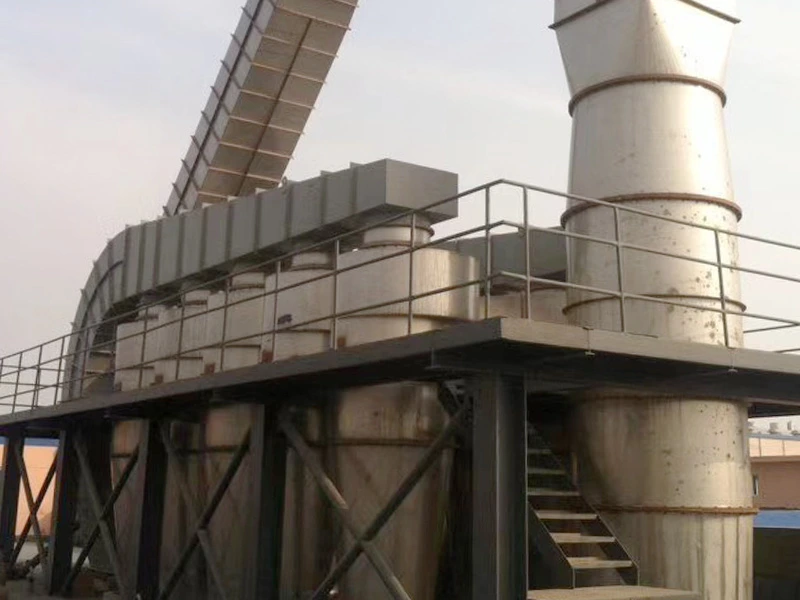
High-Speed, Compact, and Energy-Efficient Corn Starch Drying
The corn starch airflow dryer combines high-velocity gas–solid contact with rapid drying, a compact footprint, and continuous automated operation. Negative-pressure operation enhances product purity and safety, while efficient heat exchange, waste-heat recovery, and multistage dust separation reduce energy consumption and material loss while ensuring consistent product quality.