The Sodium-Ion Era Accelerates: Longxin Smart Builds a Full-Chain Intelligent Equipment Ecosystem
As energy-storage orders extend to 2028 and cells enter critically short supply, lithium carbonate prices rebound by more than 120% from their lows and force the value chain to seek alternatives, and leading companies such as CATL and BYD add sodium-ion batteries to their strategic roadmaps, 2026 is becoming a pivotal year. Sodium-ion batteries are moving rapidly from the “first year of industrialization” to the “first year of large-scale application.” At this critical stage of industrial transformation, intelligent upgrades in material processing equipment are becoming a decisive factor in whether sodium-ion batteries can cross the cost inflection point and achieve volume delivery. Drawing on extensive expertise in grinding, drying, calcination and other key processes, Longxin Smart has introduced intelligent equipment solutions spanning sodium-ion battery cathode materials, hard carbon anodes and electrolyte salts, empowering the industry’s high-quality development through integrated productivity advantages.
New Signals: Energy-Storage Order Surge, Material Price Increases and Sodium-Ion Acceleration
In 2026, the energy-storage market is experiencing a pronounced supply-demand mismatch and order boom. Rapid growth in energy-storage installations in China and overseas has created a critical shortage of battery cells, with order schedules at some major manufacturers extending to 2028. Rather than being overshadowed by lithium-ion battery capacity constraints, sodium-ion batteries are attracting a surge of orders as an independent technology route.
1. The Strategic Logic Behind Explosive Order Growth
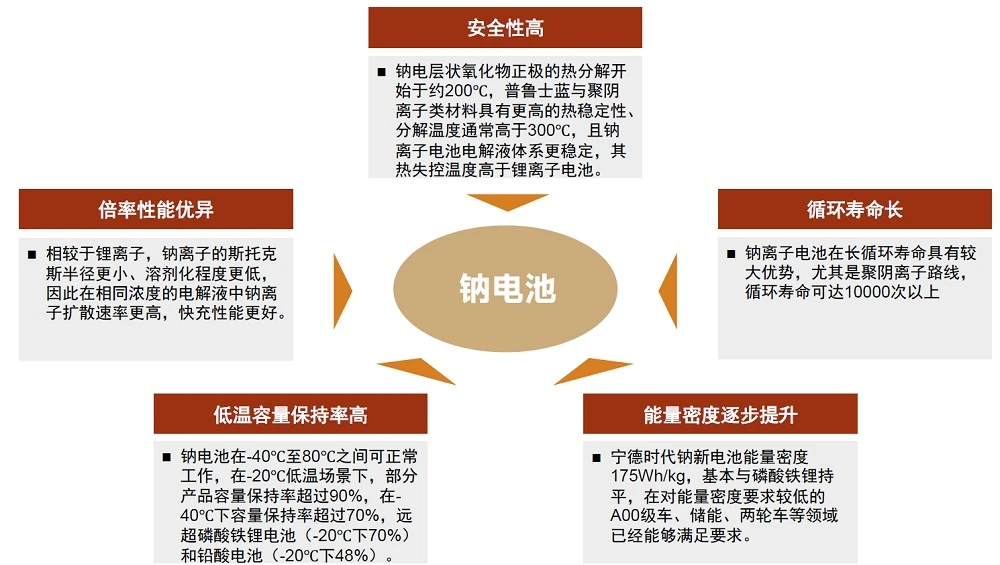
The surge is a strategic response to concerns over lithium price volatility and resource security. In January 2026, the most-active lithium carbonate futures contract closed at RMB 143,420 per metric ton, representing a cumulative increase of more than 120% from its low in June 2025. In March, battery-grade lithium carbonate averaged approximately RMB 155,000 per metric ton. Lithium carbonate prices are expected to remain above RMB 120,000 per metric ton in 2026. Combined with increases in other material prices, this could raise lithium-ion battery costs by 5–15%. By contrast, sodium-ion cell costs have fallen to RMB 0.4–0.5/Wh, narrowing the price gap with LFP cells to RMB 0.10–0.15/Wh. The price intersection between sodium-ion and lithium-ion batteries may arrive in 2027. As sodium-ion costs decline while lithium-ion costs rise, the so-called “death cross” is approaching.
2. Energy Security as a Deeper Driver
China remains highly dependent on imported lithium resources, and changes in overseas policies or geopolitical disruptions could cause severe fluctuations in supply and prices. Sodium is approximately 423 times more abundant than lithium in the Earth’s crust, is widely distributed and is low in cost. Developing a sodium-ion battery value chain therefore helps safeguard national energy security and stabilize the supply of critical resources. Sodium-ion batteries also offer strong low-temperature performance, with more than 90% capacity retention at −20°C and reliable operation across a wide temperature range from −40°C to 60°C, as well as high safety and high-rate charge-discharge capability. These advantages are becoming increasingly important in cold-region energy storage, data-center backup power and commercial vehicles. Industry estimates indicate that installed sodium-ion battery demand could exceed 400 GWh by 2030, with penetration in the energy-storage sector reaching 18%.
Sodium-Ion Industrialization Accelerates: Grinding and Drying Equipment Requires Technological Iteration
The accelerating industrialization of sodium-ion batteries is placing unprecedented demands on upstream material processing equipment. Sodium-ion battery material systems include cathodes such as layered oxides, polyanionic compounds and Prussian blue analogues; hard carbon anodes; and electrolytes such as sodium hexafluorophosphate (NaPF₆). Every material category imposes stringent requirements on grinding and dispersion, drying and granulation, and calcination and coating.
1. Sodium-Ion Battery Cathode Materials
Sodium vanadium fluorophosphate (Na₃V₂(PO₄)₂F₃, NVPF), a representative NASICON-type polyanionic compound, features an open and stable crystal structure with efficient sodium-ion diffusion channels, making it suitable for high-rate charge and discharge. Its industrialization, however, faces three major challenges:
- Poor electronic conductivity: Nanostructuring and carbon coating are required to improve performance.
- Fluorine loss during production: Conventional fluorine sources tend to volatilize during high-temperature calcination, producing impurity phases.
- Poor batch consistency: Laboratory processes are difficult to scale up, and uneven material mixing affects the reproducibility of electrochemical performance.
Sodium iron pyrophosphate (NFPP), composite sodium iron phosphate, sodium iron sulfate and other materials face similar challenges. From raw-material formulation and microscopic morphology to drying, granulation and atmosphere-controlled calcination, equipment precision and process stability at every stage directly determine compaction density, electrical conductivity and cycle life.
2. Hard Carbon Anodes
Hard carbon, the “heart” of sodium-ion batteries, presents equally significant industrialization bottlenecks. It offers reported capacities of 350–400 mAh/g, large interlayer spacing of 0.36–0.48 nm and a porous structure that supports rapid sodium-ion insertion and extraction. However, its production involves crushing, ball milling, reactor processing, spray drying and atmosphere-protected furnace treatment. Equipment must be adapted to precursors including biomass-, resin-, coal- and pitch-based materials, resulting in poor production-line compatibility. Some critical equipment, such as nano bead mills and calcination furnaces, has long relied on imports, resulting in high purchase and maintenance costs. In addition, precise control of carbonization temperature, humidity and atmosphere directly affects pore structure and electrical conductivity. Temperature fluctuations can reportedly cause differences of more than 10% in initial Coulombic efficiency.
3. Sodium Hexafluorophosphate Electrolyte
NaPF₆ production involves reactions, crystallization, filtration, washing and drying, placing extremely high demands on equipment corrosion resistance, sealing and cleanliness. Conventional multi-stage production is inefficient and energy-intensive, making it difficult to meet the cost-reduction requirements of large-scale manufacturing.
To address these challenges, material manufacturers urgently need full-chain equipment solutions covering grinding and dispersion, drying and granulation, calcination and coating, and intelligent control, enabling integrated processes, intelligent control and continuous production.
Unlocking Longxin’s “Xin” Productivity: Full-Chain Innovation in Intelligent Grinding and Drying Lines
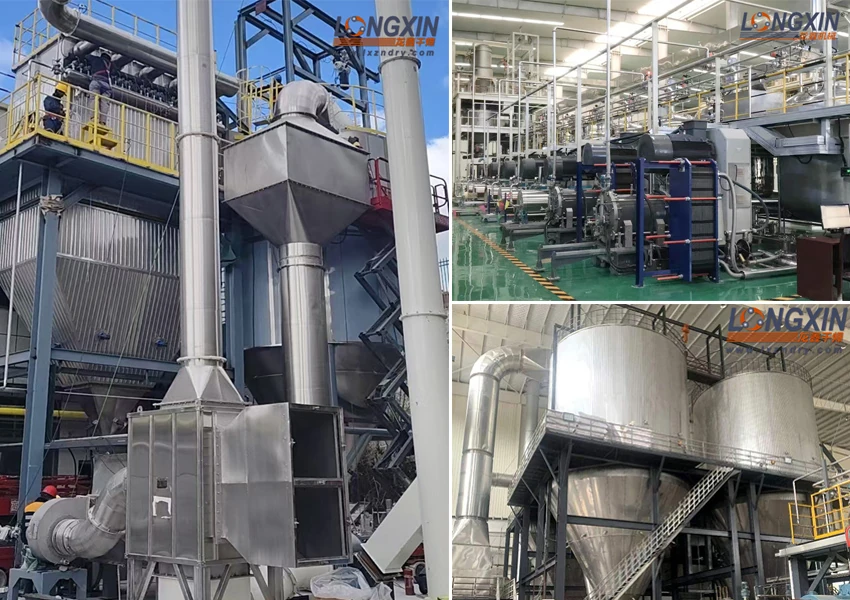
To address the challenges involved in sodium-ion battery material production, Longxin Smart has drawn on more than 20 years of experience in material processing equipment to develop a full-chain intelligent grinding and drying production line. The solution covers three core segments: cathode materials, hard carbon anodes and electrolyte salts.
1. Cathode Materials: Intelligent Nano-Grinding and Spray-Drying Production Line
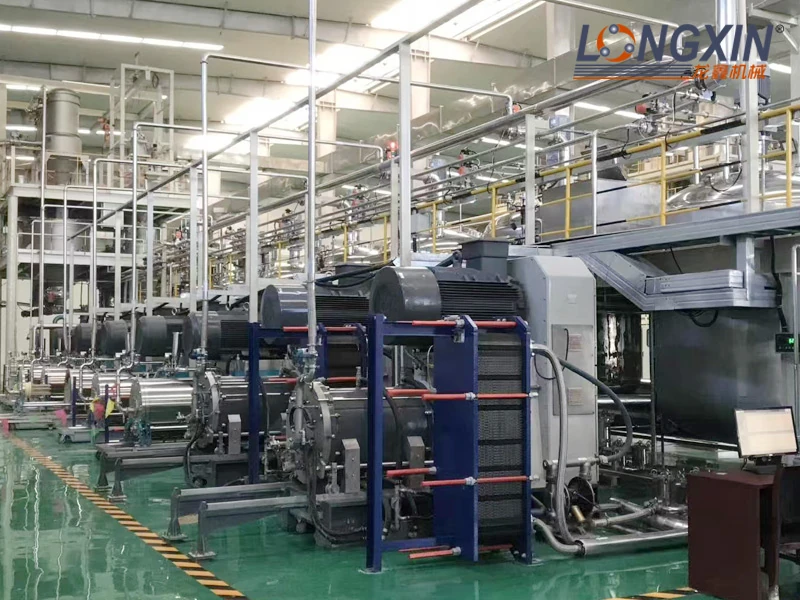
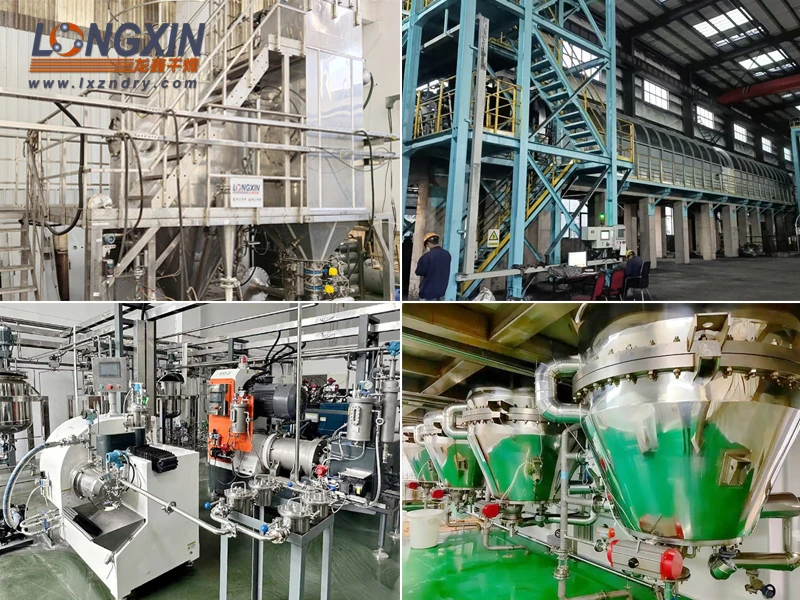
For polyanionic cathode materials including NVPF, sodium iron pyrophosphate, composite sodium iron phosphate and sodium iron sulfate, Longxin Smart offers an integrated three-stage production line combining wet nano-grinding, pneumatic spray drying and atmosphere-protected calcination.
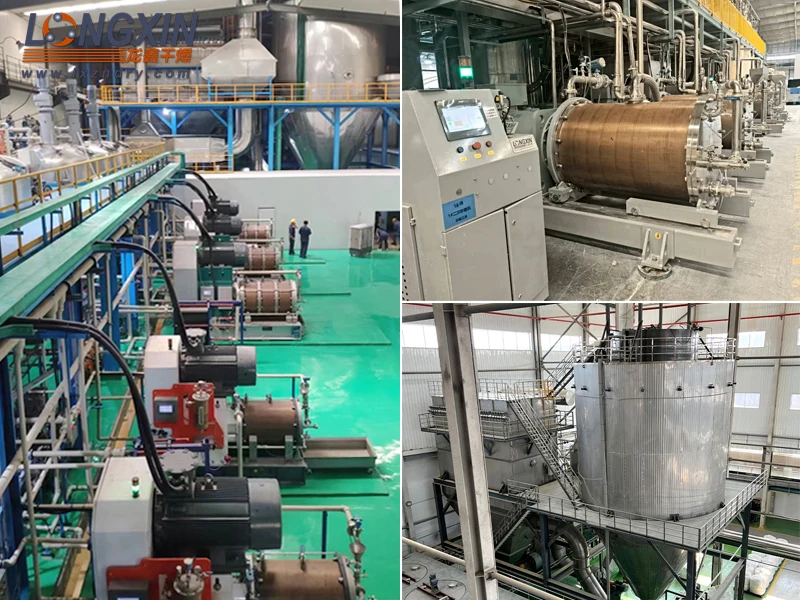
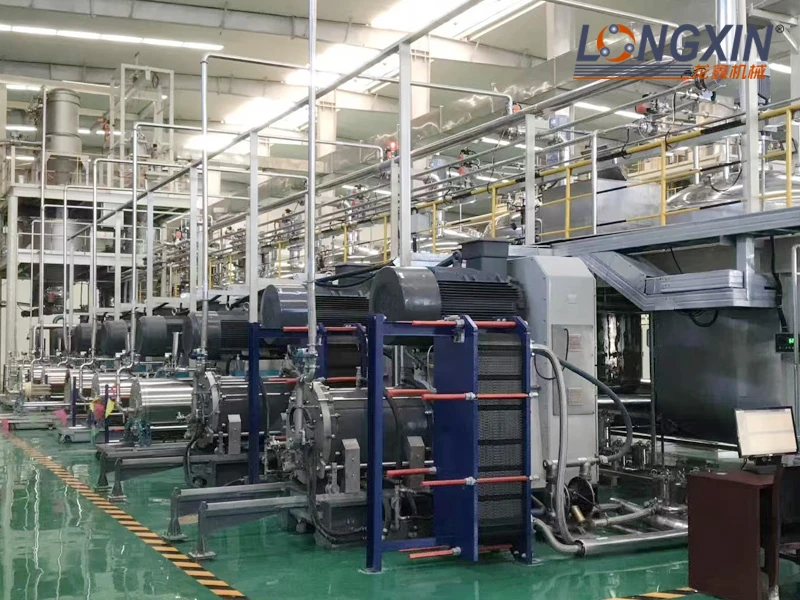
- Wet nano-grinding: The WSP high-flow nano-bead mill accurately meters carbon sources such as oxalic acid and citric acid, phosphorus sources such as phosphates, sodium sources such as sodium carbonate, and vanadium sources such as vanadium pentoxide. High-efficiency wet grinding achieves nanoscale dispersion. A new centrifugal discharge design supports zirconia grinding media as small as 0.3 mm, while a rotor with a peripheral speed of 20 m/s delivers more than twice the grinding efficiency of conventional equipment. This shortens the conventional multi-pass grinding process and improves raw-material dispersion and reaction uniformity.
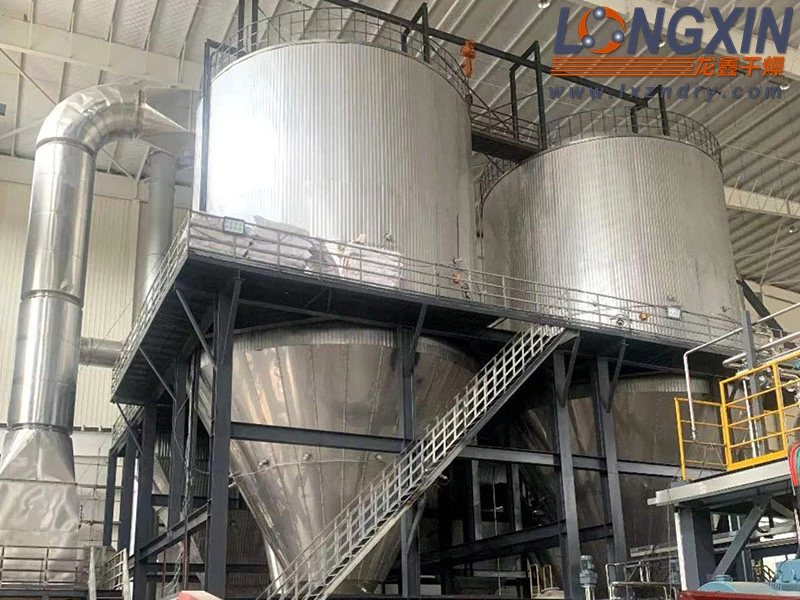
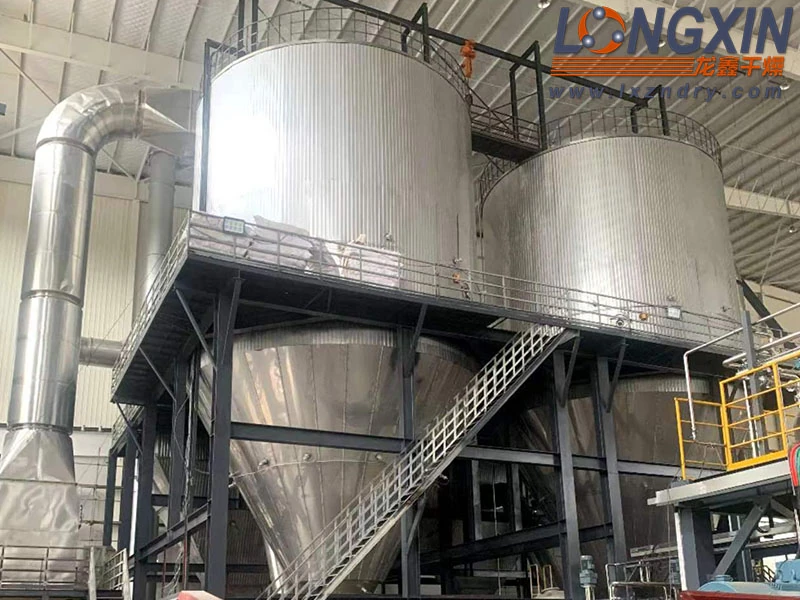
- Pneumatic spray drying: Longxin Smart’s upgraded high-pressure pneumatic spray-drying system uses a multi-fluid atomization system. A high-pressure pump and nozzle perform primary atomization, after which compressed air further breaks up the feed liquid to produce ultrafine droplets. D50 can be reduced from the conventional 25 μm to below 10 μm. In hot air at 180–250°C, the precursor slurry dries rapidly into core–shell microspheres. The nanoscale shell shortens ion-diffusion pathways, while the micron-scale overall particle size increases compaction density and improves flowability, dispersion and tap density. An intelligent control system monitors and adjusts drying parameters in real time, and hot-air recirculation improves energy efficiency and batch consistency.
- Atmosphere-protected calcination: A rotary calcination kiln processes the dried precursor together with organic fluorine and carbon sources at a programmed temperature of 450–700°C under nitrogen or argon. The rotary structure ensures uniform heating and prevents phase changes or fluorine loss caused by localized overheating. The organic fluorine and carbon sources supply fluorine, reduce volatilization losses and form a uniform carbon coating that improves electronic conductivity. The resulting NVPF cathode microspheres are approximately 5–10 μm in size with a regular core–shell structure and high compaction density at 30 MPa. After carbon coating, the powder demonstrates improved electrical conductivity, high initial discharge capacity at 1 C, stable cycling and strong high- and low-temperature performance.
The line is suitable not only for NVPF but can also be extended to sodium iron pyrophosphate, sodium iron sulfate, manganese-based polyanionic materials and other sodium-ion battery cathodes, providing critical equipment support for the sodium-ion battery material value chain.
2. Hard Carbon Anodes: Flash-Drying and Rotary Calcination Intelligent Production Line
For hard carbon anode materials, Longxin Smart offers a full-chain solution covering flash pre-drying, pre-carbonization by calcination and coating.
- Coating: The coating system uses a high-purity centrifugal and pneumatic spray dryer dedicated to ultrafine battery materials. A two-fluid nozzle combines compressed air and feed slurry to generate droplets ranging from several micrometers to several tens of micrometers. Controlled hot-air temperature of 150–300°C and airflow velocity produce highly spherical particles with high tap density. The equipment supports continuous 24-hour operation and dries material within tens of seconds. Fully enclosed piping prevents external contamination and meets the stringent sulfur and ash limits required for high-quality hard carbon.
- Coating and pyrolysis: A continuous atmosphere rotary calcination kiln features a multi-stage temperature-control system with heating rates of 1–15°C per minute and a temperature range from ambient to 1,000°C. It supports protective nitrogen and argon atmospheres and ensures uniform pyrolysis of pitch, resin and other coating materials, supporting the formation of a stable solid electrolyte interphase (SEI) during battery operation and higher initial Coulombic efficiency. The rotary-kiln design supports ton-scale production, while an intelligent control system monitors temperature and gas flow to ensure batch consistency.
- Intelligent production line: Longxin Smart integrates grinding, drying and calcination equipment into a turnkey intelligent production line. A PLC-based system coordinates process parameters and uses a process database to support rapid recipe changes. Inline particle-size monitoring and composition analyzers provide real-time feedback, while intelligent algorithms optimize process parameters. Remote equipment monitoring enables rapid warning and response. The line is compatible with biomass-, resin- and pitch-based precursors and supports capacity scaling from kilogram-scale pilot trials to 10,000-ton-scale production.
3. Sodium Hexafluorophosphate Electrolyte: Three-in-One Filtration, Washing and Drying
For NaPF₆ and other sodium-ion electrolyte salts, Longxin Smart has developed a three-in-one filtration, washing and drying system that integrates conventional multi-stage production into a single enclosed process.
- Corrosion-resistant coatings or Hastelloy construction withstand highly corrosive media such as hydrogen fluoride.
- Integrated precision filtration, multi-stage washing and vacuum drying complete crystallization, solid-liquid separation, impurity washing and low-temperature vacuum drying within a sealed system, preventing moisture absorption and contamination during material transfer.
- An intelligent control system precisely regulates filtration pressure, washing-liquid ratios and drying temperature to ensure product purity and batch consistency.
The solution significantly shortens production cycles and reduces energy and labor costs, providing efficient equipment support for large-scale NaPF₆ production.
The Sodium-Ion Industrialization Turning Point: A New Longxin Equipment Innovation Cycle Begins
Accelerating sodium-ion battery industrialization requires equally rapid advances in process equipment. Longxin Smart is building a new Longxin innovation cycle for sodium-ion battery material equipment around five core systems.
1. High-Flow Pin-Type Bead Mill
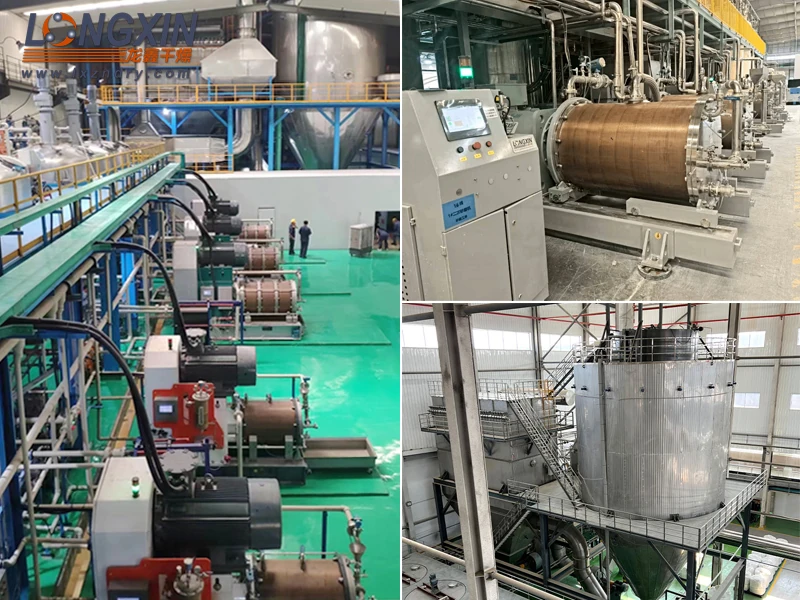
A turbine-pin grinding structure and a new centrifugal separation system enable efficient nanoscale dispersion and precision grinding. The mill supports zirconia grinding media as small as 0.3 mm and peripheral speeds of more than 20 m/s. It is suitable for ultrafine processing of polyanionic cathodes, layered oxides, Prussian blue analogues and hard carbon precursors, delivering narrow particle-size distributions and excellent batch consistency.
2. Centrifugal and Pneumatic Multi-Purpose Spray Dryer
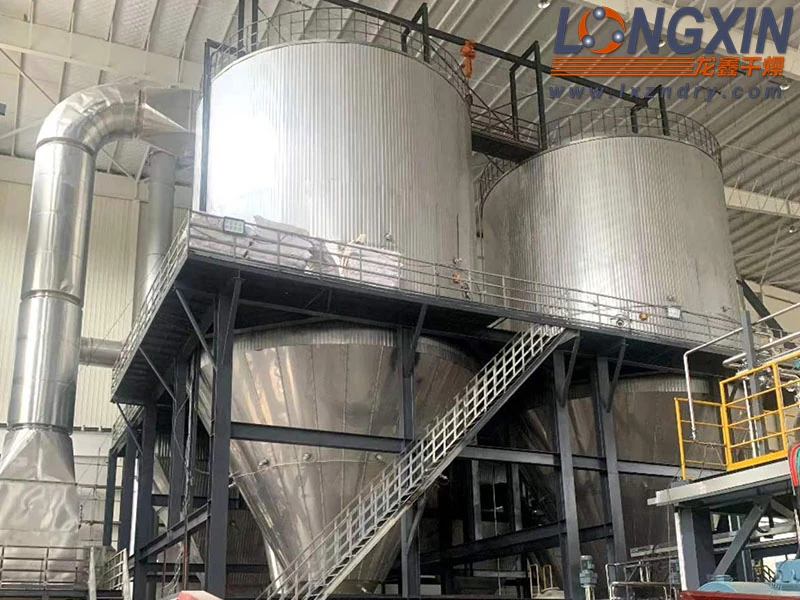
This system combines centrifugal and pneumatic atomization in a single unit and handles sodium-ion battery material slurries with different viscosities and solid contents. Variable-frequency control of atomizer-disc speed and compressed-air pressure enables D50 adjustment across a broad range of 5–20 μm. Optimized tower diameter and height ensure sufficient hot-air residence time and help prevent wall adhesion and coking. Bag filters and a heat-recovery system improve thermal-energy utilization and ensure compliant exhaust emissions.
3. High-Temperature Titanium Flash Dryer
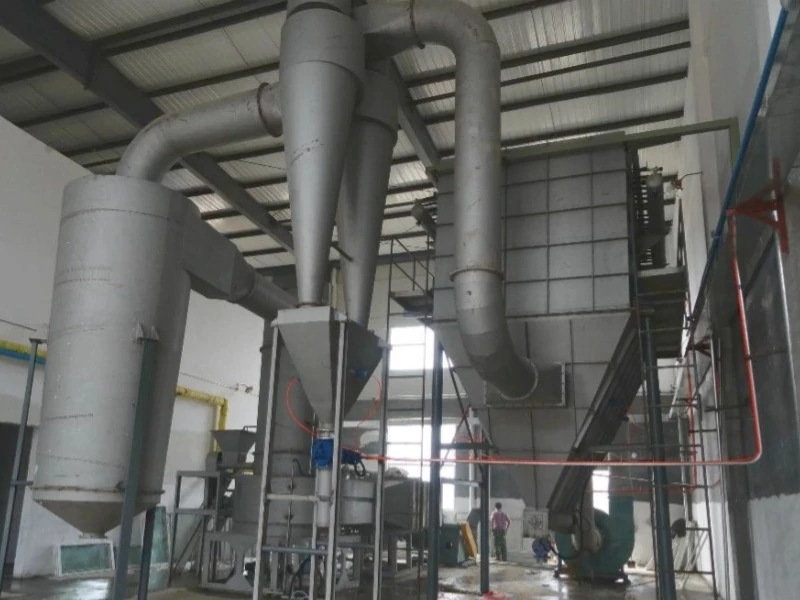
Designed for heat-sensitive and corrosive sodium-ion battery materials, this dryer uses titanium or stainless-steel linings for high-temperature and corrosion resistance. Its rotary flash-drying structure rapidly disperses and dries materials in a hot-air stream, providing short residence times and high thermal efficiency. It is suitable for rapid dehydration of hard carbon precursors and highly reactive intermediates.
4. Atmosphere-Protected Rotary Calcination Kiln
High-temperature alloy furnace tubes and a precision atmosphere-control system support protective atmospheres including nitrogen, argon and hydrogen, with high temperature uniformity. The kiln is suitable for carbon-coating calcination of polyanionic cathodes and coating pyrolysis of hard carbon anodes. Its rotary structure ensures uniform material tumbling and prevents localized overheating, while multi-stage programmed temperature control precisely executes heating, holding and cooling stages.
5. Conical Vacuum Dryer
For deep drying of heat-sensitive and oxidation-prone materials such as NaPF₆, the conical vacuum dryer uses a conical ribbon agitator to achieve efficient low-temperature drying under vacuum. The ribbon agitator ensures uniform heating and rapid drying, while the vacuum system lowers the solvent boiling point and prevents high-temperature decomposition. Its sealed design prevents moisture absorption and cross-contamination, ensuring high purity and low moisture content in electrolyte salts.
The Sodium-Ion “Speed Era” Has Arrived: Longxin Builds an Intelligent Equipment Moat through Technology and First-Mover Advantages
2026 is widely regarded as the first year of sodium-ion battery commercialization. In terms of orders, Zhongke reportedly has more than 500 MWh under negotiation, while CATL and Haibo have formed a three-year strategic sodium-ion battery cooperation covering 60 GWh. In technology, the polymerizable nonflammable electrolyte (PNE) developed by the Institute of Physics, Chinese Academy of Sciences, has reportedly prevented thermal runaway in ampere-hour-scale sodium-ion batteries, while CATL’s “NaXin” series meets the requirements of the new national standards. In terms of cost, sodium-ion cell costs are approaching RMB 0.4/Wh and are expected to fall below LFP costs across the board in 2027. These developments indicate that sodium-ion battery industrialization is progressing faster than many expected.
In this era of industrial competition, equipment suppliers’ technical resources and delivery capabilities will become key considerations for sodium-ion battery material manufacturers when selecting partners. Longxin Smart is strengthening its competitive position through the following advantages:
1. Full-Chain Coverage
From grinding, drying and calcination of cathode materials to crushing, drying and coating pyrolysis of hard carbon anodes, and from filtration and washing to drying of electrolyte salts, Longxin Smart provides full-chain equipment solutions for sodium-ion battery materials. This reduces the cost of coordinating multiple suppliers and ensures smooth process integration.
2. Deep Process Know-How
With more than 20 years of experience in battery material processing equipment, Longxin Smart has built a process database covering LFP, NCM materials, silicon-carbon anodes and other material categories. The company has developed in-depth understanding and rapid-response capabilities for the specific requirements of sodium-ion materials, including fluorine-loss control in polyanionic cathodes and pore-structure regulation in hard carbon.
3. Modular and Flexible Design
The production lines use a modular architecture that supports flexible capacity expansion from kilogram-scale to ton-scale production. They are compatible with multiple cathode routes, including polyanionic materials, layered oxides and Prussian blue analogues, as well as hard carbon precursors including biomass-, coal- and pitch-based materials. This helps customers reduce the sunk costs associated with switching technology routes.
4. Integrated Intelligence and Sustainability
The integration of PLC-based intelligent control, inline monitoring instruments and a remote operation and maintenance platform enables closed-loop process optimization and full-process traceability. Energy-saving designs, including hot-air recirculation, waste-heat recovery and exhaust-gas treatment, align with the green-manufacturing requirements of the dual-carbon strategy.
The Sodium-Ion Era Is Here: the Future Has Arrived
As the energy-storage order boom creates capacity pressure, rising lithium prices drive the search for alternatives, and the accelerating industrialization of sodium-ion batteries requires equipment support, Longxin Smart is using its “Xin” productivity as an anchor. Its intelligent equipment solutions cover the entire sodium-ion battery material value chain and help material manufacturers bridge the gap from laboratory development to industrial production.
Looking ahead, Longxin Smart will continue to deepen cooperation with research institutions and battery manufacturers, advance material preparation technologies and equipment upgrades, strengthen China’s position in the global sodium-ion battery industry, and contribute equipment expertise to the transformation of the energy system and the achievement of dual-carbon goals.