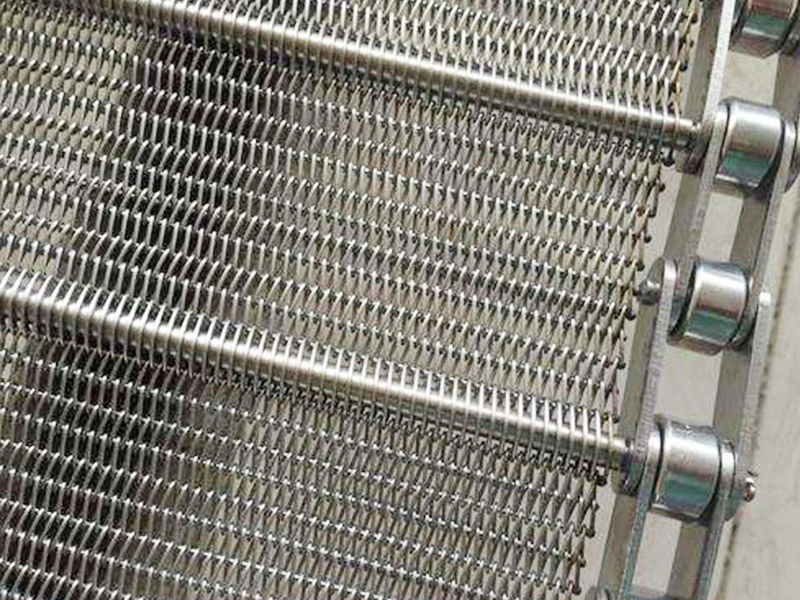
Hot-Air Through-Flow Belt Dryer: Equipment Overview
Cabinet dryers, tunnel dryers, and mesh-belt dryers are among the systems most commonly used to dry small-piece and fibrous materials. Cabinet and tunnel dryers operate in batch mode, require substantial manual labor, offer a low level of automation, and involve numerous uncontrolled variables. Mesh-belt dryers enable continuous, automated material feeding and discharge, deliver high production efficiency, and meet the requirements of modern large-scale production, making them widely used across the industry.
Belt dryers have an extensive range of industrial applications. The drying process is completed in a fully enclosed environment that prevents dust from escaping. The equipment is suitable for materials that must not break apart. Because the material remains stationary on the conveyor belt during drying, it is protected from damage, resulting in good finished-product quality. All material on the belt receives the same drying time, helping ensure consistent color and uniform moisture content.
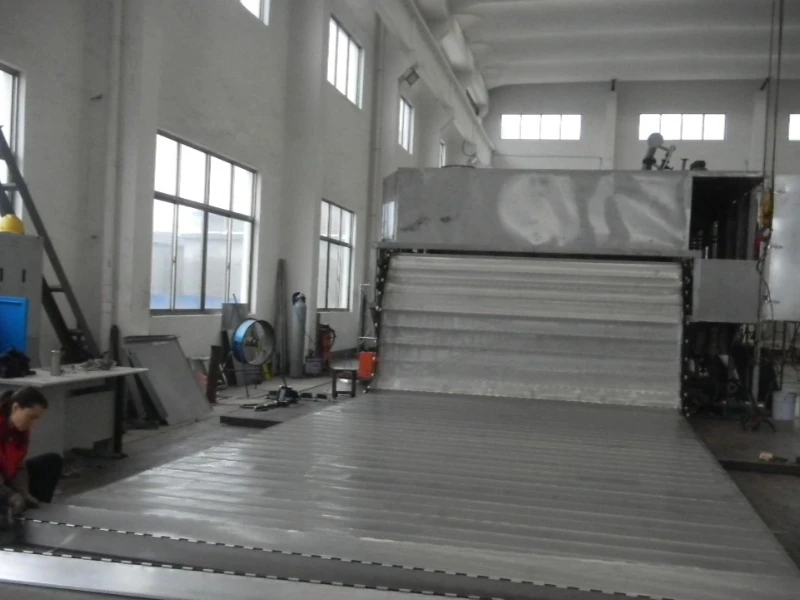
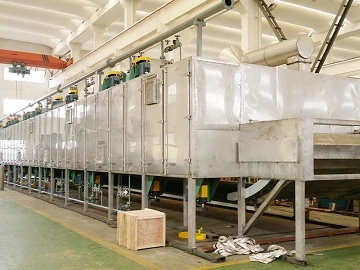
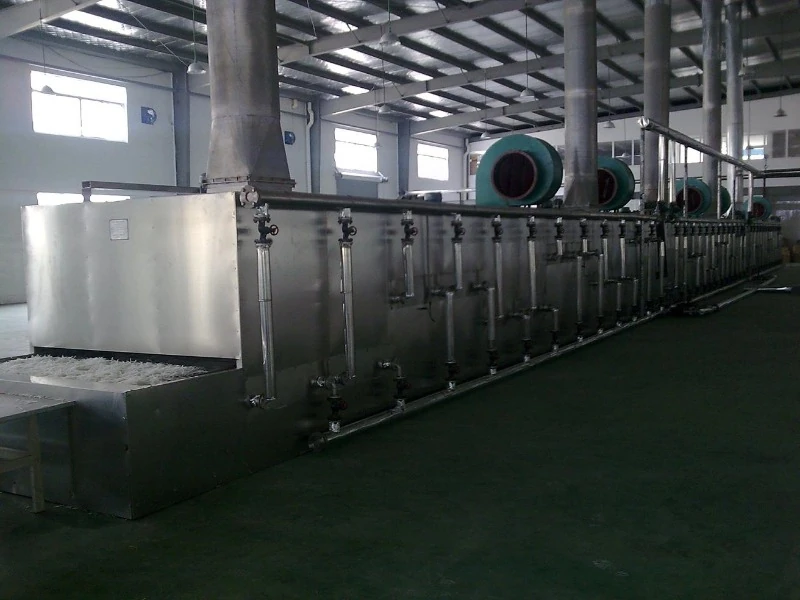
The DWT series through-flow belt dryer is a new-generation belt drying system developed and manufactured by Longxin Drying. Its main structural feature is the placement of heat exchangers above and below the mesh conveyor belt. Hot air circulates through multiple units connected in series along the longitudinal direction, providing uniform heating and high heat utilization.
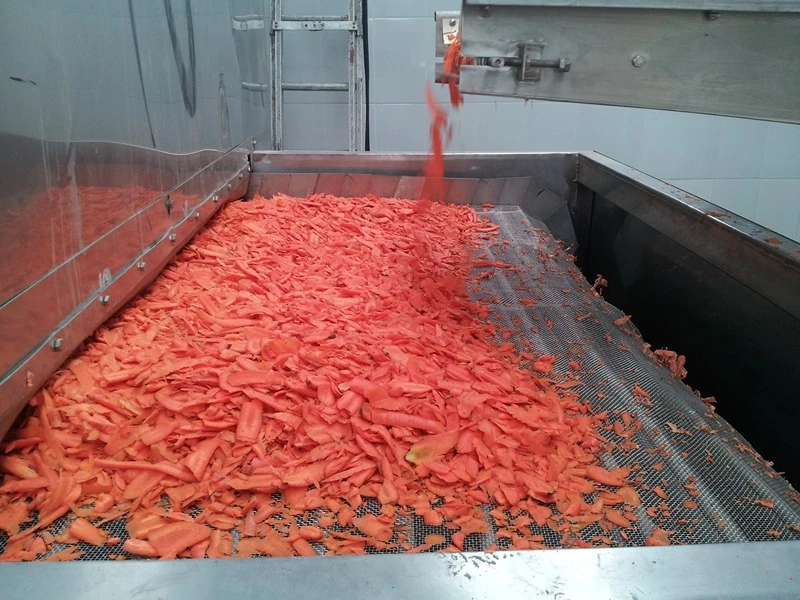
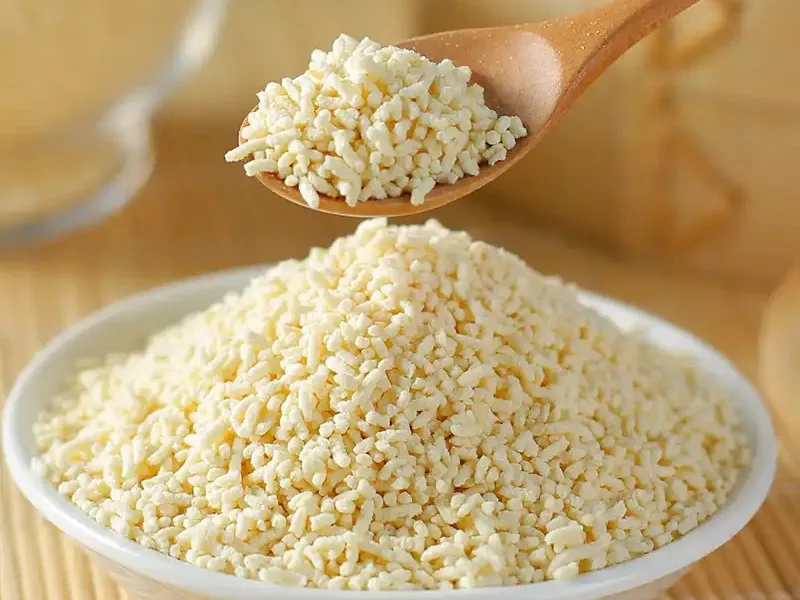
The dryer is suitable for drying sheet, strip, granular, and certain paste materials with good air permeability. For materials with high moisture content that do not readily generate fine particles, such as dehydrated vegetables and Chinese herbal slices, it provides fast drying, high evaporation intensity, and good product quality.
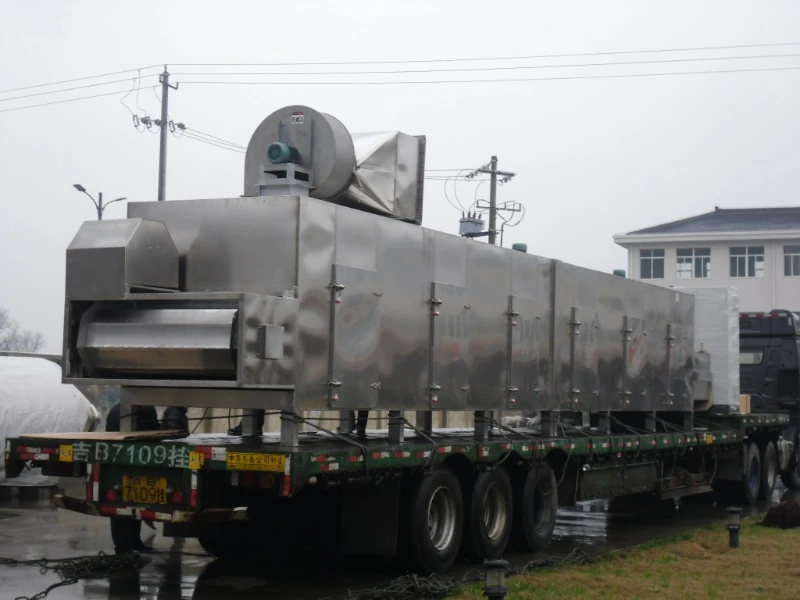
Working Principle of the Hot-Air Through-Flow Belt Dryer
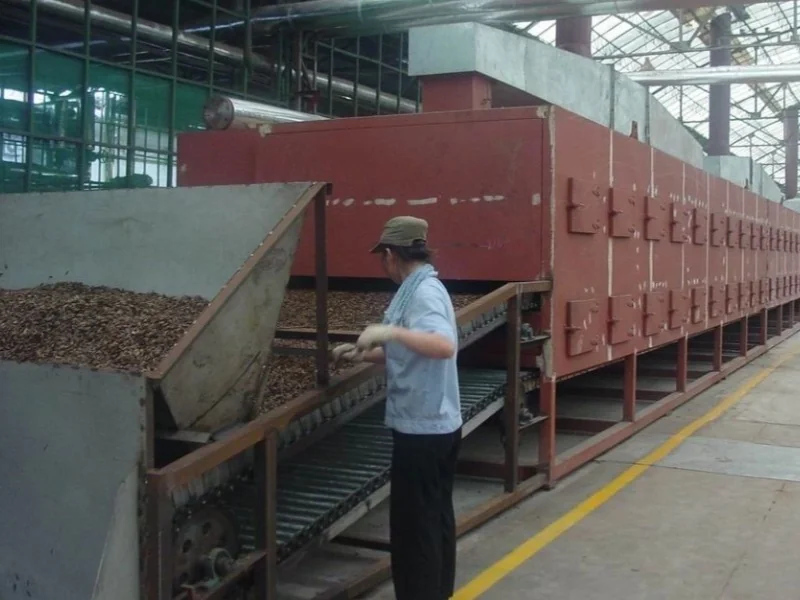
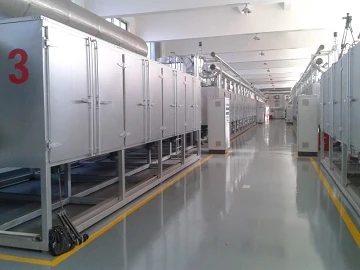
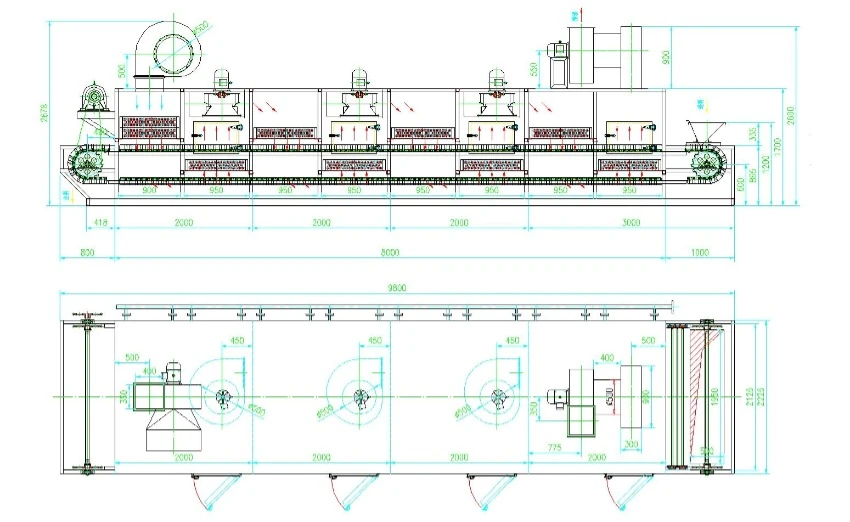
The through-flow belt dryer consists of multiple independent modules. Each module includes a drying chamber, a conveyor mesh belt and drive system, a circulation fan, a heating device, and individual or shared fresh-air intake and exhaust systems. The number of modules can be configured according to process requirements. Operating parameters such as drying-air volume, temperature, humidity, and exhaust recirculation rate can be controlled independently, supporting reliable operation and process optimization.
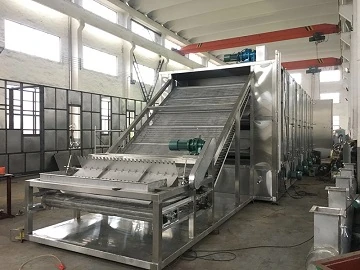
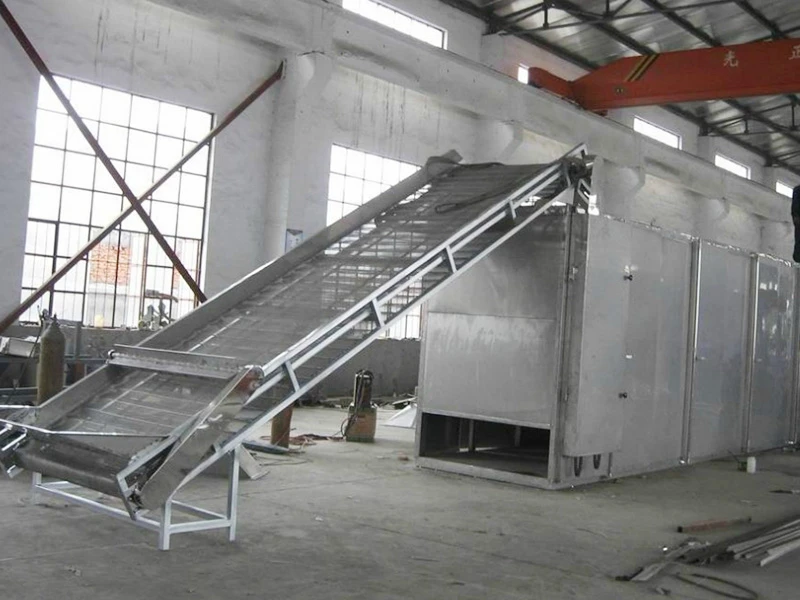
Material in the feed hopper is evenly distributed onto a stainless-steel wire mesh by the feeder and moves through the drying chamber at a constant speed under the drive of the conveyor motor. The drying section consists of multiple modules. Hot air circulates longitudinally through two or more modules. Fresh air is drawn into the drying chamber by a fan, heated through the heat exchanger, and passed through the material bed for heat exchange. The air then enters the lower chamber and flows to the next module. The cooled air is reheated by another heat exchanger and passes through the mesh belt and material bed for a second heat exchange. Moist exhaust air is discharged by the exhaust fan, completing the drying process. The number of modules in each dryer can be configured according to material properties and process requirements.
Equipment Features
Flexible, Enclosed Operation
The belt dryer offers flexible operation. Wet material enters the dryer, and drying takes place inside a fully enclosed chamber, improving working conditions and preventing dust from escaping.
Uniform Drying Conditions and Minimal Material Damage
As the material moves with the conveyor belt, the relative positions of the particles remain largely fixed, functioning as a fixed bed. All material therefore receives essentially the same drying time. This makes the belt dryer particularly suitable for processes that require uniform color or moisture content. Vibration and impact on the belt are minimal, so particles are not easily broken. The system is therefore also suitable for materials that must not be damaged, such as food products.
Multiple Processing Capabilities
In addition to drying, the belt dryer can sometimes be used for baking, firing, or curing materials.
Reliable Structure and Convenient Maintenance
The belt dryer has a relatively simple structure, is easy to install, and can operate continuously over long periods. When a fault occurs, maintenance personnel can access the interior of the drying chamber for inspection and repair.
Limitations
The main disadvantages of the belt dryer are its relatively large footprint and higher operating noise.
Technical Advantages of the Hot-Air Through-Flow Belt Dryer
- Material is uniformly distributed onto the conveyor belt by a feeding device at the inlet end. The belt is driven by a motor through a gearbox and can operate at adjustable speeds.
- Hot air circulates longitudinally through multiple units connected in series. Heat exchangers are positioned above and below the mesh belt to provide uniform heating and high heat utilization.
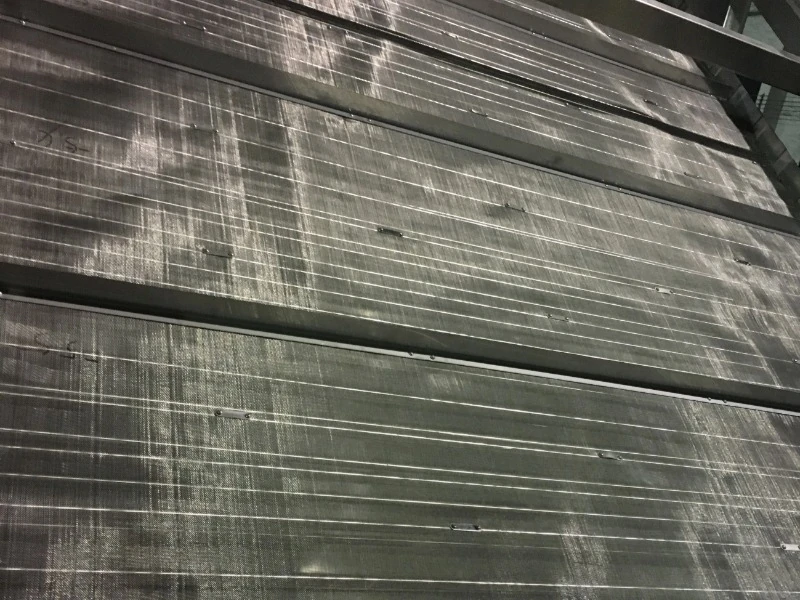
- Depending on material properties, the system can use various conveyor configurations, including stainless-steel square-mesh belts, specially profiled mesh belts, and perforated stainless-steel plate belts. Stainless-steel wire mesh is the standard configuration.
- The hot-air through-flow belt dryer is widely used in the food, chemical-fiber, leather, forestry, pharmaceutical, and light-industry sectors, as well as in inorganic-salt and fine-chemical applications.
Structural Diagram
Technical Advantages of the Hot-Air Through-Flow Belt Dryer
The dryer uses longitudinal multi-unit, series-connected hot-air circulation and positions heat exchangers above and below the mesh belt, allowing hot air to pass uniformly through the material bed and undergo repeated heat exchange. This design combines uniform heating with high thermal efficiency. The material moves continuously and smoothly through the fully enclosed drying chamber on the conveyor belt, maintaining stable relative positions and consistent exposure time, which helps reduce breakage and improve color and moisture uniformity. The number of modules and operating parameters—including airflow, temperature, and humidity—can be configured flexibly for different materials and processes. The system is suitable for sheet, strip, granular, and certain paste materials and is particularly well suited to the continuous production of dehydrated vegetables, Chinese herbal slices, and similar products.