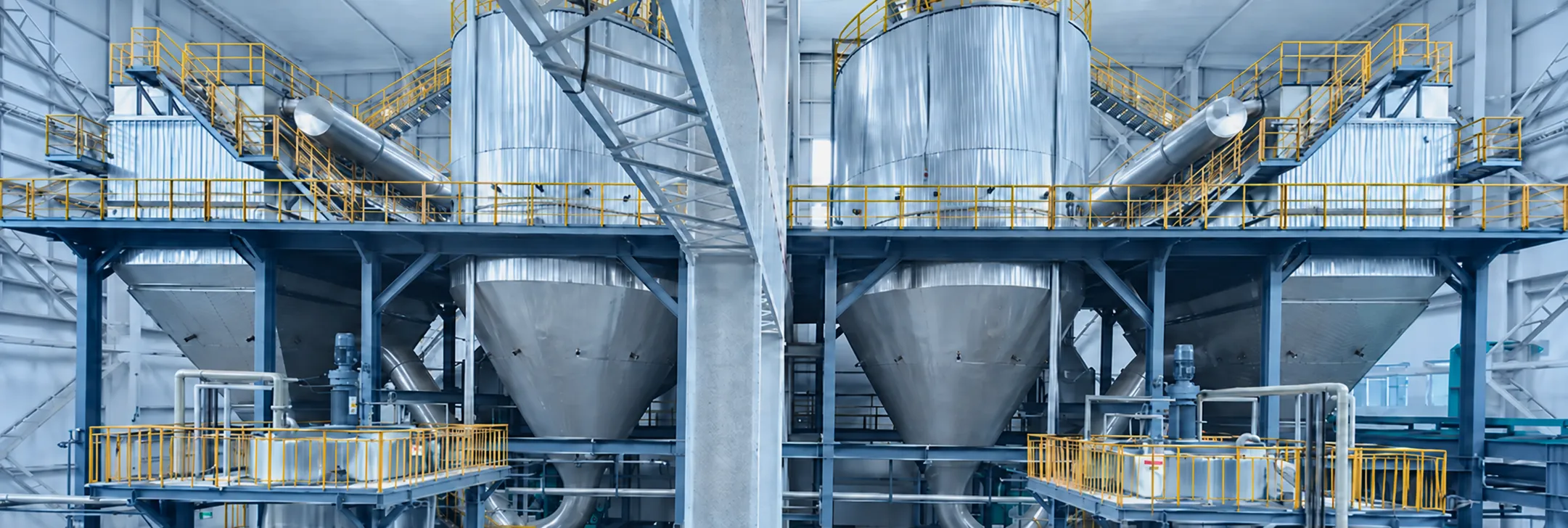
Advancing from Process Innovation to Industrial Production
Lithium-rich manganese-based materials are a class of lithium battery cathode materials that use manganese as their principal component and feature a superlattice structure. Their specific discharge capacity significantly exceeds that of conventional ternary cathode materials and lithium iron phosphate. After years of dedicated research, breakthroughs have been achieved in eliminating voltage decay, suppressing battery gas generation, and improving rate performance. These advances can enable a disruptive upgrade in power-battery energy density and support continued increases in electric vehicle range. Lithium-rich manganese-based cathode materials also reduce dependence on scarce imported resources such as cobalt and nickel. By leveraging China’s abundant manganese resources, they help secure the industry’s raw-material supply at the source and have become a leading candidate for next-generation, high-energy-density lithium batteries.
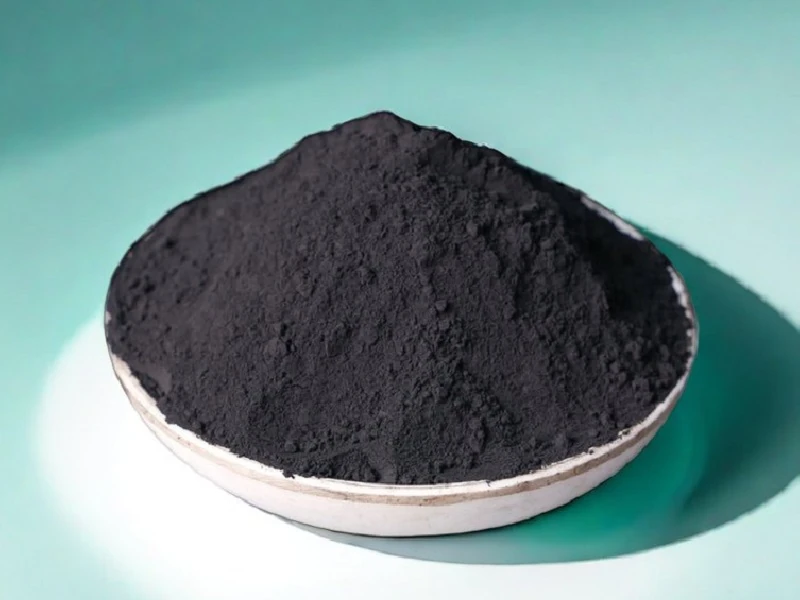
As the new energy industry accelerates toward higher energy density, greater safety, and lower cost, lithium-rich manganese-based cathode materials are moving from laboratory research to the forefront of industrialization. Their ultra-high specific capacity and low resource dependence make them a key avenue for overcoming energy-density bottlenecks and resource-security concerns. However, fully realizing the potential of these materials requires compatible production processes and equipment. Their complex crystal structures and electrochemical characteristics impose stringent requirements on core operations such as grinding and dispersion, drying and powder formation, and calcination and coating.
With extensive experience in new energy material equipment, Longxin Smart has identified the key production challenges and established a full-process equipment portfolio covering grinding, drying, and calcination. Through technological innovation, the company aims to remove production barriers, support the commercial-scale production of lithium-rich manganese-based materials, and drive technological advancement and industrial transformation in solid-state battery materials, ternary cathode materials, ultra-high-specific-energy cathode materials, and related fields.
Current Production Processes and Core Challenges for Lithium-Rich Manganese-Based Cathode Materials
The industrialization of lithium-rich manganese-based cathode materials has long been constrained by complex production processes and technical bottlenecks. Mainstream production methods generally draw on conventional ternary material routes, primarily using co-precipitation precursor synthesis followed by high-temperature sintering, along with post-processing steps such as grinding, dispersion, and surface coating. When applied to the specific characteristics of lithium-rich manganese-based materials, however, these processes present several significant problems:
(1) Raw-material preparation
Lithium-rich manganese-based materials require atomic-level uniform mixing of multiple elements, including nickel, cobalt, manganese, and lithium. Conventional co-precipitation involves long reaction cycles and can generate ammonia-nitrogen wastewater. It is also difficult to precisely control precursor particle-size distribution and morphological consistency, resulting in insufficient crystal-structure stability in the subsequently calcined product and directly affecting cycle performance and voltage stability. Some processes use solid-state mixing, but this method cannot achieve uniform elemental dispersion and is prone to local composition segregation, causing fluctuations in electrochemical performance.
(2) Grinding and dispersion: Balancing refinement and scale
The microstructure of lithium-rich manganese-based materials requires extremely high grinding precision. Particles must be refined to the nanoscale to improve ion-transport efficiency. Conventional grinding equipment, however, has disadvantages including high energy consumption, low capacity, and the potential to introduce impurities. It is also difficult to ensure uniform material dispersion during large-scale production, resulting in poor batch-to-batch consistency. In addition, excessive mechanical stress during grinding may damage the material’s lattice structure and cause performance degradation.
(3) Drying and powder formation
Drying and powder formation are critical steps that determine material morphology and physicochemical properties. Existing drying technologies have notable limitations. Oven drying is inefficient and tends to cause material agglomeration. Conventional spray dryers often produce uneven atomization and severe wall adhesion when processing high-viscosity precursors, resulting in a broad particle-size distribution and low bulk density and affecting heat and mass transfer during subsequent calcination. Incomplete moisture removal during drying can also cause secondary reactions during calcination and damage the material’s superlattice structure.
(4) Calcination and coating: Precise temperature control and uniform coating
Lithium-rich manganese-based materials require staged heating during calcination, with strict requirements for the temperature profile and atmospheric environment. Conventional calcination equipment often provides poor temperature-field uniformity and inflexible heating-rate control, which may lead to incomplete crystal growth or the formation of impurity phases, causing voltage decay and capacity loss. Surface coating is a key technology for improving material stability, but conventional coating processes struggle to produce nanoscale uniform coating layers. Coating delamination or uneven thickness can intensify interfacial reactions and prevent the effective suppression of active-oxygen release and metal-ion dissolution.
These technical bottlenecks severely constrain the industrialization of lithium-rich manganese-based materials. An integrated full-process equipment solution that combines high efficiency, precision, and stability is therefore urgently needed.
Longxin Smart’s Full-Process Equipment Portfolio: Connecting the Key Stages of Lithium-Rich Manganese-Based Material Production
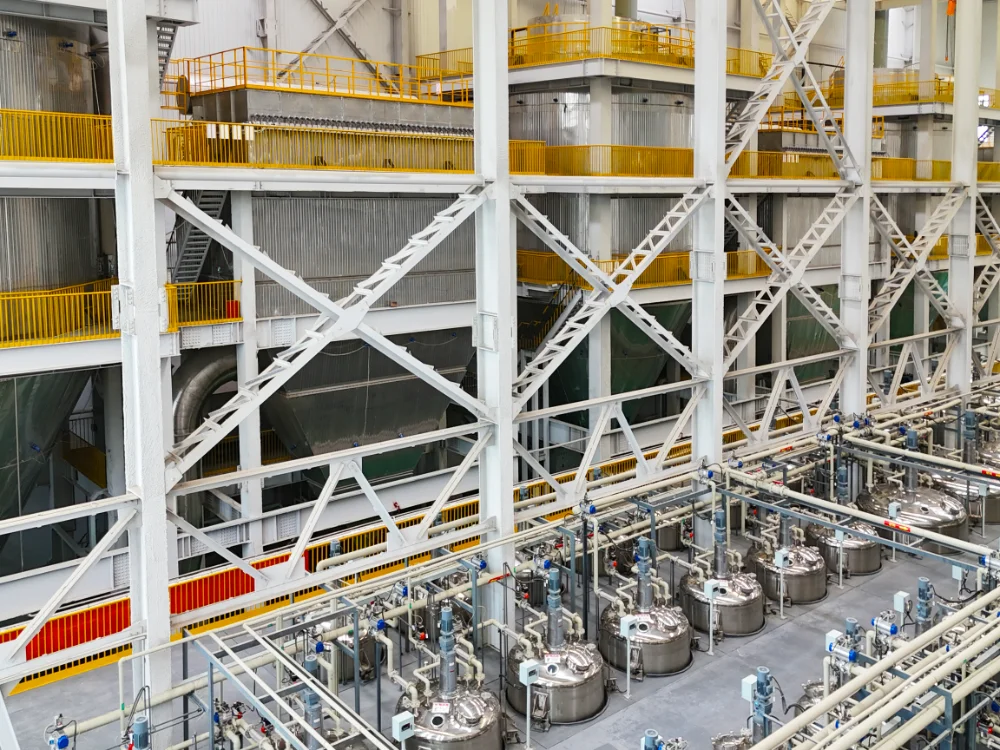
To address production challenges in lithium-rich manganese-based cathode materials, Longxin Smart has developed a complete equipment system covering grinding and dispersion, drying and powder formation, and calcination and coating. Supported by three core equipment platforms, the system optimizes the entire process from raw-material processing to finished-product manufacturing and provides a solid foundation for industrial-scale production.
(1) Grinding and dispersion: The High-Flow Pin-Type Bead Mill strengthens product consistency
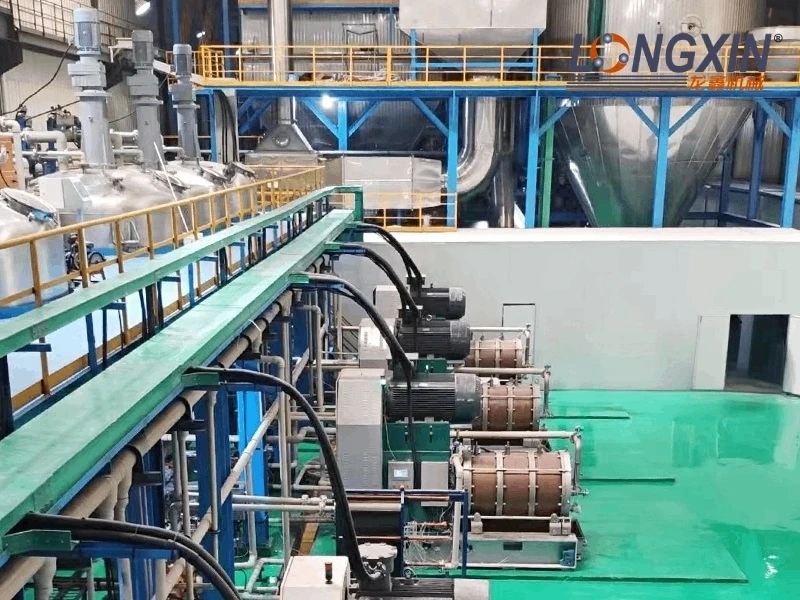
The High-Flow Pin-Type Bead Mill independently developed by Longxin Smart is designed for large-scale grinding and dispersion of lithium-rich manganese-based materials. It achieves a dual breakthrough in precision dispersion and efficient production.
① The equipment uses a distinctive pin-type grinding structure with high-wear-resistant zirconia grinding media. This helps maintain grinding efficiency while reducing the risk of impurity introduction and protecting material purity.
② Its innovative flow-path design increases material throughput by more than 20%, and single-unit capacity can reach 1.5 times that of conventional equipment, meeting large-scale production requirements.
③ An intelligent variable-frequency control system precisely adjusts grinding speed and material flow to control particle size. The material can be dispersed into uniform nanoparticles with a narrow particle-size span (D90/D10), helping ensure microstructural consistency.
④ An integrated cooling system controls grinding temperature in real time, helping prevent lattice damage caused by overheating and preserving the material’s original properties to the greatest extent possible.
Through precision dispersion with this equipment, the ion-transport paths within lithium-rich manganese-based materials are shortened, laying a solid foundation for improved electrochemical performance.
(2) Drying and powder formation: The air-flow spray drying tower addresses two core challenges
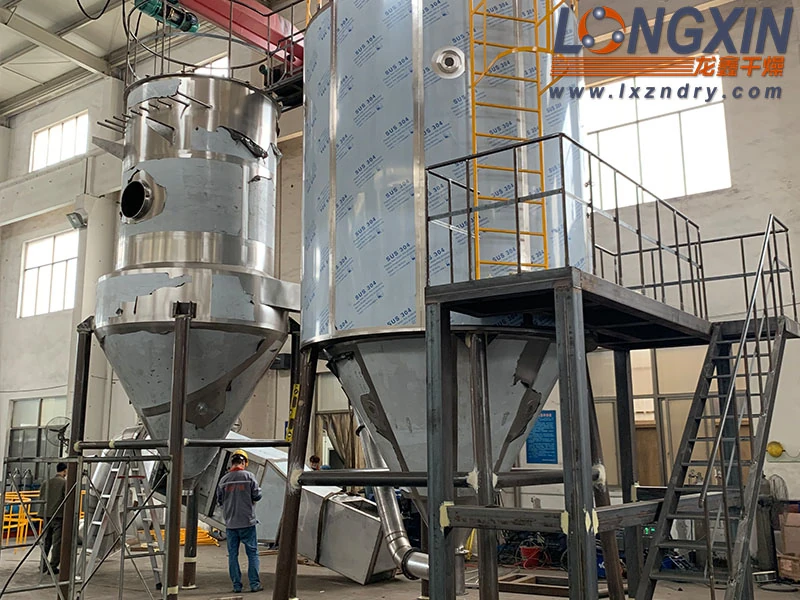
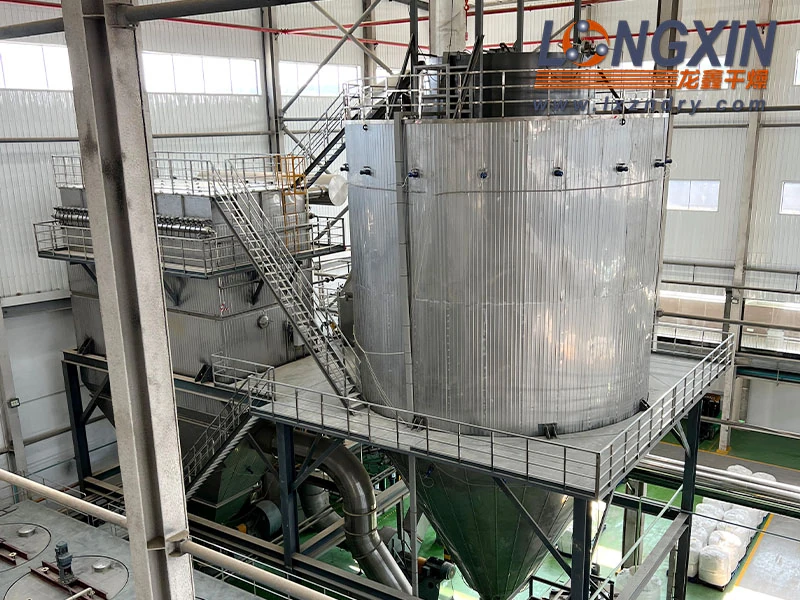
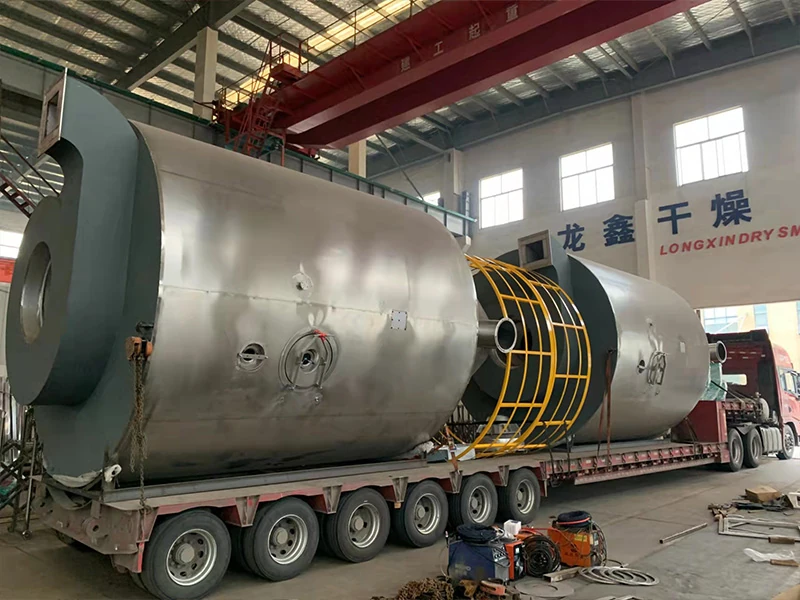
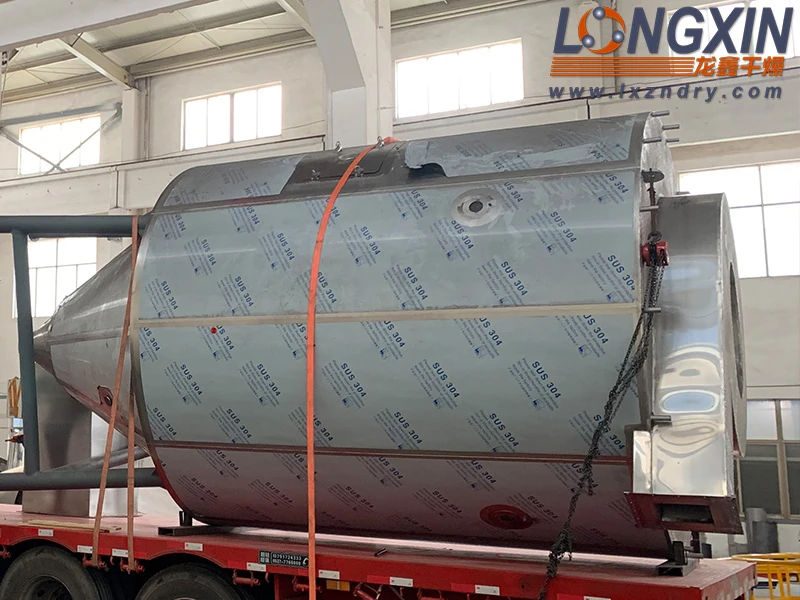
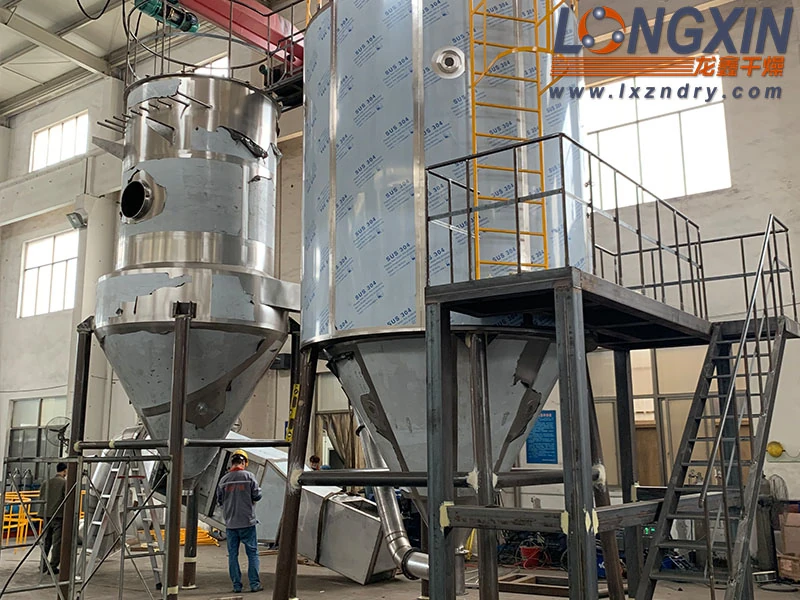
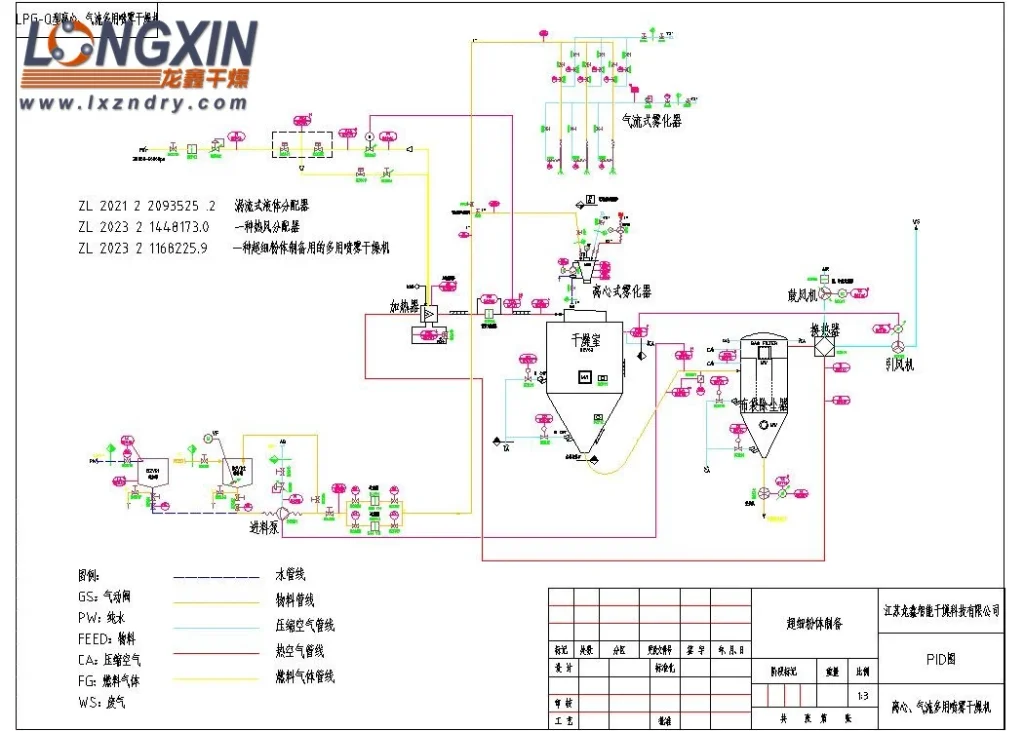
Longxin Smart’s newly upgraded air-flow spray drying tower provides an innovative drying solution for the high viscosity and particle-size control requirements of lithium-rich manganese-based material precursors.
① The system uses three-fluid atomization technology. High-speed airflow impacts the material and disperses high-viscosity precursors into fine droplets. Atomization uniformity significantly exceeds that of conventional two-fluid nozzles, effectively addressing common industry problems such as difficult atomization and severe wall adhesion when processing high-viscosity materials.
② A key advantage of the equipment is its combination of precise temperature control and efficient drying. The closed-loop temperature-control system allows precise adjustment of the inlet-air temperature within 200–300°C and provides outlet-air temperature control accuracy of ±5°C. This enables rapid drying within a short time and helps prevent residual moisture.
③ The drying-chamber structure has been optimized and combined with an adjustable airflow distributor to reduce material adhesion to the walls and improve product yield. The dried product has a uniform spherical morphology and a concentrated particle-size distribution, providing an excellent feedstock for subsequent calcination.
(3) Calcination and coating: The atmosphere-controlled rotary calcination kiln provides a protective “armor” for the material
Longxin Smart’s atmosphere-controlled rotary calcination kiln is designed for staged calcination and surface coating of lithium-rich manganese-based materials, providing an integrated solution for precise calcination and uniform coating.
① High-quality refractory materials and precision heating elements create a uniform, stable temperature field with fluctuations below ±5°C. The system precisely matches the staged process requirements for lithium-rich manganese-based materials, including pre-calcination at 400–500°C and sintering at 650–850°C. The rotary structure tumbles the material thoroughly during calcination, ensuring uniform heating, preventing localized overheating or incomplete reaction, and improving crystal-structure integrity and consistency.
② For atmosphere control, a high-precision gas-flow control system allows flexible adjustment of air, nitrogen, argon, and other atmospheric components to meet the requirements of different calcination stages. This helps suppress the formation of impurity phases and the loss of lattice oxygen.
③ For surface coating, the kiln incorporates an in-situ coating function. By precisely controlling the atomization and distribution of coating agents, it supports the formation of nanoscale uniform coating layers that help block direct contact between the electrolyte and active material, suppress interfacial side reactions and metal-ion dissolution, and provide a protective shell for the material.
In-Depth Look at the Core Equipment: Targeted Solutions to Production Challenges
(1) High-Flow Pin-Type Bead Mill
This equipment is a core innovation developed by Longxin Smart for grinding lithium-rich manganese-based materials and offers three main advantages:
① Efficient dispersion:
A high-kinetic-energy pin grinding system improves grinding efficiency compared with conventional equipment and enables rapid nanoscale dispersion with good uniformity, effectively addressing composition segregation.
② Stable mass-production design:
Large-flow channels and wear-resistant structures help ensure stable continuous operation and long single-run durations, meeting industrial mass-production requirements.
③ Precise intelligent control:
A PLC control system monitors parameters such as grinding temperature, pressure, and flow in real time and supports parameter traceability and automatic adjustment to ensure batch-to-batch consistency.
(2) Air-Flow Spray Drying Tower
As the core equipment for drying and powder formation, the air-flow spray drying tower offers the following technical highlights:
① A three-fluid nozzle enables precise adjustment of atomized particle size within the 5–10 μm range, meeting the morphological requirements of lithium-rich manganese-based material precursors.
② The system provides high drying efficiency. The large contact area between droplets and hot air and the high heat-exchange efficiency substantially shorten drying time while preserving the material’s original characteristics.
③ An energy-saving and environmentally responsible design incorporates a waste-heat recovery system to improve energy utilization. The process generates no wastewater and meets clean-production requirements.
④ Operation is flexible and convenient. Touchscreen one-touch control supports rapid adjustment of process parameters according to material properties, accommodating different formulation requirements.
(3) Atmosphere-Controlled Rotary Calcination Kiln
The core competitive advantages of this equipment include:
① Precise temperature control:
Multistage heating and intelligent temperature-control algorithms provide precise control of heating rates and holding temperatures, meeting the demanding requirements of staged calcination for lithium-rich manganese-based materials.
② Uniform calcination:
The inclination angle and rotational speed of the rotary cylinder are adjustable, ensuring thorough material mixing and uniform heating while improving crystal-structure stability.
③ Precise atmosphere control:
High-precision gas sensors and flow controllers provide atmosphere-concentration control accuracy of ±1%, effectively suppressing material oxidation and impurity-phase formation.
④ Integrated design:
By integrating calcination and coating in a single system, the equipment simplifies the production process and reduces capital-equipment costs while helping ensure coating uniformity and adhesion.
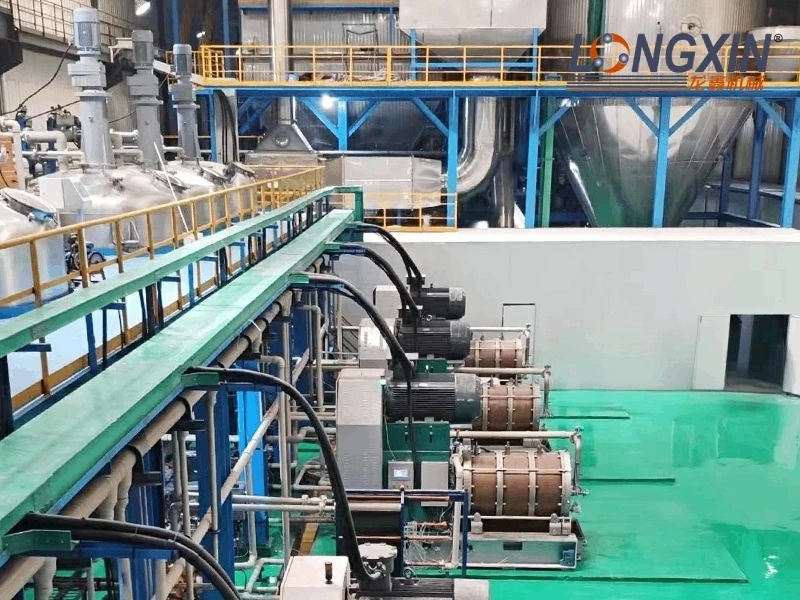
Longxin’s Newly Upgraded Air-Flow Spray Drying Tower: Multiple Advantages Drive Drying Innovation
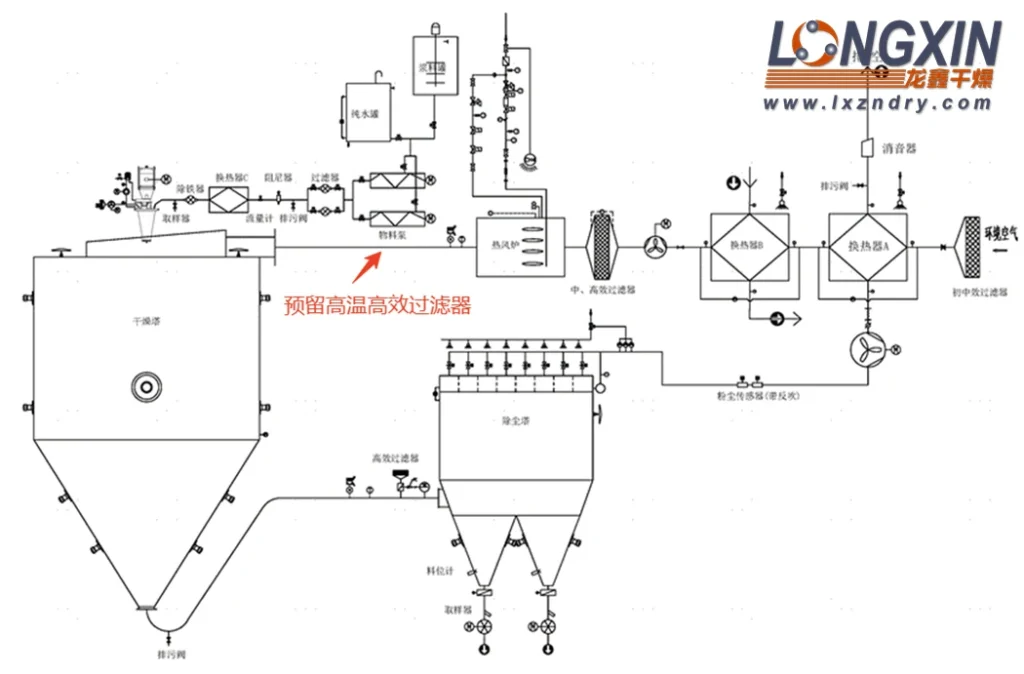
Longxin Smart’s newly upgraded air-flow spray drying tower offers significant technical advantages in the drying and powder-formation stage for lithium-rich manganese-based materials and has become a key system for supporting industrial-scale production.
(1) Outstanding drying capacity
The system uses co-current drying, in which hot air and droplets flow in the same direction to achieve rapid heat and mass transfer. Moisture evaporation can be completed within 10–30 seconds, improving drying efficiency compared with conventional equipment and substantially shortening production cycles. To address the high viscosity of lithium-rich manganese-based material precursors, the atomization system and airflow field have been optimized. The high-speed airflow generated by the three-fluid nozzle effectively breaks up high-viscosity materials to form uniform droplets, overcoming problems such as uneven atomization and severe wall adhesion in conventional equipment and improving product yield.
(2) Precise product-quality control
By precisely adjusting inlet-air temperature, outlet-air temperature, and feed rate, the system can control product particle size, bulk density, and moisture content. This helps ensure a concentrated particle-size distribution and a moisture content below 3%, meeting the requirements of subsequent calcination. The drying process is also gentle, helping preserve the material’s original properties and prevent structural damage caused by high temperatures or overdrying, thereby supporting electrochemical performance.
(3) Advanced energy efficiency, environmental performance, and intelligence
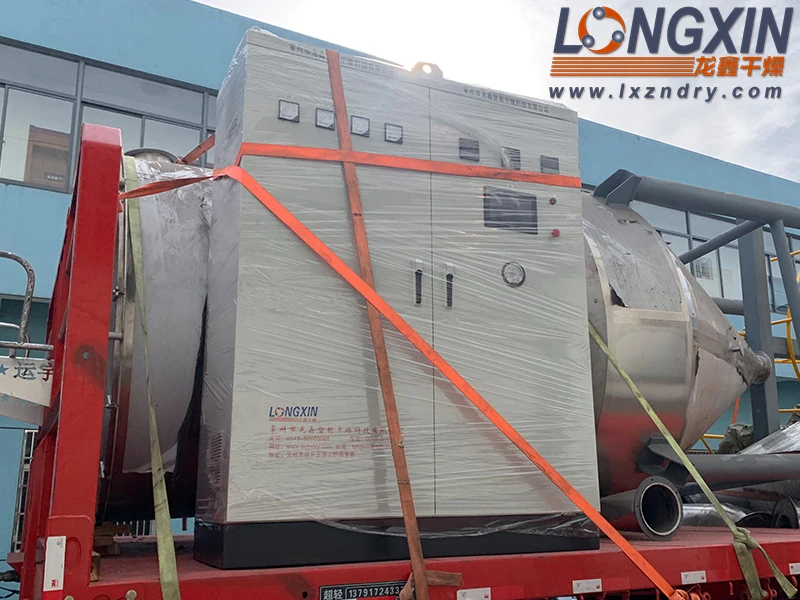
High-efficiency insulation materials and a waste-heat recovery system reduce energy consumption. The process generates no wastewater or solid waste, aligning with green-production principles. An advanced automation system provides real-time monitoring and automatic adjustment of inlet-air temperature, outlet-air temperature, feed rate, fan frequency, and other parameters, with data logging and traceability to facilitate quality control and process optimization. In addition, the equipment has a rational structural design and nozzles that are easy to disassemble, reducing maintenance costs and overall operating costs.
(4) Broad applicability
In addition to lithium-rich manganese-based cathode materials, the equipment can be adapted to dry solid-state battery materials, ternary cathode materials, ultra-high-specific-energy cathode materials, and other new energy materials, providing flexible solutions for the industrialization of different materials.
Focusing on Mass Production: An End-to-End Solution for Industrial Transformation
When process development for ultra-high-specific-energy cathode materials meets the challenges of delivery and quality, the answer is not a single piece of equipment—it is a one-stop solution spanning research and development through mass production.
From formulation sampling and process validation to large-scale production, Longxin supports customers working with solid-state battery materials, ternary cathode materials, ultra-high-specific-energy cathode materials, lithium-rich manganese-based oxide materials, and lithium-rich manganese-based cathode materials through an integrated equipment, process, automation, and service capability. This helps customers make an efficient transition from laboratory development to factory production.
(1) From process validation to mass production: Full-process technical support
Longxin Smart has established a comprehensive process-development and testing platform based on its engineering and industrialization test base for micro- and nanomaterial preparation. For lithium-rich manganese-based material customers, the company provides full-process support ranging from equipment selection and process-parameter optimization to engineering-solution design. Customers can conduct laboratory and pilot-scale validation at the test base, optimize formulations and process parameters using extensive experimental data, and then receive a customized mass-production line solution from Longxin Smart to ensure a seamless transition from laboratory to factory.
The company also has a professional engineering team that provides on-site installation, commissioning, and process guidance, helping customers rapidly achieve stable mass production.
(2) Integrated automation and data systems: Precise production-process control
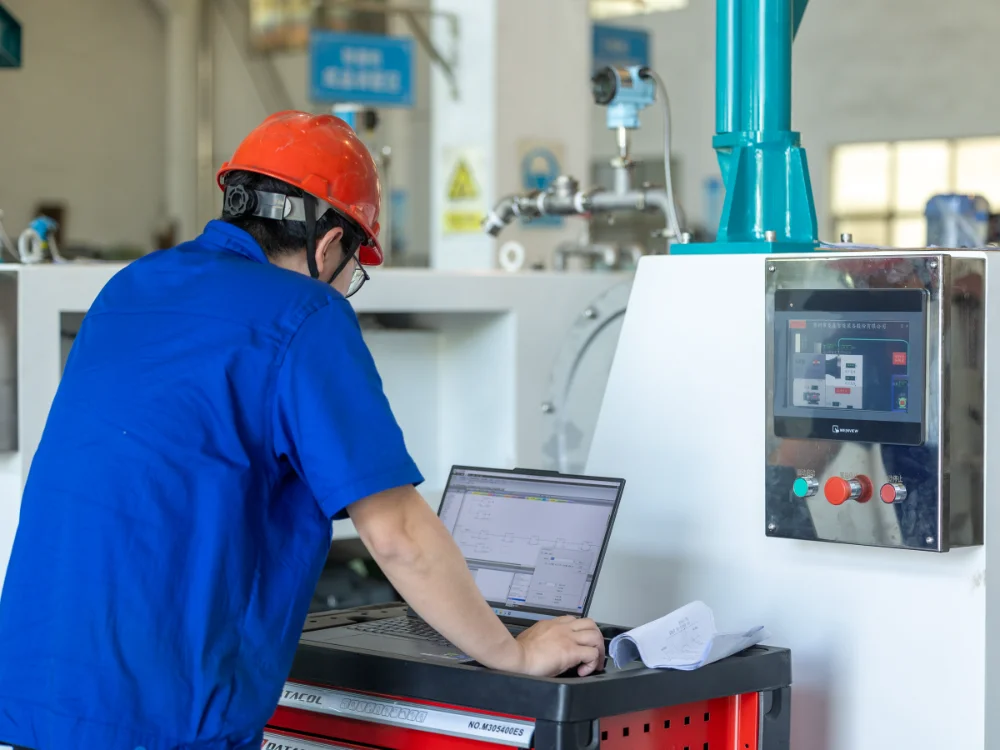
All Longxin Smart full-process equipment incorporates advanced automation and digital systems covering safety interlocks, process monitoring, and data traceability. During production, the equipment collects key parameters such as temperature, pressure, flow, and particle-size distribution in real time, enabling full-process visual management through a digital platform.
Big-data analysis and AI algorithms can monitor processes in real time, provide early warnings, and adjust process parameters promptly to ensure product stability and consistency. Data traceability also helps customers meet production-process compliance requirements and provides strong support for quality control.
(3) Full-lifecycle service: Supporting long-term stable operation
Longxin Smart follows a customer-first service philosophy and provides full-lifecycle support. After equipment delivery, the company provides professional installation and production-startup support to ensure rapid commissioning. Operators receive training to help them master equipment operation and maintenance skills. A comprehensive spare-parts supply system provides timely access to high-quality spare parts and maintenance services to reduce equipment downtime. The company also offers equipment upgrades and refurbishment based on customers’ process-upgrade requirements, helping extend service life and continuously optimize total operating costs. A 24-hour technical service hotline is also available to respond promptly to customer inquiries and feedback.
At this critical stage in the new energy industry’s transition toward higher energy density, greater safety, and lower resource dependence, the industrialization of lithium-rich manganese-based cathode materials is of milestone significance. Centering on technological innovation, Longxin Smart has established a full-process equipment portfolio covering grinding, drying, and calcination, directly addressing core production challenges and providing an efficient, precise, and stable solution for commercial-scale production.
In the future, Longxin Smart will continue to deepen its work in new energy material equipment, continually upgrade its products and services, and work alongside industry customers to advance the industrialization of lithium-rich manganese-based materials, solid-state battery materials, and other high-end new energy materials. These efforts are intended to help China strengthen its leadership in the global high-end battery materials sector and provide strong momentum for the development of new quality productive forces.