Sodium-Ion Battery Mass Production Ignites the Polyanion Cathode Material Race
In January 2026, CATL officially launched a new sodium-ion battery designed for volume production, marking a new stage in the commercialization of sodium-ion battery technology. With the launch of the low-temperature edition of its “Tianxing II Light Commercial” sodium-ion battery, sodium-ion batteries can retain more than 92% of their available capacity at −20°C, addressing the range loss experienced by new-energy vehicles in cold regions. Volume production is scheduled for July 2026. The large-scale deployment of sodium-ion batteries not only provides low-cost, high-safety energy solutions for energy storage, light commercial vehicles and passenger vehicles, but also accelerates technological competition and capacity expansion in the upstream cathode material sector. Among the three major sodium-ion cathode material systems—layered oxides, Prussian blue analogues and polyanionic compounds—polyanionic materials are becoming a focal point for industrialization due to their stable structures, high safety and long cycle life. Sodium vanadium fluorophosphate (Na₃V₂(PO₄)₂F₃, NVPF), a representative polyanionic cathode material, demonstrates strong commercialization potential.
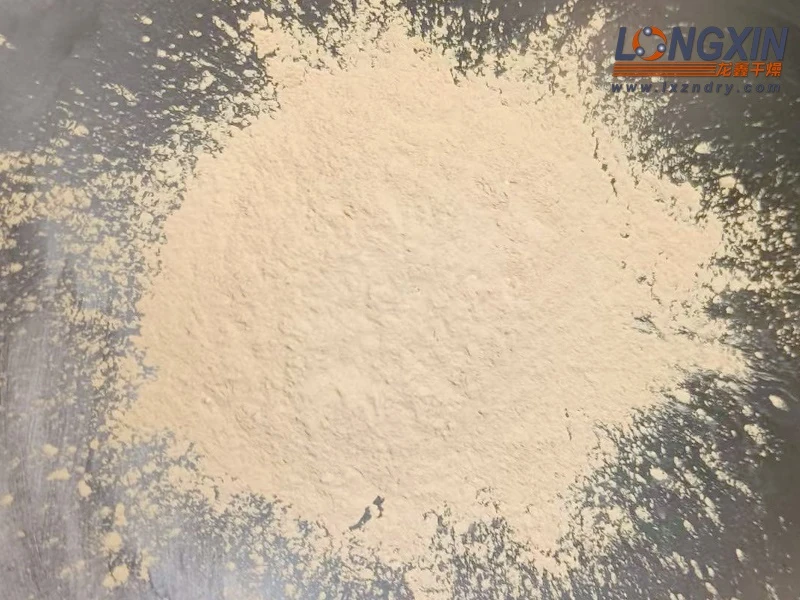
Market Demand and Development Trends for the NVPF Polyanion Cathode Material
As China’s dual-carbon strategy advances and the energy storage and electric vehicle industries grow rapidly, battery materials must meet increasingly stringent requirements for cost, resource sustainability and safety. Sodium resources are abundant and widely distributed, with lower costs than lithium, making sodium-ion batteries a strong complement and alternative to lithium-ion batteries. Among cathode materials, polyanionic compounds have attracted significant attention because of their stable three-dimensional framework structures, high operating voltages and excellent thermal stability.
As a NASICON-type polyanionic compound, NVPF features open sodium-ion diffusion channels, an average operating voltage of 3.8 V and a theoretical energy density of 507 Wh/kg, approaching the level of commercial LFP. Its distinctive core–shell microsphere structure combines nanoscale ion-transport pathways with micron-scale overall dimensions that support high compaction density, improving volumetric energy density while maintaining strong rate performance and cycling stability. As sodium-ion battery capacity is gradually released by companies including CATL, HiNa Battery and Natrium New Energy, demand for NVPF as a high-performance cathode material is expected to grow rapidly.
Existing Production Processes and Challenges
Current NVPF preparation methods mainly include solid-state reaction, sol–gel synthesis, hydrothermal synthesis and spray drying. The conventional solid-state process is simple, but it produces materials with poor homogeneity and broad particle-size distributions. Sol–gel synthesis achieves molecular-level mixing, but involves complex procedures, long processing cycles and limited scalability. Hydrothermal synthesis can produce nanoscale particles, but requires specialized equipment, precise process control and relatively high costs.
As industrialization advances, NVPF production continues to face four core challenges:
- Severe fluorine loss: Fluorine tends to volatilize during high-temperature sintering, producing impurity phases and reducing material voltage and cycling stability.
- Poor electrical conductivity: The phosphate framework is intrinsically insulating, limiting rate performance.
- Difficult morphology control: Conventional processes struggle to produce a uniform nano/micro composite structure, affecting both compaction density and electrochemical performance.
- Low batch consistency: Significant process fluctuations lead to poor reproducibility, making it difficult to meet automotive-grade quality requirements.
Intelligent NVPF Grinding, Drying and Calcination Production Line
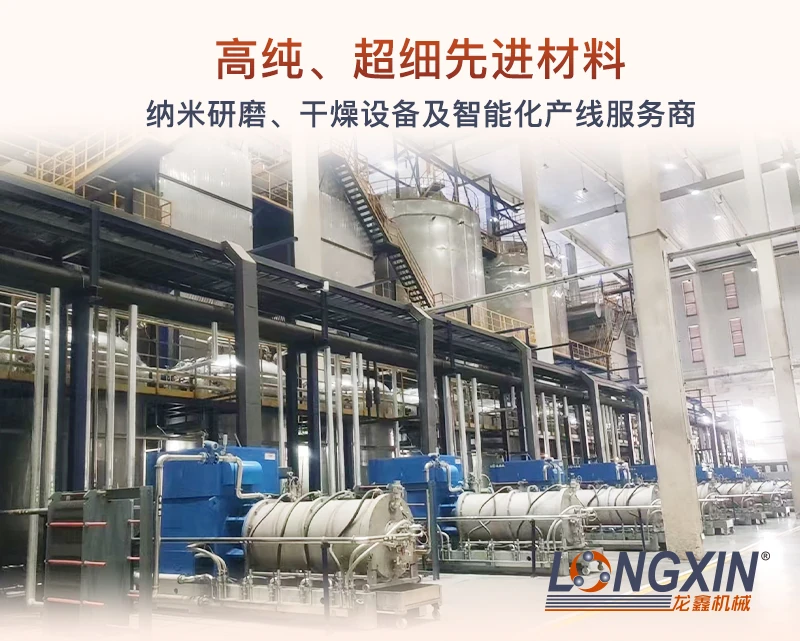
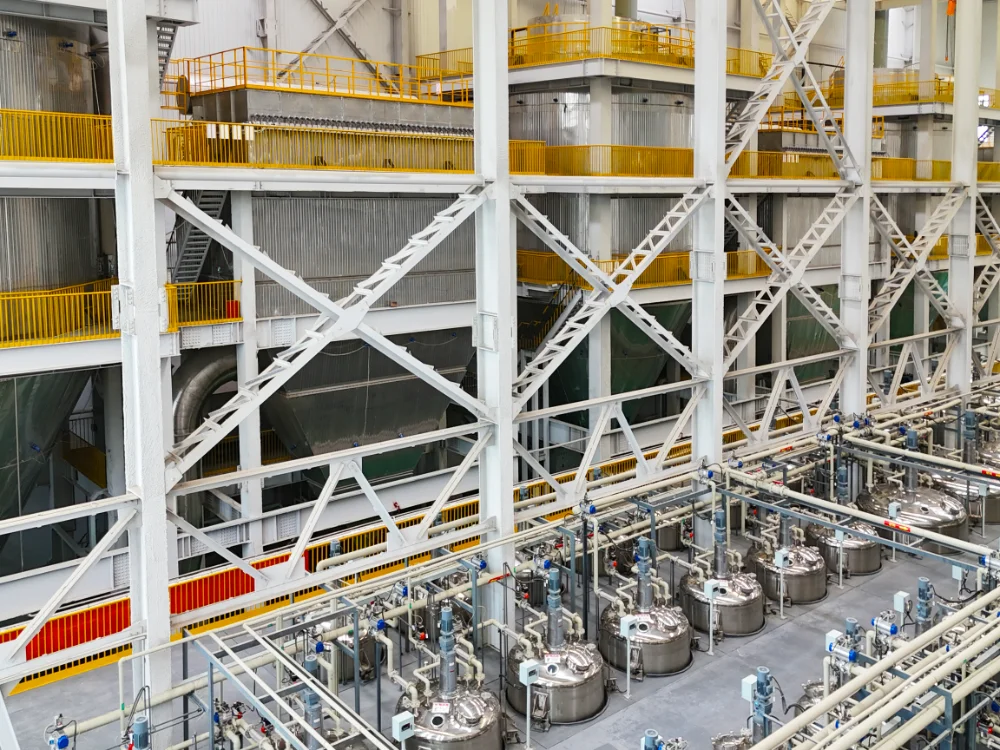
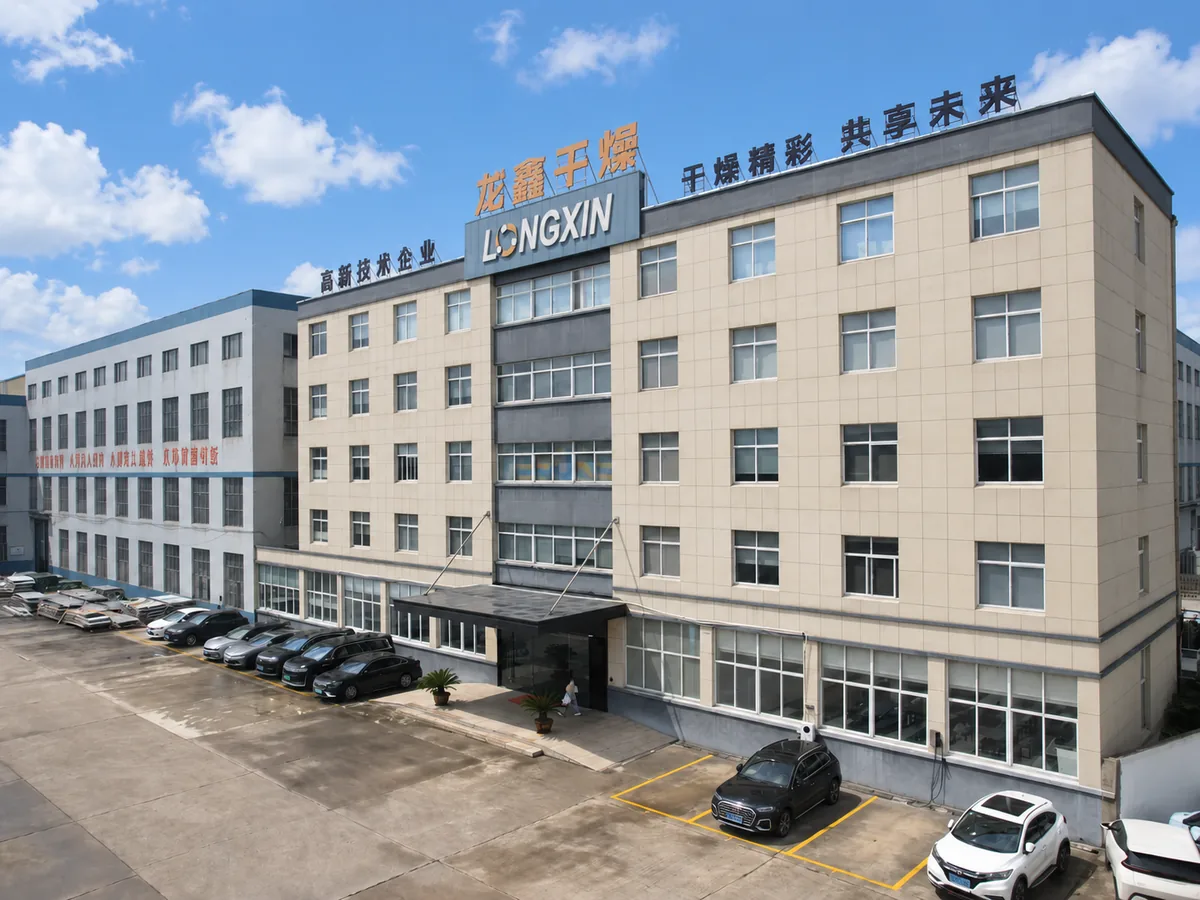
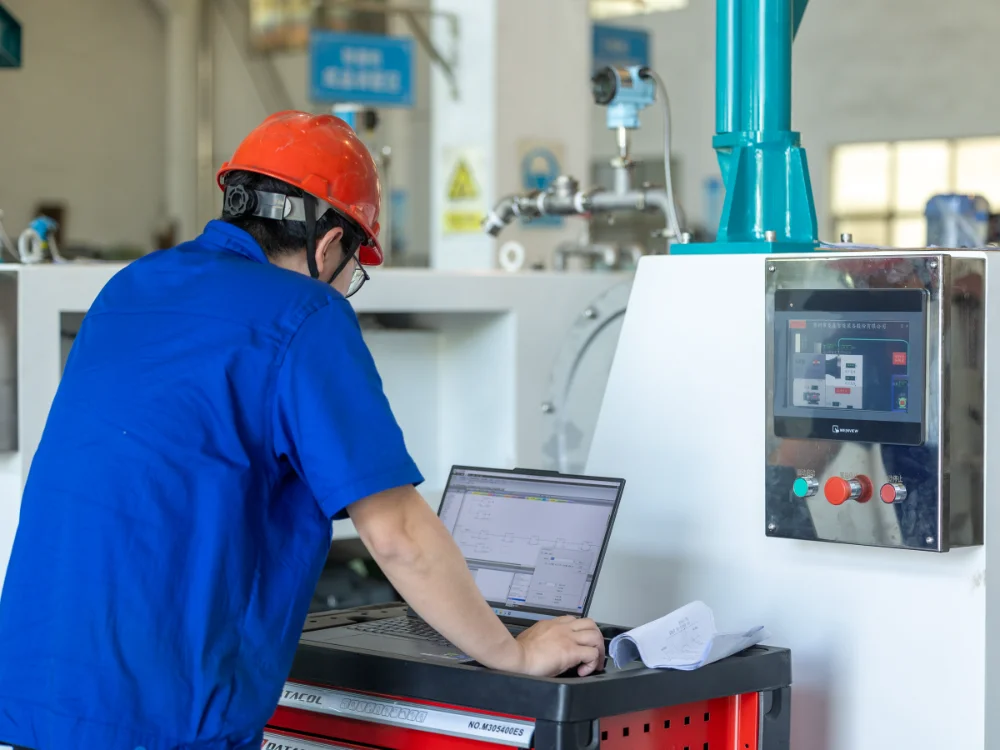
To address these industry challenges, Longxin Smart has leveraged its extensive experience in new-energy material equipment to develop an intelligent NVPF grinding, drying and calcination production line. By integrating wet nano-grinding, pneumatic spray drying and atmosphere-protected calcination, the line enables integrated, automated and intelligent production from raw materials to finished cathode material, providing a complete solution for scalable, high-performance NVPF manufacturing.
1. WSP High-Flow Nano-Bead Mill: Wet Nanoscale Dispersion and Mixing
Using an efficient wet-grinding process, carbon sources such as oxalic acid and citric acid, phosphorus sources such as ammonium dihydrogen phosphate, sodium sources such as sodium carbonate, and vanadium sources such as vanadium pentoxide are dispersed and mixed at the nanoscale in deionized water. By controlling milling time, grinding-media size and rotational speed, the system achieves uniform particle refinement and surface activation, promotes vanadium reduction and complexation reactions, and produces a highly homogeneous precursor slurry for spray drying and high-temperature sintering.
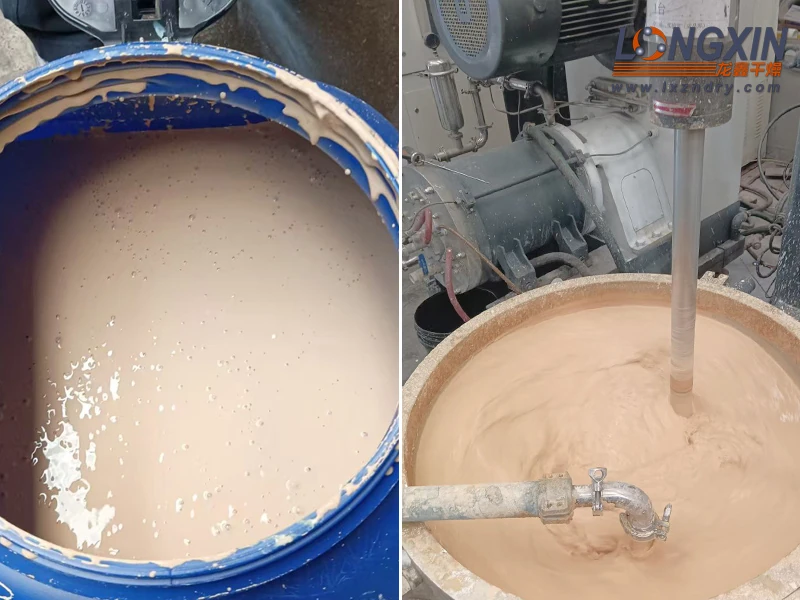
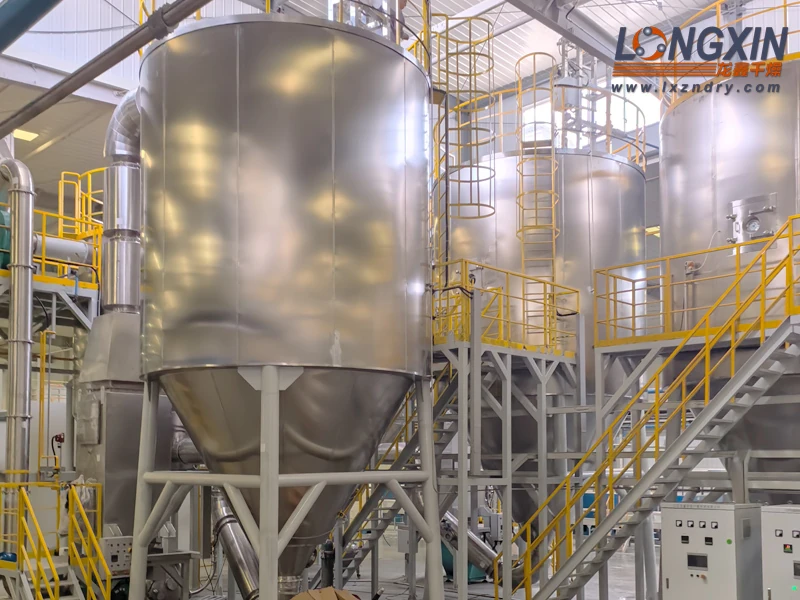
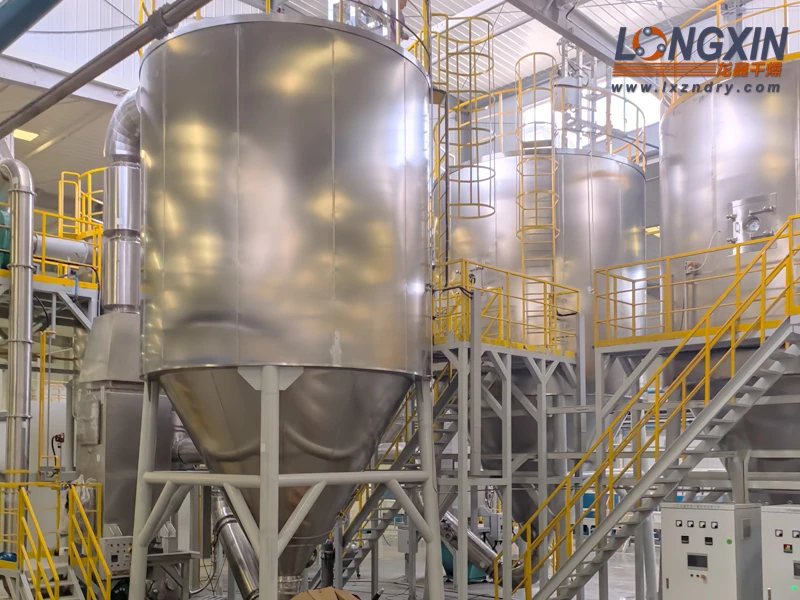
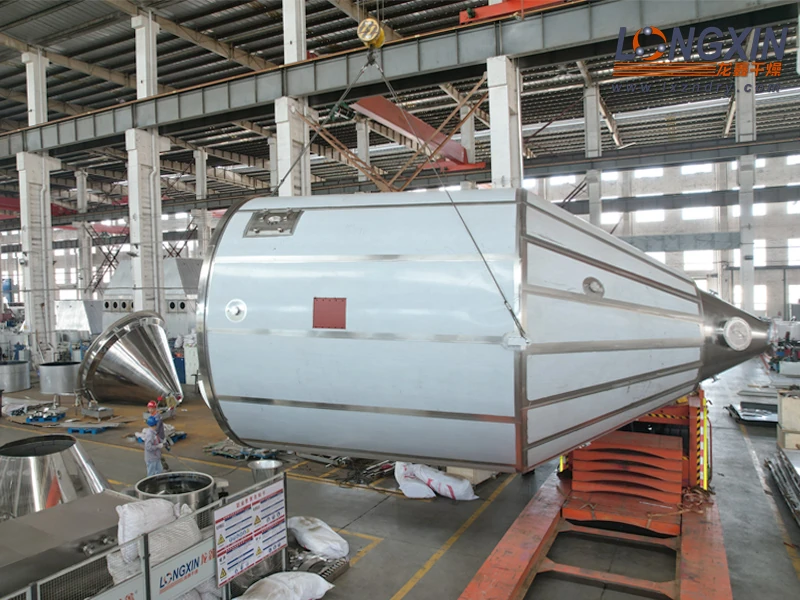
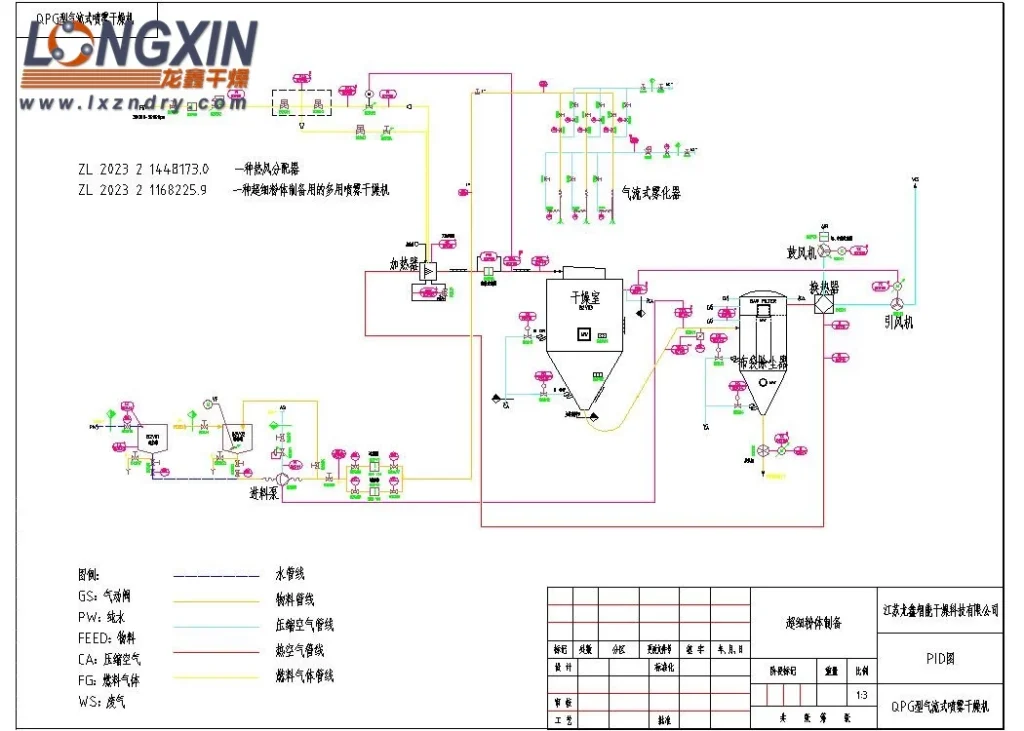
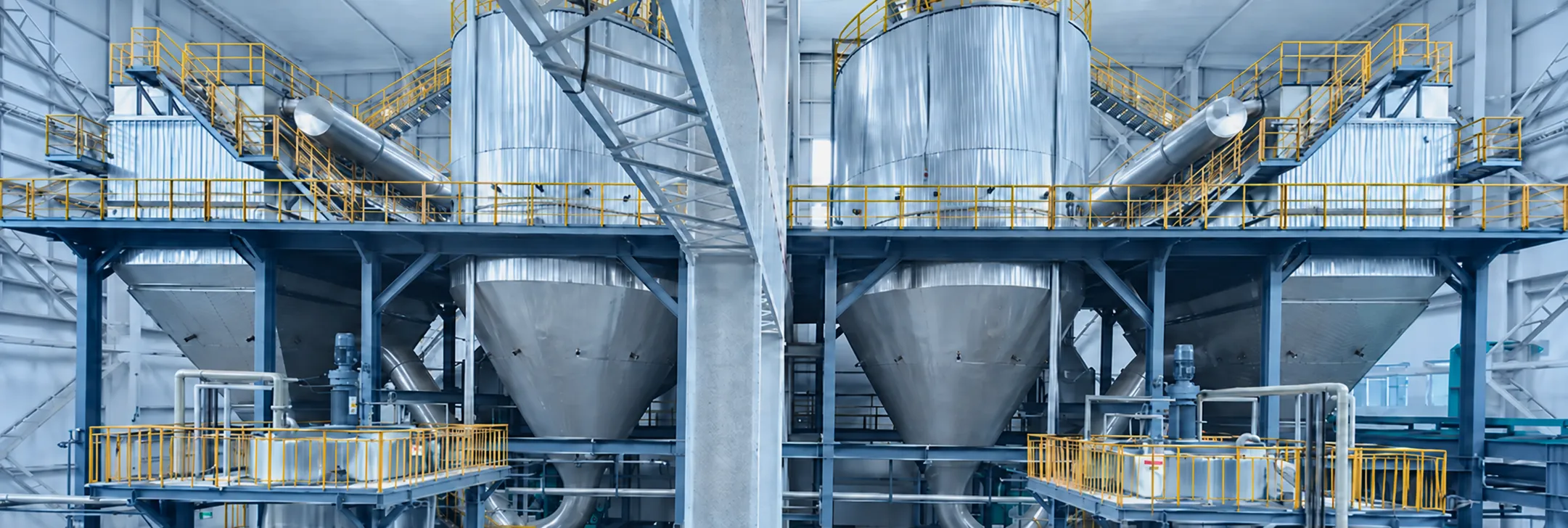
2. Pneumatic Spray Dryer: Engineering a Micro-Nano Structure
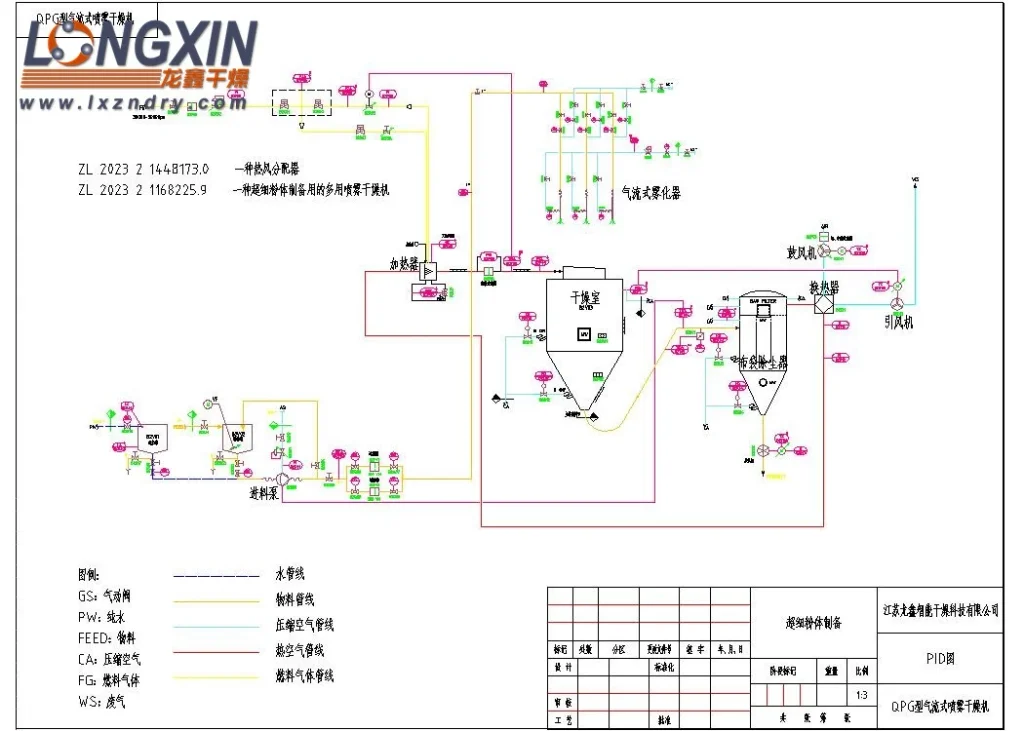
The precursor slurry is atomized at high speed into a drying tower, where it comes into immediate contact with hot air for rapid drying and granulation. Precise control of outlet air temperature (110–130°C), feed rate, atomization pressure and other parameters enables the production of hollow microspheres with a uniform particle size and controllable shell thickness. This structure combines a nanoscale shell—which shortens ion-diffusion pathways—with a micron-scale overall diameter that supports high compaction density, optimizing both tap density and electrochemical activity.
3. Atmosphere-Protected Rotary Calcination Kiln: Precise Fluorine Control and Carbon Coating
The process uses dynamic rotary calcination under an inert nitrogen or argon atmosphere. Precursor powder is uniformly mixed with a fluorine source such as PTFE or PVDF and then calcined under a programmed temperature profile between 450 and 700°C. The rotary design ensures uniform heating and complete reaction, effectively suppressing fluorine loss and promoting stable fluorine incorporation. At the same time, the organofluorine source decomposes at high temperature to form a uniform carbon coating, improving the material’s electronic conductivity, rate performance and cycling stability.
Performance Advantages: Micro-Nano Structure, High Compaction Density and High Consistency
NVPF cathode materials produced on Longxin Smart’s production line offer the following advantages:
- Optimized structure: Uniform micron-sized core–shell microspheres combine short ion-diffusion pathways with high compaction density.
- Strong electrochemical performance: The material delivers high initial discharge capacity at 1 C and stable performance at 10 C, supporting excellent rate capability.
- Precise fluorine control: Effective suppression of impurity phases improves material purity and cycling stability.
- High consistency: Full-process automated control and traceable process parameters minimize batch-to-batch variation and support large-scale production.
- Controllable costs: High raw-material utilization and optimized energy consumption deliver favorable economic performance.
Technical Breakthroughs in Longxin Smart’s New-Generation Pneumatic Spray Dryer
Building on conventional spray drying, Longxin Smart’s new-generation system integrates intelligent temperature control, multi-stage atomization modules and inline particle-size monitoring to achieve the following improvements:
- Greater drying uniformity: Optimized airflow distribution prevents localized overheating and incomplete drying.
- Precisely controlled particle-size distribution: Particle sizes can be customized from the submicron range to several tens of microns.
- Lower energy consumption: An integrated heat-recovery system improves energy efficiency.
- Integrated automation: The dryer connects seamlessly with upstream and downstream equipment for intelligent full-line production.
Overcoming Industry Bottlenecks: Advancing Polyanion Cathode Material Innovation and Industrialization
Longxin Smart’s production line supports not only NVPF but can also be extended to other polyanionic cathode materials, including sodium iron pyrophosphate, composite sodium iron phosphate and sodium iron sulfate. The integrated grinding–drying–calcination design creates a closed process chain, significantly shortening production cycles, improving product consistency and reducing overall costs.
As sodium-ion battery industrialization accelerates, polyanionic cathode materials will play an important role in energy storage, light electric vehicles and base-station backup power. Longxin Smart advances materials through equipment innovation and supports high-quality industry development through intelligent production lines, strengthening the international competitiveness of China’s sodium-ion battery industry.