Nitrogen Closed-Loop, Explosion-Protected, and Solvent-Recovery Integration: Solving Safe Drying Trials for Organic-Solvent-Containing Materials
In recent years, industries such as battery materials, precision ceramics, 5G and semiconductor materials, polymers, cemented carbide, and active pharmaceutical ingredients (APIs) have established common requirements for powder materials, including high purity, oxidation-free processing, and controllable particle size. The BLPG-5 laboratory closed-loop spray dryer plays an important role in small-batch process validation, formulation development, and pre-scale-up research. It helps shorten development cycles, reduce scale-up risks, and provide reproducible data for commercial production.
Core Challenges and Technology Evolution in Closed-Loop Spray Drying
Materials dispersed in organic solvents such as ethanol, acetone, cyclohexane, and toluene generally present three major technical challenges during drying:
(1) Most organic solvents are flammable and explosive, and some are toxic. Their use in a high-temperature hot-air environment creates fire and explosion hazards as well as occupational health risks.
(2) Active ingredients may react with oxygen during drying, causing oxidation, discoloration, or degradation and directly affecting product quality.
(3) If solvent vapor is released without recovery, it results in material loss and environmental pollution.
Conventional open spray dryers use hot air as the heat-transfer medium. The air is discharged to the atmosphere after a single pass and cannot be recirculated. This configuration is suitable only for materials with relatively high moisture content and for non-toxic, odorless exhaust gases. It is not adequate for drying organic-solvent-containing, oxidation-sensitive, flammable, or explosive materials.
Against this background, drying technology is evolving from open, negative-pressure systems to closed-loop, positive-pressure systems. Closed-loop systems use inert gases such as nitrogen, carbon dioxide, or argon as the drying medium. The medium circulates within a sealed circuit, absorbing and releasing moisture before being reused. This prevents contact between the material and oxygen while enabling medium recirculation. As an optimized upgrade to conventional spray drying technology, the closed-loop spray dryer provides a practical path for the safe and environmentally responsible drying of organic-solvent-containing materials.
Market Demand for the BLPG-5 Laboratory Closed-Loop Spray Dryer
In recent years, industries such as battery materials, precision ceramics, 5G and semiconductor materials, polymers, cemented carbide, and APIs have imposed common requirements on powder materials, including high purity, oxidation-free processing, and controllable particle size. Production processes in these industries commonly involve organic-solvent-containing slurries, and their drying operations place significantly higher demands on system safety, product purity, and solvent recovery than general-purpose drying equipment.
For these companies, laboratory- and pilot-scale closed-loop spray dryers perform an essential function in small-batch process validation, formulation development, and pre-scale-up research. Before volume production, small-scale equipment can be used to verify the relationships among atomization parameters, inlet and outlet air temperatures, and product particle size. This helps shorten development cycles, reduce scale-up risks, and provide reproducible data for commercial production.
At the same time, environmental and safety regulations are becoming increasingly stringent. Solvent recovery, dust-free operation, and explosion protection have become mandatory requirements in many industries. Operating under fully enclosed, positive-pressure conditions, closed-loop systems combine solvent recovery with explosion protection. This aligns with regulatory and safety priorities and creates expanding market opportunities for these systems.
Working Principle of the BLPG-5 Laboratory Closed-Loop Spray Dryer
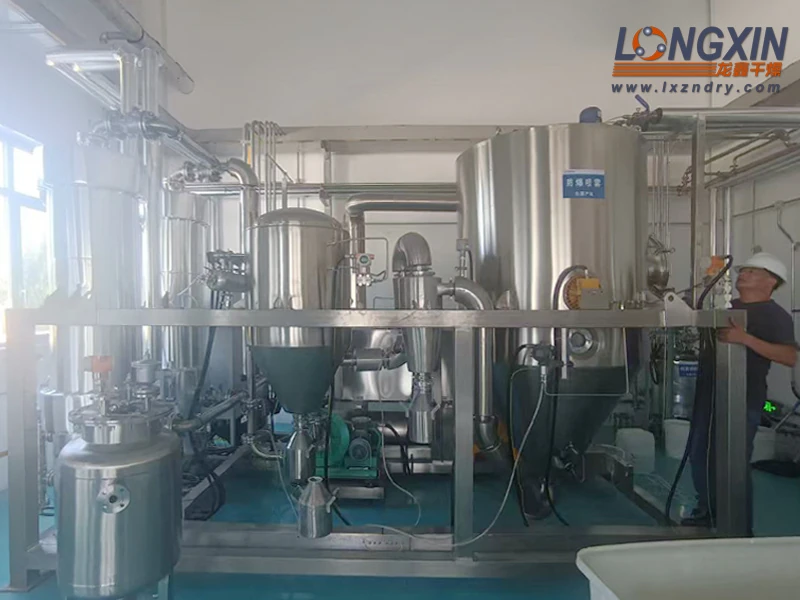
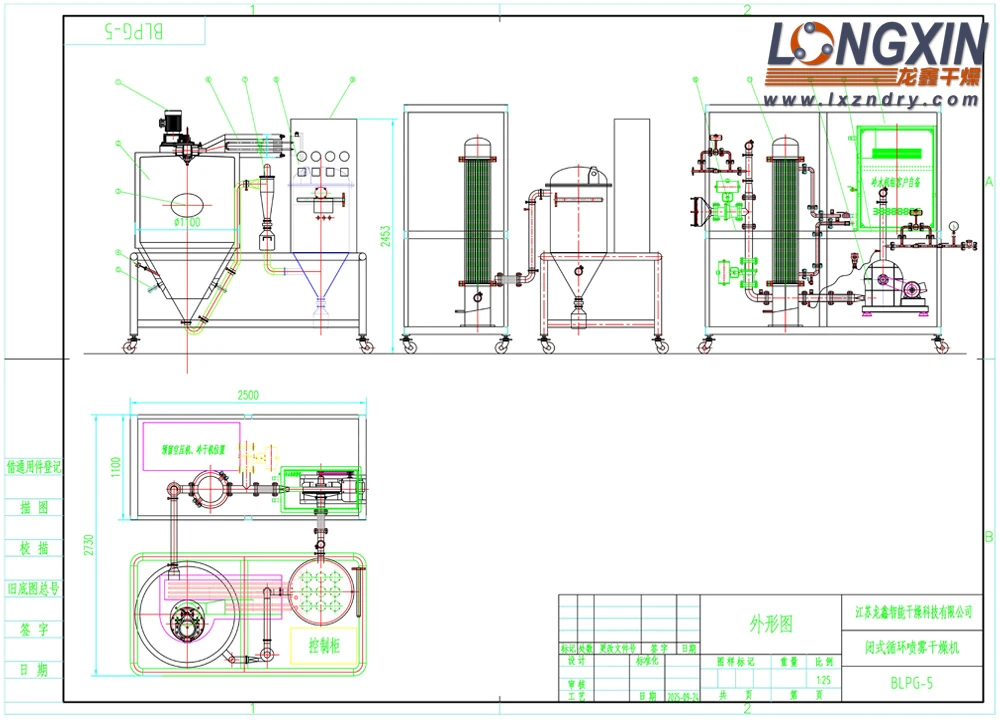
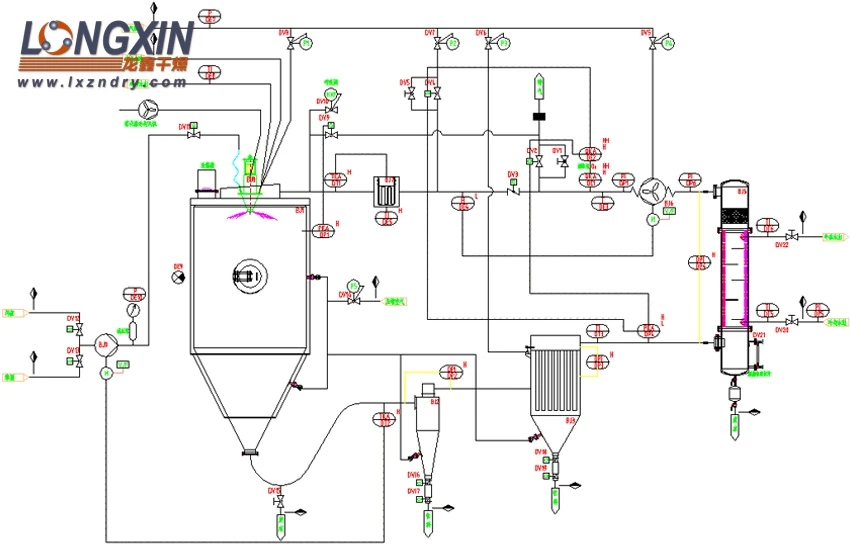
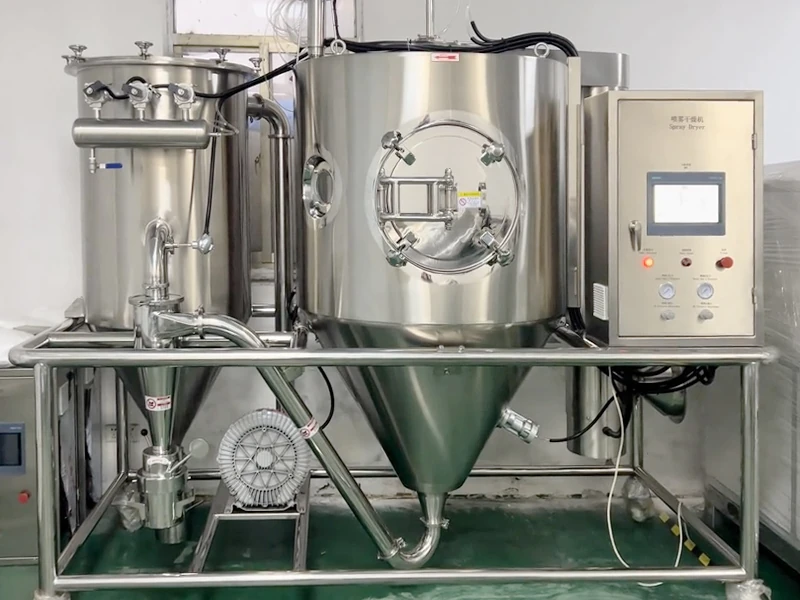
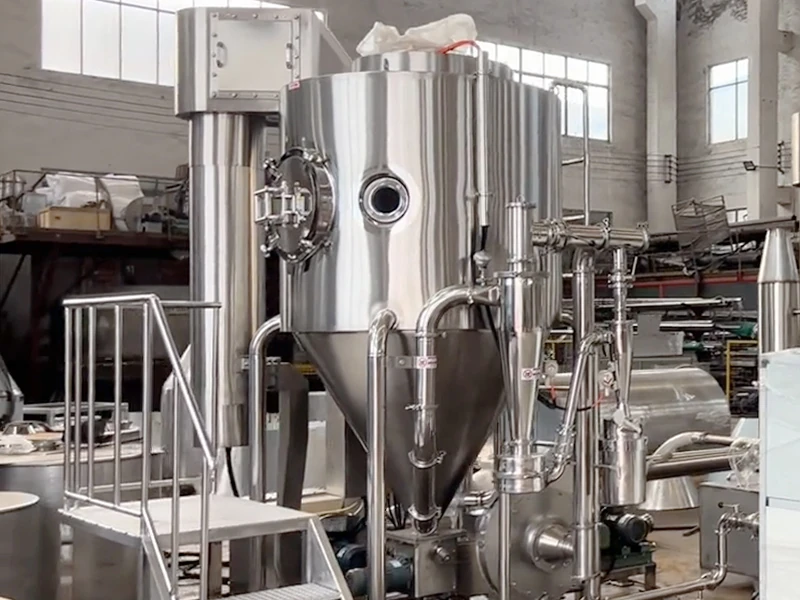
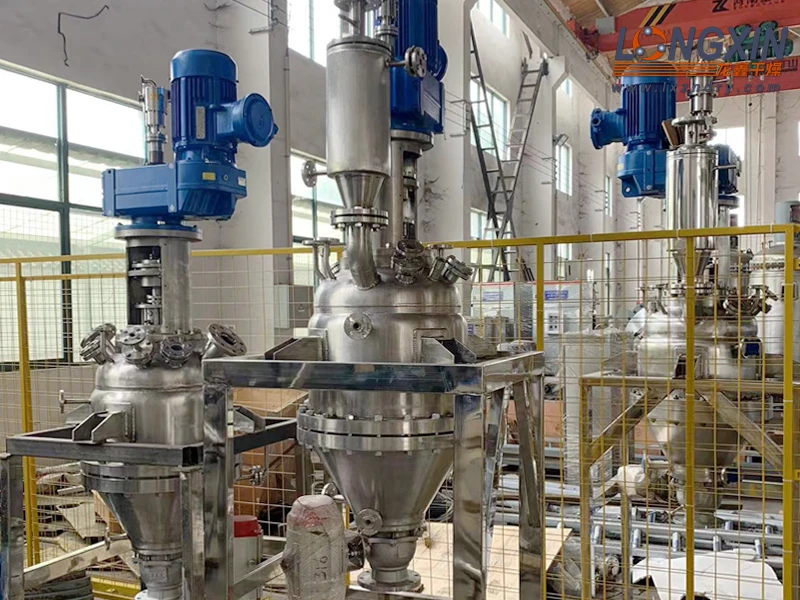
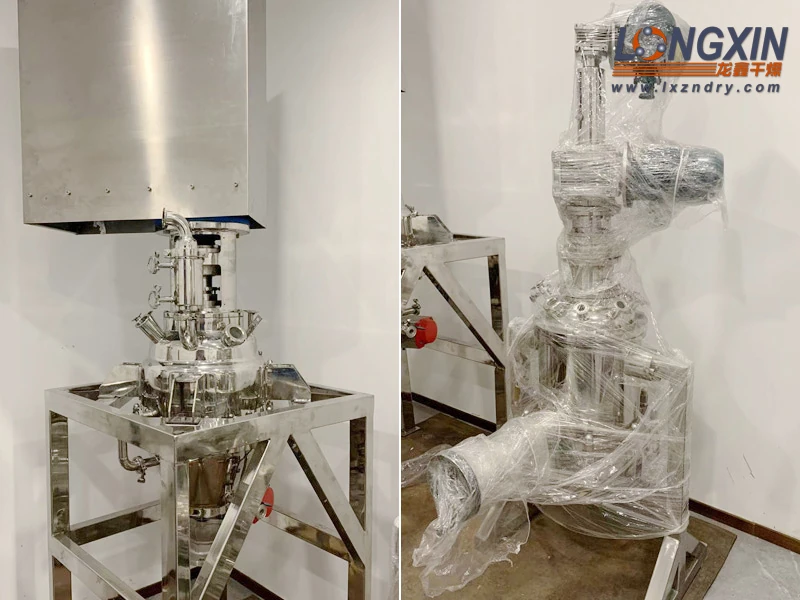
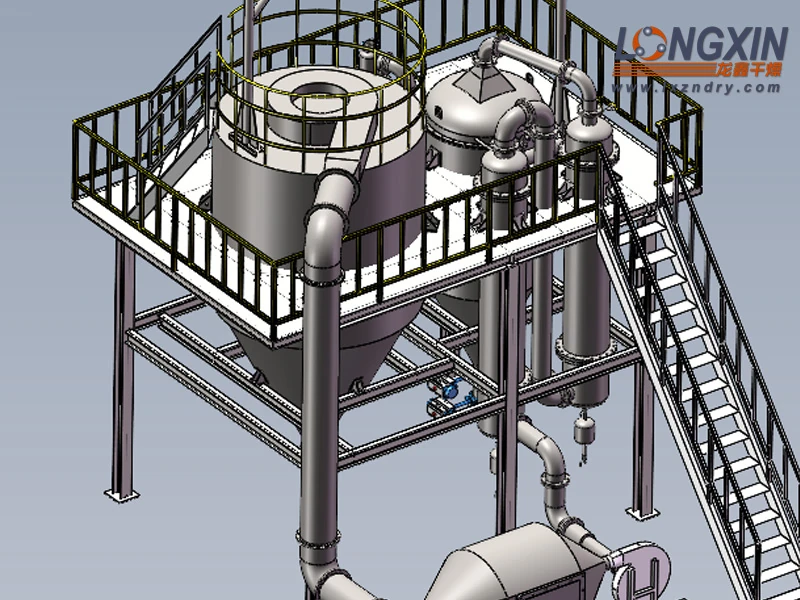
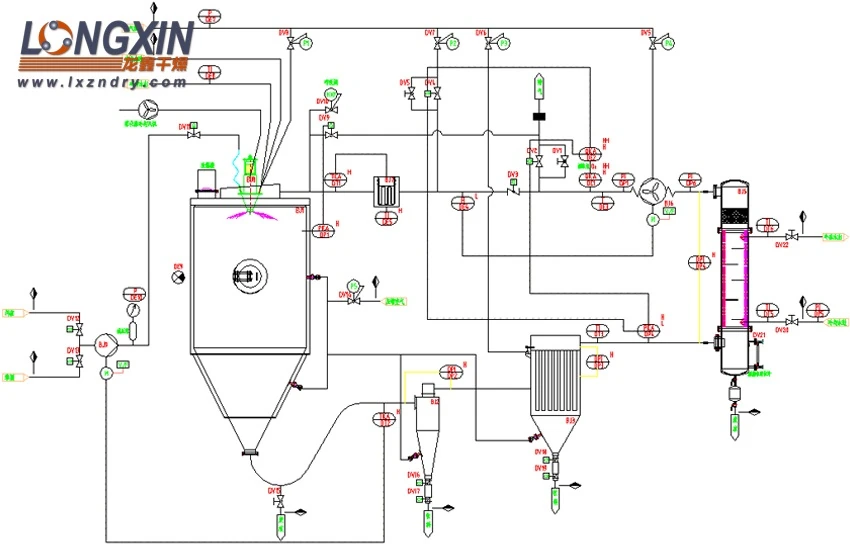
The BLPG-5 laboratory closed-loop spray dryer combines spray drying with fluidized drying. A micro screw pump with variable-frequency speed control delivers the liquid slurry at a stable rate to a high-speed centrifugal atomizer, where the slurry is dispersed into fine droplets by centrifugal force and sprayed into the drying chamber. The droplets contact heated nitrogen and transfer heat efficiently, causing the solvent to evaporate rapidly. The dried powder settles at the bottom of the tower and is discharged.
Driven by the circulation fan, the exhaust gas passes through a cyclone separator and a pulse-jet bag filter, where gas–solid separation and dual-point powder collection are completed. Saturated organic-solvent vapor then enters a condenser, where it is liquefied, discharged, and recovered. The non-condensable inert gas is heated and returned to the drying system as the drying medium, completing a fully enclosed circulation loop.
The system operates under positive pressure. The drying chamber pressure is maintained at approximately +1,000 Pa when empty and between +1,000 Pa and +3,000 Pa under load. When system pressure drops, a pressure transmitter automatically controls nitrogen make-up to maintain pressure balance. An online oxygen analyzer is also provided to control the oxygen concentration in the drying chamber at ≤3 vol%, helping ensure safe drying of flammable and explosive materials.
Performance Features of the BLPG-5 Laboratory Closed-Loop Spray Dryer
(1) High product purity and oxidation protection
The system uses inert gas such as nitrogen as the drying medium, preventing the material from contacting oxygen throughout the process. This helps avoid oxidation, discoloration, and degradation while protecting product purity. The equipment can be used for precision ceramics, pharmaceuticals, battery materials, and other applications with stringent quality requirements.
(2) High solvent recovery and product yield
Solvent recovery is ≥95%, dry-powder recovery is ≥95%, and residual solvent in the product is ≤2%. These capabilities help reduce material and solvent losses.
(3) Rapid drying
Atomization significantly increases the surface area of the liquid feed. The solvent evaporates rapidly in the high-temperature nitrogen stream, and drying is generally completed within 5 to 40 seconds, helping shorten the process cycle.
(4) Low energy consumption and environmental benefits
The inert medium is recirculated after moisture absorption and removal, so the amount of heat-transfer medium required is considerably lower than in an open system. Combined with solvent recovery, this supports both energy savings and emissions reduction.
(5) High safety
The system features a fully enclosed, explosion-protected design, with explosion vents installed on the main body and key components at a vent pressure of +10,000 Pa. Positive-pressure sealing helps prevent leakage, reducing fire and explosion risks and protecting operators and the production environment.
(6) Simple operation
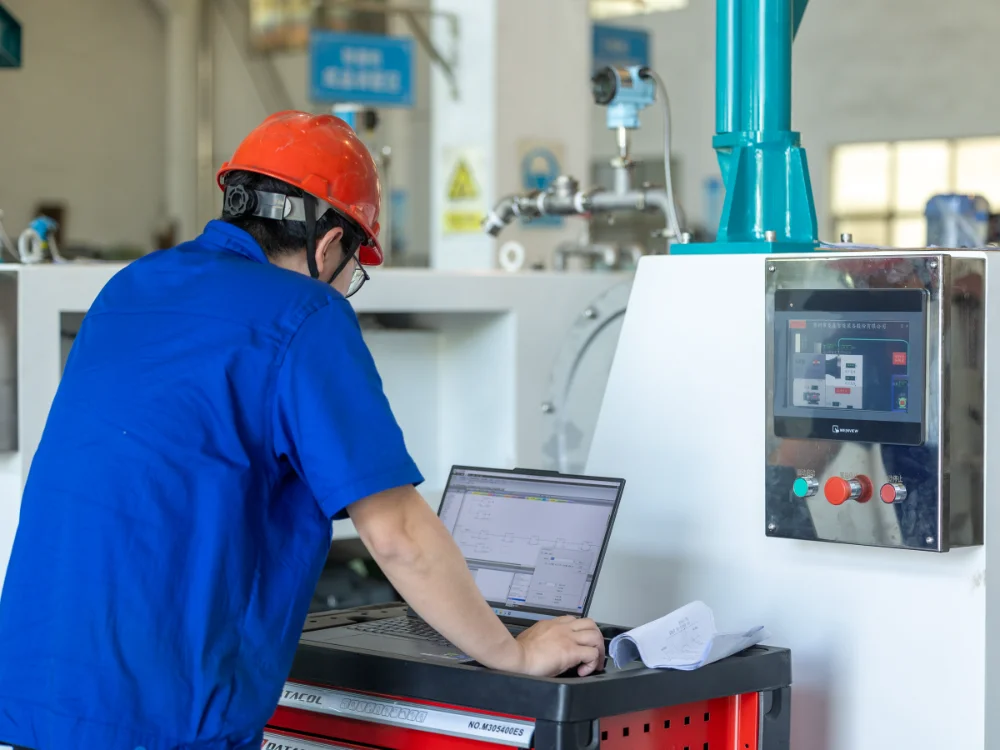
The system uses PLC and touchscreen automatic control with a dynamic process-flow display. Operators can control the entire process after completing a few basic settings.
Technical Improvements in the BLPG-5 Laboratory Closed-Loop Spray Dryer
(1) An innovative shaft-end sealing design for the circulation fan addresses the long-standing leakage challenge of closed-loop systems and helps maintain gas tightness under positive pressure.
(2) Differential-pressure transmitters and online oxygen detection are used to monitor system pressure and oxygen concentration in real time and provide automatic control, improving operational safety and product quality assurance.
(3) Explosion-proof electric heaters and explosion-proof circulation-fan motors reduce potential ignition sources in the heating and power systems, making the equipment suitable for drying flammable and explosive organic-solvent systems.
(4) An atomizer cleaning system and in-place cleaning function improve operational reliability and simplify material changeover and maintenance.
(5) The sealing structure has been optimized to maintain a leak-resistant positive-pressure system, improving both thermal efficiency and safety.
(6) For high-solids, viscous, and paste-like feeds, the atomization capability of the nitrogen circulation system has been enhanced to help increase production capacity and reduce energy consumption.