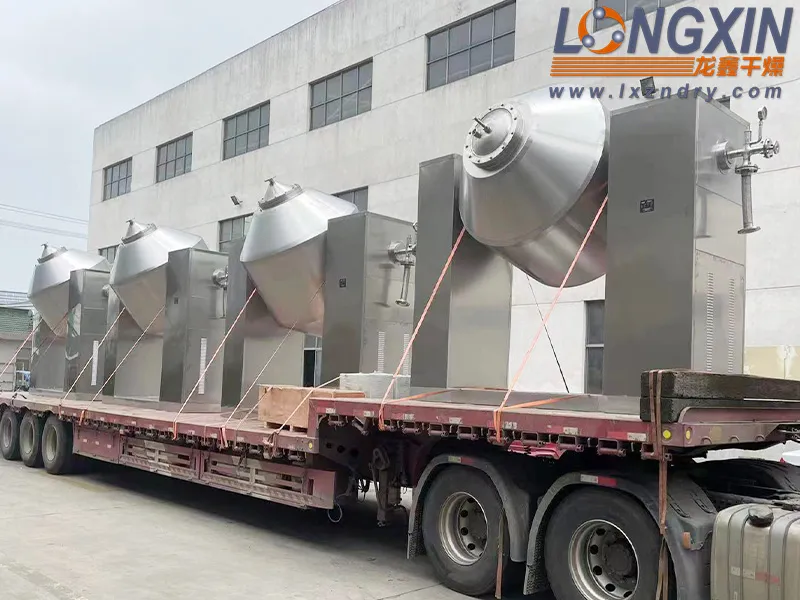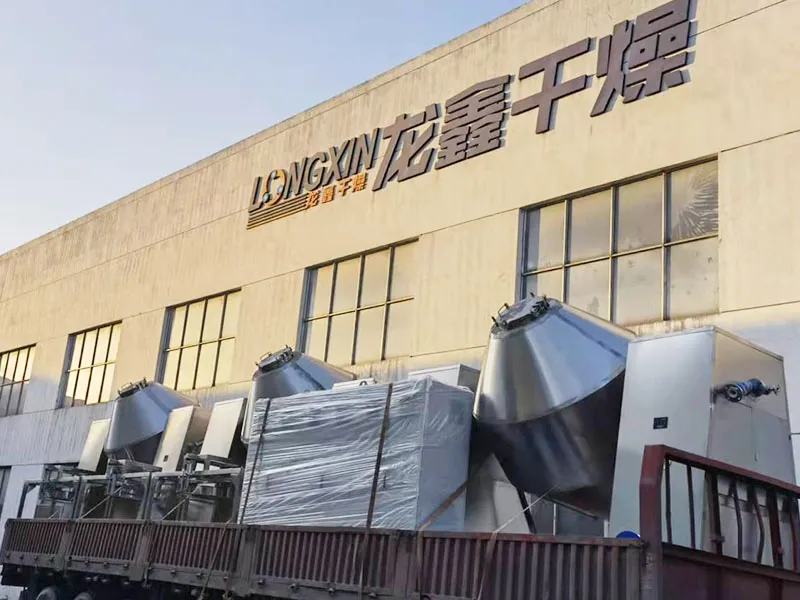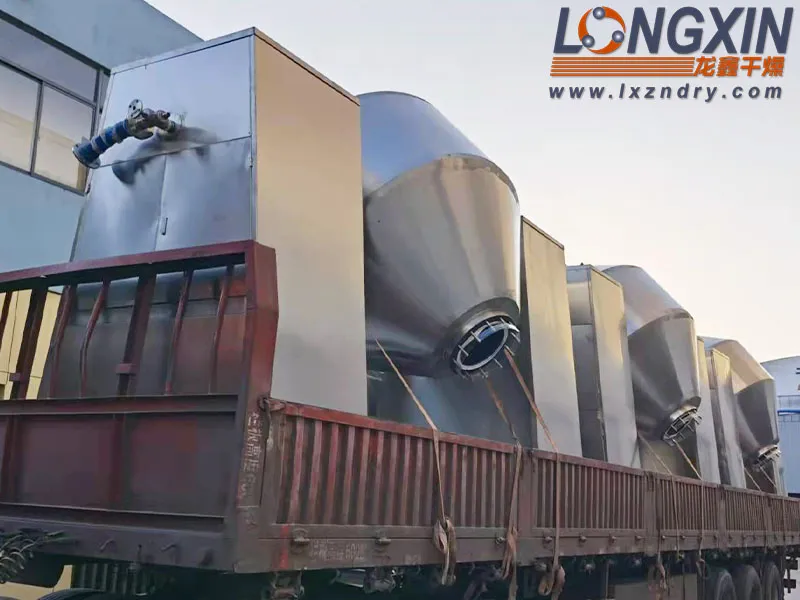

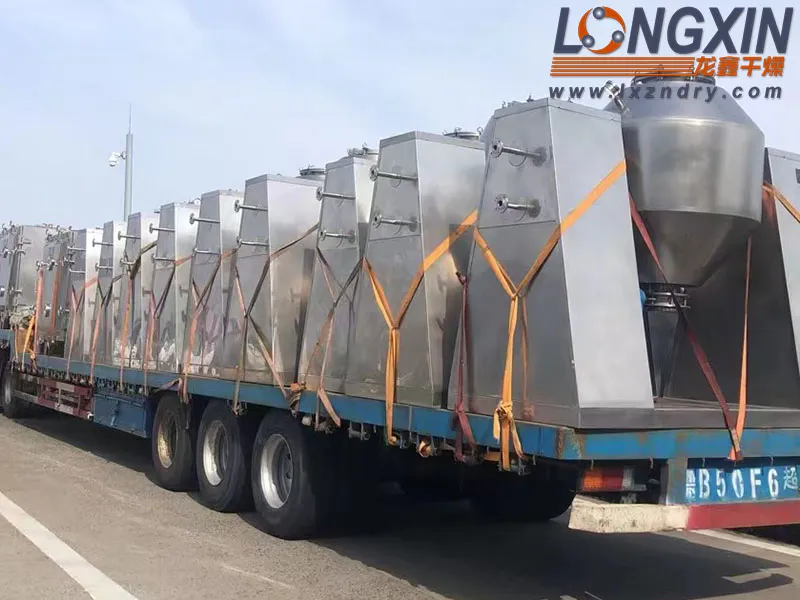
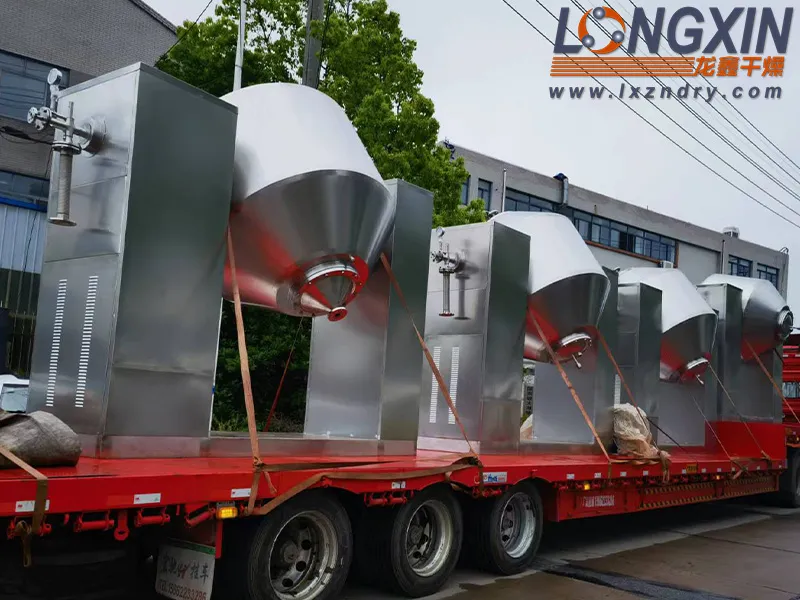
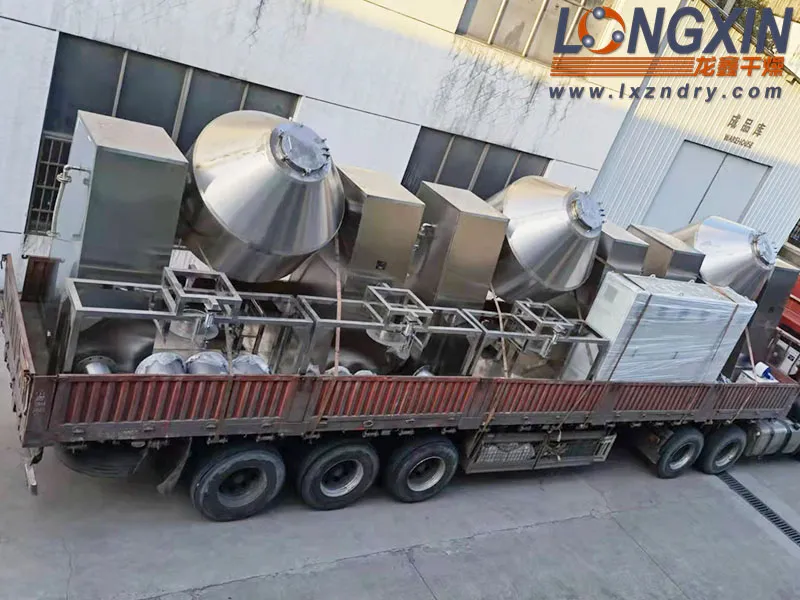
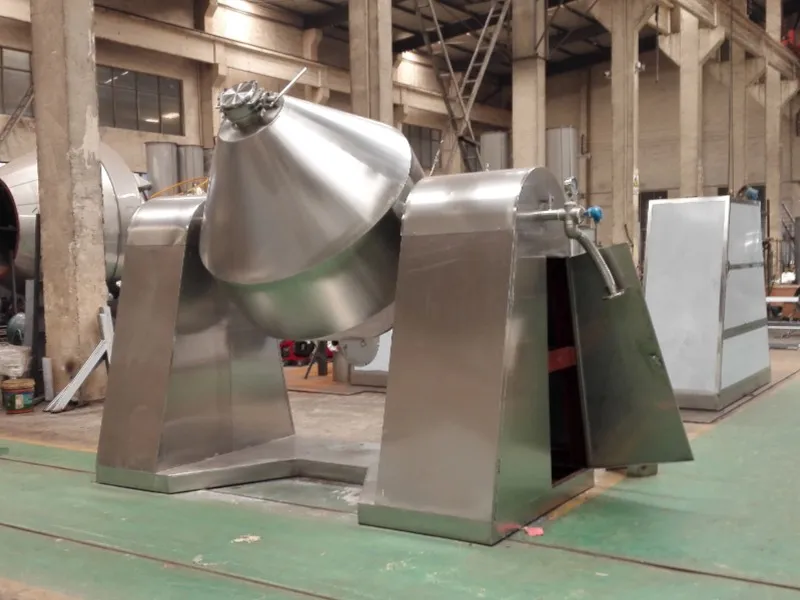
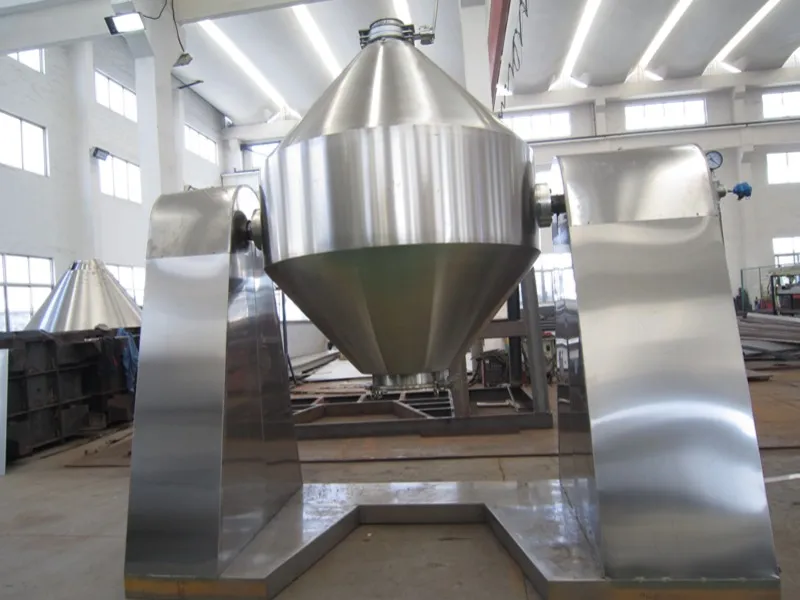
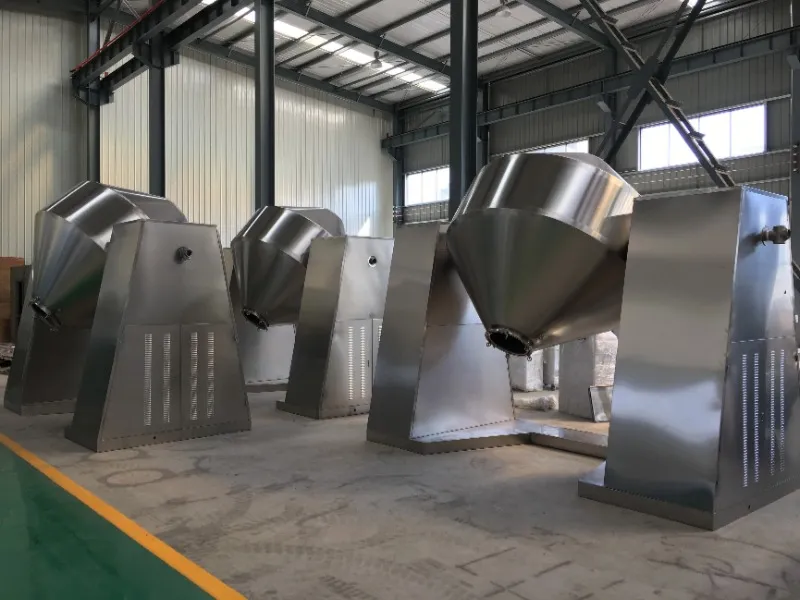
Equipment Overview
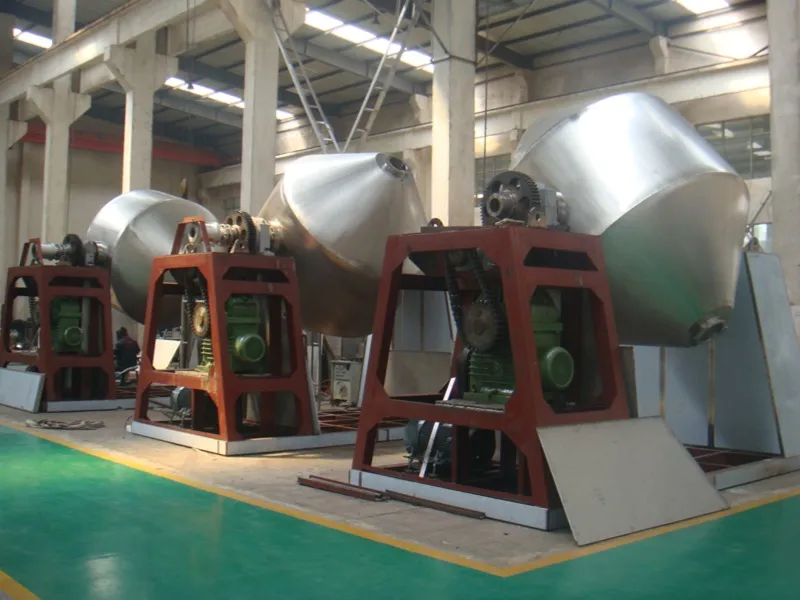
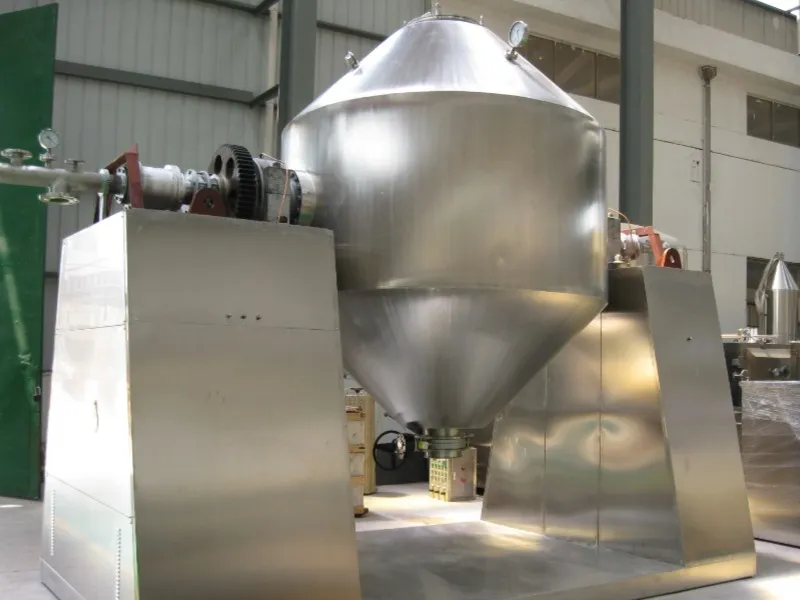
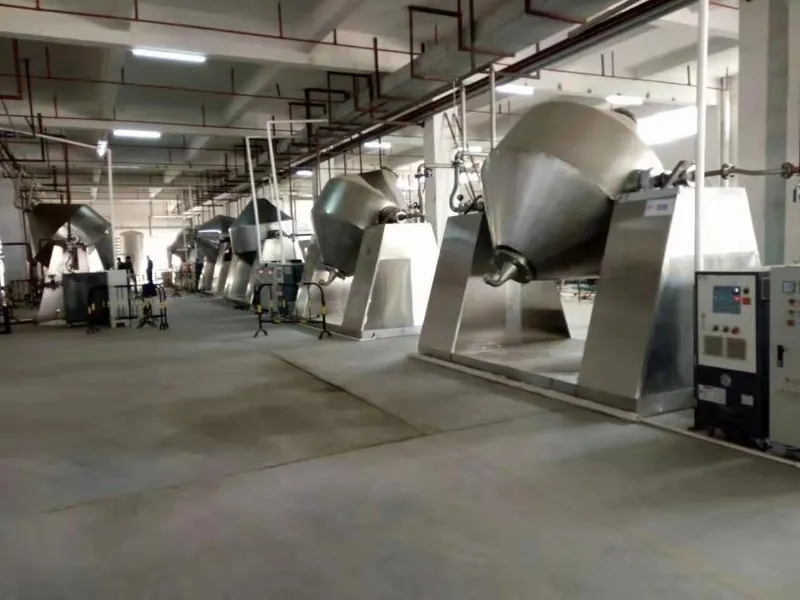
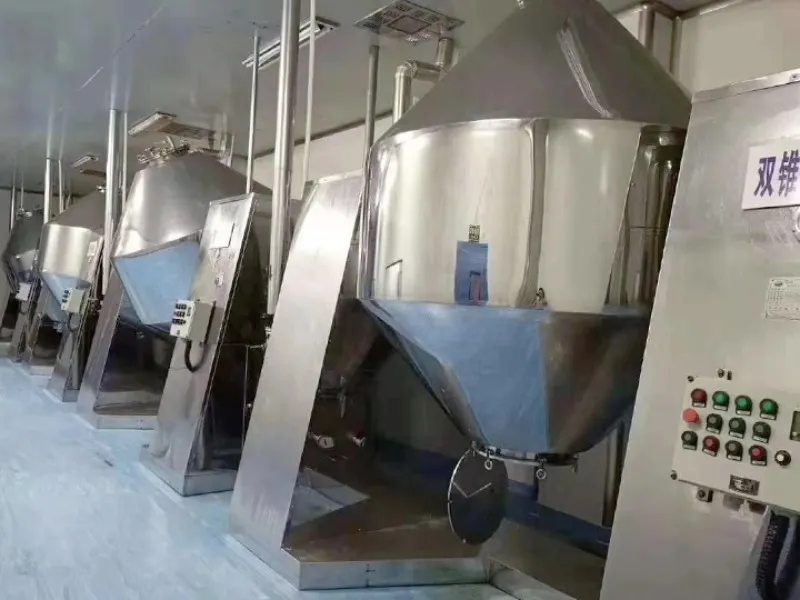
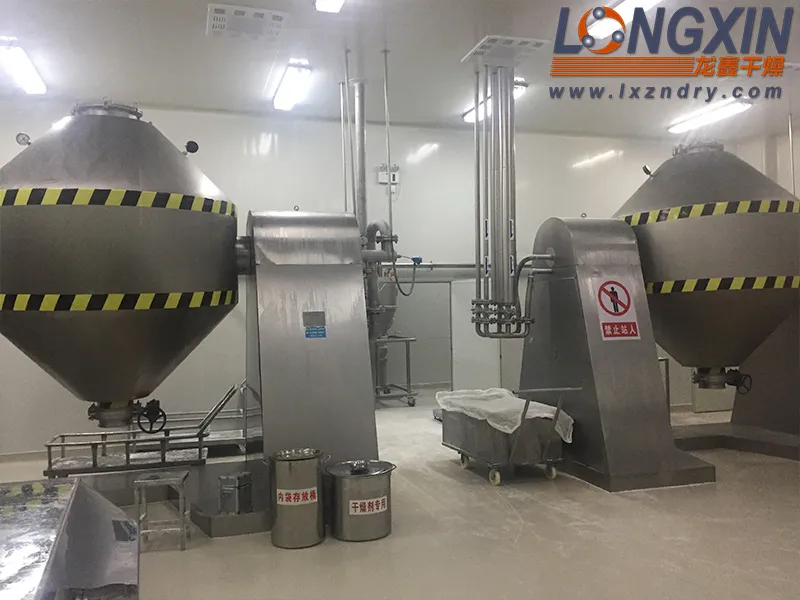
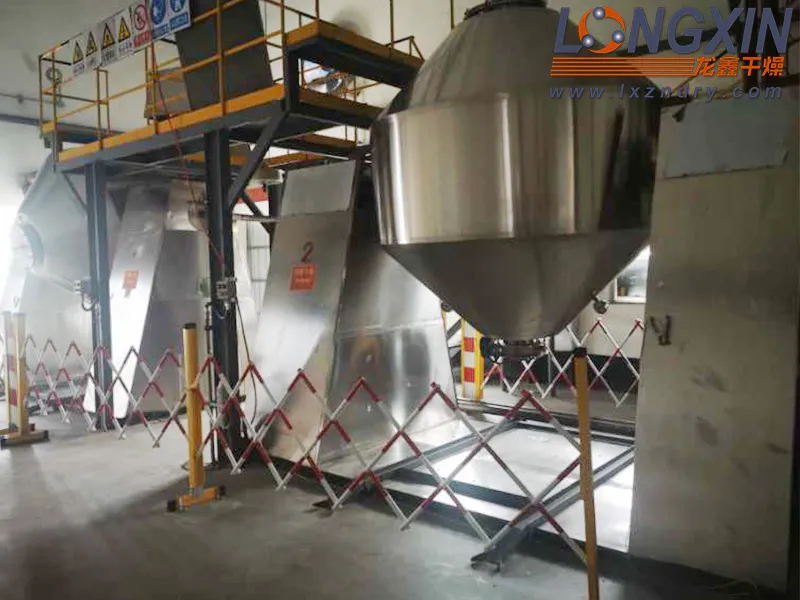
The double cone vacuum dryer is drying equipment that integrates mixing and vacuum drying in one unit. The vacuum drying process consists of placing the material to be dried in a sealed cylinder and drawing a vacuum with a vacuum system while continuously heating the material, so that the moisture inside the material diffuses to the surface through a pressure difference or concentration difference; the water molecules (or other non-condensable gases) gain sufficient kinetic energy at the surface of the material and, after overcoming the mutual attraction between molecules, diffuse into the low-pressure space of the vacuum chamber and are drawn away by the vacuum pump, thus completing their separation from the solid.
The double cone vacuum dryer is particularly suitable for drying materials that are easily oxidized, flammable or explosive, and for heat-sensitive materials. Its advantages are demonstrated even more clearly with materials whose crystal form must not be destroyed, materials with strict limits on metal ions, and materials whose volatiles (or toxic substances) must be recovered (or whose toxicity must be destroyed).
Double Cone Vacuum Dryer — Structure Diagram
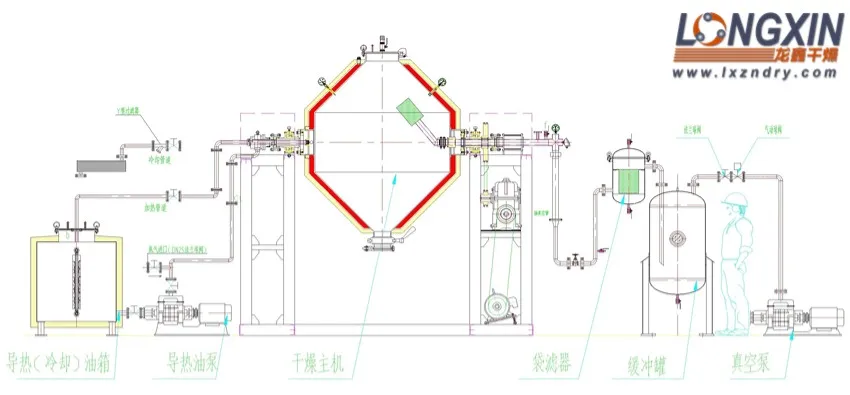
Double Cone Vacuum Dryer — Working Principle
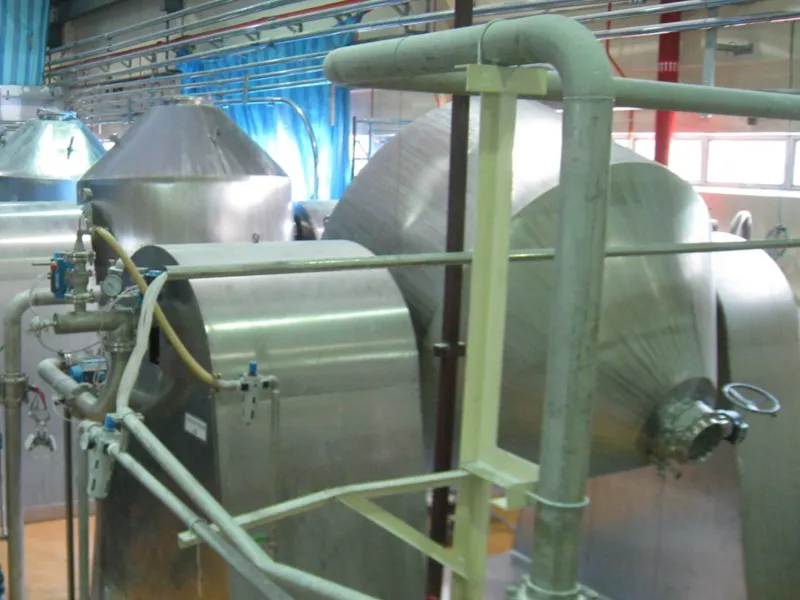
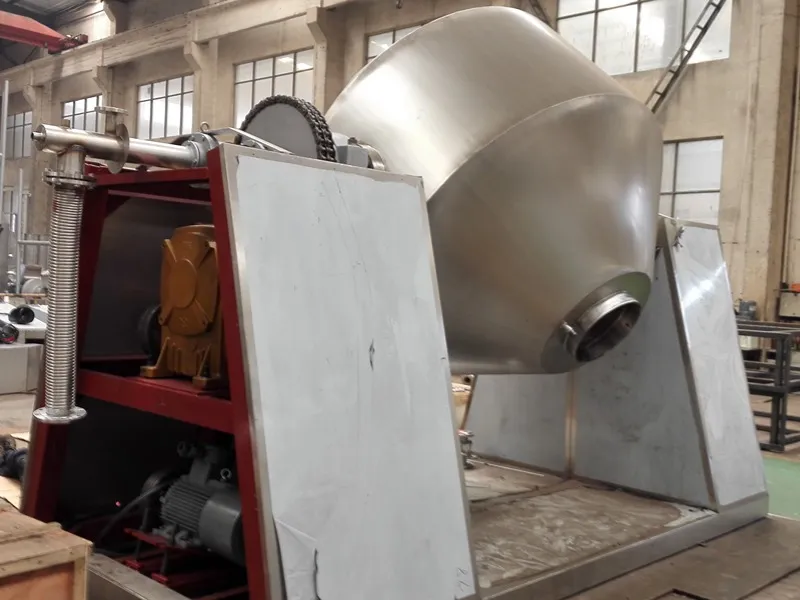
The double cone vacuum dryer has a double-cone-shaped rotating tank body. With the tank under vacuum, steam or hot water is fed into the jacket for heating, and the heat contacts the wet material through the inner wall of the tank. After absorbing heat, the wet material evaporates moisture, and the water vapour is drawn off through the vacuum exhaust pipe by the vacuum pump. Because the interior of the tank is under vacuum and the rotation of the tank makes the material tumble continuously up and down and inside and out, the drying speed of the material is increased, drying efficiency is improved, and uniform drying is achieved. The double cone vacuum dryer system mainly consists of the double cone vacuum dryer, condenser, dust collector, vacuum pumping system, heating system, cooling system, electrical control system, etc.
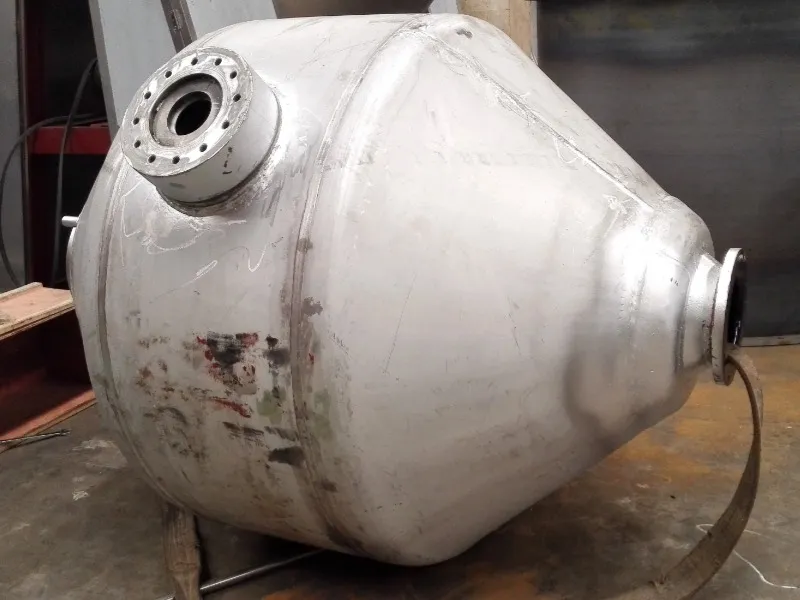
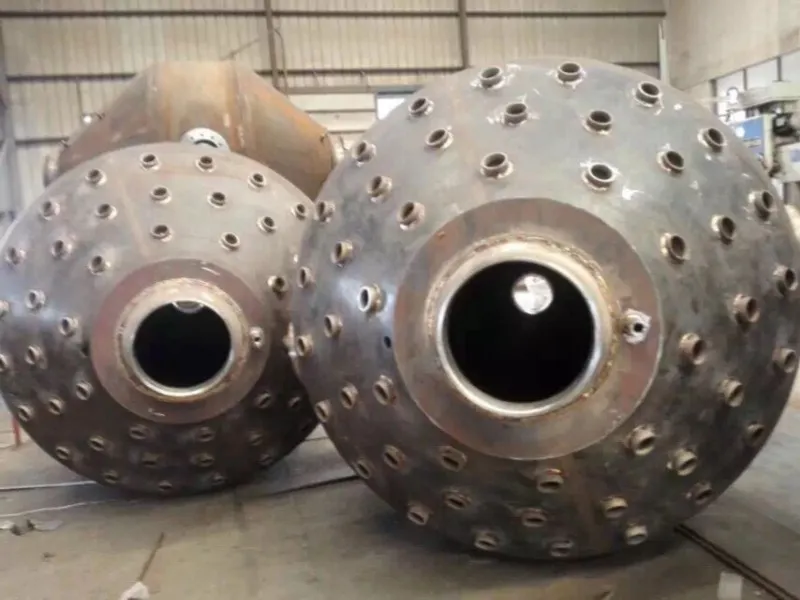
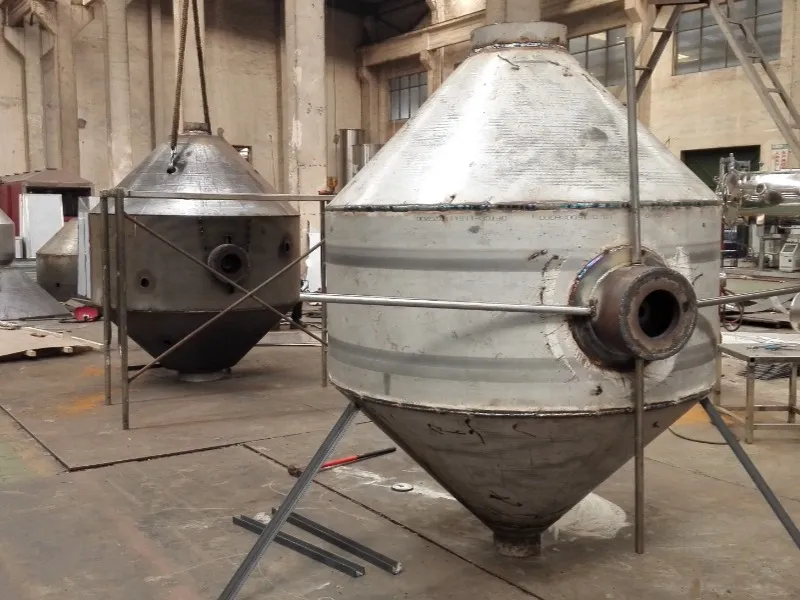
The tank body of the rotary vacuum dryer is cylindrical in the middle and conical at both ends; the top of the cone is provided with the feed and discharge port (which also serves as the manhole). The tank body is divided into three layers, inside and outside; the heating medium in the middle jacket may be steam or circulating hot water, and the insulation layer is made of medium-alkali ultra-fine glass wool, with very low energy consumption. The material is loaded into the inner layer and dried by rotation under vacuum; the material is tumbled while gaining heat through the vessel wall, which accelerates drying. In this way the phenomenon of the surface of heat-sensitive materials turning yellow during drying is avoided, and the drying time of the material is greatly shortened — only about 2/3 of the drying time required for the same material in a vacuum oven — improving labour productivity.
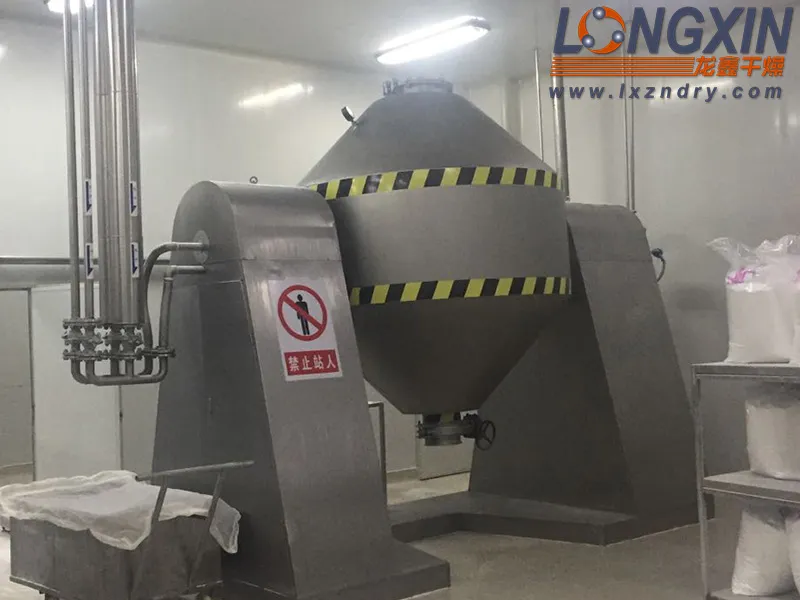
Double Cone Vacuum Dryer — Performance Features
(1) During vacuum drying, the pressure inside the cylinder is always lower than atmospheric pressure, with fewer gas molecules, low density and low oxygen content. Medicines that are easily oxidized can therefore be dried, and the chance of the material becoming contaminated with bacteria is reduced.
(2) Because the temperature of the moisture during vaporization is proportional to the vapour pressure, in vacuum drying the moisture in the material can vaporize at a low temperature, achieving low-temperature drying; this is particularly suitable for pharmaceutical production involving heat-sensitive materials.
(3) Vacuum drying can eliminate the surface hardening that readily occurs in atmospheric hot-air drying. This is because in vacuum drying the pressure difference between the interior and the surface of the material is large, and under the action of the pressure gradient the moisture moves quickly to the surface, so surface hardening does not occur.
(4) Because in vacuum drying the temperature gradient between the interior and exterior of the material is small, the moisture is able to move on its own and be collected owing to the reverse osmosis effect, effectively overcoming the loss phenomenon produced by hot-air drying.