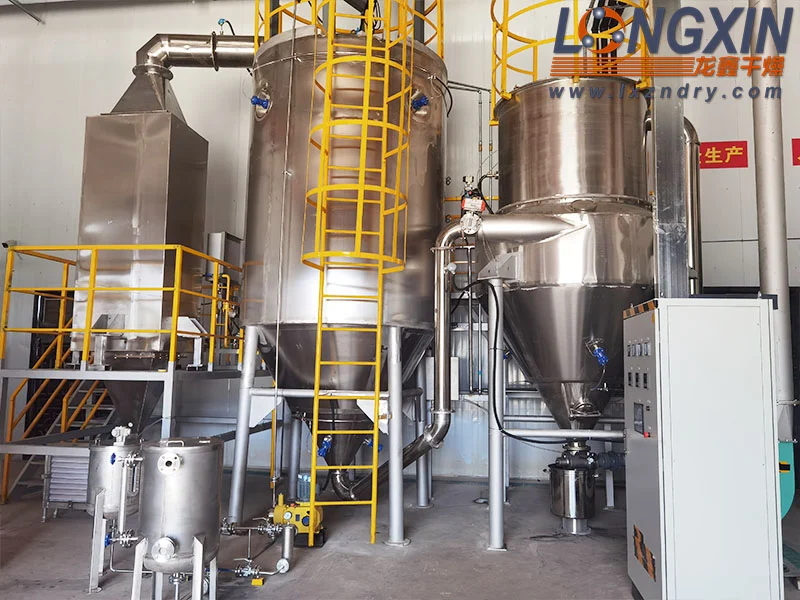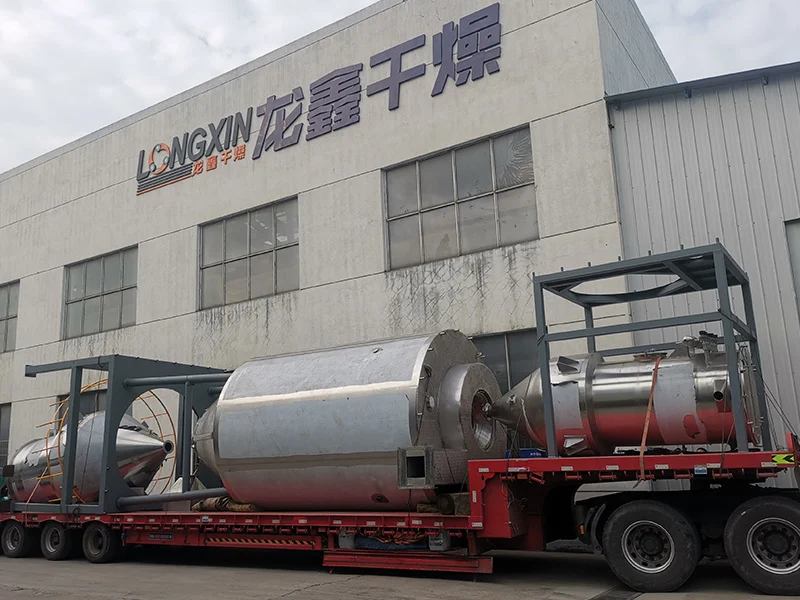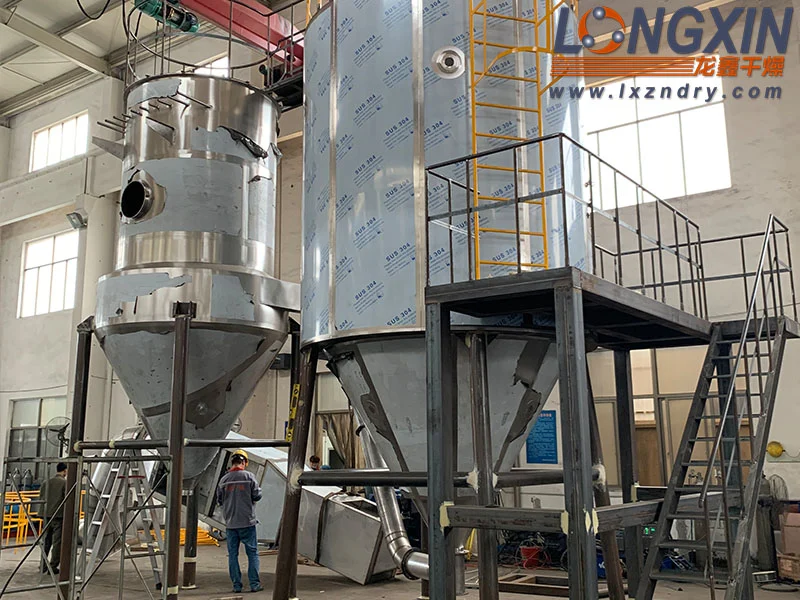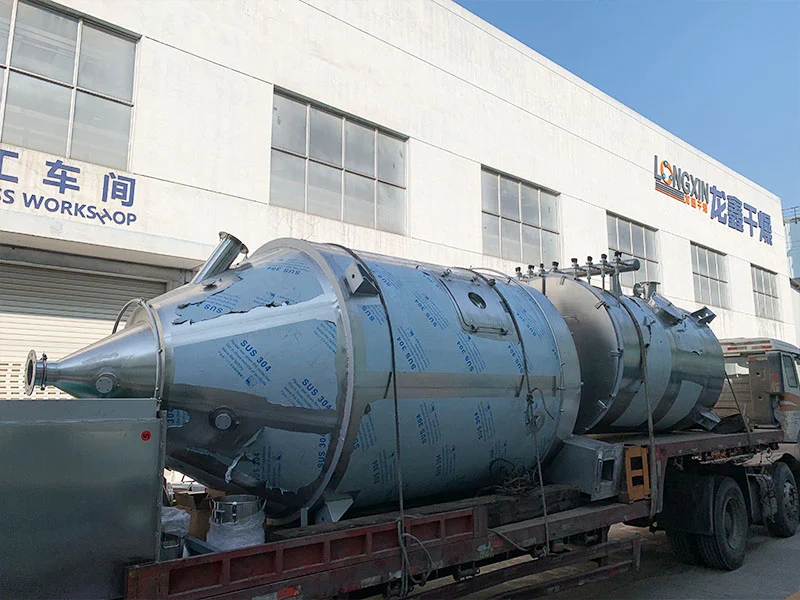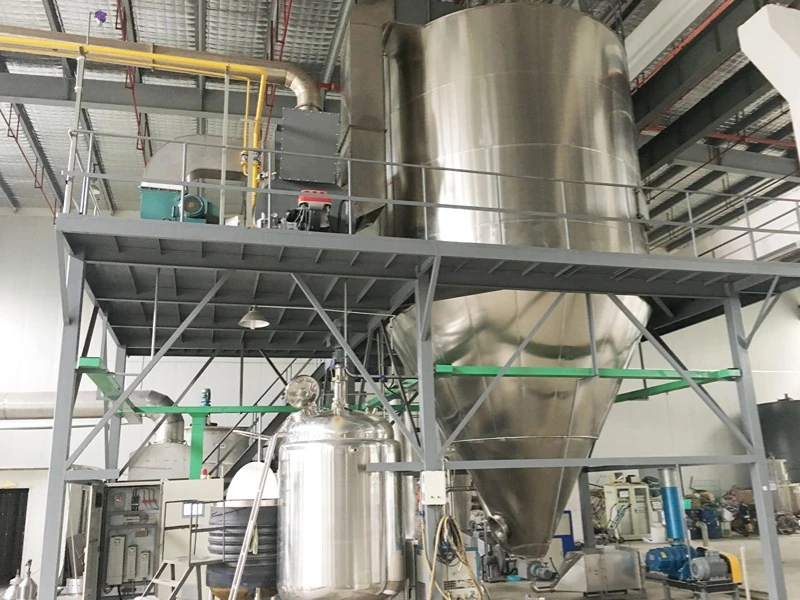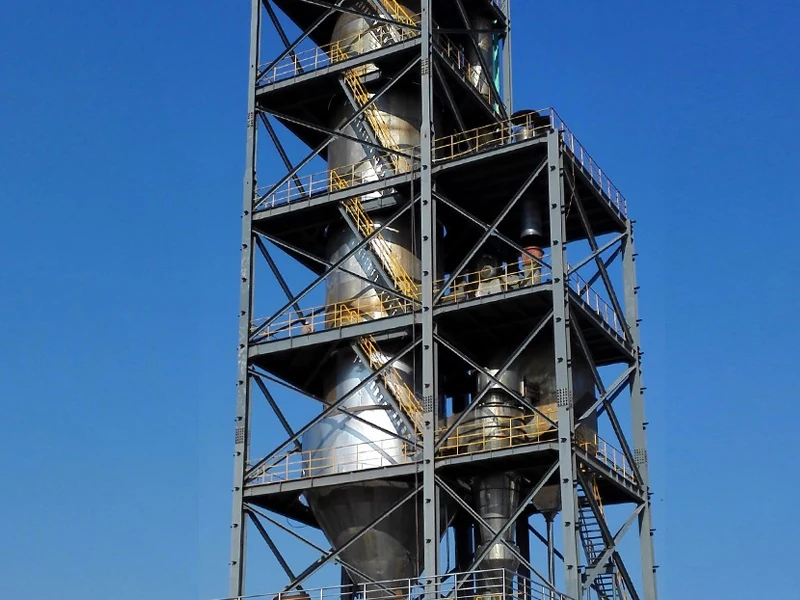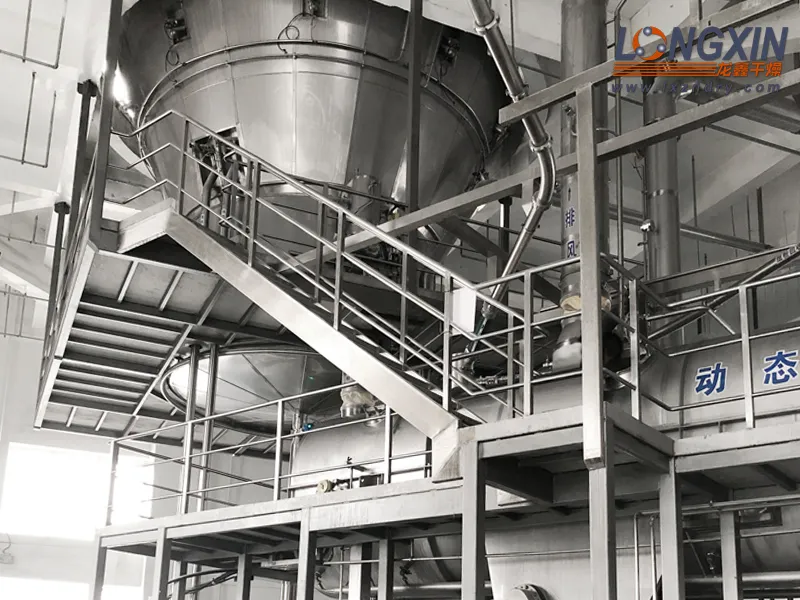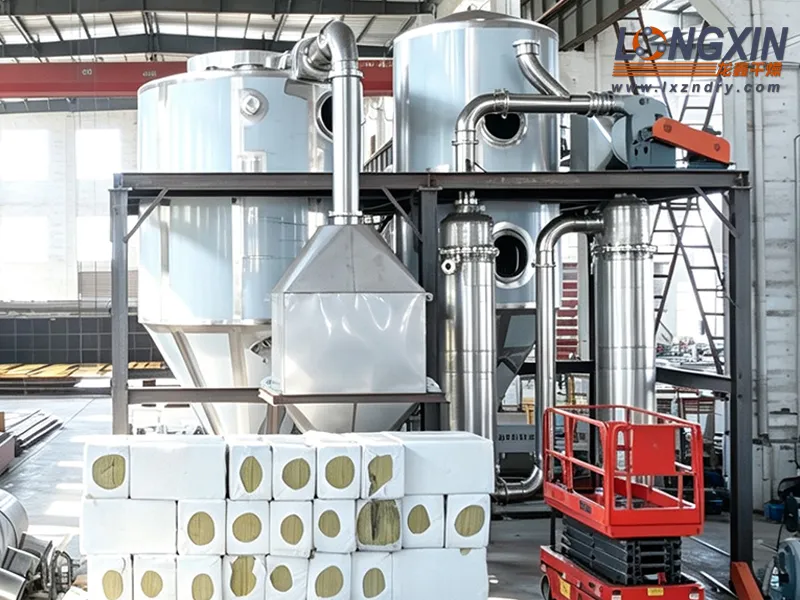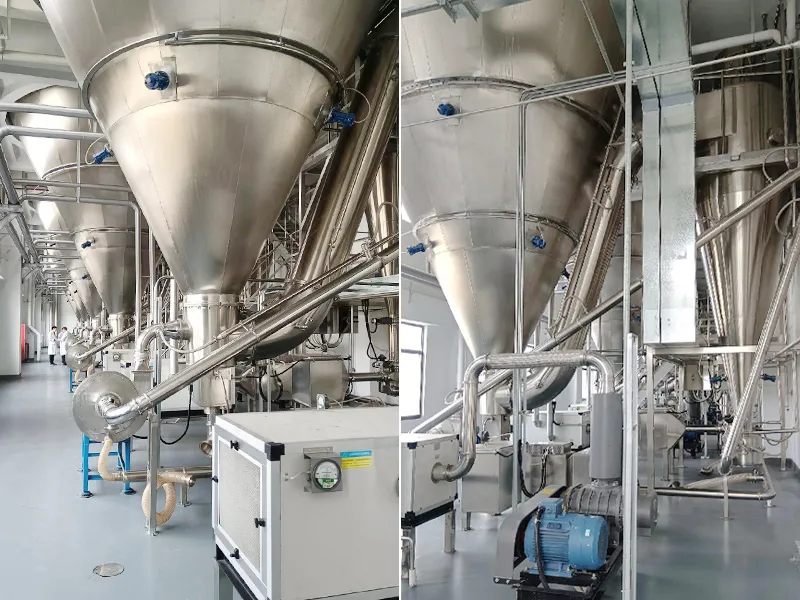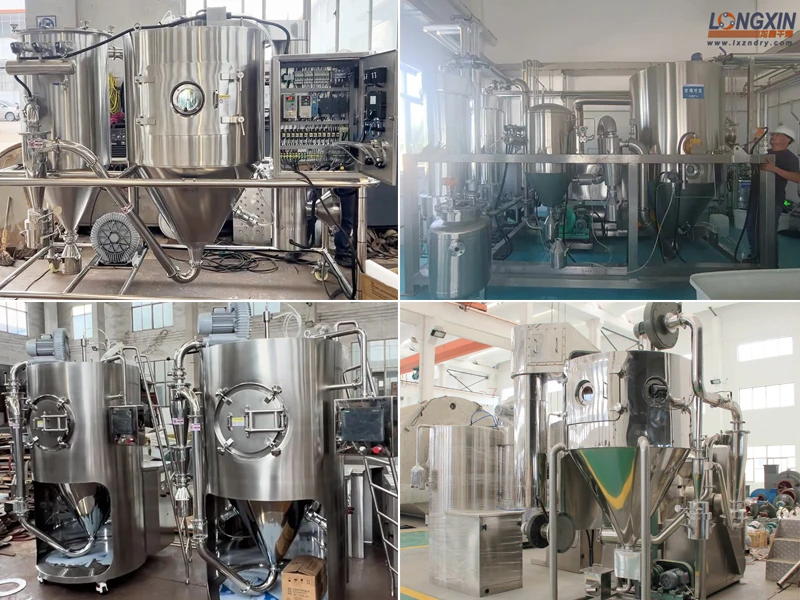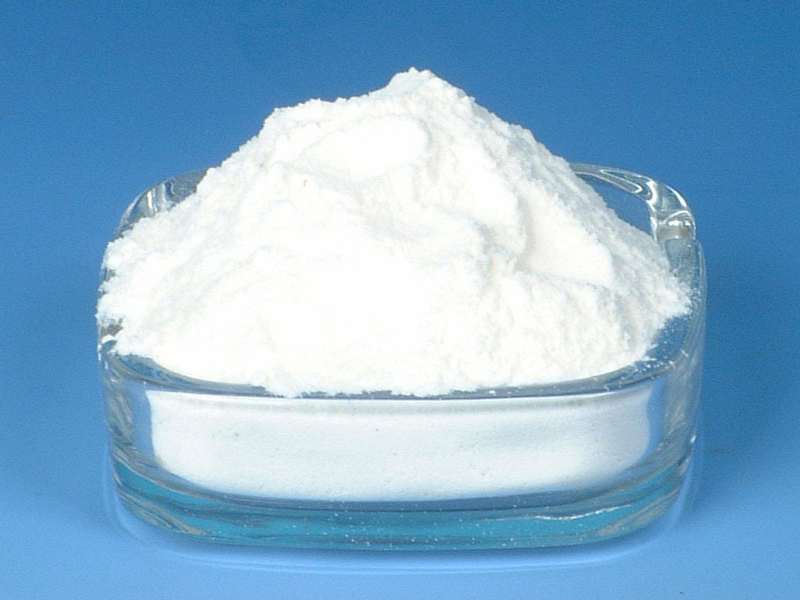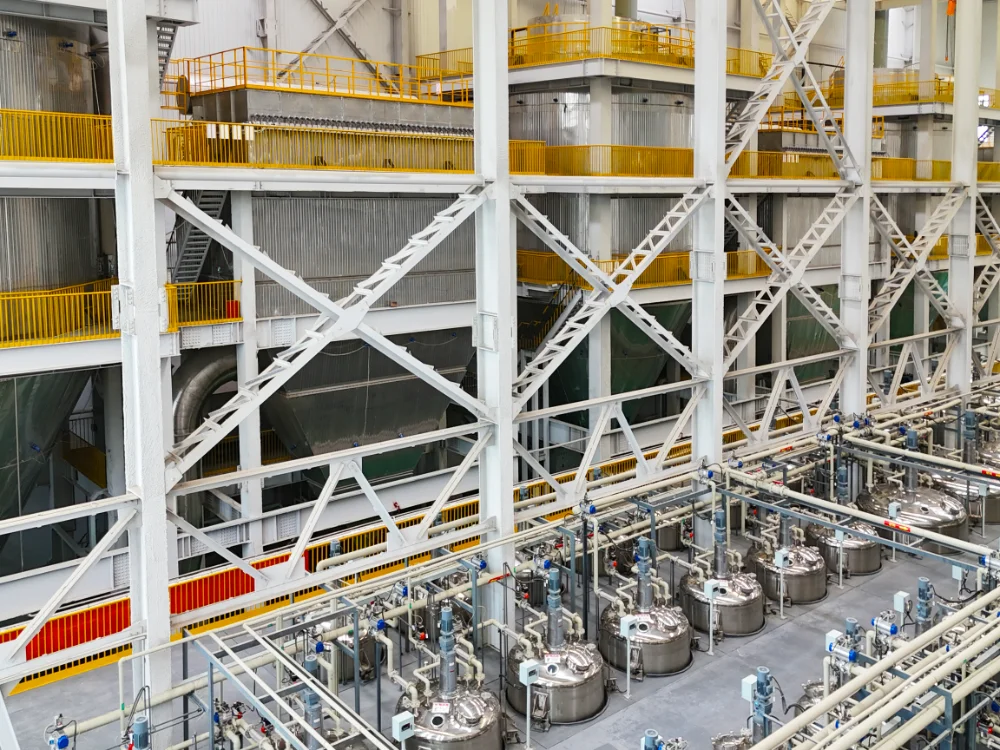
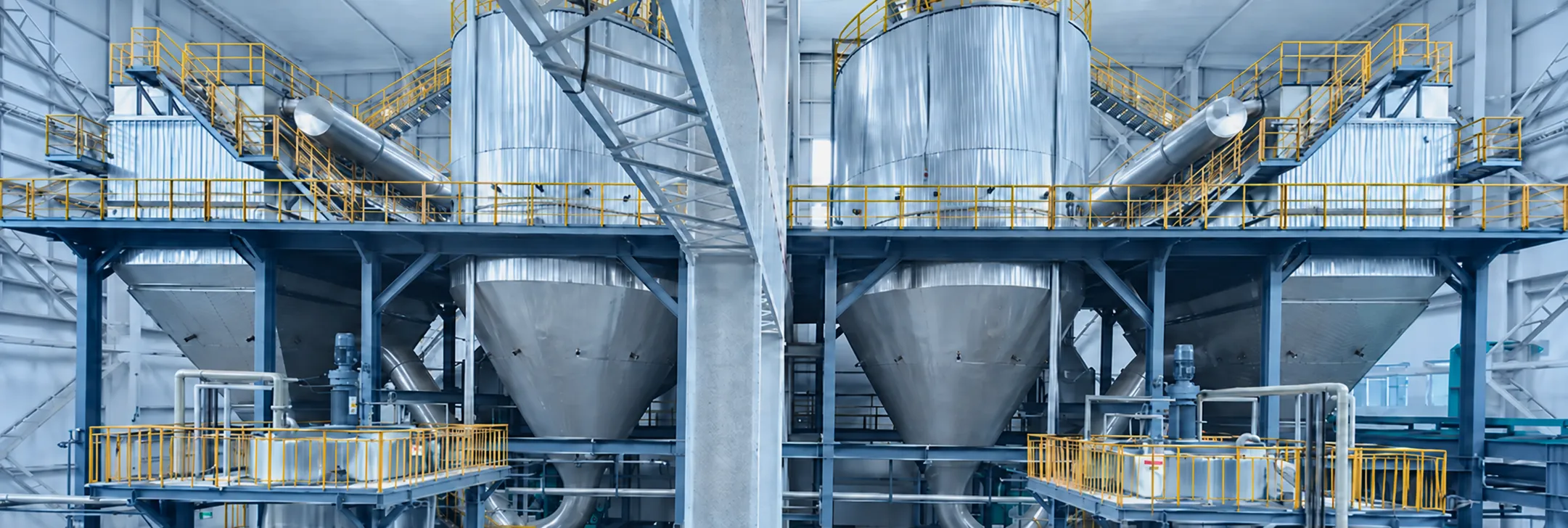
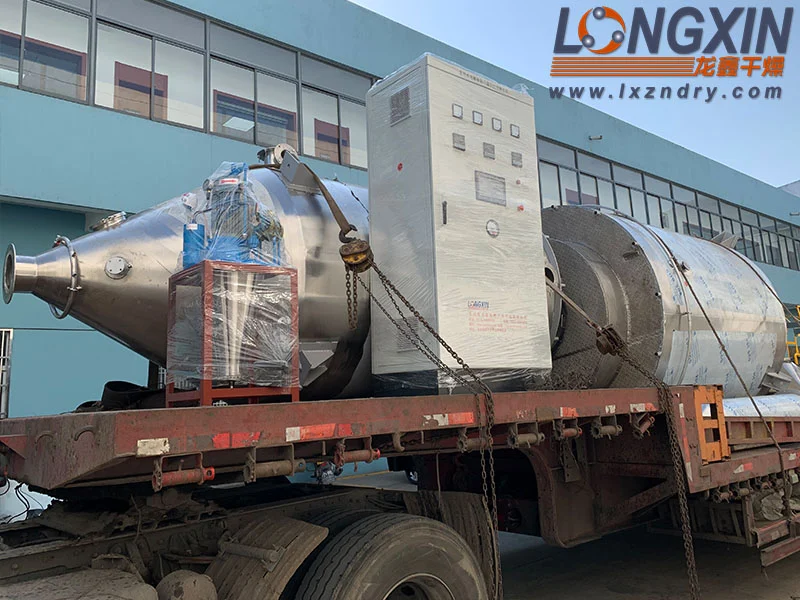
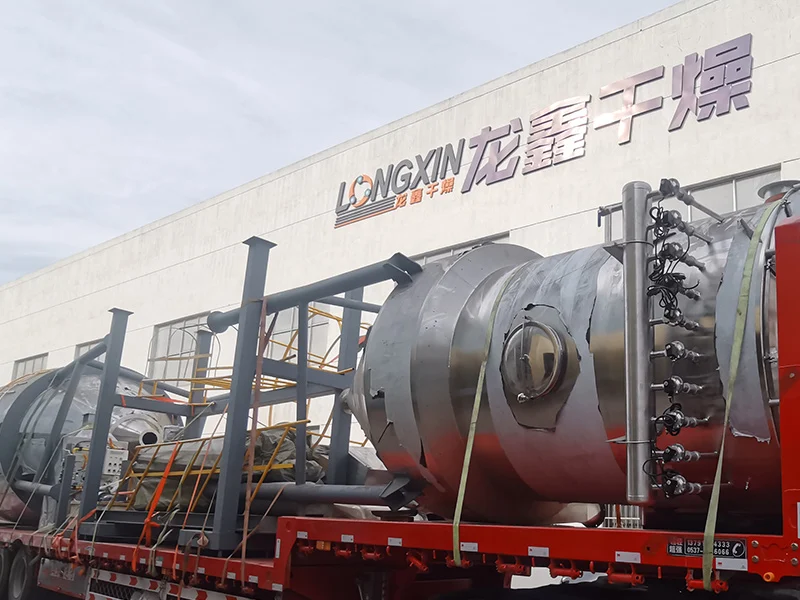
The Fluid Nozzle Spray Dryer uses high-pressure air or superheated steam to atomize liquid feed into fine droplets. These droplets come into contact with hot air in the drying chamber, where moisture evaporates rapidly to produce dry powder.
High-velocity gas generates friction and shear forces that break the liquid into fine droplets. Particle size can be controlled by adjusting the atomizing gas pressure and flow rate, as well as the liquid feed rate.
In co-current operation, the atomizer is positioned near the hot-air distributor at the top of the drying chamber. This mode is suitable for heat-sensitive products, while mixed-flow operation is suitable for non-heat-sensitive materials requiring coarser particles.
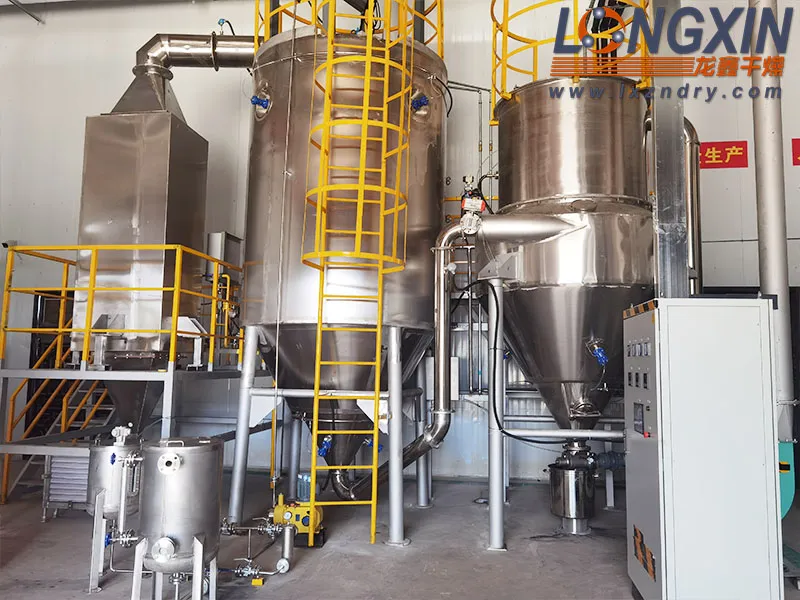
Main Components
- Feed System: Delivers liquid feed steadily to the atomizer.
- Atomization System: Uses high-pressure gas to break liquid into fine droplets. Two-fluid and three-fluid nozzles are available, with external-mix and internal-mix configurations for two-fluid nozzles.
- Drying Chamber: Equipped with a heating system and fan to provide controlled hot-air circulation for rapid evaporation.
- Product Collection System: Collects and discharges the dried powder while maintaining product quality.
Applications
- Chemical Industry: Silica, barium sulfate, detergents, additives, latex, resins, alumina, titanium dioxide, kaolin, fertilizers and other chemical materials.
- Food Industry: Dextrin, maltose, protein powder, egg yolk powder, instant coffee, starch, flavorings and fruit and vegetable powders.
- Pharmaceutical Industry: Pharmaceutical powders, antibiotics, biochemical products, vitamins, enzymes and hydrolyzed proteins.
- Dairy Industry: Skimmed milk powder, whole milk powder, soy milk powder, ice cream powder and whey powder.
- Environmental Protection: Flue gas desulfurization, paper mill black liquor treatment and pharmaceutical wastewater treatment.
- Building Materials: Ceramic body materials, glazes and ultrafine powders.
Key Features and Advantages
1. Rapid Drying
The large contact area between droplets and hot air promotes efficient heat and mass transfer, enabling short drying times, typically within 10–30 seconds depending on material properties and operating conditions.
2. Flexible Process Control
Adjustable atomizing gas pressure, gas flow, feed rate and drying temperature allow control over particle size, bulk density, moisture content, flowability and solubility.
3. Wide Material Compatibility
Suitable for solutions, emulsions, pastes, suspensions and selected high-viscosity materials, subject to appropriate feed and nozzle configuration.
4. Consistent Product Quality
Rapid drying and adjustable operating parameters help preserve product color, aroma and other desirable properties while controlling final moisture content.
5. Reliable Atomization
The nozzle-based design provides efficient atomization. Proper nozzle selection and operating conditions help reduce clogging and simplify maintenance.
6. High-Viscosity Material Processing
High-velocity gas generates strong shear forces to disperse viscous feeds into fine droplets. Optimized atomization pressure, feed conditions and hot-air parameters can improve drying efficiency and help reduce wall deposition and agglomeration.
7. Automated Operation
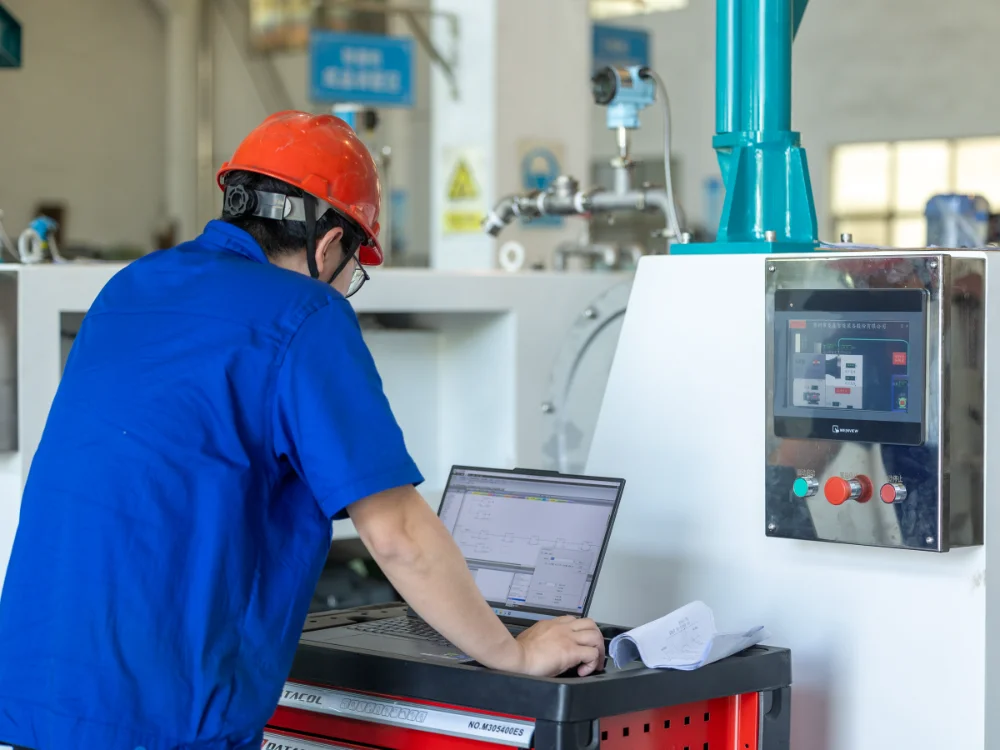
An automated control system enables operators to set process parameters through a touchscreen, monitor operating conditions in real time and adjust settings to maintain stable production.
8. Economical Operation
A relatively simple atomization system can reduce equipment complexity and maintenance requirements. Actual energy consumption and operating costs depend on feed properties, throughput, gas supply and system configuration.
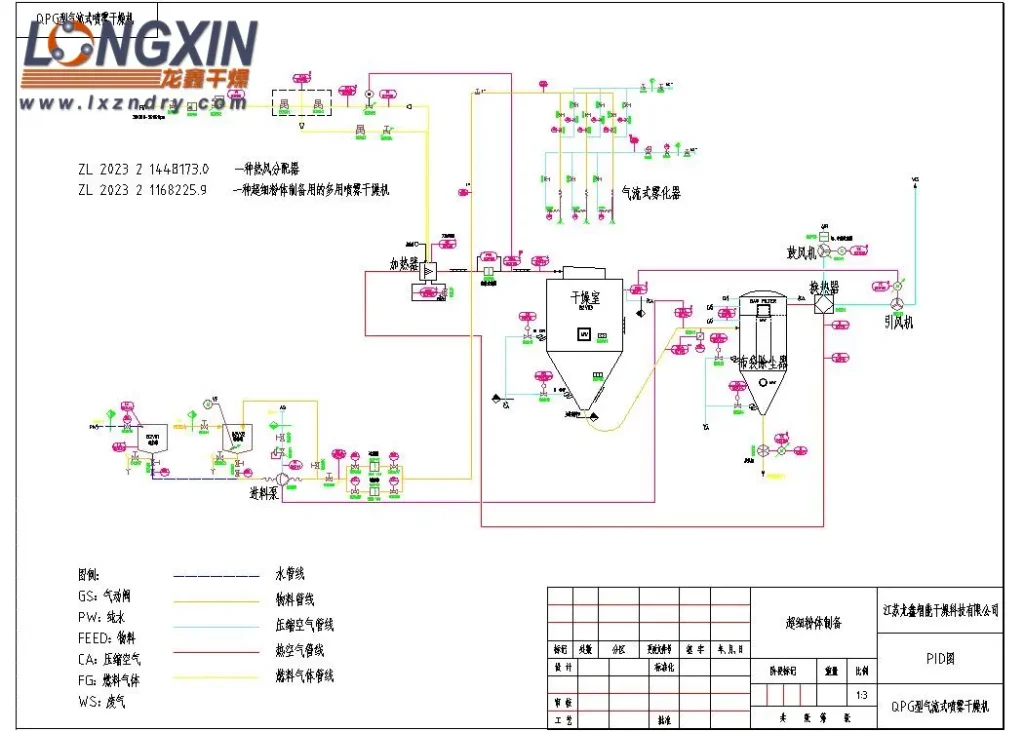
PID Diagram
Fluid Nozzle Spray Dryer – P&ID
The P&ID (Piping and Instrumentation Diagram) illustrates the process flow, major equipment, piping, instrumentation and control loops for the spray drying system.