Dual-Mode Innovation for PVP Drying: A Pressure and Pneumatic Spray Dryer Overcomes Multi-Grade Production Bottlenecks
As a core water-soluble polymer, povidone (polyvinylpyrrolidone, PVP) has become a key functional material across pharmaceuticals, personal care, new energy and chemicals due to its outstanding overall performance. As downstream applications continue to expand and move upmarket, demand is growing simultaneously for PVP products in different molecular weights and specifications, placing increasingly stringent requirements on drying processes.
Conventional drying equipment is limited to a single atomization mode and cannot adapt to the processing characteristics of both medium-to-low-molecular-weight and ultra-high-molecular-weight PVP. This has become a major bottleneck restricting multi-grade production and quality upgrades. To address this industry-wide challenge, Jiangsu Longxin has introduced a pressure and pneumatic dual-mode spray dryer for PVP. Its integrated dual-mode atomization system allows a single machine to cover the drying requirements of multiple PVP product grades, providing a new technical solution for efficient and flexible PVP production.
The Rise of Polyvinylpyrrolidone: From Industrial Additive to High-Performance Material
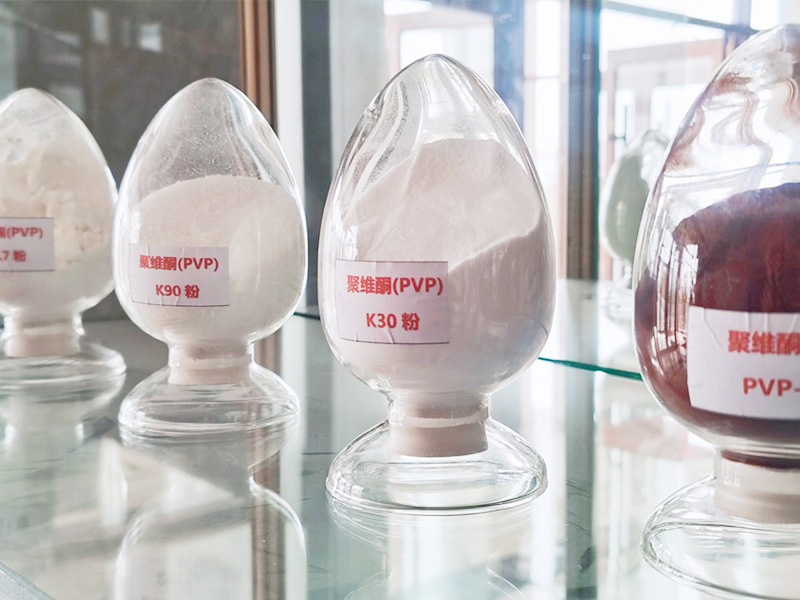
PVP is a water-soluble polymer formed by the polymerization of N-vinylpyrrolidone. It offers strong hydrophilicity, excellent film-forming properties, physiological inertness, good chemical stability, low toxicity and complexing capability. These characteristics have enabled PVP to evolve from a general-purpose industrial additive into a high-value functional material, with its range of applications continuing to expand.
1. Pharmaceuticals
PVP is one of the most widely used pharmaceutical excipients and a key raw material for active ingredients such as povidone-iodine. As an excipient, PVP can serve as a tablet binder, solubilizer, stabilizer, dispersant, film-forming coating agent and release modifier. It plays a significant role in improving drug stability, the solubility of poorly soluble drugs and bioavailability. As the global population grows and ages, the pharmaceutical formulation market continues to expand while new drug development and formulation innovation accelerate. This has created higher standards for the purity, particle-size uniformity and batch consistency of pharmaceutical-grade PVP. The quality of PVP directly affects drug-release efficiency and clinical performance, particularly in poorly soluble and sustained-release formulations, further increasing demand for high-end pharmaceutical-grade povidone.
2. Personal Care and Cosmetics
PVP is widely used as a film former, humectant, dispersant, thickener and fragrance fixative in skincare, oral care products, personal-cleaning products and other applications. As natural, organic and functional cosmetics gain market share, consumers are demanding both safety and efficacy. With its mild performance and high safety, PVP is increasingly used in premium skincare and sun-care products, while demand continues to rise for low-impurity, high-purity cosmetic-grade PVP.
3. New Energy
The range of applications for PVP is expanding rapidly. In lithium battery production, PVP can serve as a dispersant for electrode slurries and a processing aid for conductive materials, effectively improving the dispersion of conductive particles and the uniformity of electrode coatings, thereby enhancing electrochemical performance. In photovoltaics, PVP is used as a dispersant in silver-powder production for spherical silver powder used in front-side silver paste, flake silver powder used in rear-side silver paste and nanoscale silver particles, helping ensure the conductivity and printability of silver paste. With the rapid growth of the global new-energy industry, this sector is becoming an important growth engine for the PVP market.
4. Established Applications
PVP also has established applications in coatings, pigments, separation membranes, textile dyeing and printing, oil recovery, papermaking and agricultural chemicals, as well as in agriculture and animal husbandry applications such as seed treatment, aquaculture and feed additives. These markets form a stable foundation for the industry’s continued growth.
Overall, the PVP industry is entering a stage of continued application expansion and product-structure upgrading toward higher-value grades. The entire value chain is placing growing demands on process precision and flexibility. As drying is a core process that determines the morphology, purity and performance of finished PVP, upgrading drying technology has become critical to the industry’s high-quality development.
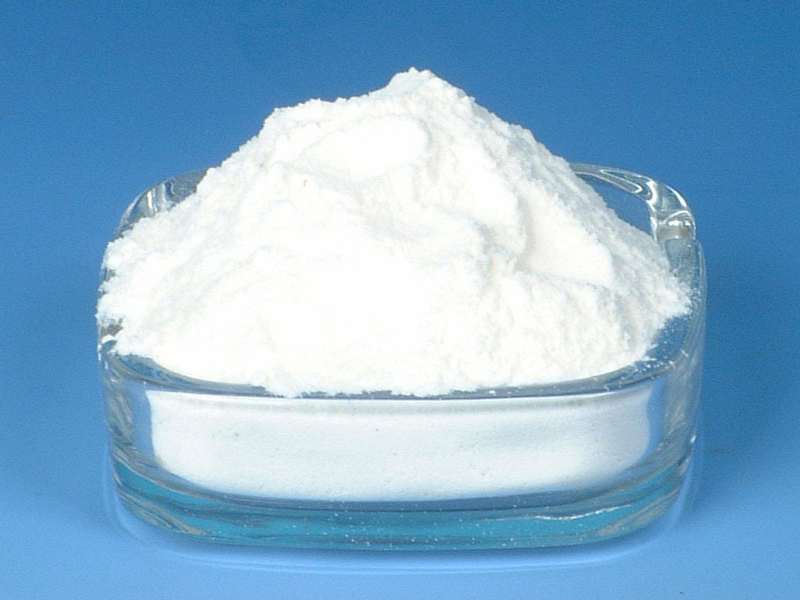
PVP Drying Processes and Their Challenges: Atomizing High-Viscosity Materials
PVP is a water-soluble polymer with strong adhesive properties. Its molecular-weight grade is commonly characterized by the viscosity of an aqueous PVP solution relative to water and expressed as a K value. PVP grades with different K values differ significantly in viscosity, polymer-chain length and application performance, requiring distinctly different drying processes. Current drying technologies vary considerably by PVP molecular weight, and each approach has its own technical limitations.
1. Common Challenges in Drying Medium- and Low-Molecular-Weight PVP
Medium- and low-molecular-weight grades such as PVP-K30 are among the most widely used PVP products, and conventional spray drying is commonly applied in industrial production. In practice, however, conventional equipment presents several challenges:
- Insufficient temperature-control accuracy and uneven hot-air distribution can cause localized overheating, leading to discoloration or polymer-chain degradation and affecting product performance.
- Batch consistency is poor. Variations in atomization and temperature can lead to significant differences in moisture content and particle-size distribution between batches, making it difficult to consistently meet stringent pharmaceutical-grade requirements.
- Energy efficiency is low. Most conventional dryers lack waste-heat recovery, allowing exhaust heat to escape directly into the atmosphere.
- Material recovery and environmental performance are inadequate. A single cyclone separator has limited collection efficiency, and fine dust can escape with exhaust gas, causing material loss and environmental pressure.
Conventional PVP-K30 drying systems also have several structural and operational shortcomings:
- Some induced-draft fans are mismatched to actual production capacity, resulting in excessive damper adjustment and inefficient operation.
- Individual cyclone separators lack sufficient throughput for effective gas-solid separation.
- The separators are not equipped with temporary material-storage sections, forcing the discharge rotary valves to operate continuously. This accelerates wear on seals and bearings and leads to frequent replacement.
- Multi-stage electric heating systems result in high energy costs.
These issues increase both production and maintenance costs.
2. Industry Challenges in Drying Ultra-High-Molecular-Weight PVP
For ultra-high-molecular-weight PVP with a K value above 80, such as PVP-K90 and higher grades, drying becomes significantly more technically demanding. Because of the material’s high viscosity, conventional pressure spray drying cannot achieve effective atomization. The industry has traditionally relied on low-temperature freeze drying or vacuum belt drying. These routes have clear drawbacks:
- High equipment investment, with purchase and maintenance costs far exceeding those of conventional spray dryers.
- Low production efficiency and long drying cycles, making large-scale continuous production difficult.
- Poor product morphology. Dried products often take the form of flakes or large particles with poor flowability, complicating downstream processing and limiting their use in formulations and slurries that require good flow characteristics.
3. A Common Industry Challenge: Limited Equipment Flexibility
In addition to the specific challenges associated with individual product grades, the PVP industry faces a broader issue: conventional dryers have limited functionality, and a single production line can usually accommodate only one PVP molecular-weight range.
Manufacturers producing multiple PVP grades often need multiple independent drying lines. This increases floor-space requirements and upfront investment while also complicating maintenance and capacity scheduling. As a result, companies struggle to respond quickly to changing market demand, limiting both production flexibility and competitiveness.
Integrated Dual-Mode Atomization: One Machine for Multiple PVP Grades
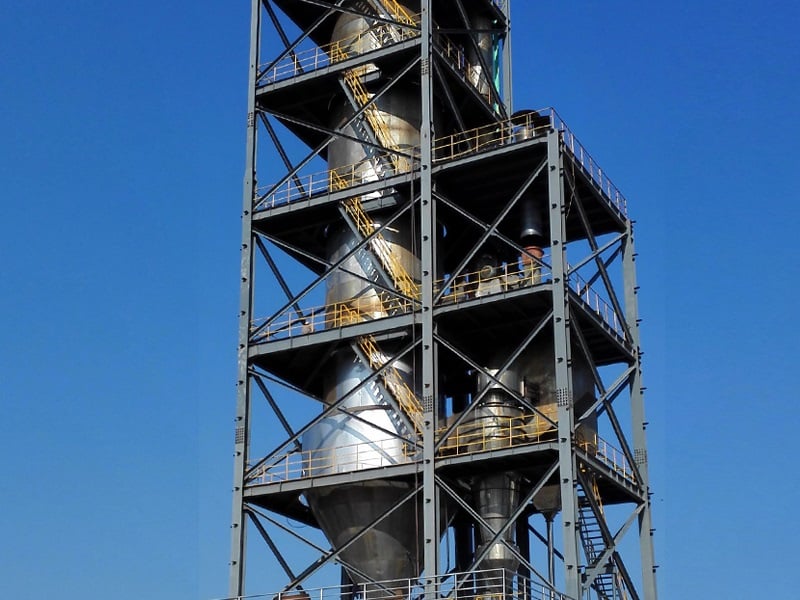
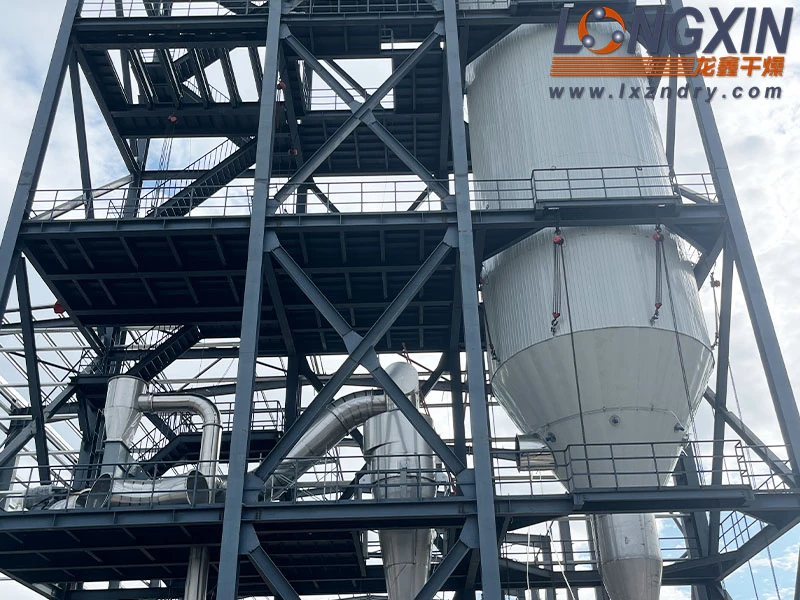
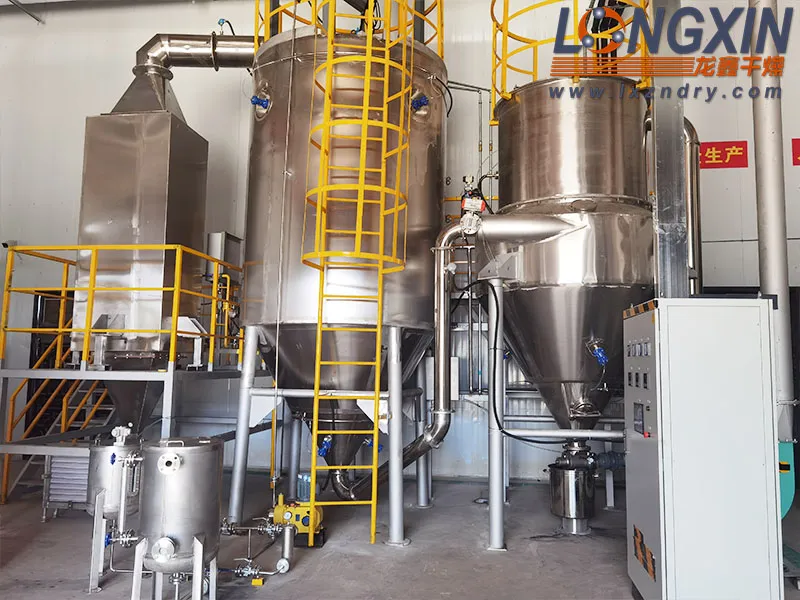
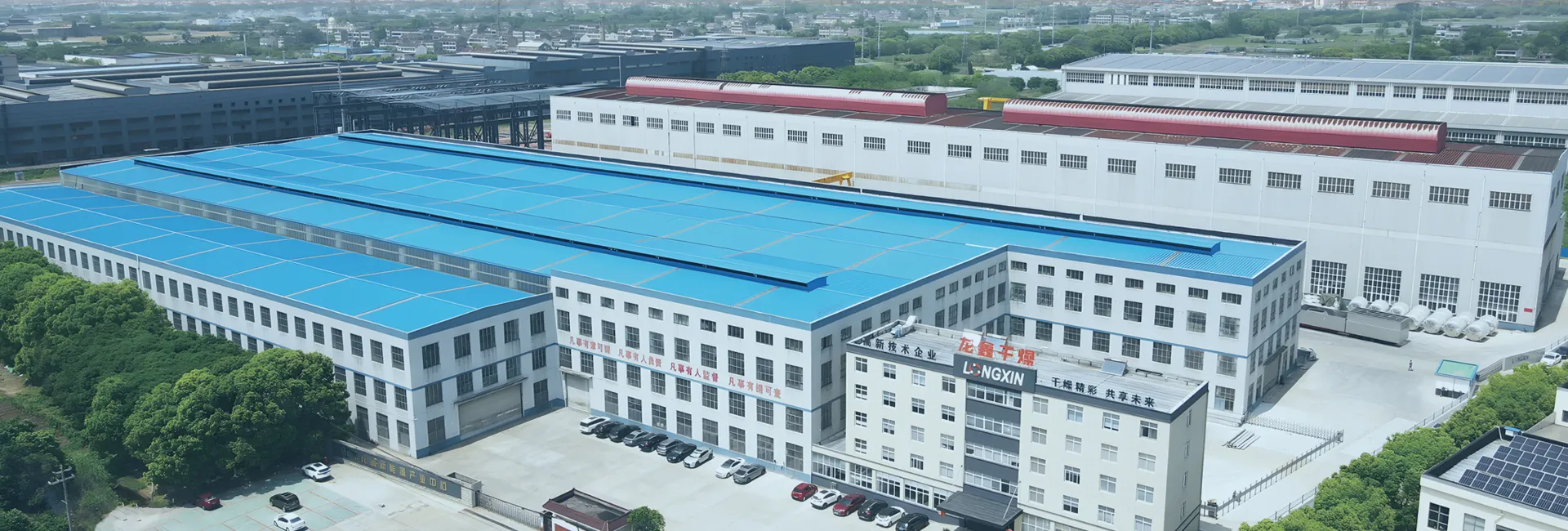
To address the major differences in drying requirements across PVP molecular weights and the limited flexibility of conventional equipment, Jiangsu Longxin Smart Drying Technology Co., Ltd. has drawn on its expertise in polymer drying to develop a pressure and pneumatic dual-mode spray dryer for PVP. The system integrates pressure and pneumatic atomization modes and allows flexible switching according to material characteristics. One machine can cover the drying requirements of PVP products ranging from low molecular weight to ultra-high molecular weight, providing an economical and flexible multi-grade drying solution.
1. Pressure-Nozzle Spray Drying Mode: Optimized for Large-Scale Production of Medium- and Low-Viscosity PVP
For medium- and low-viscosity PVP grades such as PVP-K30, the system can switch to pressure-nozzle spray drying. An aqueous PVP feed is pressurized by a high-pressure plunger pump and delivered to a pressure nozzle. The pressurized feed is discharged at high speed through the nozzle to form a high-speed liquid film, which breaks into fine, uniform droplets under aerodynamic forces. In general, droplet size decreases as pressure increases, while nozzle throughput increases with pressure. Feed pressure can therefore be adjusted to control the final particle size.
The atomized droplets contact heated, evenly distributed air in a co-current flow inside the drying chamber. Because atomization greatly increases the specific surface area of the droplets, moisture evaporates rapidly and drying and granulation are completed within a short time. The dried particles settle under gravity for collection, while exhaust gas is treated by the dust-removal system before discharge. This mode offers high production efficiency and is suitable for large-scale continuous manufacturing. It produces spherical particles with excellent flowability and solubility, consistently meeting the quality requirements of medium- and low-molecular-weight PVP in pharmaceutical, personal care and other applications.
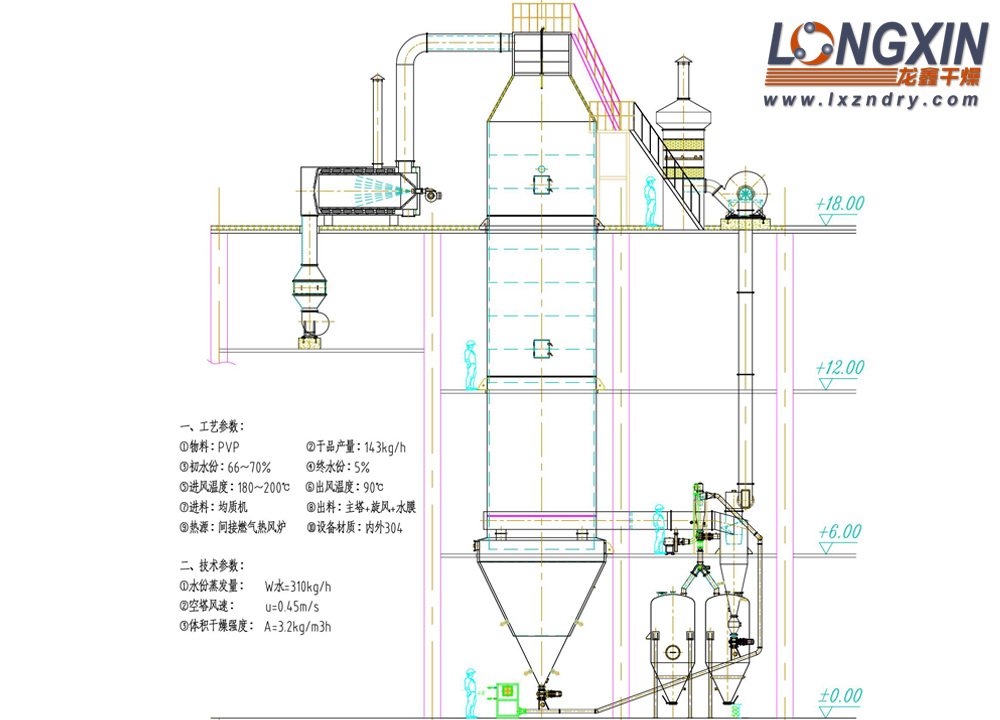
2. Pneumatic Spray Drying Mode: Overcoming the Atomization Challenge of Ultra-High-Molecular-Weight PVP
For ultra-high-molecular-weight, high-viscosity PVP grades such as PVP-K90, the system can switch to pneumatic spray drying. Compressed air provides the atomization energy. Clean, pressurized air is delivered through high-pressure piping to a pneumatic atomizing nozzle, where high-speed airflow shears the high-viscosity PVP feed into fine droplets. This effectively resolves the industry-wide difficulty of atomizing ultra-high-molecular-weight PVP.
In pneumatic mode, the feed is diluted, homogenized and preheated before being delivered to the nozzle, where it mixes with high-pressure air and is atomized. The resulting droplets contact clean hot air in a co-current flow inside the drying chamber. Moisture evaporates rapidly within tens of seconds, producing a free-flowing powder. Compared with conventional freeze drying and vacuum drying, pneumatic spray drying significantly reduces equipment investment and energy consumption while improving particle morphology and expanding the application range of ultra-high-molecular-weight PVP.
By switching flexibly between the two atomization modes, the system can process PVP products with different K values and viscosities. This enables manufacturers to adjust their product portfolios according to market demand, substantially reducing the production-line investment and operational complexity associated with multi-grade manufacturing while improving capacity flexibility and market responsiveness.
Dual-Mode Technology Delivers Higher Efficiency and Quality in PVP Production
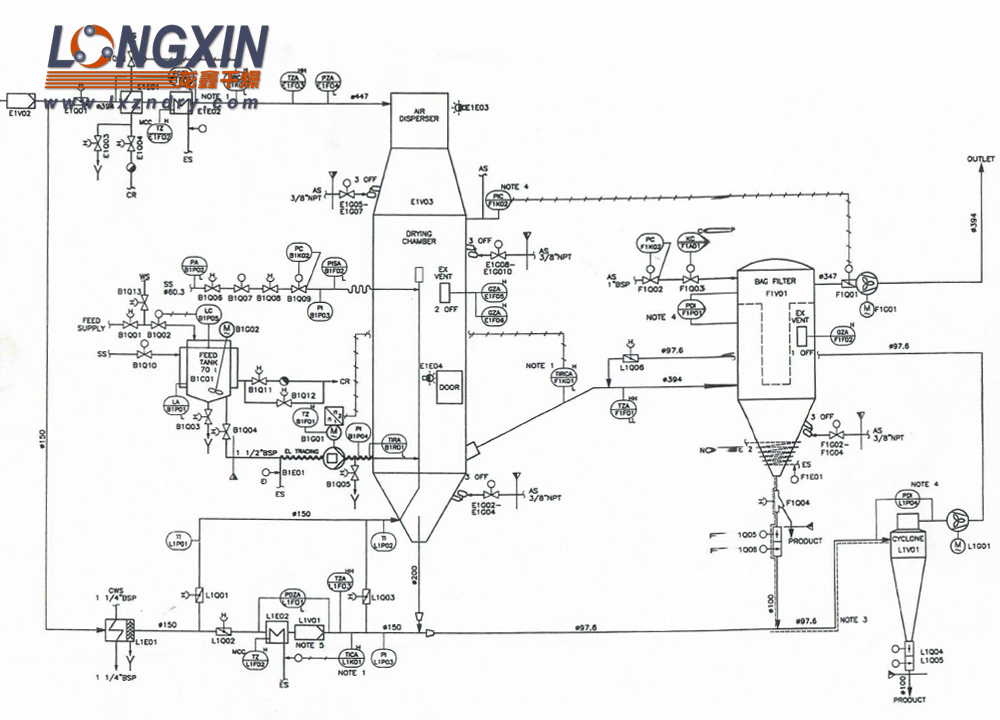
The main feature of the pressure and pneumatic dual-mode spray dryer is its ability to perform multiple duties through a rapidly switchable dual-mode atomizer, overcoming the single-application limitations of conventional drying equipment. The system has also been systematically optimized for drying efficiency, product quality, energy consumption, environmental performance, and operation and maintenance.
1. Multi-Grade Coverage and Greater Production Flexibility
The system covers the full range of PVP products from low to ultra-high molecular weight and can process grades including PVP-K30, PVP-K90, K117 and cross-linked povidone. Pressure or pneumatic drying can be selected according to material viscosity, product specifications and capacity requirements. Manufacturers producing multiple PVP grades can switch between products on one system rather than installing several independent lines, saving factory space and equipment investment while improving production scheduling flexibility.
2. High Drying Efficiency and Shorter Production Cycles
Both drying modes use atomization to greatly increase the specific surface area of the feed, expanding its contact area with hot air and significantly enhancing heat and mass transfer. In co-current drying, moisture in the droplets can evaporate within roughly ten to several tens of seconds, far faster than conventional oven drying and vacuum drying. The system supports continuous operation and higher hourly throughput, helping manufacturers shorten production cycles, improve delivery performance and respond quickly to market demand.
3. Consistent Quality for High-End Applications
A precise temperature-control system and uniform hot-air distribution prevent localized overheating during drying, avoiding discoloration and degradation while preserving PVP’s film-forming, binding and other core properties. The dried product consists of regular spherical particles with a uniform particle-size distribution, excellent flowability and solubility, and high purity. Key indicators such as moisture content and particle size remain highly consistent between batches, consistently meeting the quality requirements of pharmaceutical-, food- and electronic-grade applications and helping customers improve final-product performance.
4. Cascaded Energy Utilization and Lower Operating Costs
A waste-heat recovery system captures heat from the dryer exhaust through a heat exchanger and uses it to preheat incoming fresh air, improving thermal efficiency and reducing heat-source consumption. Compared with spray dryers without heat recovery, the system achieves significantly higher thermal efficiency; compared with freeze drying and vacuum drying, it substantially reduces energy consumption. This helps manufacturers lower operating costs and improve price competitiveness.
5. Fully Enclosed, Clean Design for Green Production
The system uses a fully enclosed structure. Material-contact parts are made of 304 stainless steel with mirror-polished internal surfaces, preventing material buildup and external cross-contamination while ensuring product cleanliness. A multi-stage dust-removal system combining a cyclone separator and bag filter efficiently captures fine dust, achieving high material recovery and compliant exhaust-emission concentrations. This reduces raw-material waste, improves the workshop environment and supports cleaner production and green manufacturing.
6. Intelligent Control for Simpler Operation and Maintenance
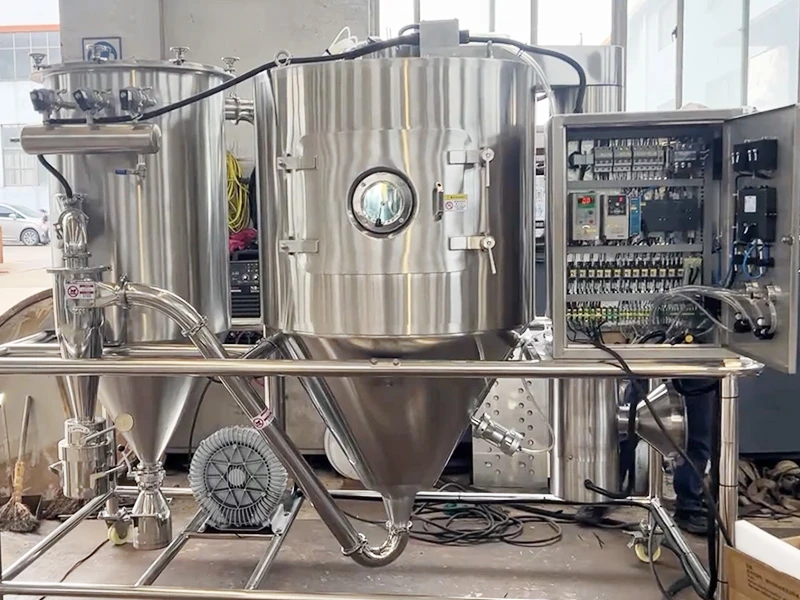
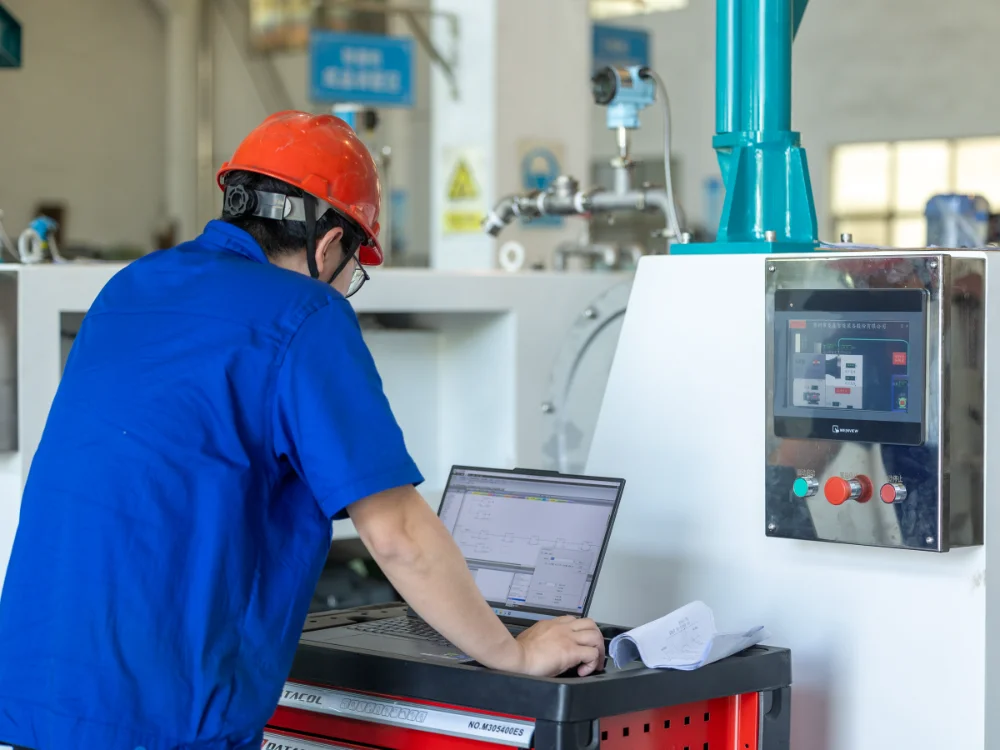
The dryer is equipped with a PLC control system and human-machine interface (HMI) for real-time monitoring of inlet-air temperature, outlet-air temperature, atomization pressure, feed flow rate and other core parameters. It supports automatic parameter adjustment and visual display of operating status. The two drying modes can be switched quickly through the control system, simplifying operation and reducing the technical skill required from operators. A fault self-diagnosis function provides early warnings for common operating abnormalities, reducing downtime and improving equipment stability.
PVP Drying Enters the Dual-Mode Era, Adding Another Intelligent and Green Manufacturing Solution
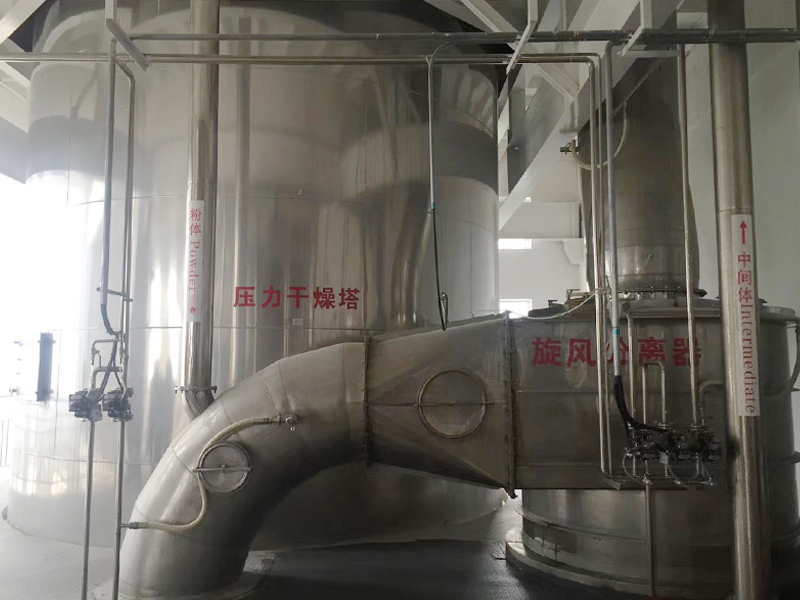
The performance advantages of the dual-mode PVP spray dryer stem from systematic iteration and optimization of conventional drying technology. Targeted improvements have been made across the atomization system, temperature control, separation and recovery, structural design, and safety and compliance, effectively addressing many shortcomings of conventional PVP dryers.
1. Integrated Dual-Mode Atomization System
The system integrates pressure and pneumatic atomization units in a single dual-mode design that can be switched quickly according to production requirements.
- The pressure nozzle uses a wear-resistant ceramic insert for long service life and uniform, controllable droplet size.
- The pneumatic nozzle has flow channels optimized for high-viscosity materials. High-speed air shear enables efficient atomization, resolving the technical challenge of atomizing ultra-high-molecular-weight PVP.
- Both atomization systems use quick-install structures for easy removal, cleaning and replacement, meeting the cleaning requirements of multi-grade production.
2. Precise Temperature Control and Uniform Hot-Air Distribution
To address insufficient temperature accuracy and uneven hot-air distribution in conventional dryers, the system uses an intelligent PID temperature-control system and a superheated-steam heat source to precisely regulate inlet-air temperature with minimal fluctuation.
- A hot-air distributor at the top of the drying chamber, combined with multilayer stainless-steel flow straighteners and a conical chamber, delivers hot air vertically and uniformly. Temperature distribution across any cross-section of the chamber is uniform, preventing material discoloration or degradation caused by localized overheating.
- Using outlet-air temperature feedback, the system automatically adjusts feed rate and hot-air parameters to maintain stable product moisture and improve batch-to-batch consistency.
3. Multi-Stage Material Separation and Waste-Heat Recovery
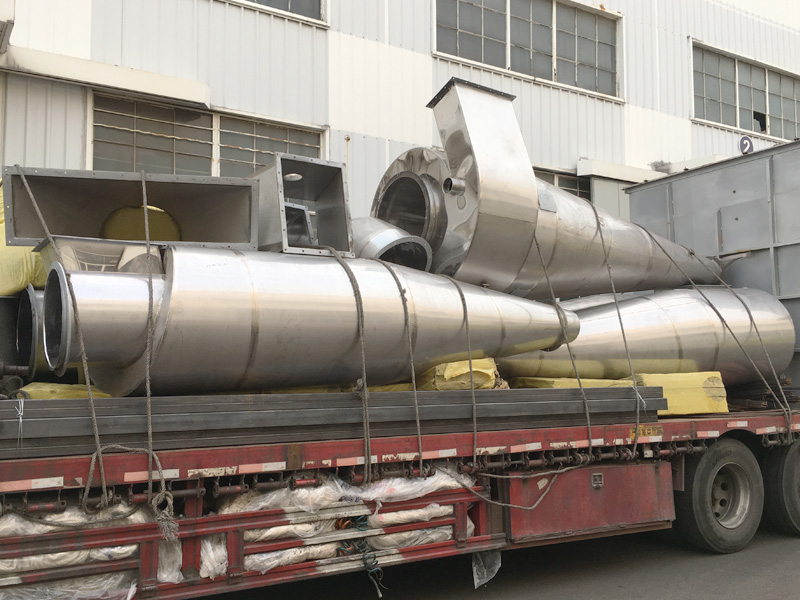
For material recovery, the system uses a multi-stage separation structure combining dual cyclones and a bag filter.
- Two cyclones—one with clockwise and one with counterclockwise airflow—operate in parallel to improve gas-solid separation and collect most finished particles.
- A downstream bag filter captures remaining fine dust, increasing material recovery and reducing raw-material loss.
- A heat-recovery exchanger installed in the exhaust duct uses waste heat to preheat fresh air, enabling cascaded use of thermal energy, reducing energy consumption per unit of product and improving operating economy.
4. Fluid-Dynamics-Optimized Tower and Maintenance Structures
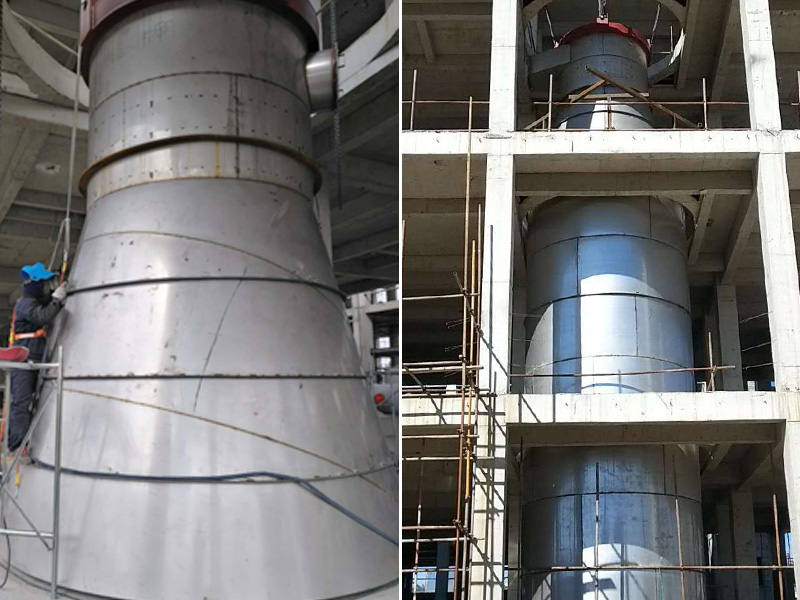
The drying-tower structure is optimized through fluid-dynamics simulation. The upper cone uses an optimized angle, and the bottom cone angle is mechanically optimized to reduce wall adhesion and material retention.
- Pneumatic wall knockers periodically vibrate the tower wall to further reduce adhesion.
- Key components use modular quick-release designs. Atomizers, cyclones and filter bags can be removed quickly, shortening cleaning and maintenance time.
- Observation ports and lighting allow operators to monitor conditions inside the drying chamber in real time.
5. Comprehensive Safety and Compliance Design
The system includes a comprehensive safety-interlock system with automatic shutdown protection for overtemperature and overpressure, along with code-compliant explosion-relief vents.
- Material-contact parts use stainless steel suitable for pharmaceutical-grade requirements, with mirror-polished internal surfaces and no dead corners. An optional clean-in-place (CIP) system meets the clean-production requirements of the pharmaceutical and food industries.
- The equipment is designed and manufactured in accordance with relevant safety standards for the chemical and pharmaceutical industries, providing reliable support for compliant production.
Overcoming Multi-Grade PVP Drying Bottlenecks and Building a Clean, Energy-Efficient Production Path
The PVP industry is moving toward higher-end products, greater product diversity and intelligent manufacturing. Upgrading drying technology is therefore essential to high-quality industry development. The pressure and pneumatic dual-mode PVP spray dryer not only resolves the incompatibility of conventional drying processes across different PVP molecular weights, but also uses systematic technical optimization to balance efficiency, quality, energy consumption and environmental performance.
As a company specializing in polymer material drying technology, Longxin Smart continues to focus on customer and industry requirements, advancing process upgrades through technology innovation. The company provides PVP manufacturers with efficient, flexible and reliable drying solutions that support quality improvement, product upgrading and sustainable development across the PVP industry.