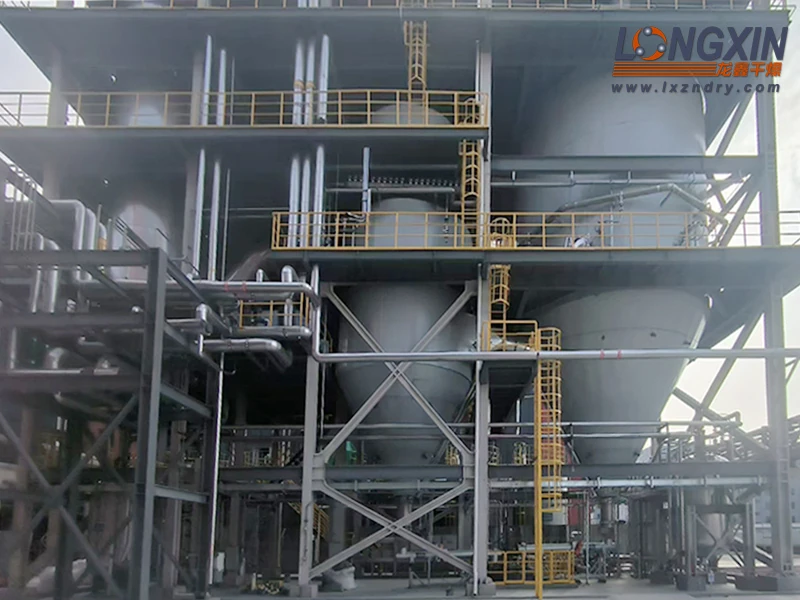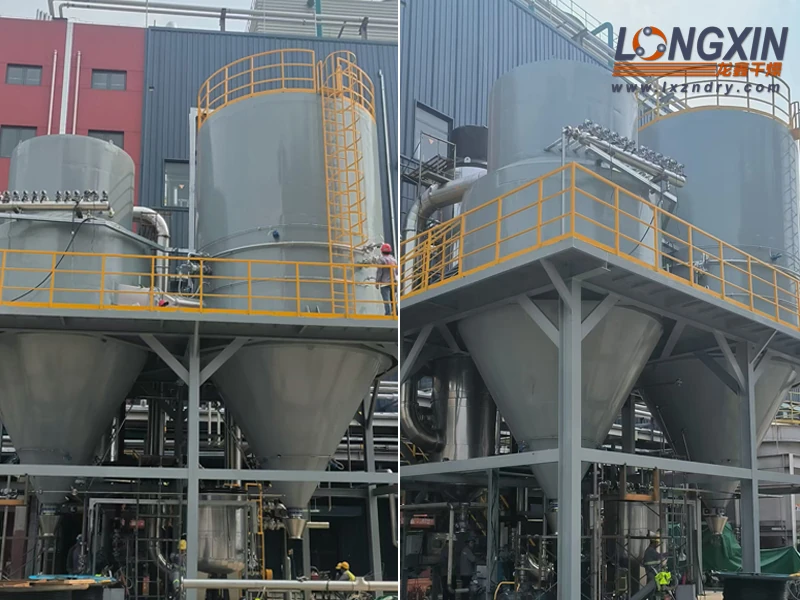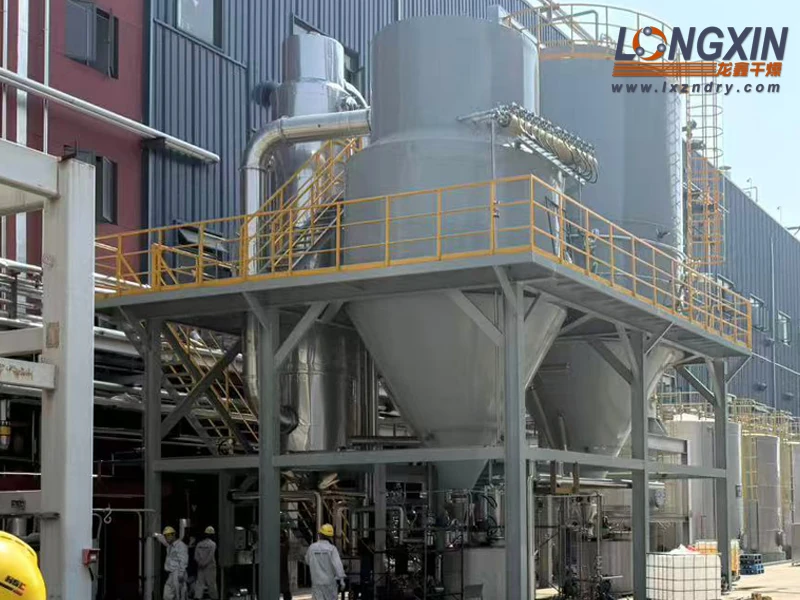
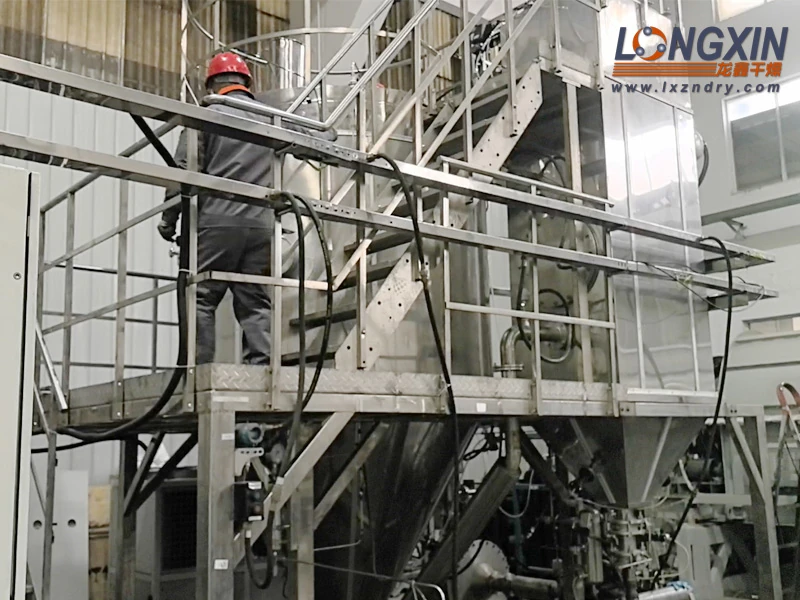
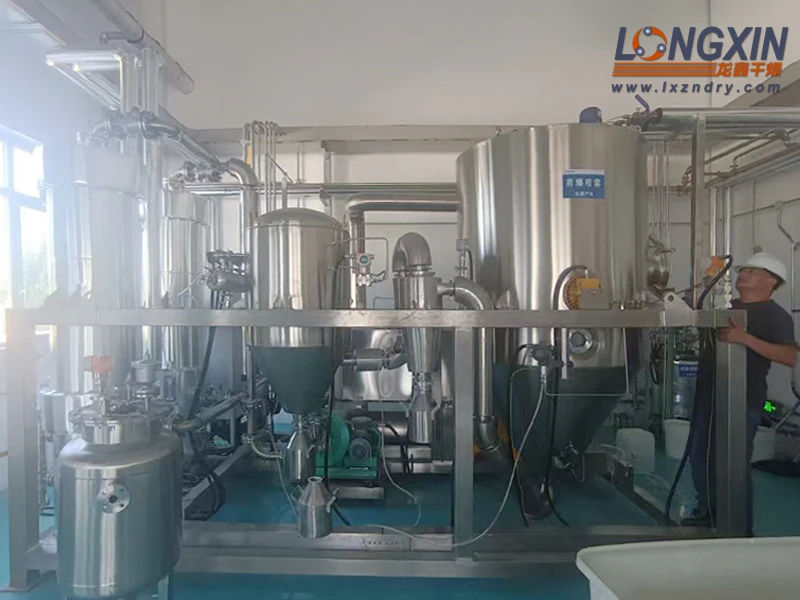
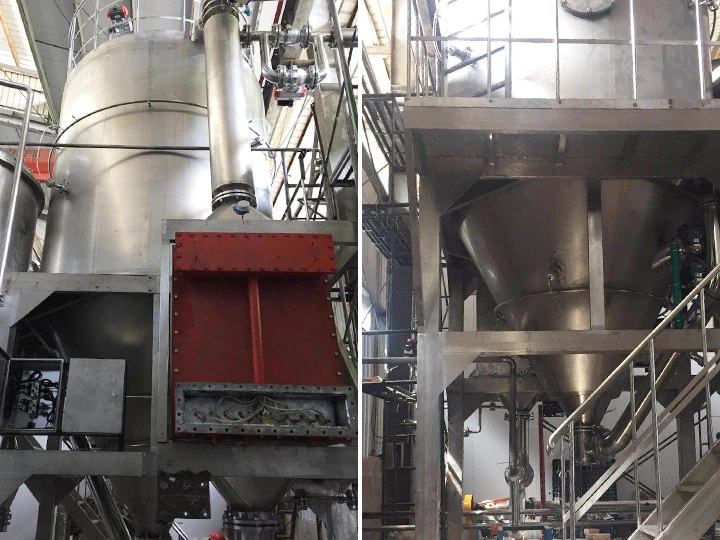
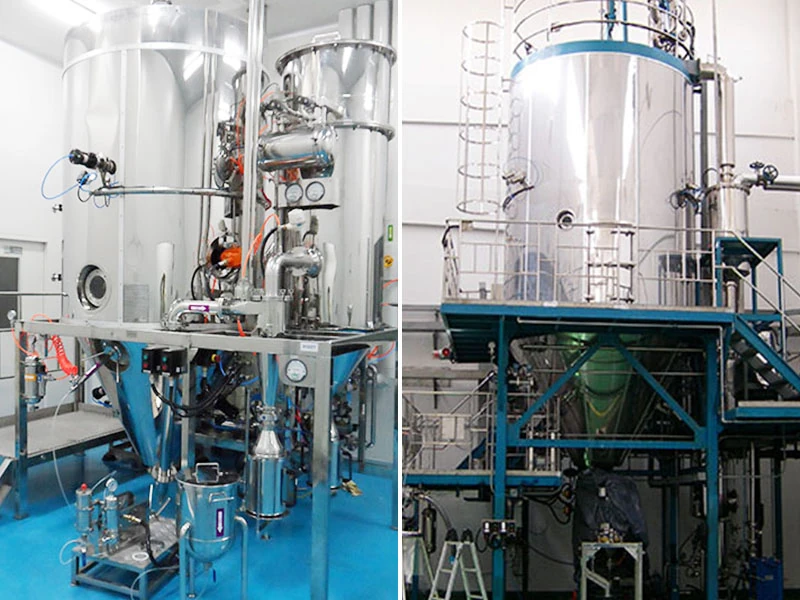
Equipment Overview
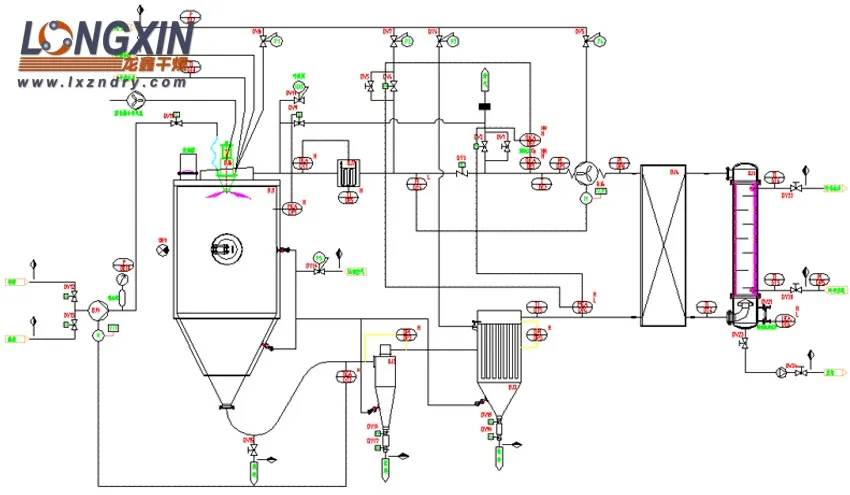
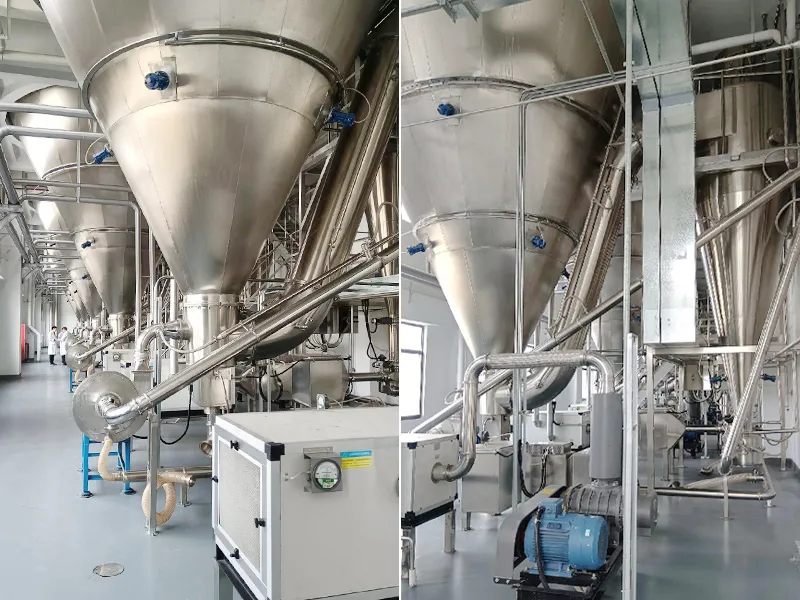
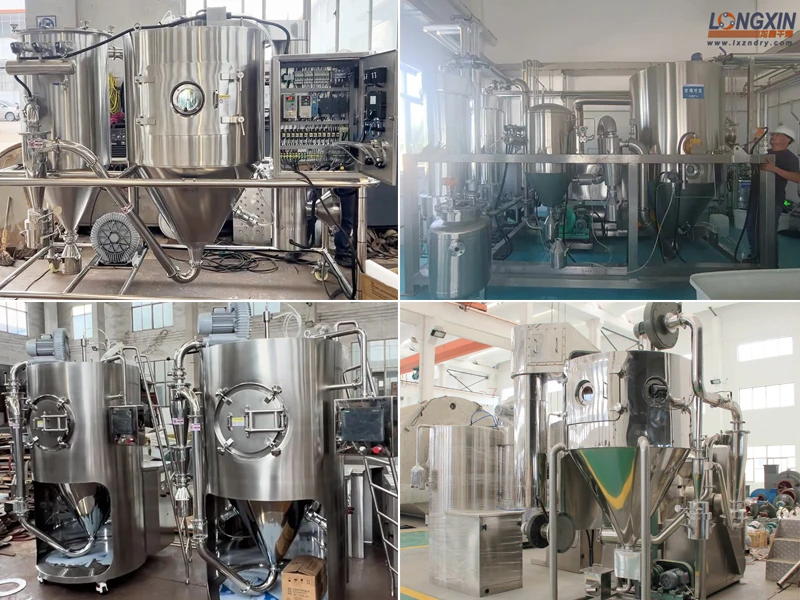
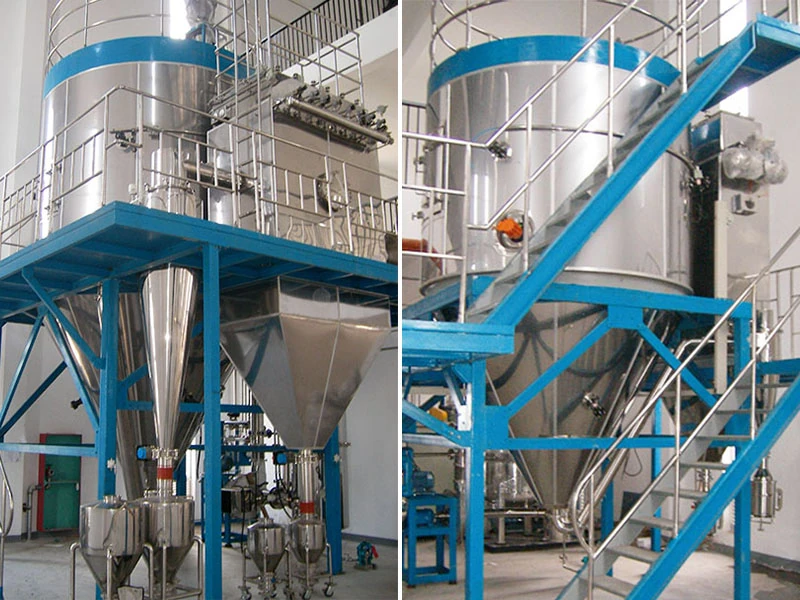
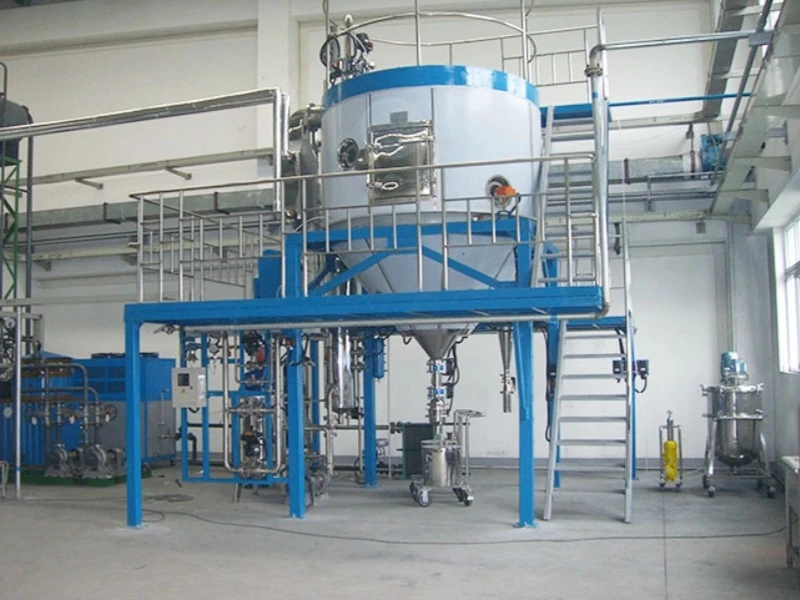
The Closed-cycle Spray Dryer forms a closed circulation loop in which the heat carrier can be recycled. For drying materials whose volatiles are organic chemical solvents, or materials that are toxic or, once released, hazardous to people and the environment — as well as liquids containing organic solvents or products that are prone to oxidation, ignition or explosion — this type of process is generally required, because such materials must not come into contact with oxygen. For this reason the heat carrier is mostly an inert gas (such as nitrogen or carbon dioxide); this method is also known as inert gas drying. After gas-solid separation, the tail gas discharged from the dryer still has to pass through a condenser to recover the solvent or remove moisture, and is then heated by a heater before re-entering the dryer for reuse. Through the heat carrier and the closed-loop circulation, we can effectively avoid the high-temperature hazards that materials may encounter during drying, prevent contact with oxygen during the spray drying process, and recover more than 90% of the dust.
The Closed-cycle Spray Dryer has been reliably applied in closed-loop spray drying processes for suspensions prepared with organic solvents such as ethanol, acetone, cyclohexane and toluene, using an inert gas (or nitrogen) as the drying medium. Throughout the entire process the product is not oxidized, the medium can be recovered, and the inert gas (or nitrogen) can be recycled and reused. As a closed-loop system designed for organic solvent recovery, it demands extremely high explosion-proof control standards, extremely high automatic control performance, and stringent GMP compliance. It is commonly used for the spray drying of precision ceramics, pharmaceutical products, battery materials and cemented carbide (WC-Fe) powders.
Structure
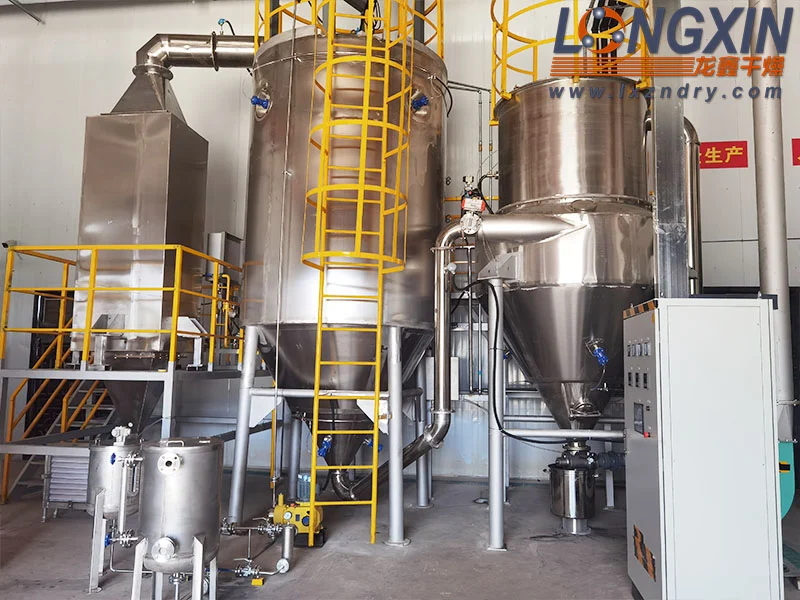
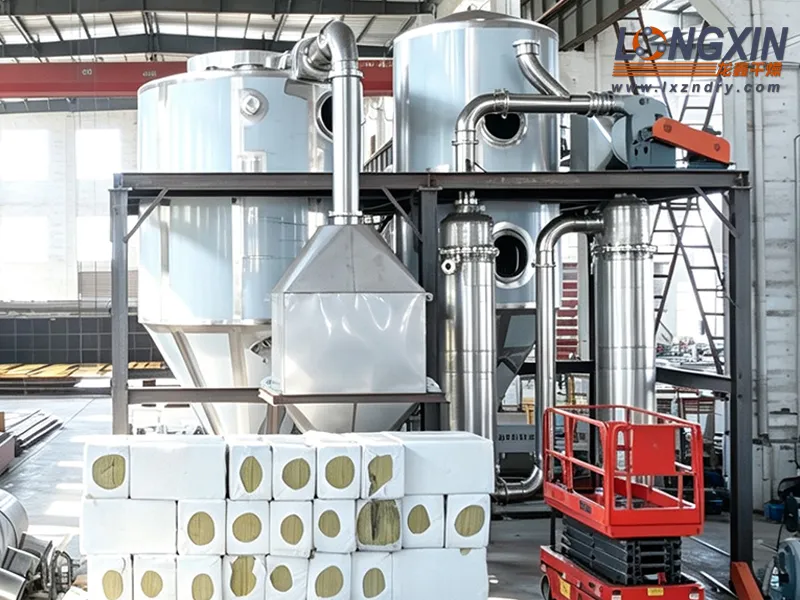
(1) Feed and atomization system: comprises the feed pump, pipeline filter, feed liquid piping and atomizer, among other components. The feed pump delivers the material to the atomizer, while the pipeline filter removes impurities from the material to ensure proper atomization.
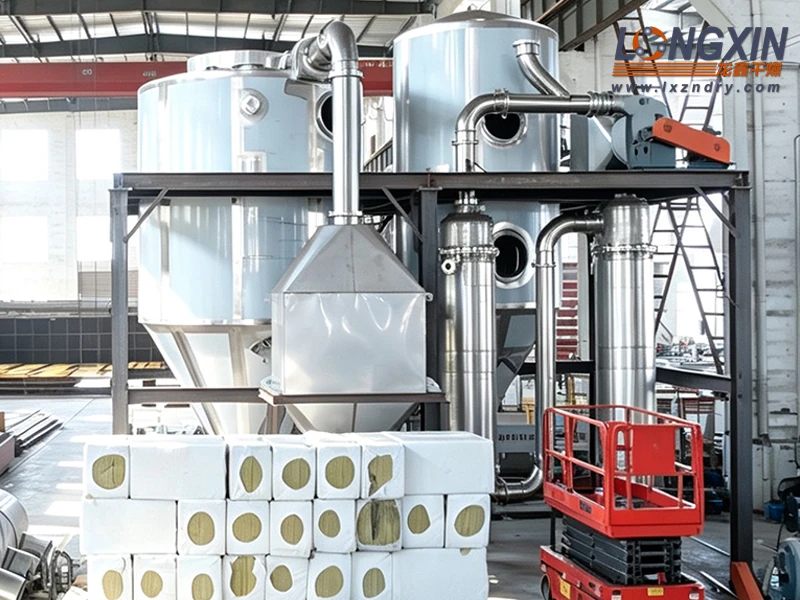
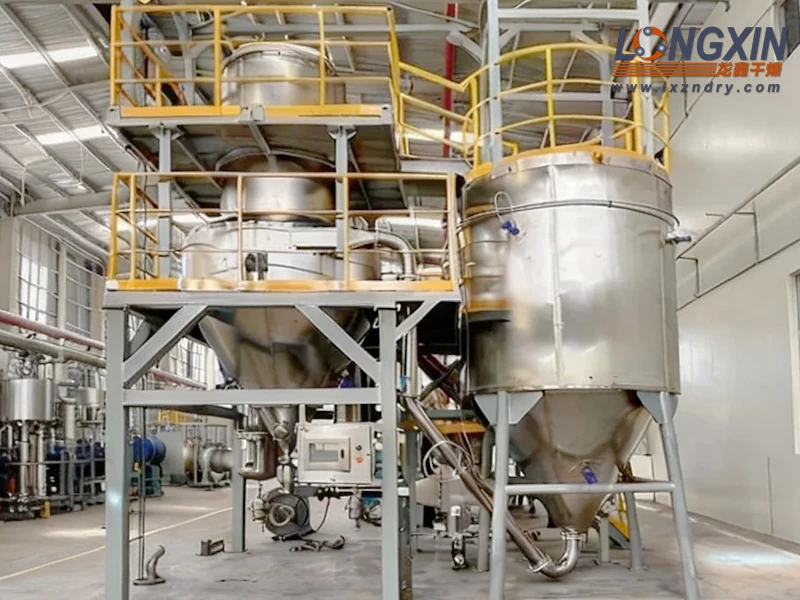
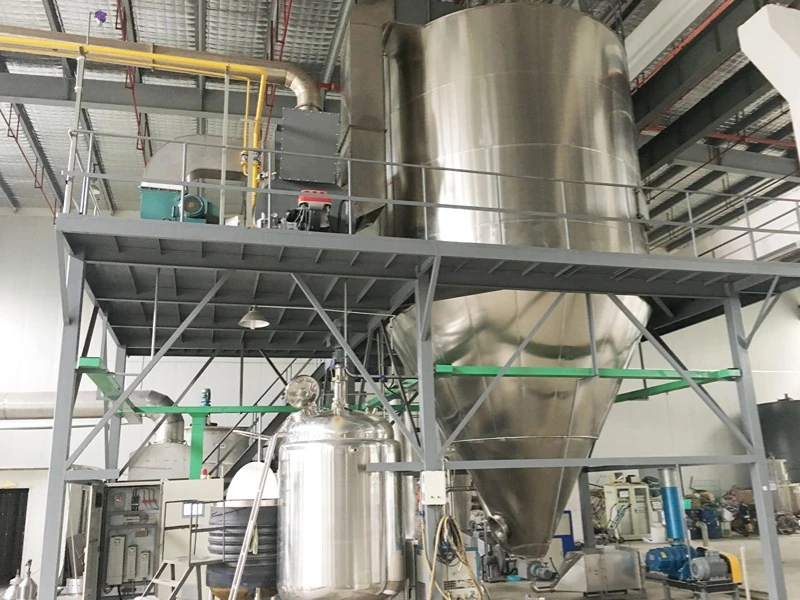
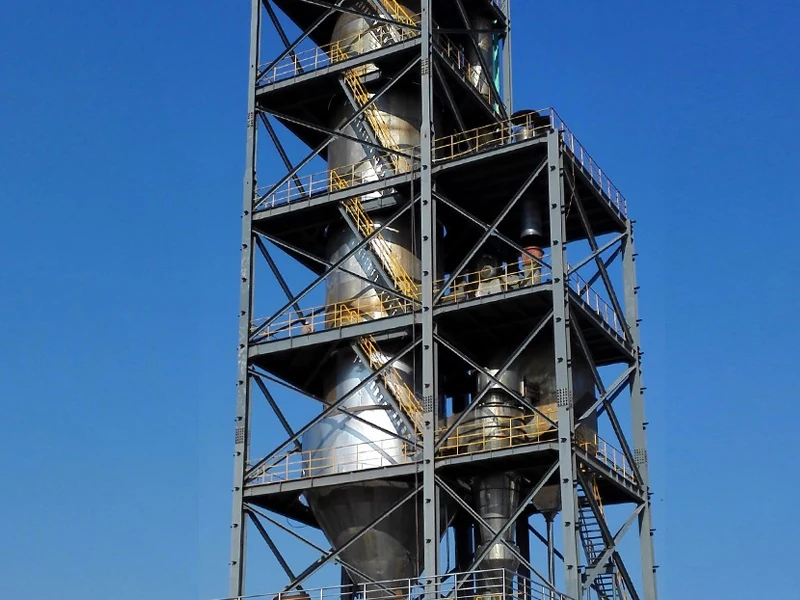
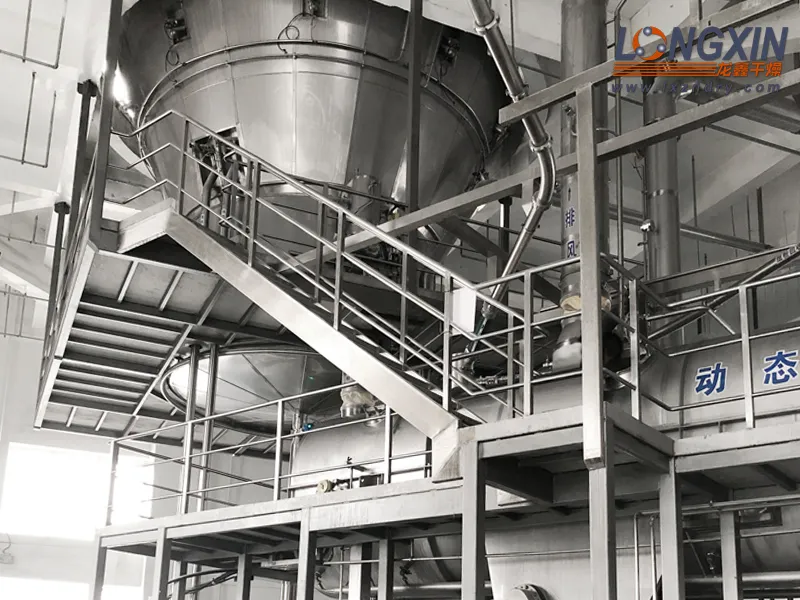
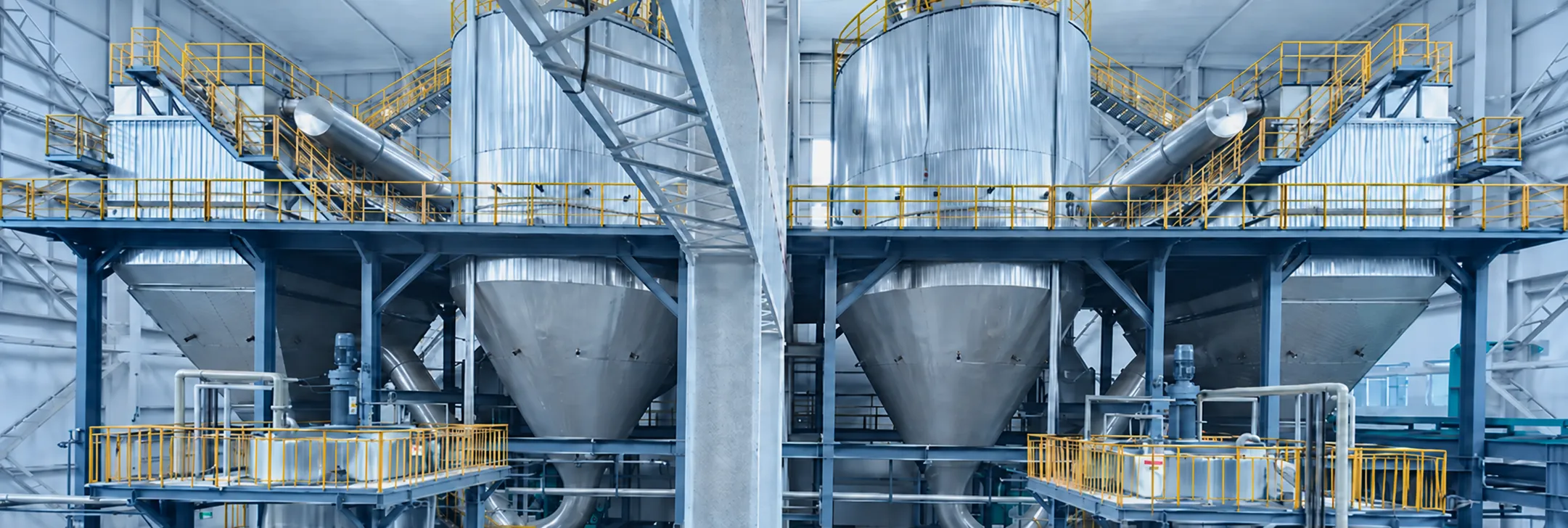
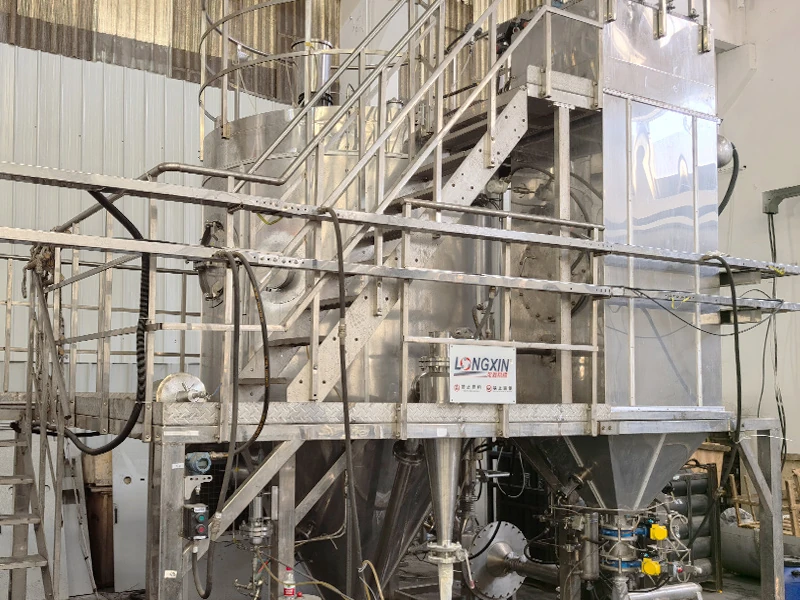
(2) Main circulation, product collection and dust removal system: mainly composed of the drying tower, hot air distributor, explosion-proof electric heating unit, cyclone separator and bag filter. The drying tower is where the material is dried; the hot air distributor distributes nitrogen evenly inside the drying tower; the cyclone separator and bag filter collect the dried product and filter dust out of the gas.
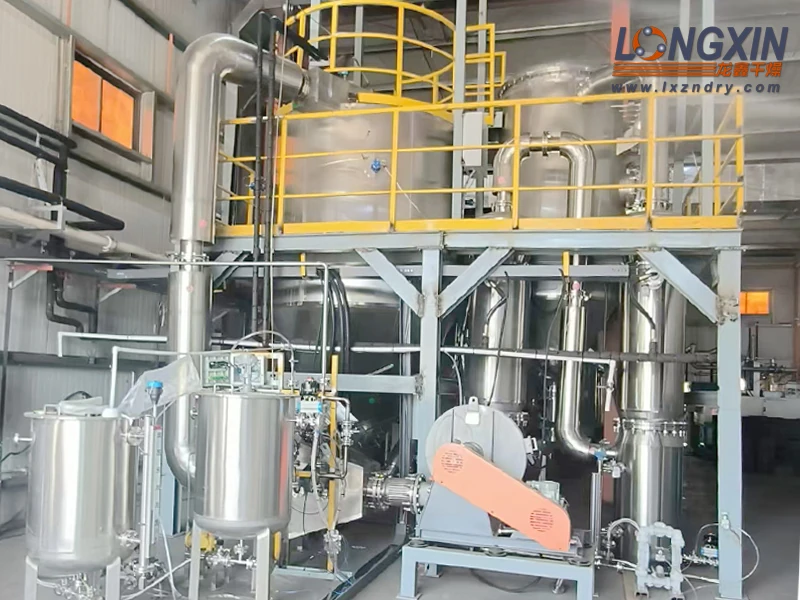
(3) Solvent recovery system: usually consisting of a condensing tower, piping, valves and other components, used to recover the solvent evaporated during drying, thereby lowering production costs and reducing environmental pollution.
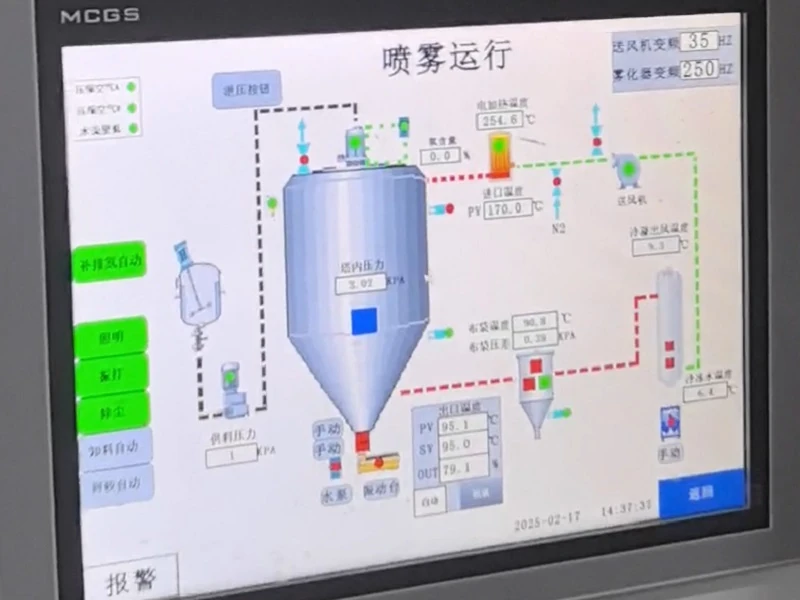
(4) Nitrogen make-up and venting system: equipped with an oxygen content analyzer to monitor the oxygen level inside the drying tower in real time and, by controlling the opening and closing of the nitrogen make-up valve and the exhaust valve, keep the oxygen content within the tower inside the range required by the process so as to ensure production safety.
Working Principle
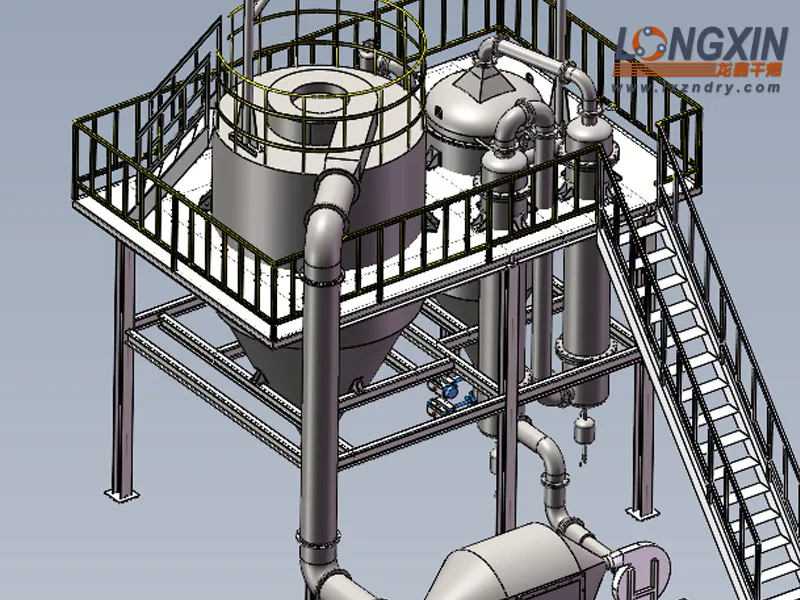
The Closed-cycle Spray Dryer combines spray drying with fluidized drying. The feed liquid is atomized into fine droplets by compressed nitrogen or centrifugal force and sprayed into the drying chamber, where it contacts hot nitrogen gas and exchanges heat with it so that the solvent evaporates, thereby drying the material. At the same time, the circulating airflow in the system keeps agitating and dispersing the suspended particles inside the drying chamber, ensuring uniformity of drying and consistent product quality.
The whole process takes place in a closed circulation loop, and the heat carrier (such as an inert gas) can be recycled. For materials that are easily oxidized, flammable or explosive, or that contain organic solvents, the heat carrier is mostly an inert gas (such as nitrogen or carbon dioxide). After gas-solid separation, the tail gas discharged from the dryer still has to pass through a condenser to recover the solvent or remove moisture, and is then heated by a heater before entering the dryer again for reuse.
Technical Features
(1) High product purity: nitrogen is an inert gas, and during drying it prevents the material from coming into contact with oxygen and thus from oxidizing, discoloring or deteriorating, thereby guaranteeing the quality and purity of the dried product. It can therefore be widely used in industries with high product quality requirements, such as pharmaceuticals and food.
(2) Low energy consumption: advanced heat energy recovery technology is adopted; through the nitrogen circulation system, the heat generated during drying is recovered and recirculated, greatly improving energy utilization and reducing energy consumption and production costs.
(3) Fast drying speed: spray drying technology can rapidly break liquid materials down into tiny particles, increasing the material's surface area, which favors heat transfer and moisture evaporation; combined with the circulation effect of the nitrogen circulation system, heat transfer is accelerated, making the drying process faster, raising production efficiency and shortening the production cycle.
(4) Simple operation and easy maintenance: with an automatic control system, operators only need to carry out simple settings and adjustments to complete the entire drying process; moreover, the equipment is relatively easy to clean, which saves maintenance costs.
(5) High safety: the entire drying process takes place in a closed system, which effectively prevents the volatilization and leakage of organic solvents, reduces hidden hazards such as fire and explosion, and safeguards the personal safety of operators and the safety of the production environment.
Advantages
(1) The closed-loop circulation system is applied to explosion-proof spray dryers: the Closed-cycle Spray Dryer uses nitrogen as the heat transfer medium as well as the carrier gas, achieving closed-loop circulation in a sealed state, thereby effectively achieving safety in drying liquid materials containing organic solvents and providing oxidation resistance for easily oxidized wet materials during the drying process.
(2) The Closed-cycle Spray Dryer adopts a new type of spray drying technology, making possible nitrogen-powered atomization of high-solid-content, viscous and thick liquid materials that conventional centrifugal spray drying cannot match, thereby raising production capacity and reducing energy consumption by more than 70%, achieving remarkable energy-saving and high-output production results.
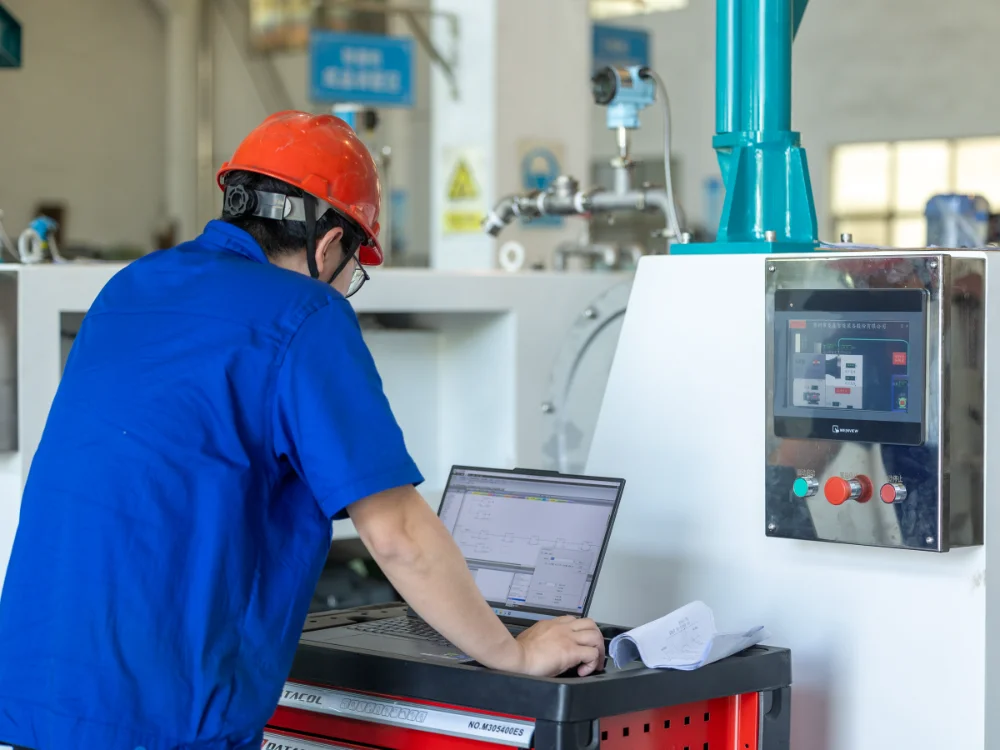
(3) The application of intelligent automatic control technology has upgraded conventional centrifugal spray drying equipment; the Closed-cycle Spray Dryer adopts online monitoring and self-diagnostic control functions to ensure safe production when drying liquid materials containing organic solvents, and its intelligent control system offers a high degree of automation. The application of automatic differential-pressure transmitters and online oxygen detection technology makes the system safer and the product quality better assured.
(4) The Closed-cycle Spray Dryer achieves the recovery and reuse of materials containing organic solvents during the drying process. On the basis of solving the difficulties of drying and heavy waste gas emission pollution in the relevant industries, it realizes solvent recovery and reuse, delivering practical energy-saving and emission-reduction results.
(5) It innovates a leak-free sealing technology for the shaft end of the circulation fan, effectively solving the leakage problems of systems of this kind.
Process Flow Diagram 1 — Conventional
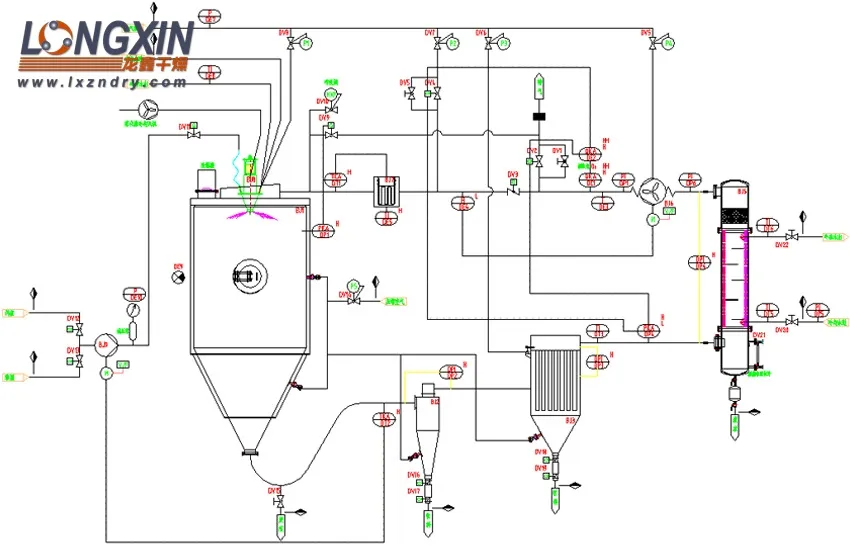
Process Flow Diagram 2 — With Waste Heat Recovery Unit