Equipment Overview
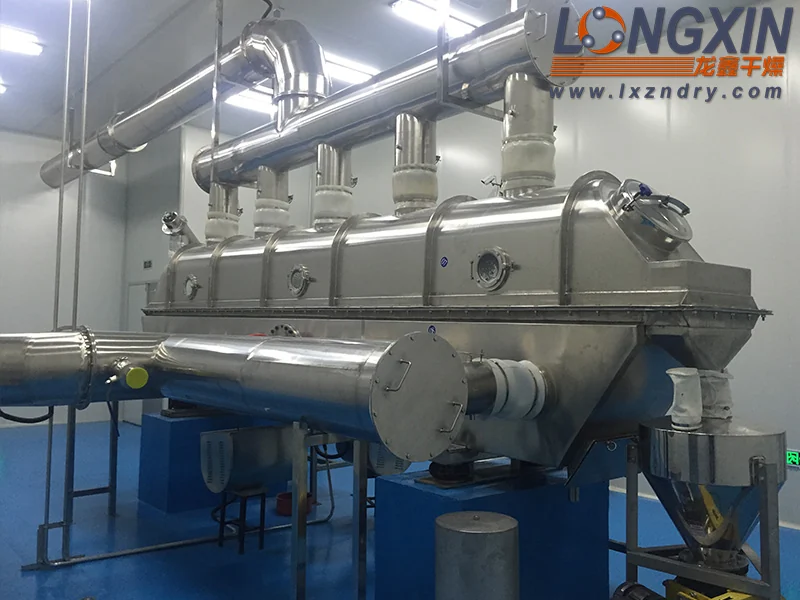
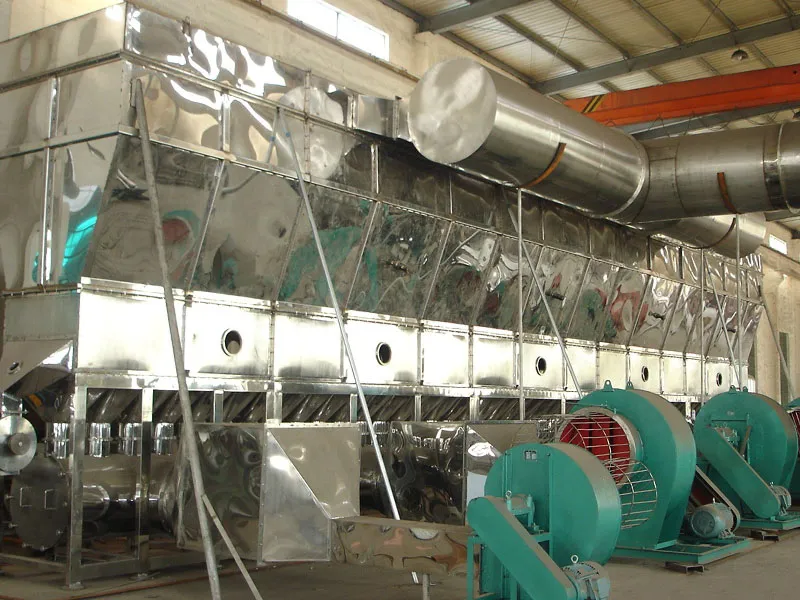
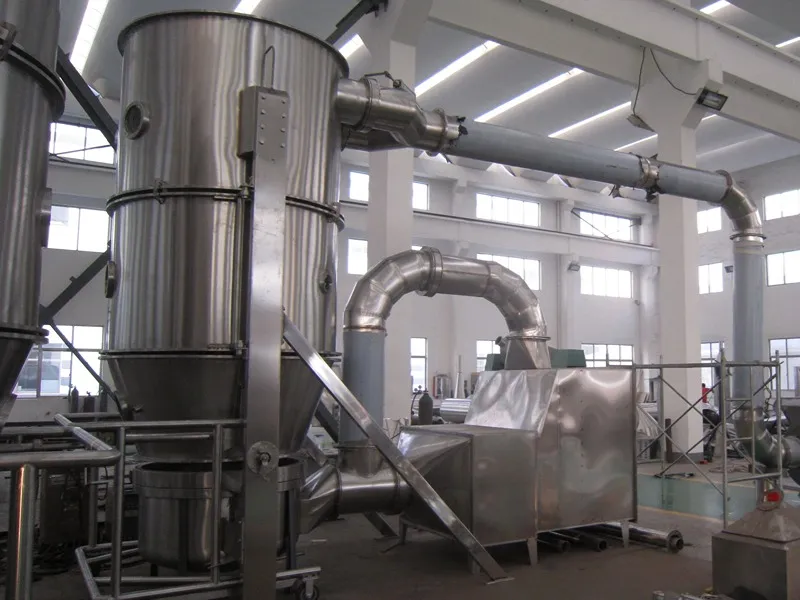
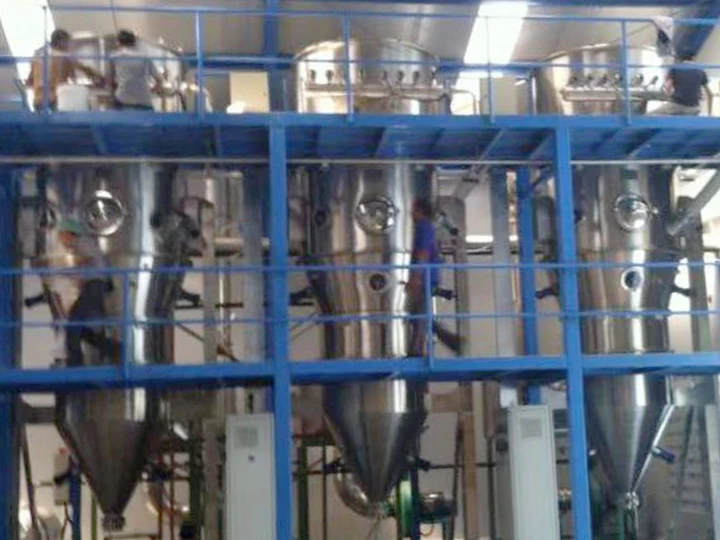
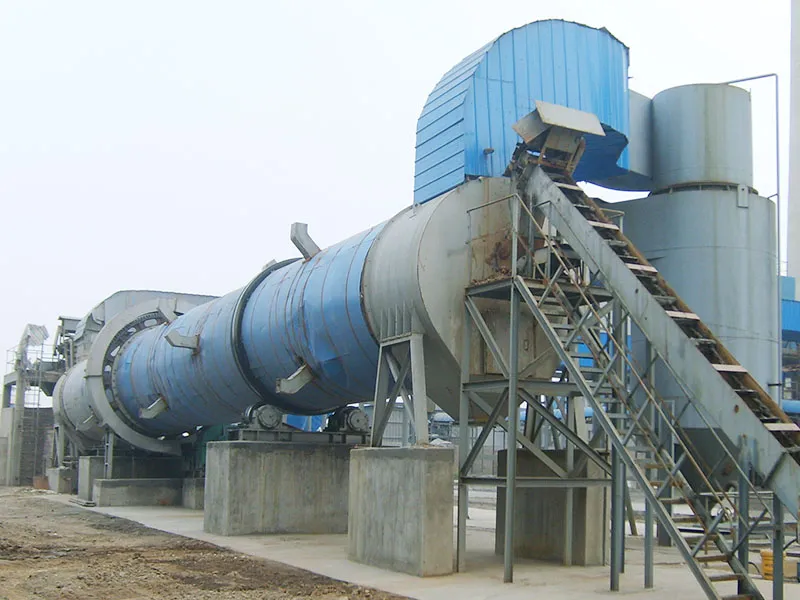
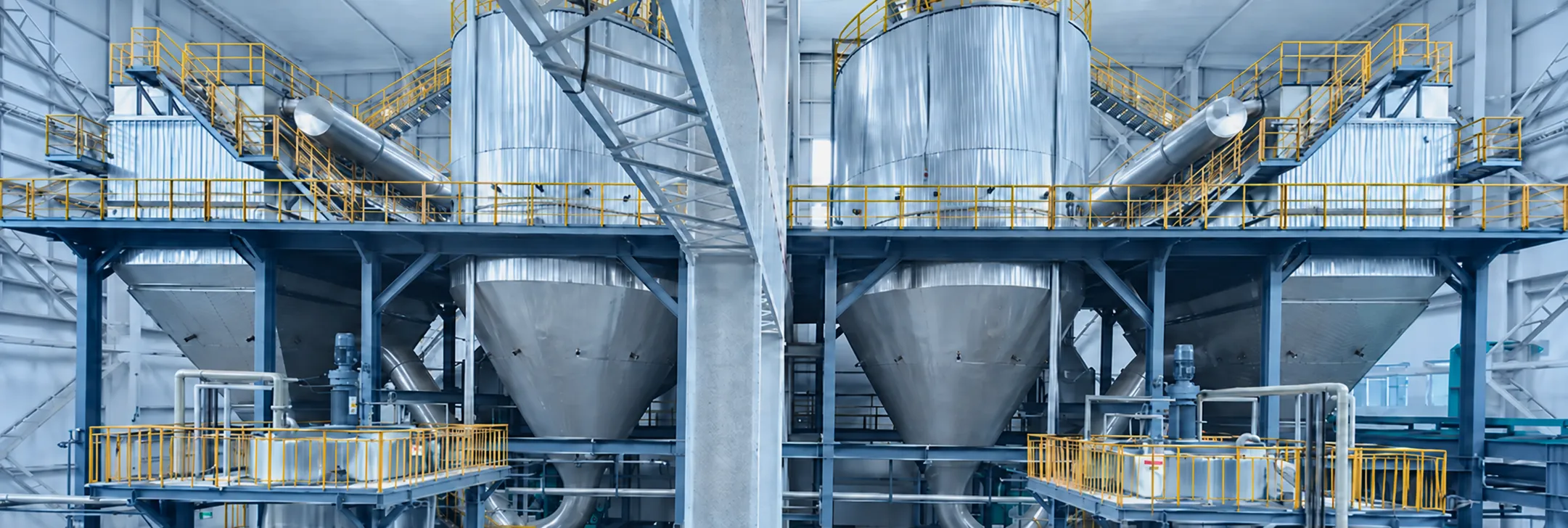
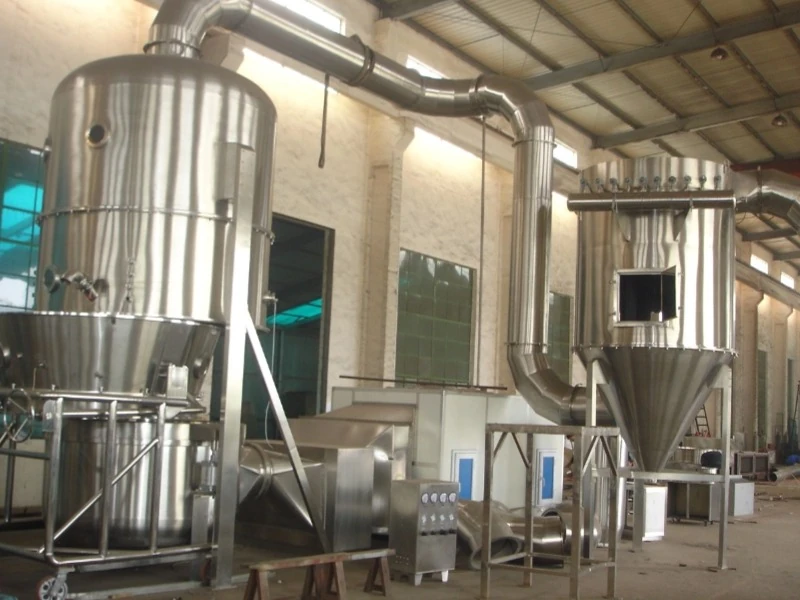
The Efficient Fluid Bed Dryer, also known as a fluid bed dryer or boiling bed dryer, is a material drying device widely used in the pharmaceutical, chemical, food and other industries. Its working principle is to use hot air to bring granular material into a fluidized state similar to that of a liquid, thereby accelerating the drying process.
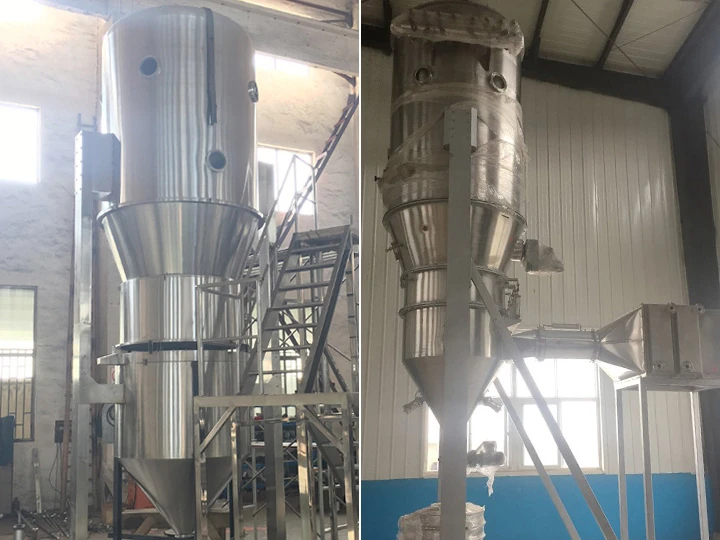
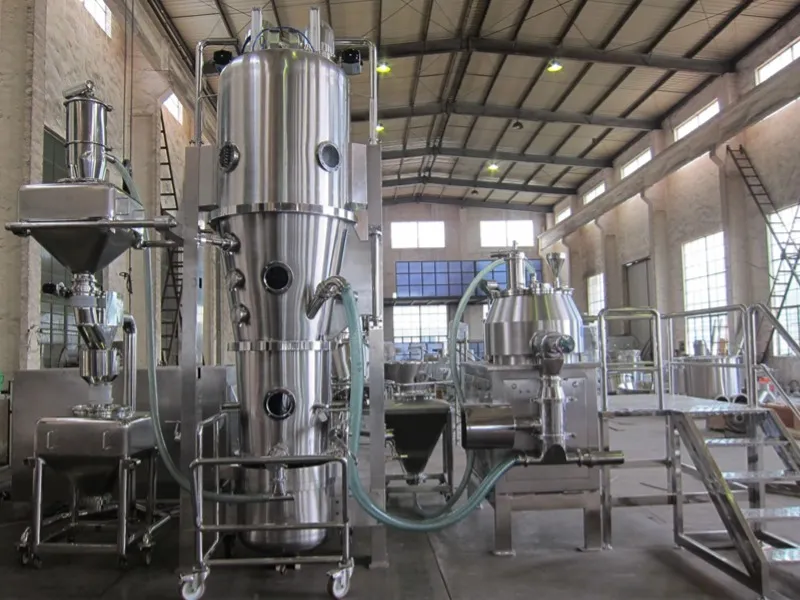
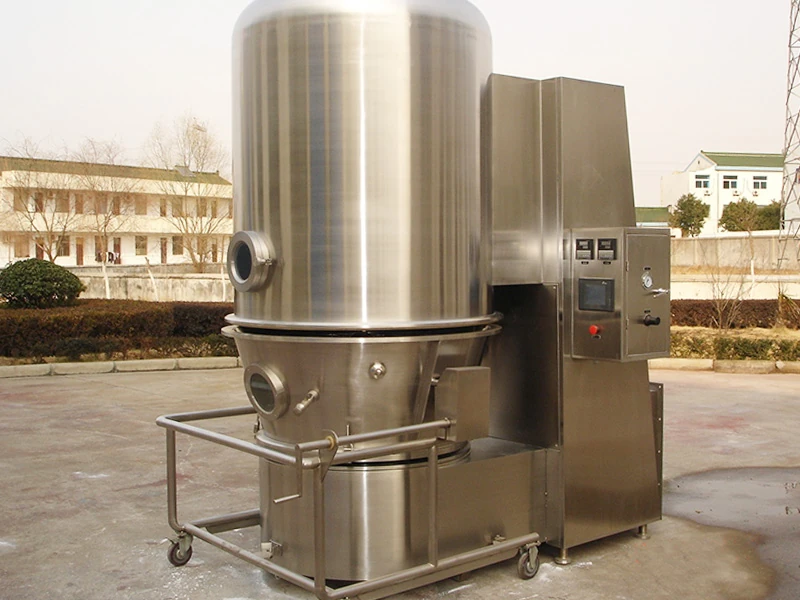
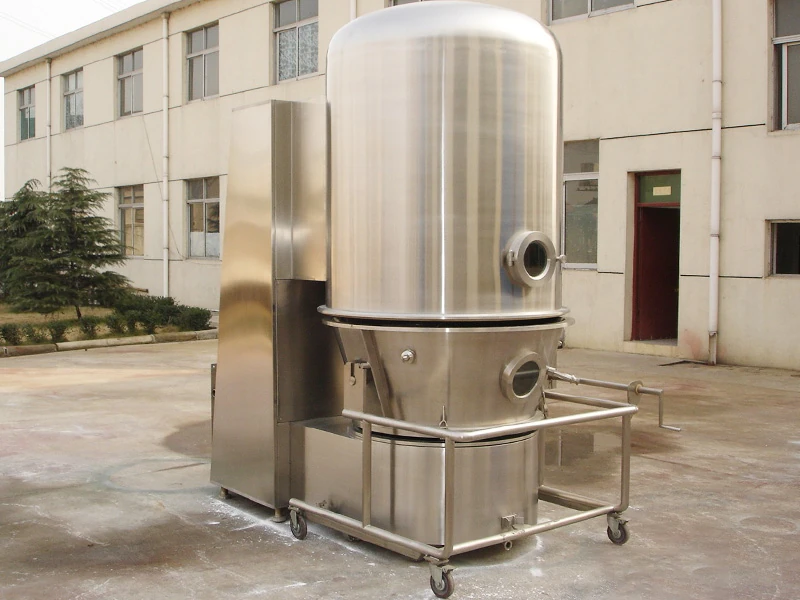
The GFG type Efficient Fluid Bed Dryer is a new, highly efficient type of dryer developed to meet the requirements of GMP pharmaceutical engineering design. It can be used in combination with the oscillating granulator and the GHL high-efficiency wet-type granulator, and it has a wider fluidization range than the conventional horizontal XF type fluid bed dryer.
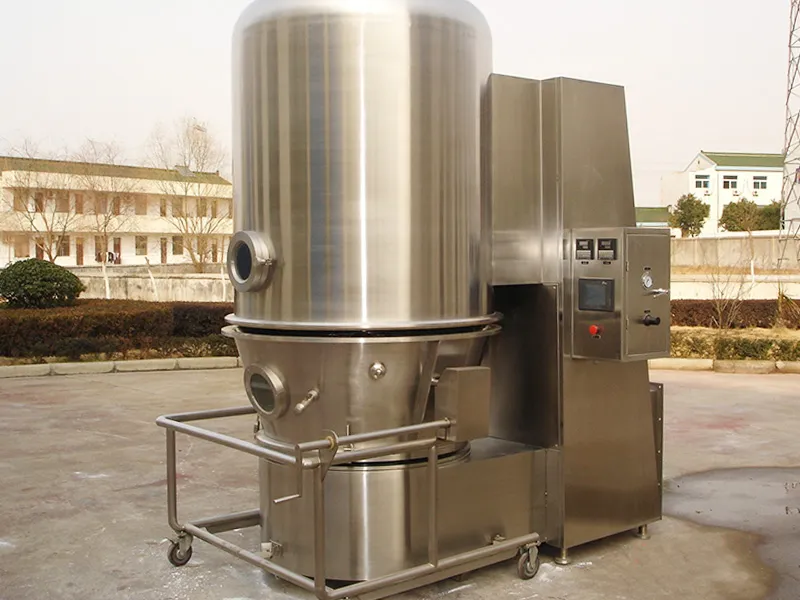
Efficient Fluid Bed Dryer — Working Principle
The material to be dried (granules or fine powder) is loaded into the hopper of the dryer. After the air has been dedusted through the filter (meeting the Class 100,000 purification requirement), it is heated by the heater to the temperature required for drying. The hot air passes through the air distribution plate at the bottom of the hopper and enters the main tower, where it contacts the material being dried, fluidizing the material in the hopper while removing moisture and drying it. The evaporated moisture is carried out with the exhaust air, filtered through the bag filter and discharged by the fan. Fine powder rising with the air flow during drying is captured by the filter bags and returned to the fluid bed through the dust-cleaning device.
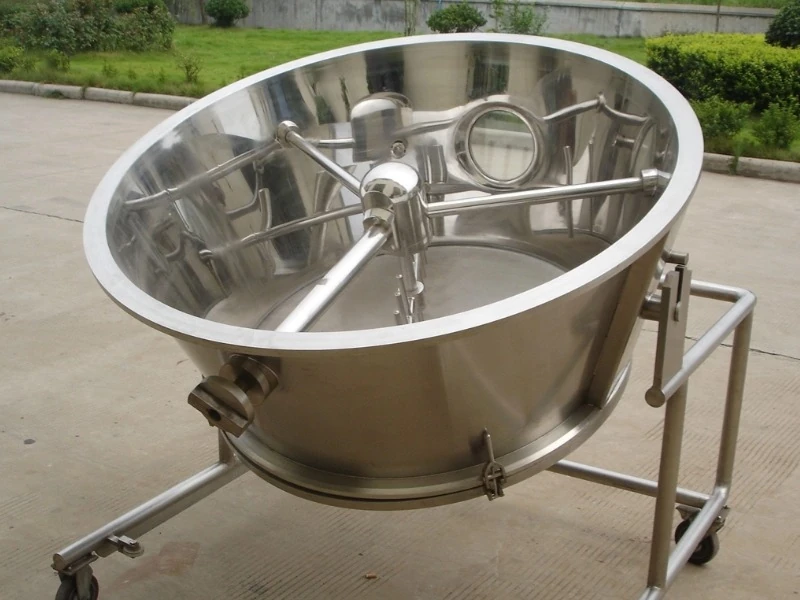
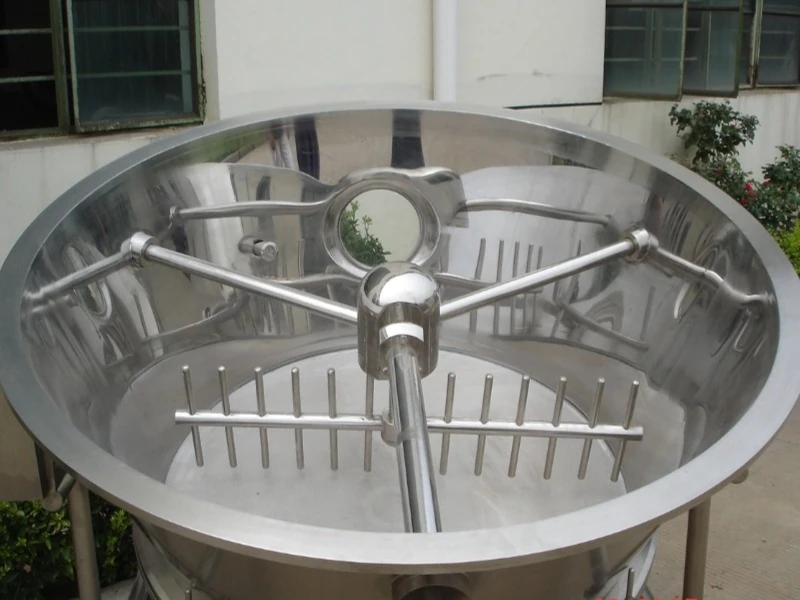
In the GFG type Efficient Fluid Bed Dryer, a stirrer is installed at the bottom of an ordinary fluid bed dryer, and this stirrer also has a heating function: it can both stir the material and transfer heat to it, representing another improvement in fluidized-bed drying. It broadens the range of materials to which fluidized-bed drying can be applied, making it suitable for powdery or granular materials that may cake during feeding or during the drying and dewatering process. For example, most materials separated by centrifuges are partly agglomerated, and materials containing crystal water cake very easily during drying. Another benefit of this improvement is that uniform fluidization can be obtained, increasing the intensity of heat and mass transfer.
(1) Material feeding: The material to be dried enters the drying chamber inside the dryer through the feed inlet.
(2) Hot air supply: Hot air enters through the air distribution plate or nozzles located at the bottom of the drying chamber. This distribution plate is designed with special hole diameters and layout to ensure that the hot air is distributed evenly across the whole bed.
(3) Fluidization process: When hot air passes upward through the material layer at a certain velocity, it lifts the granular material into suspension, showing a flow state similar to that of a liquid; this is what is called fluidization. During this process, the interaction between the particles, and between the particles and the gas, is strengthened, providing an extremely large area for mass and heat transfer.
(4) Heat and mass transfer: In the fluidized state, the material particles come into full contact with the hot air; the hot air transfers heat to the material, evaporating the moisture or other solvent in it. At the same time, the moisture is carried away by the hot air, thereby achieving the drying objective.
(5) Exhaust gas treatment: The exhaust gas carrying moisture must be treated before being discharged into the atmosphere; solid particles in the exhaust gas are usually removed by a bag filter or another type of dust removal device.
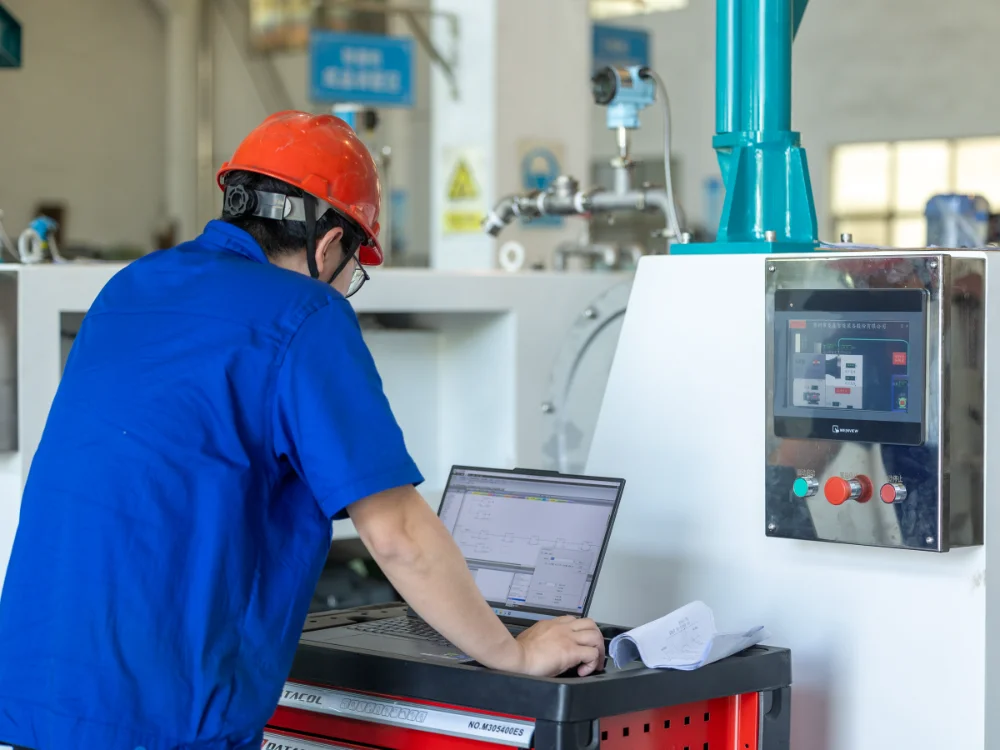
(6) Control system: The entire drying process is usually monitored by an automatic control system; parameters such as temperature, pressure and humidity can be precisely controlled to ensure the best drying effect.
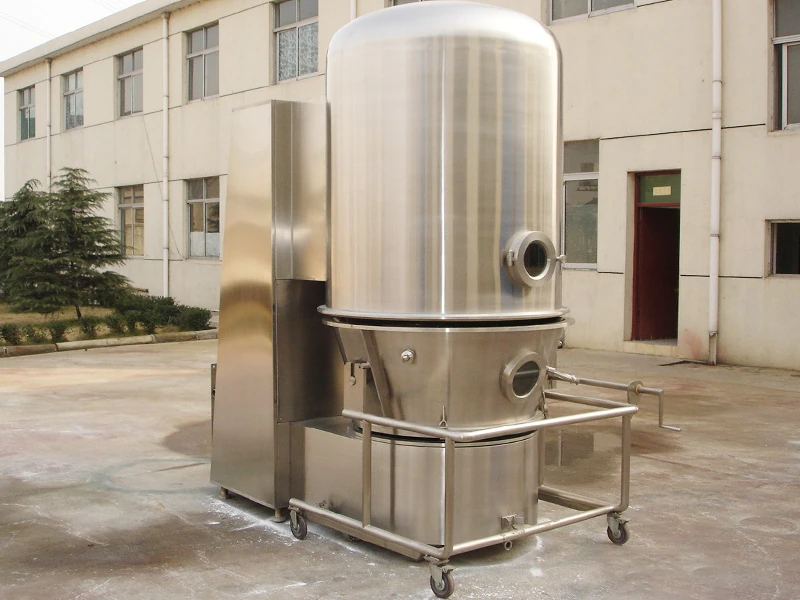
Efficient Fluid Bed Dryer — Equipment Features
(1) This equipment uses a circular-structure hopper with no dead corners; the finished product has a uniform moisture content, and cleaning is convenient and thorough.
(2) It uses antistatic special fibre cloth with a good dust-cleaning effect, and is safe and reliable.
(3) A stirring device is arranged inside the bed, which prevents channelling or agglomeration and gives a wide fluidization range.
(4) The equipment is provided with an explosion vent, so that in the event of an explosion the equipment will not be damaged.
(5) Drying takes place within a sealed system, with no leakage and no flying dust.
(6) The equipment dries by boiling (fluidizing) the material to remove moisture; compared with traditional dryers, it saves energy and time.
Efficient Fluid Bed Dryer — Application Range
The Efficient Fluid Bed Dryer is used for the fluid bed drying of granular materials with a particle size of 0.1–6 mm, and is suitable for drying finished products and intermediates in the pharmaceutical, food, light industry and chemical industries.
(1) Pharmaceutical industry: In the pharmaceutical industry, the Efficient Fluid Bed Dryer is often used for drying pharmaceutical raw materials and intermediates. It can handle various powdery and granular pharmaceutical ingredients, helping to remove the solvents or moisture added during processing and ensuring the stability and purity of the final product.
(2) Chemical industry: Chemical products often need to be dried to achieve specific physical properties such as flowability and particle size distribution. The Efficient Fluid Bed Dryer can be used to dry various chemicals, including but not limited to plastic pellets, fertilizer granules and dyes.
(3) Food industry: In food processing, foods often need to be dried in order to extend shelf life or change their physical properties. For example, the production of milk powder, seasoning powder and vegetable granules all involves the Efficient Fluid Bed Dryer.
(4) Agriculture: Some processing steps in agriculture also use the Efficient Fluid Bed Dryer, such as the drying of pesticide technical materials and WDG (water-dispersible granules).
(5) Other industries: Besides the fields above, the Efficient Fluid Bed Dryer may also be used for drying powdery or granular materials in the ceramics, metallurgy and environmental protection industries.
Efficient Fluid Bed Dryer — Process Flow Chart 1: Conventional
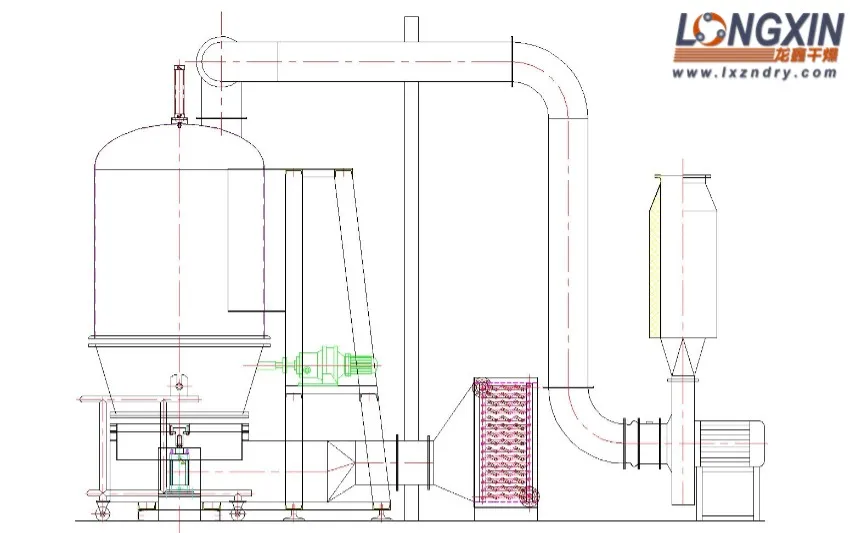
Efficient Fluid Bed Dryer — Process Flow Chart 2: Vertical fluid bed (granulating) dryer
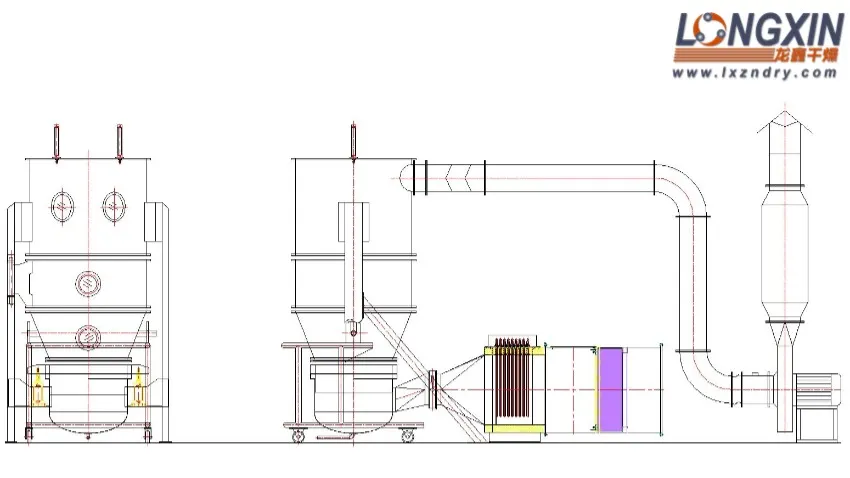
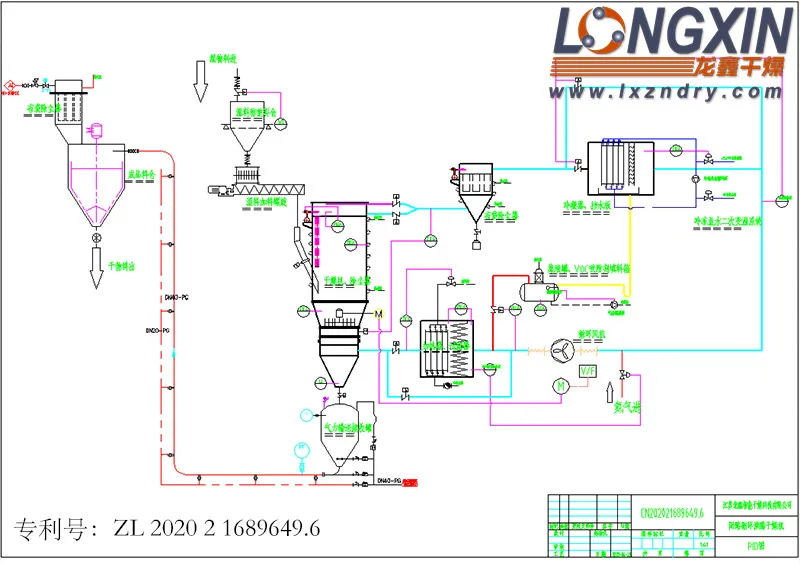
Efficient Fluid Bed Dryer — Process Flow Chart 3: Nitrogen circulation fluid bed dryer