Equipment Overview
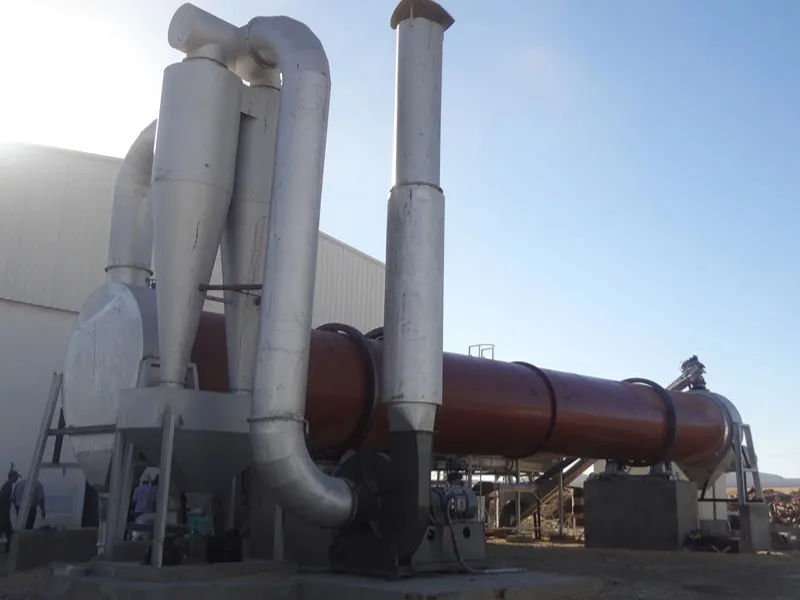
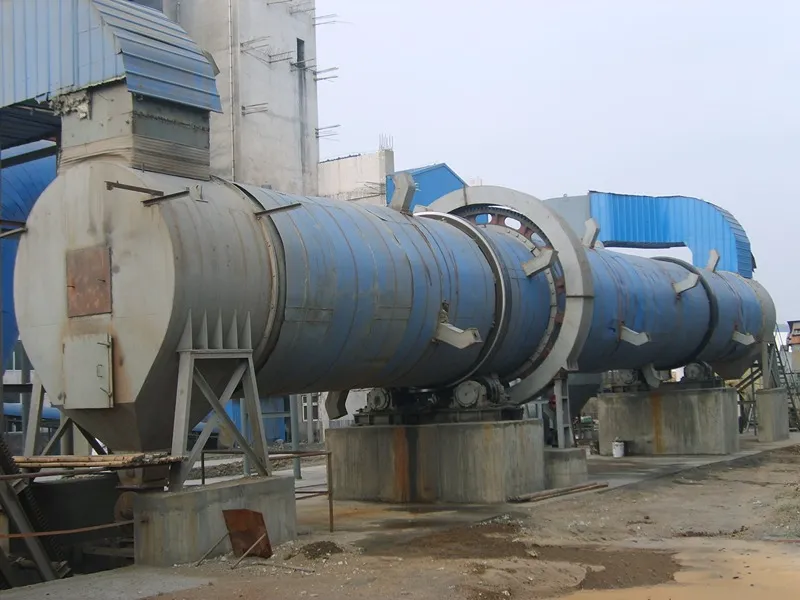
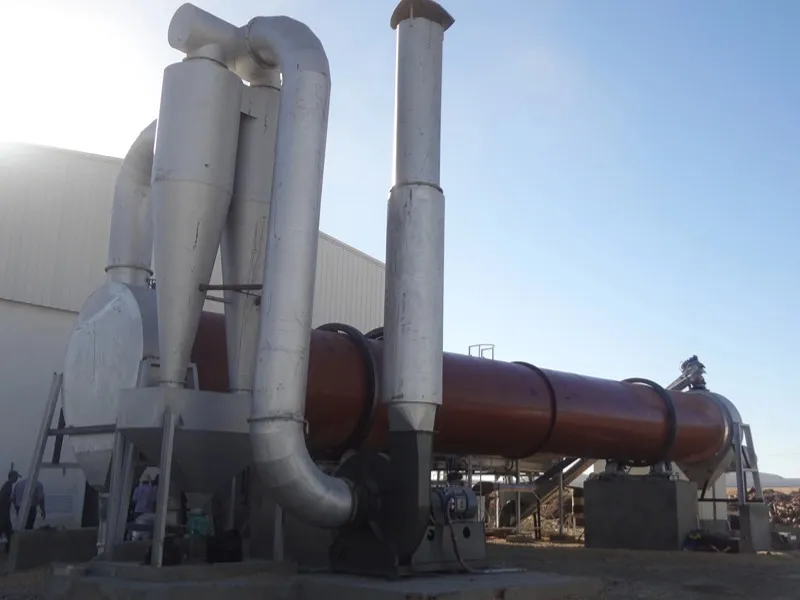
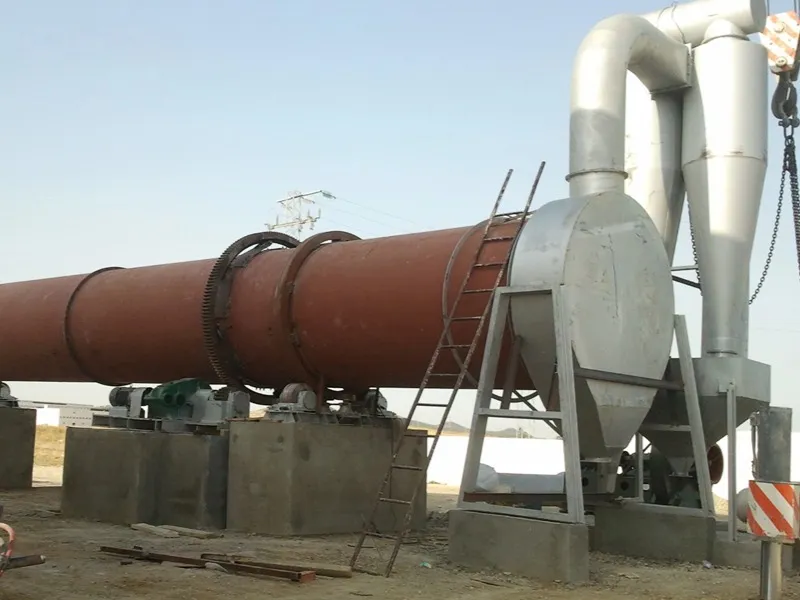
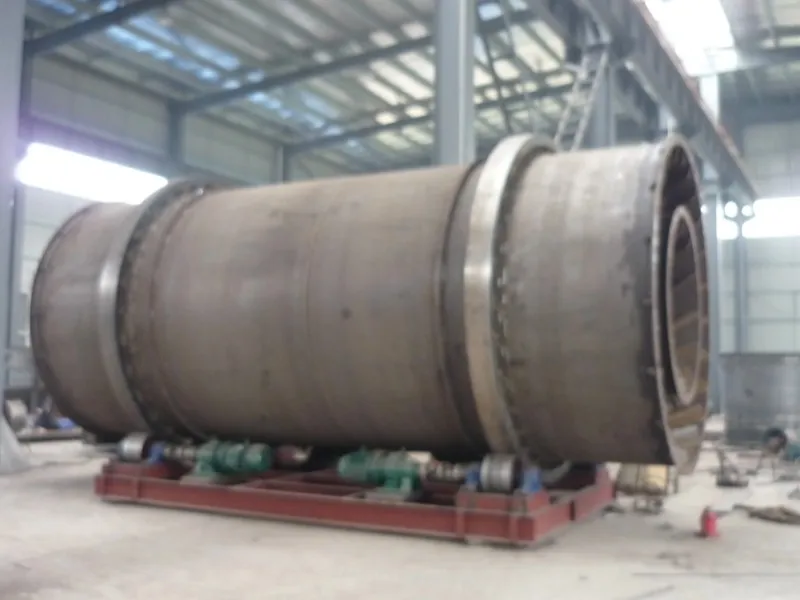
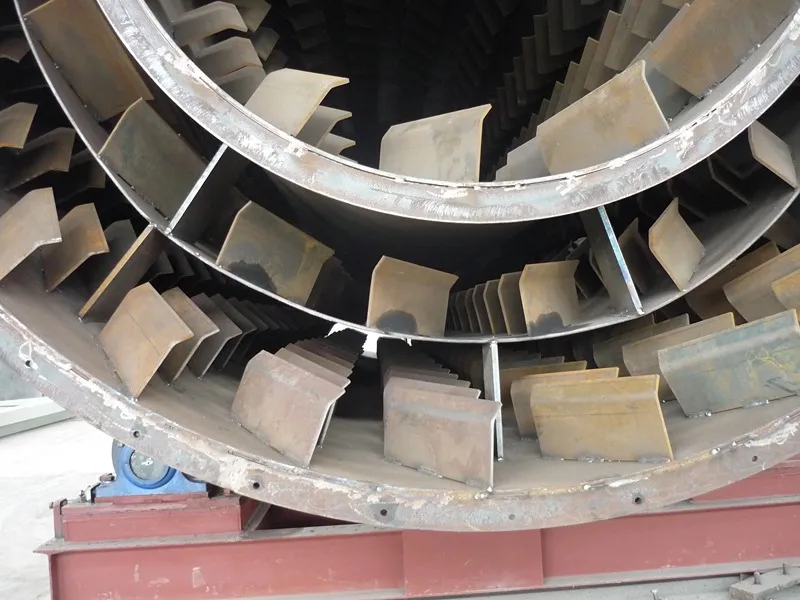
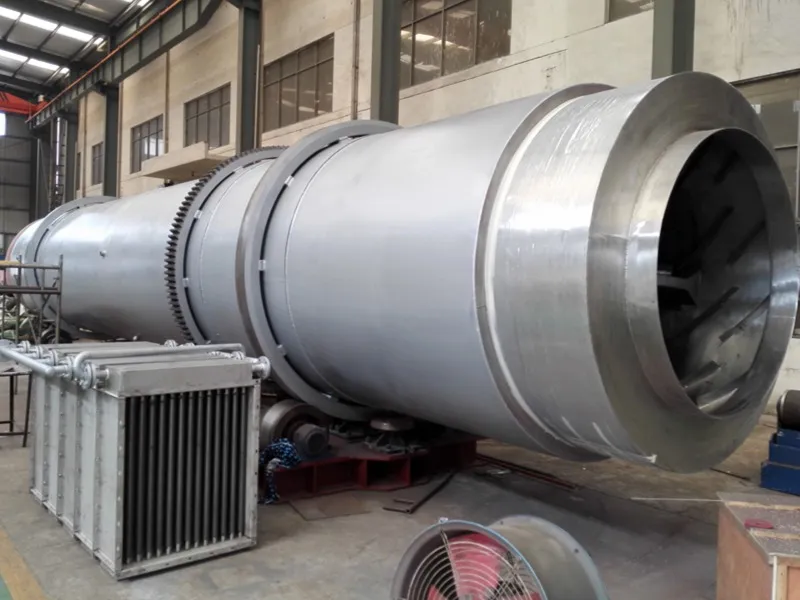
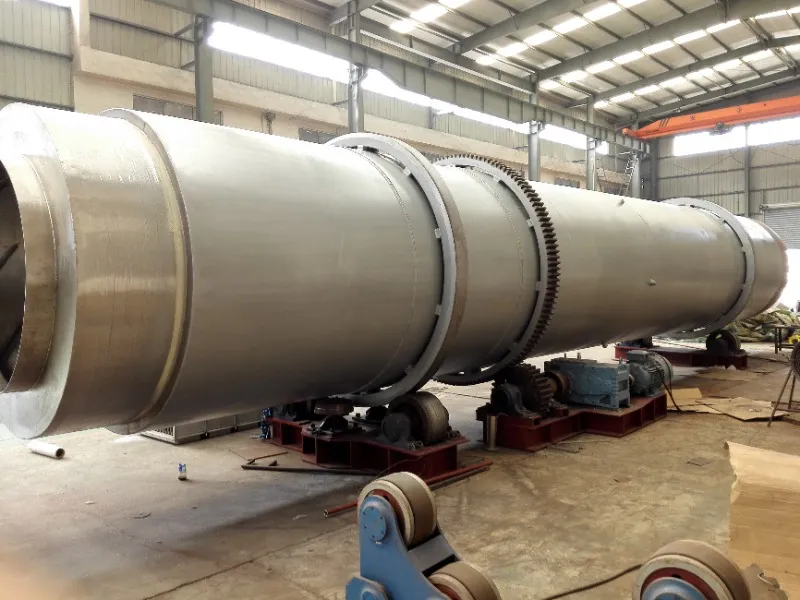
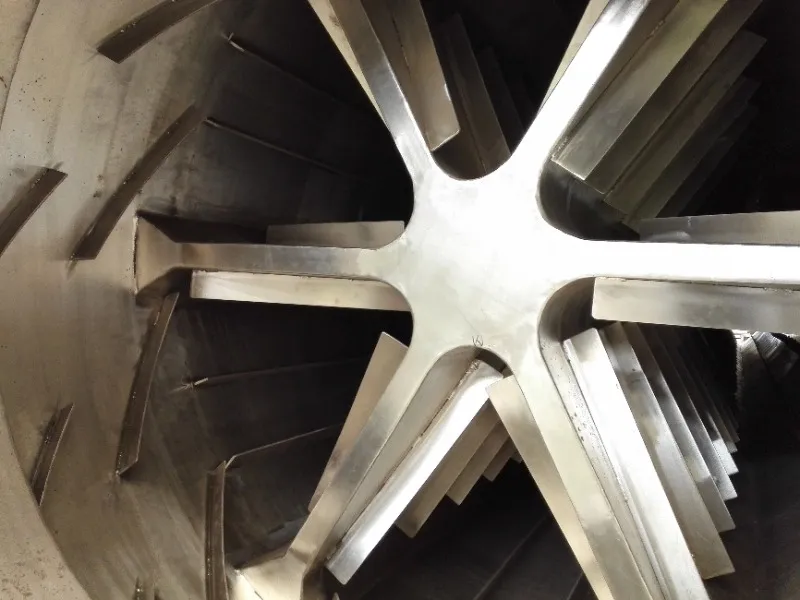
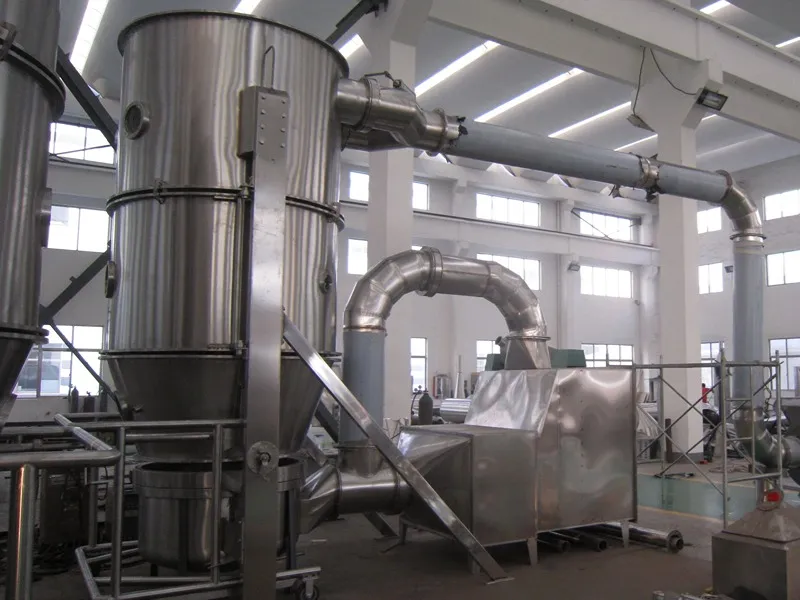
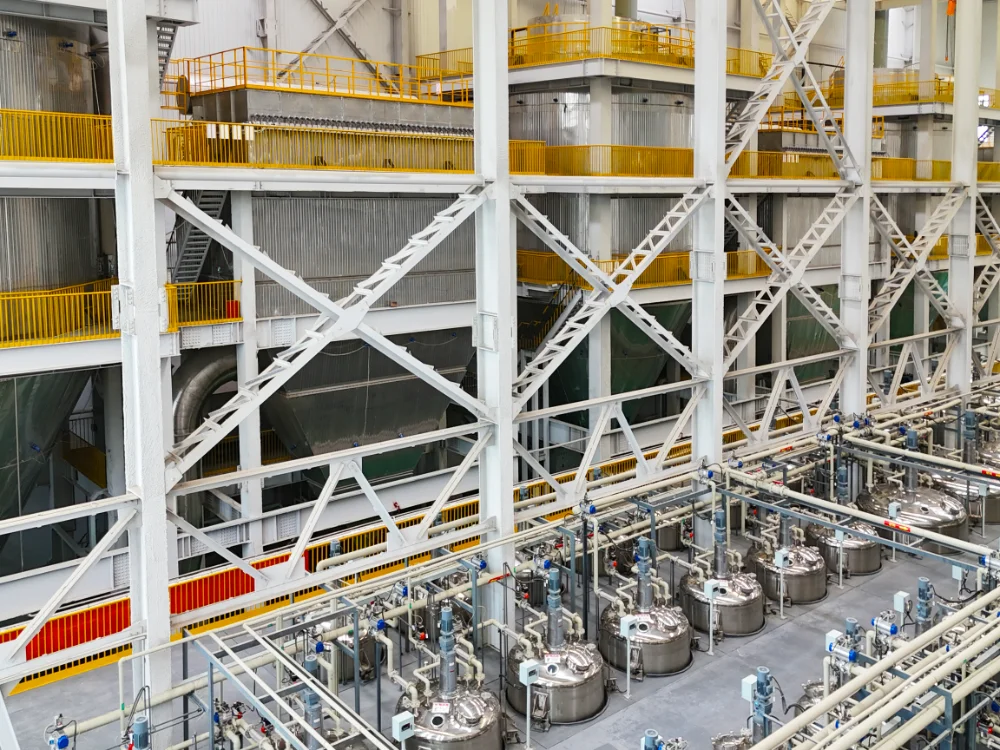
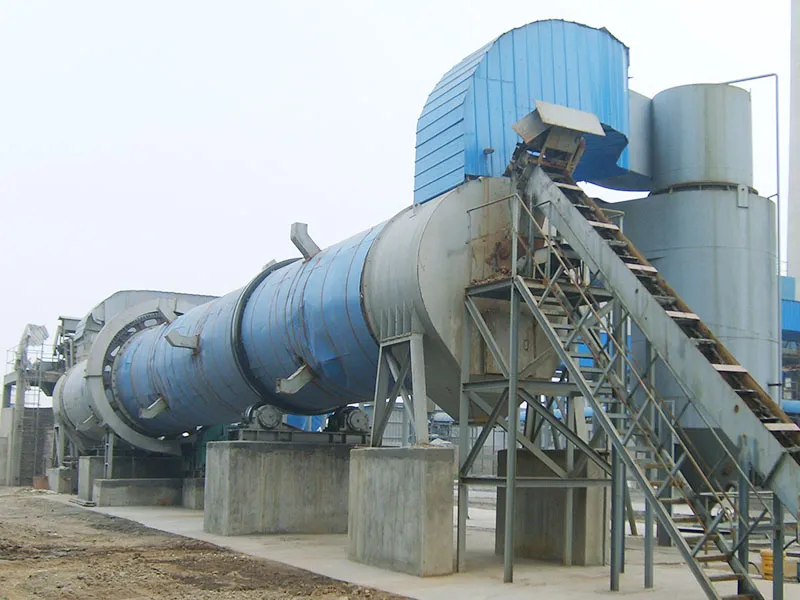
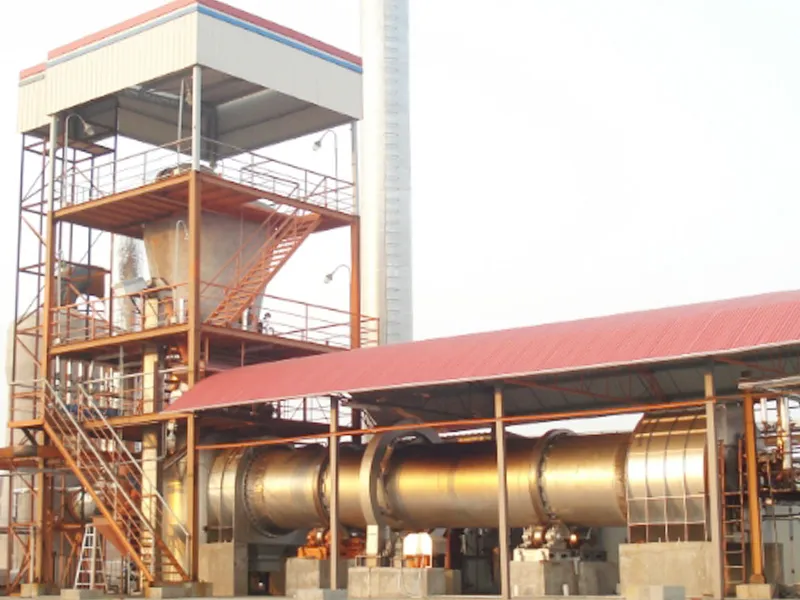
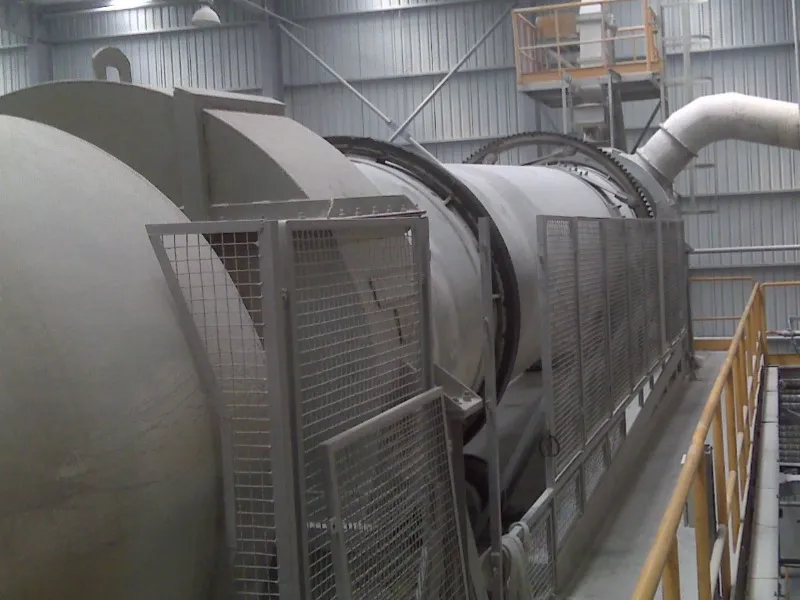
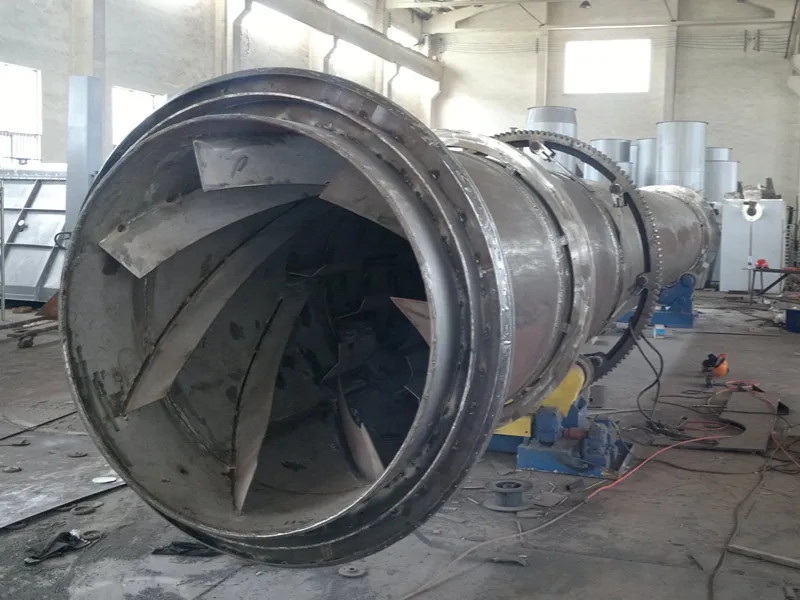
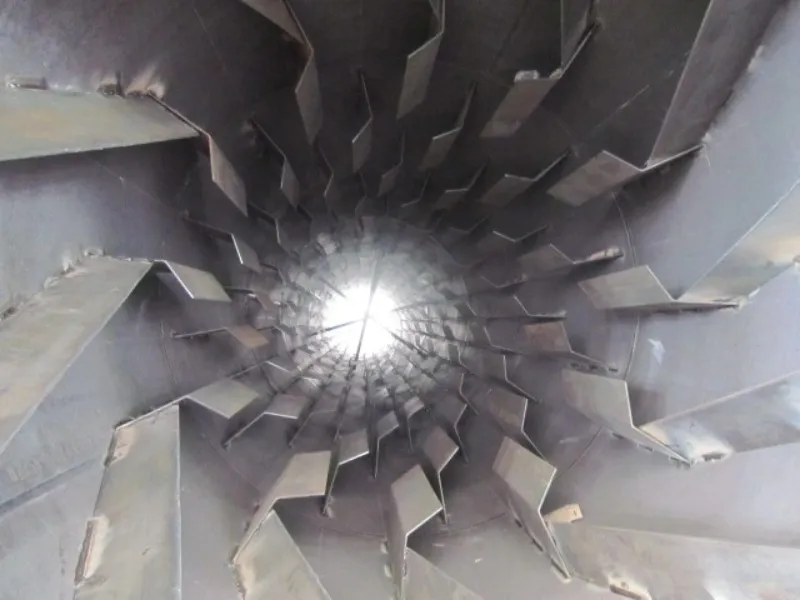
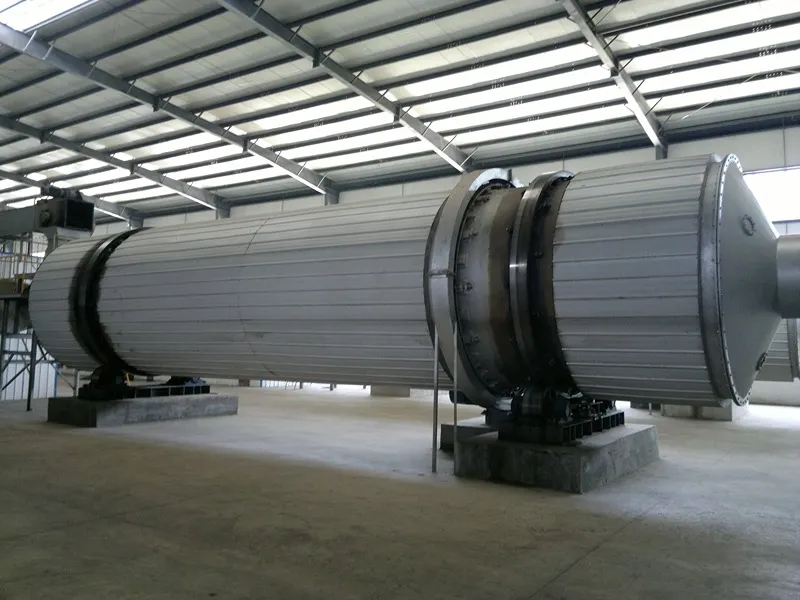
The rotary drum dryer consists of a cylindrical shell that is set at a slight inclination and whose rotation speed is adjustable within a certain range. Wet material is fed into the cylinder by the feeder, and under the turning action of the lifters (flights) evenly distributed inside the cylinder, the material is evenly distributed and dispersed within the dryer and comes into full contact with the hot air passing through the cylinder (in co-current or counter-current flow). This accelerates heat and mass transfer during drying and thereby achieves the drying objective. Various types of lifters can be selected to suit different materials. The equipment has a simple structure, reliable operation, convenient maintenance and a large production capacity.
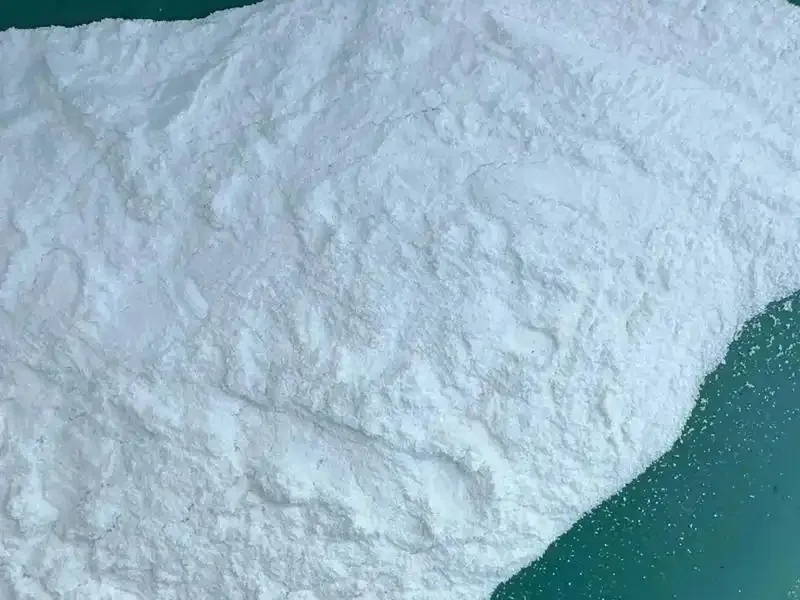
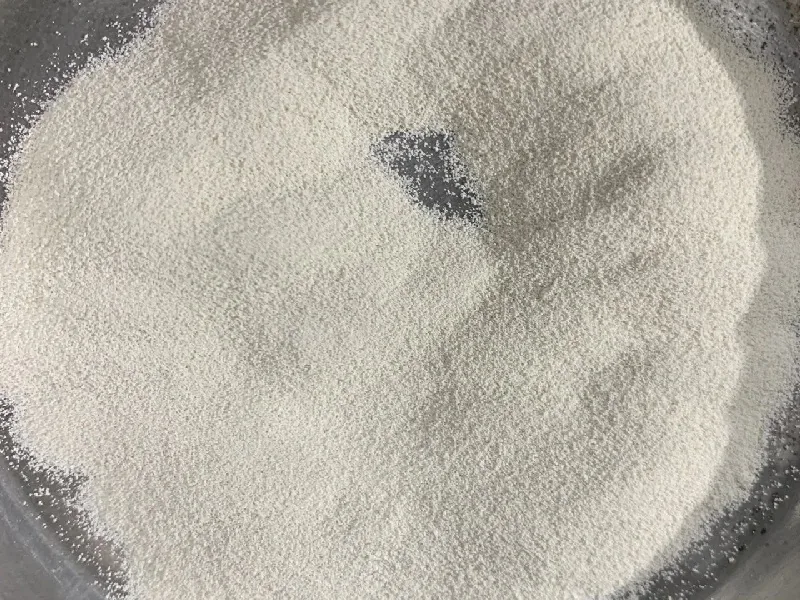
The rotary drum dryer is a dryer that processes large quantities of material. Because of its reliable operation, wide operating flexibility, strong adaptability and large processing capacity, it is widely used in the metallurgical, building materials, light industry and other sectors. In the chemical industry, for the drying of materials such as ammonium sulfate, sodium sulfide, ammophos, ammonium nitrate, urea, oxalic acid, calcium carbonate, calcium magnesium phosphate fertilizer, ordinary superphosphate, triple superphosphate and sodium tripolyphosphate, drum dryers are mostly used (some of these materials can also be dried with other types of dryers). The rotary drum dryer is generally suitable for granular materials; by blending in a proportion of dry material, it can also be used to dry sticky paste materials or materials with a relatively high moisture content. The moisture content of the material is generally 3–25%, up to 50%, and the moisture content of the product can reach 0.5%.
Rotary Drum Dryer — Working Principle
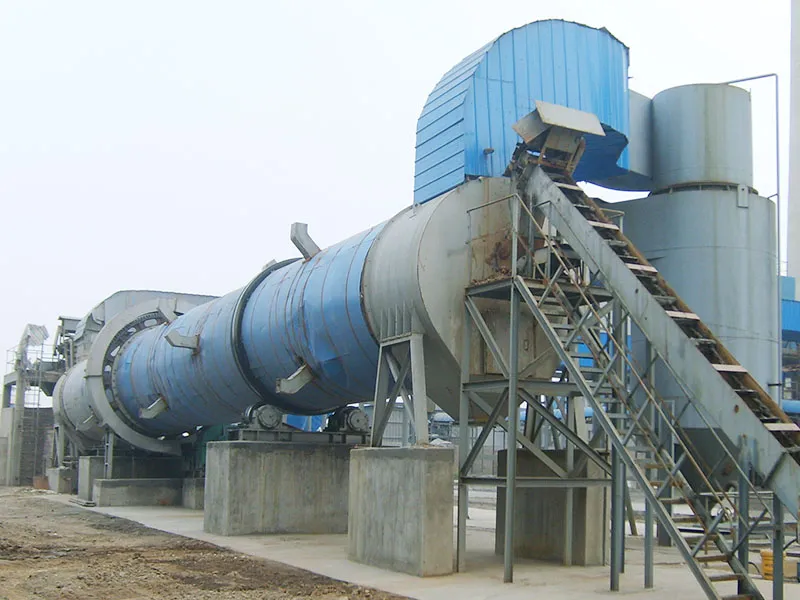
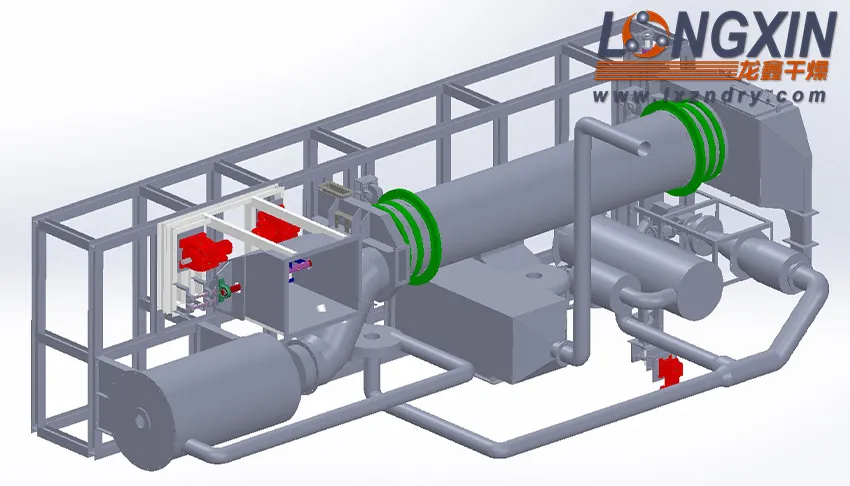
The wet material is mixed and stirred by the screw feeder and then fed into the rotary drum; under the action of the lifters the material is raised up. The heated hot air enters the drum and, after contacting the material, rapidly undergoes heat and mass transfer exchange. The temperature of the hot air falls rapidly after contact with the wet material, and the material, having absorbed heat, rapidly evaporates its moisture. Fine powder carried in the moist air is recovered by cyclone dust removal and then discharged outdoors by the exhaust fan. The material enters the dryer at the feed end and is discharged at the other end, operating continuously. The whole process comprises the material preheating stage, the moisture evaporation stage and the material heating-up stage.
The system operates under a slight negative pressure, so the working environment is very clean. The drive motor uses variable-frequency speed control, which allows the drum speed to be adjusted and the output and the final moisture content of the product to be controlled effectively.
Rotary Drum Dryer — Process Flow Chart
Rotary Drum Dryer — Suitable Materials
(1) Drying of large-particle, high-specific-gravity materials in the chemical, mining, metallurgical and other industries, such as: ore, blast furnace slag, coal, metal powder, phosphate fertilizer and ammonium sulfate.
(2) Drying of powdery and granular materials with special requirements, such as: HP foaming agent, distillers' grains residue, light calcium carbonate, activated clay, magnetic powder, graphite and medicinal residue.
(3) Materials that require low-temperature drying and large-volume continuous drying.
Rotary Drum Dryer — Performance Features
(1) The rotary drum dryer is highly mechanized and has a relatively large production capacity.
(2) Low resistance to the fluid passing through the cylinder and low energy consumption.
(3) Relatively strong adaptability to material characteristics.
(4) Stable operation, relatively low operating costs, and good uniformity of the dried product.
Choice of Flow Direction and Heat-Carrying Fluid for the Drum Dryer
(1) Co-current flow: the direction of material movement is the same as the flow direction of the heat-carrying fluid. It is suitable for the following materials:
① Materials that, at relatively high moisture content, may be dried rapidly without cracking or scorching.
② Materials that cannot withstand high temperatures after drying, i.e. products that will decompose, oxidize or otherwise change when exposed to high temperature.
③ Materials with very low hygroscopicity after drying; otherwise the dried material will reabsorb moisture from the heat-carrying fluid and product quality will be reduced.
(2) Counter-current flow: the direction of material movement is opposite to the flow direction of the heat-carrying fluid. It is suitable for the following materials:
① Materials for which rapid drying is not permitted at relatively high moisture content, to avoid cracking of the material;
② Materials that can withstand high temperatures after drying and will not decompose, oxidize or otherwise change;
③ Materials with relatively high hygroscopicity after drying;
④ Applications requiring both a high drying rate and a low product moisture content.
(3) Selection of the heat-carrying fluid:
If the solid material to be dried is not sensitive to high temperatures, is not the final product, and slight contamination during the intermediate process is acceptable, flue gas may be used as the heat-carrying fluid, giving a relatively high volumetric evaporation rate and thermal efficiency. For example, drum dryers for materials such as ore, gravel, coal and superphosphate use flue gas, and the fuel may be coal, oil or natural gas. If the material to be dried must not be contaminated, air is used as the heat-carrying fluid. The hot air is obtained through a steam heat exchanger or an indirectly heated hot air furnace.
High Flexibility and Reliability: Drying, Cooling, Calcining and Conditioning for Everything from Fine Chemicals to Heavy Minerals
(1) Rotary dryers / coolers
The rotary drum dryer can handle a wide variety of materials. Because of its process flexibility and rugged construction, its design permits the highest drying temperatures practically achievable. Compared with other dryers, this rotary dryer is insensitive to fluctuations in capacity and product size.
Longxin offers two basic forms of rotary cooler — the counter-current cascade type and the indirect type — which use recirculated cooling water, either sprayed onto the outside of the drum or circulated through internal channels. Cascade coolers are widely used for coarse and granular materials. Indirect coolers are better suited to gently handling the hot, fine and dusty products discharged from kilns, calciners and ovens.
(2) Rotary kiln (ROTARY KILN)
Kilns are used in applications that require changing the "state" of a material or driving a chemical or physical reaction.
Direct-fired calcining units are suitable for high-temperature applications, while indirectly heated kilns are used for fine, dusty materials, including those requiring an inert atmosphere, or applications where contamination must be avoided.
(3) Conditioners
The conditioning system, with conditioning drums and fluidized beds, is used for scuffing, polishing and drying of granular materials, significantly improving product quality and operating efficiency while reducing dust load. The lifters, drum angle, spray pattern, rotational speed and residence time must all be adjusted to meet the required product specification.