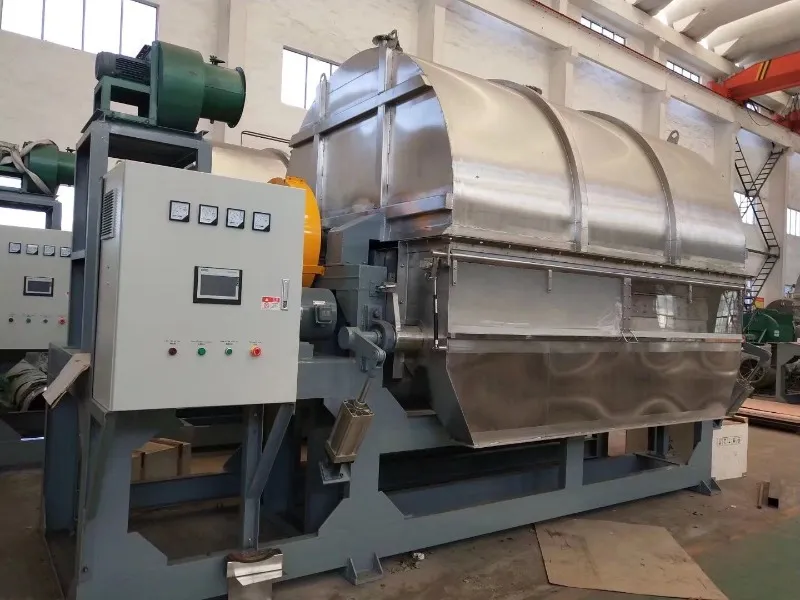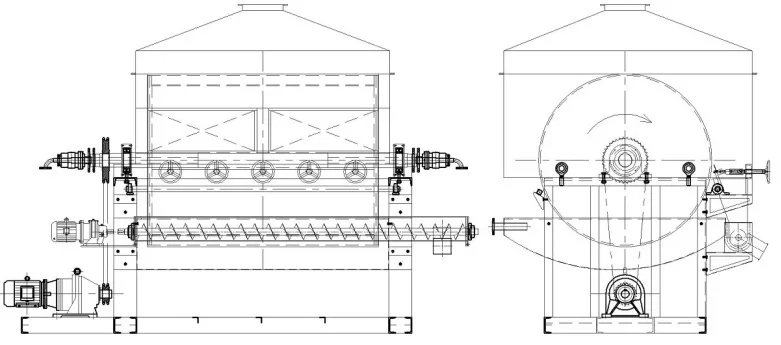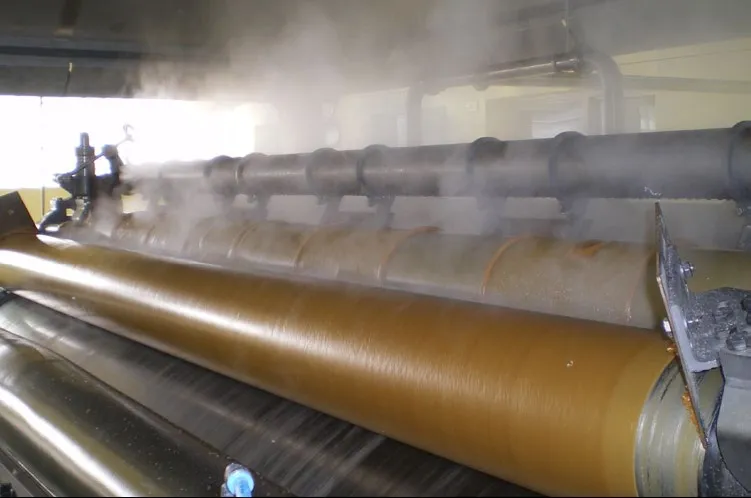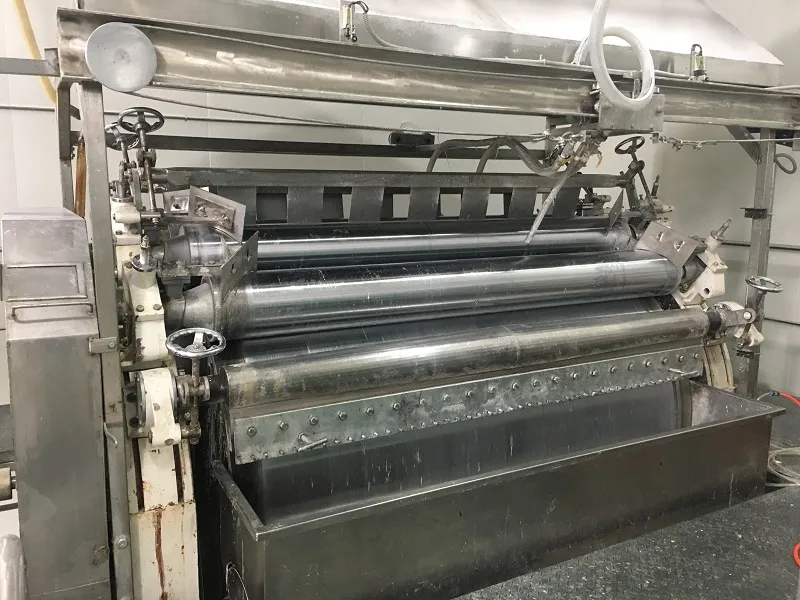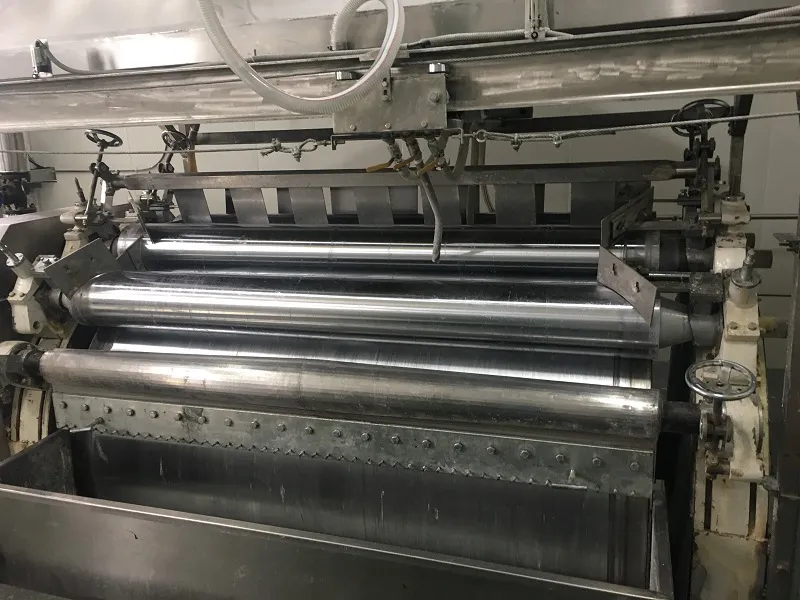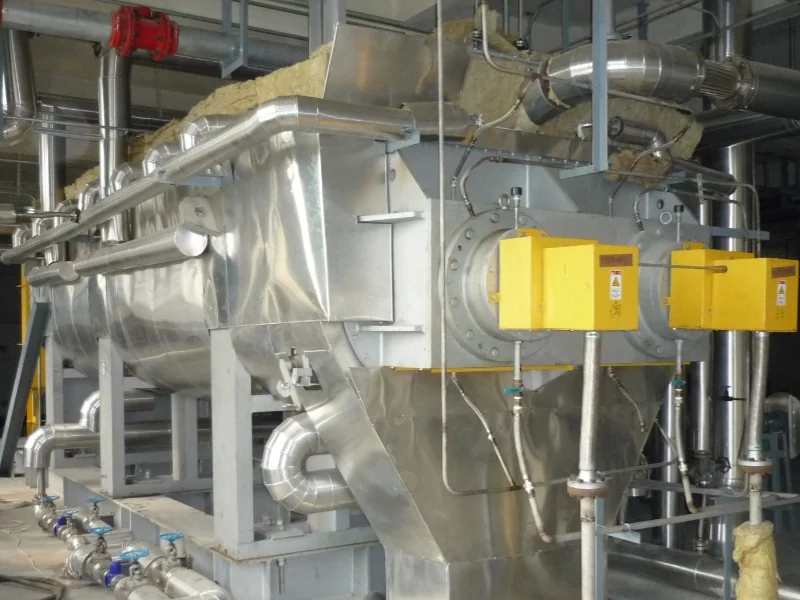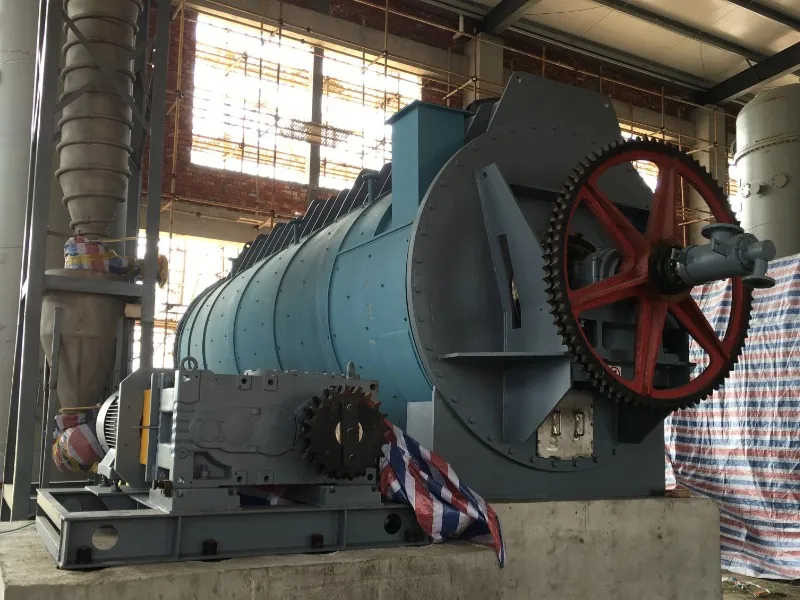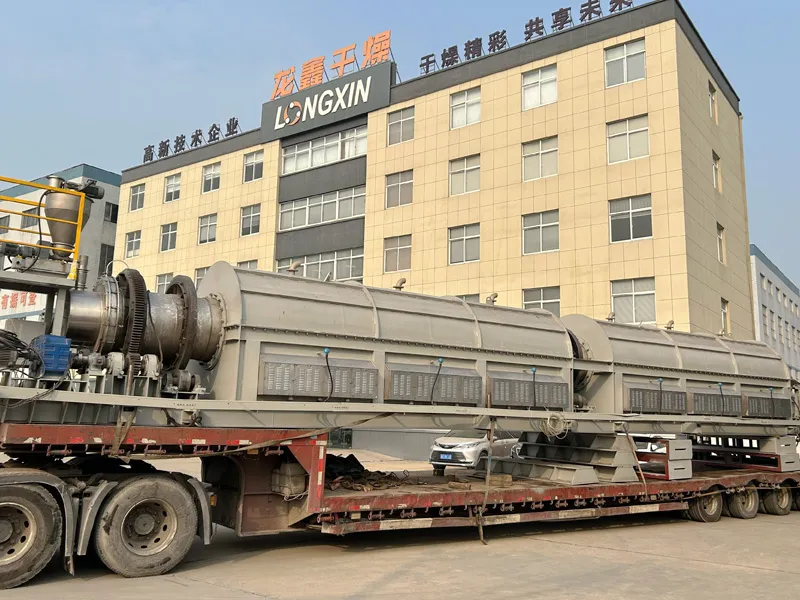
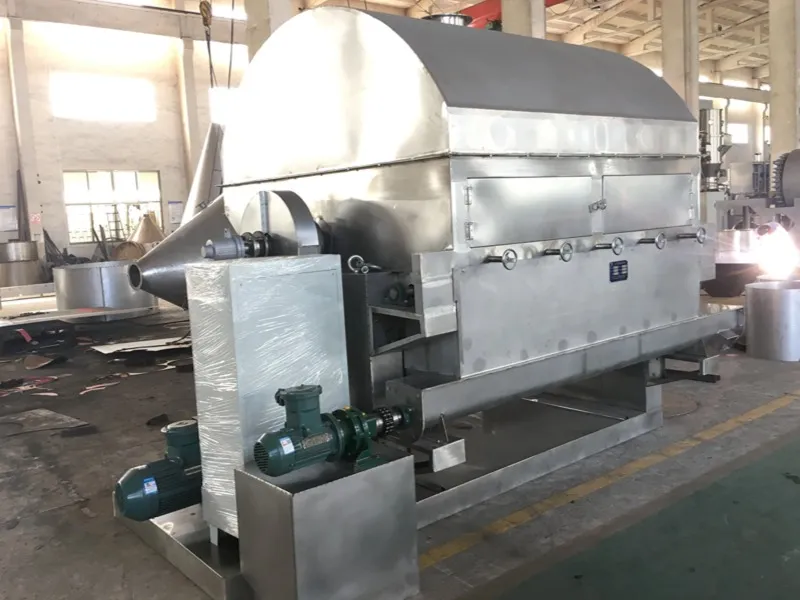
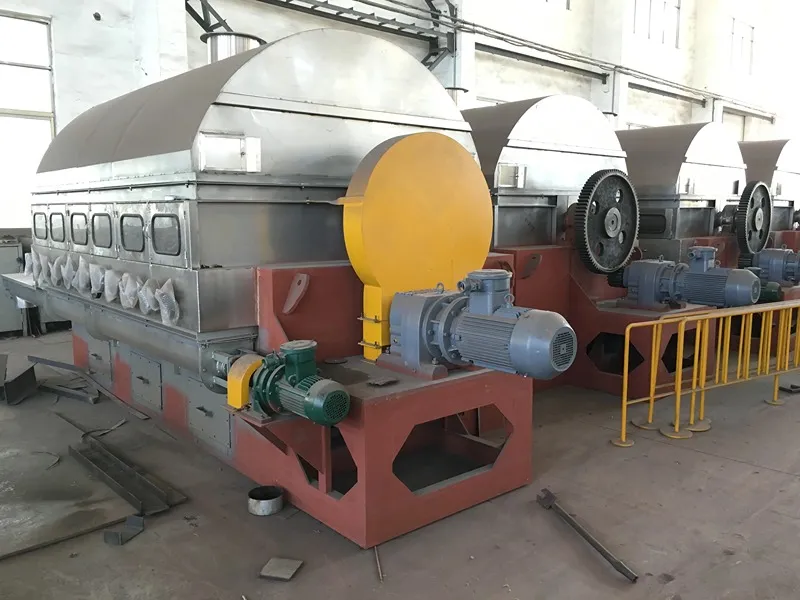
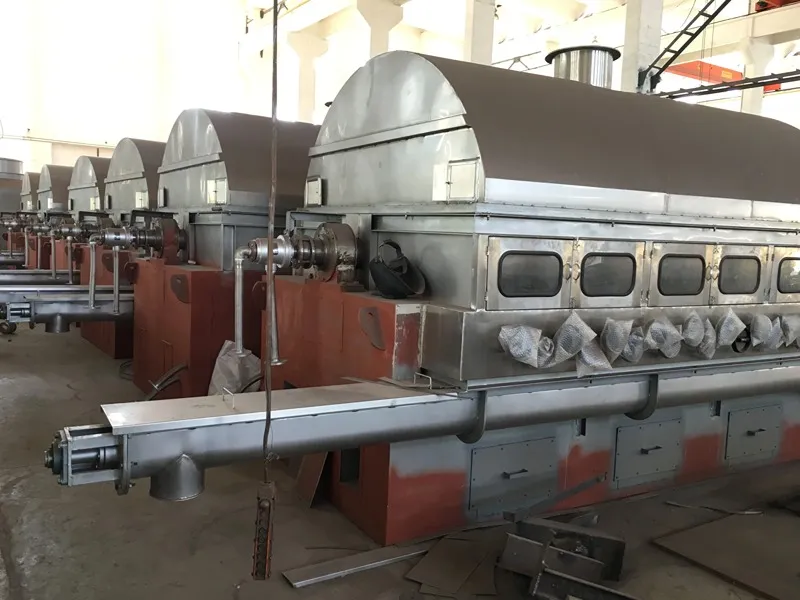
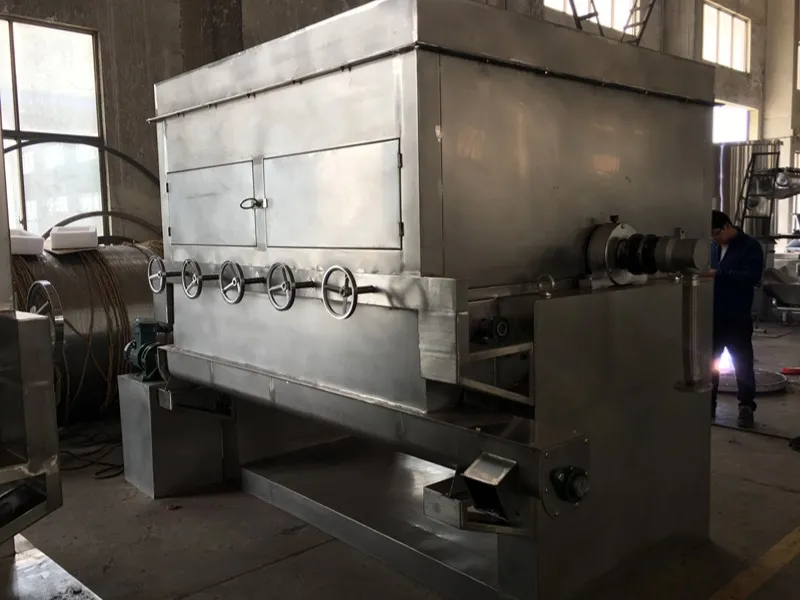
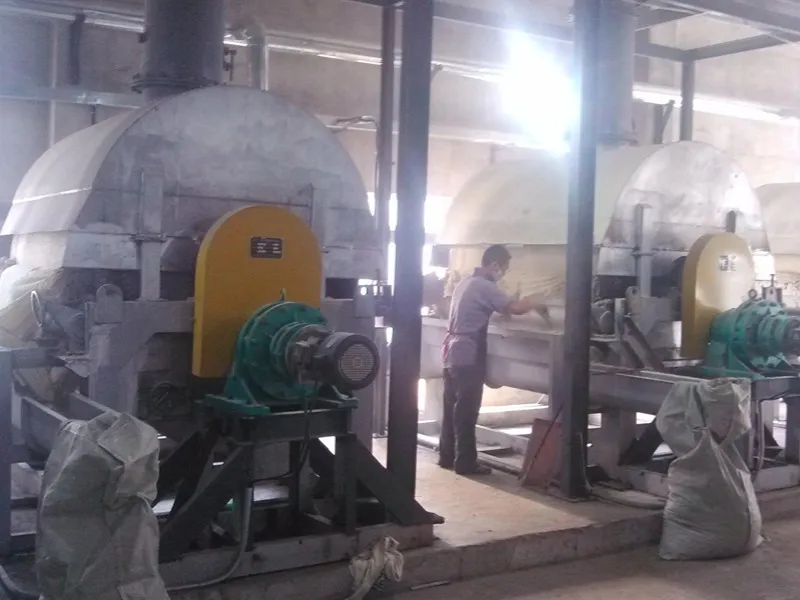
The HG Series Drum Dryer is an internally heated, conductive, rotating continuous dryer. As the drum rotates, it dips into the trough beneath it and picks up a film of material of a defined thickness. Heat is supplied through piping to the inner wall of the drum and conducted to the outer surface, indirectly heating the film so that its moisture evaporates and the material dries. The dried product is scraped off the drum surface by a doctor blade mounted against the drum and falls into a screw conveyor positioned below the blade, which collects and conveys the dry material for packing.
The dryer is suitable for drying liquids and relatively viscous materials in the chemical, dyestuff, pharmaceutical, food, metallurgical and yeast industries. It is widely used for rice flour, oat flakes, α-starch, whole potato flour and similar food products, producing dried material in flake, powder and granular form.
HG Series Drum Dryer — Working Principle
Drying process: liquid or slurry material is formed into a thin film on the surface of a drum heated by steam or another heating medium. The material is completely dried within one revolution of the drum, the product is scraped off with a doctor blade, and the freshly exposed drum surface contacts the feed again to form a new film and continue drying.
The drum dryer spreads liquid or paste material as a 0.1–1.5 mm film onto the drum, which is a hollow metal cylinder. The drum can be heated with steam, hot water or thermal oil. Within one revolution, the material is dried and removed from the cylinder surface by a dedicated doctor blade. Drum dryers generally rotate at 4–6 rpm.
For paste materials, a press roller is fitted on the feed side to adjust the film thickness and compress the material layer, so that it is spread evenly over the drum. To help the material release more easily when it is scraped off, a metered flow of cold air can be blown onto the material through a cooling-air duct before it reaches the blade.
HG Series Drum Dryer — Performance Features
- Wide operating flexibility and broad adaptability. The drum dryer tolerates considerable variation in operating conditions and can handle a wide range of materials and production rates.
- High thermal efficiency.
- Short drying time. The wet film on the drum surface is typically 0.3–1.5 mm thick, and the complete drying cycle takes only 10–60 s.
- High drying rate. Because the film is very thin, the film surface sustains a drying intensity of 15–50 kg water/(m²·h).
- Continuous operation, stable quality, labour savings and a uniform product.
- Easy internal cleaning and quick product changeover.
- The exhaust air carries no material, so no dust collection equipment is required.