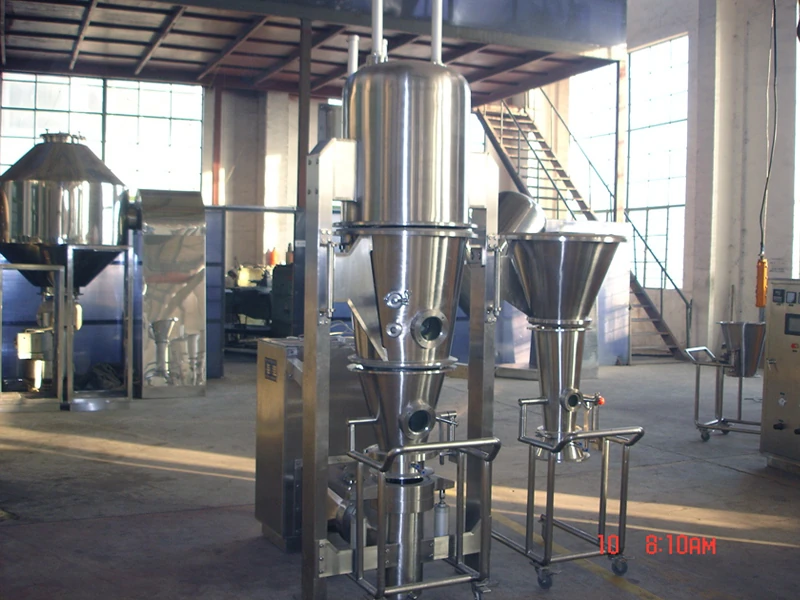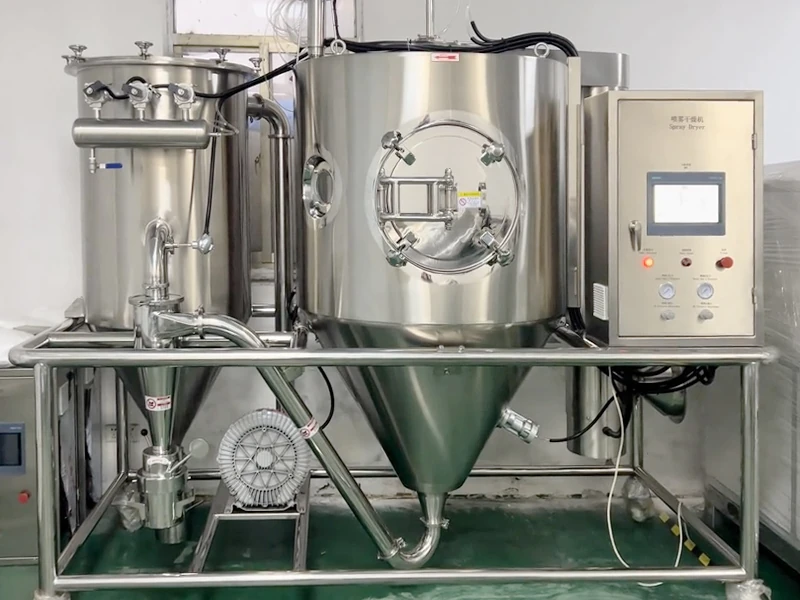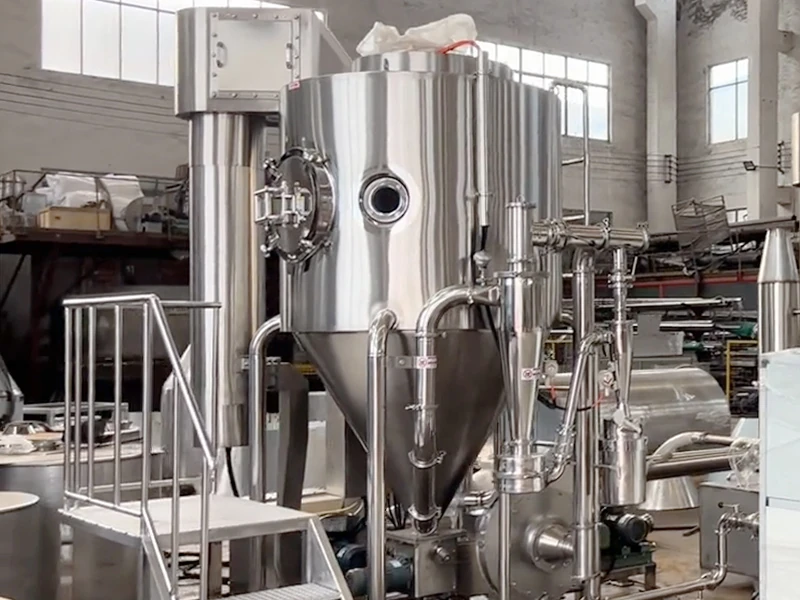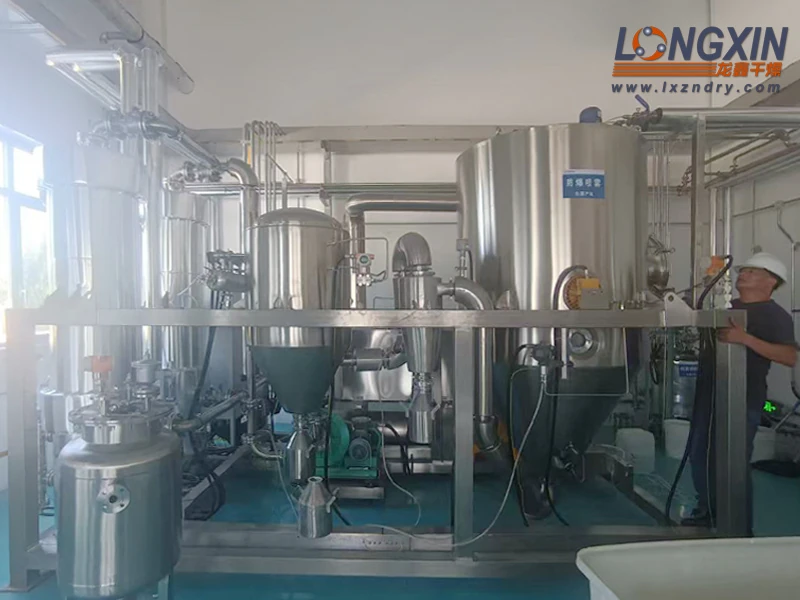
FG-3 Laboratory High-Efficiency Fluid-Bed Dryer
In industries such as pharmaceuticals, fine chemicals, and food processing, drying is a critical step before material forming and directly affects moisture uniformity, particle-size distribution, and final product quality consistency. As the pace of development accelerates for new drugs, formulations, and processes, laboratories increasingly require greater controllability, reproducibility, and safety throughout the drying process. Drawing on years of experience in fluid-bed drying, Longxin Drying has introduced the FG-3 Laboratory High-Efficiency Fluid-Bed Dryer. With a 12 L working volume and a batch capacity of 1.5–4.5 kg, the FG-3 provides R&D teams with a small-scale drying platform that shares core technology with production-scale equipment and offers controllable process parameters.
Key Challenges and Technological Evolution in Fluid-Bed Drying
Fluid-bed drying, also known as fluidized-bed drying, uses heated air to bring granular materials into a fluidized, liquid-like state. This promotes thorough contact between particles and between the particles and the air stream, substantially enhancing heat and mass transfer and accelerating moisture evaporation. With advantages such as fast drying and uniform final moisture content, fluid-bed dryers have become mainstream equipment for drying granular materials in pharmaceuticals, food, light industry, fine chemicals, pharmaceutical intermediates, and other industries.
However, fluid-bed drying has long faced several engineering challenges:
(1) Moist materials or materials containing crystal water can agglomerate during drying, resulting in uneven fluidization or even preventing fluidization altogether;
(2) Channeling and slugging can occur within the material bed, causing localized overheating and uneven drying;
(3) Fine particles may become entrained in the airflow, affecting environmental cleanliness and increasing material losses;
(4) When organic solvents or combustible dust are present, the system must also meet explosion-protection safety requirements.
At the same time, scale-up effects commonly exist between laboratory testing and industrial production. If airflow, temperature, and endpoint parameters established during R&D cannot be reproduced in subsequent equipment, process discontinuities and scale-up difficulties often result.
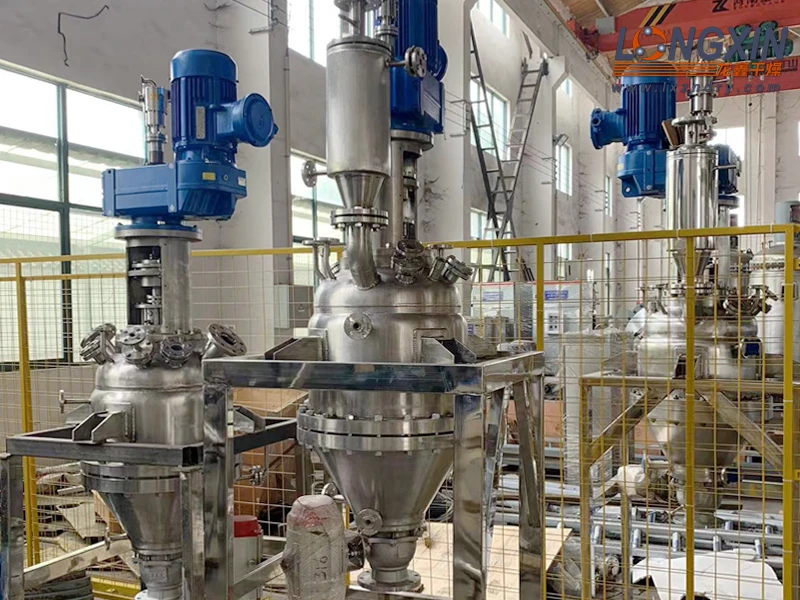
Fluid-bed drying equipment has continued to evolve in response to these challenges—from conventional horizontal XF fluid-bed dryers to the vertical GFG high-efficiency fluid-bed dryer developed for GMP pharmaceutical applications. The GFG incorporates a heated agitation device at the bottom of the fluidized bed that both mixes the material and transfers heat, effectively expanding the fluidization range. This enables the processing of powdered and granular materials that may agglomerate during feeding or dehydration and allows integration with oscillating granulators and GHL high-efficiency wet granulators. Building on this foundation, the FG-3 was developed specifically for laboratory R&D, extending the technical experience embodied in production-scale equipment to small-scale testing. Together, these systems form Longxin Drying’s complete equipment chain from production to R&D.
Market Demand Analysis for the FG-3 Laboratory High-Efficiency Fluid-Bed Dryer
Process development at the R&D stage is placing more specific demands on laboratory drying equipment. When new drugs, formulations, and processes are initiated, they often must pass through laboratory-scale and pilot-scale stages to verify material drying behavior under specified temperature and airflow conditions and to determine the appropriate inlet-air temperature, fluidization intensity, and drying endpoint. This requires equipment with precisely controllable temperature, adjustable airflow, and quantifiable endpoint determination—not merely the basic ability to dry a material.
As GMP compliance requirements in the pharmaceutical industry become more stringent and food, fine chemical, and pharmaceutical-intermediate companies place greater emphasis on process reproducibility and product-quality consistency, the credibility of laboratory process data is becoming increasingly important. The more accurate the parameters accumulated during R&D, the smoother the transition to industrial production scale-up. The FG-3 was designed against this backdrop. Sharing core technology with GFG production-scale equipment, it provides fluidization, heating, and control characteristics close to those of production equipment at the R&D stage, helping reduce process deviations caused by scale-up effects and shorten the path from laboratory results to commercial production. For small-scale testing, R&D, and process validation, this type of equipment is becoming an option that combines functionality and practicality in laboratory equipment configurations.
Working Principle of the FG-3 Laboratory High-Efficiency Fluid-Bed Dryer
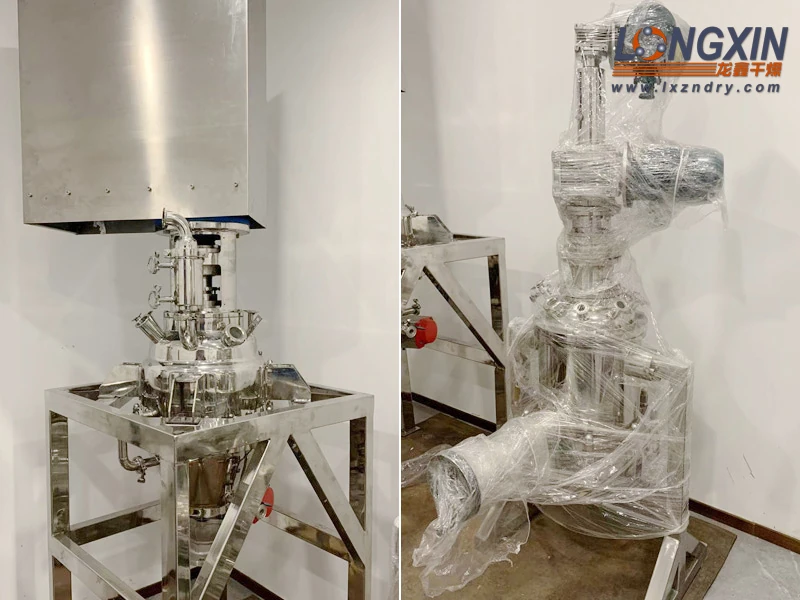
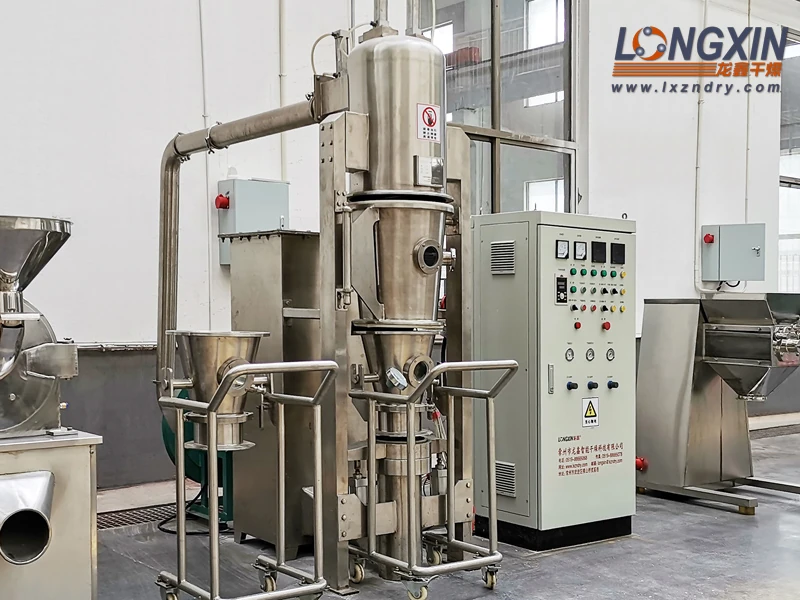
The FG-3 follows the fundamental principles of fluidized-bed drying. Granular materials or fine powders to be dried are loaded into the bowl. Filtered air is heated to the set temperature by the heater and passes through the air-distribution plate at the bottom of the bowl into the drying system. The heated air contacts the material thoroughly, fluidizing it and removing moisture. Moisture-laden air passes through the filter bags and is discharged by the induced-draft fan, while fine particles carried upward by the airflow are captured by the bags and returned to the fluidized bed by the cleaning system.
At the process implementation level, the FG-3 is designed around three dimensions: controllability, continuity, and safety.
(1) The inlet-air temperature is adjustable and controllable from ambient temperature to 80°C, with an accuracy of ±2°C, providing a stable temperature window for heat-sensitive materials. The airflow damper is adjustable, allowing the intensity of fluidization within the bed to be controlled through airflow to suit the fluidization characteristics of different materials.
(2) A material-temperature sensor is installed inside the bowl. Material temperature and exhaust-air temperature are displayed in real time on the touchscreen, allowing operators to determine the granulation or drying endpoint by comparing the two values and helping prevent over-drying.
(3) A pulse-jet cleaning system keeps the filter bags unobstructed throughout the drying process, supporting continuous operation. An active explosion-protection valve activates when system vacuum is lost, rapidly isolating the air-handling system from the drying system. Together with the explosion-vent design, this provides two layers of safety protection.
Performance Features of the FG-3 Laboratory High-Efficiency Fluid-Bed Dryer
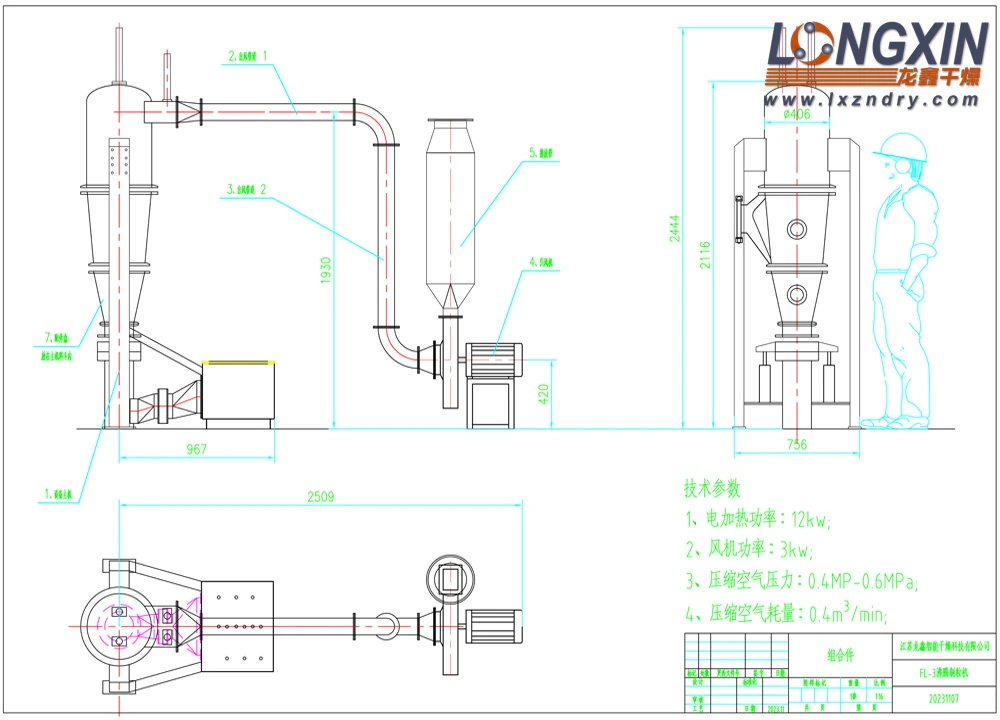
The design and performance features of the FG-3 are primarily reflected in the following areas:
(1) The bowl has a circular design without dead corners, supporting uniform final moisture content and easy, thorough cleaning. This facilitates material changeovers and cleaning during laboratory testing.
(2) An agitation device is installed within the bed to prevent wet-material agglomeration and channeling during drying. This broadens the fluidization range and expands the range of materials that can be processed.
(3) Drying is completed within a sealed system, and combined with bag filtration, helps prevent leakage and dust dispersion—supporting clean production and environmental protection.
(4) The system uses anti-static specialty fiber filter bags designed to dissipate static electricity evenly and avoid spark generation. The bags provide effective cleaning performance and reliable safety.
(5) The active explosion-protection valve and explosion vent provide emergency isolation and pressure-relief capability, helping reduce safety risks under abnormal operating conditions.
(6) Pulse-jet cleaning keeps the filter bags unobstructed and supports continuous drying.
(7) Differential-pressure monitoring across the upper and lower sections of the bowl is used to monitor screen condition, while differential-pressure monitoring of the collection bag is used to determine whether the bag is blocked or damaged, providing quantitative information on operating status.
Technical Improvements to the FG-3 Laboratory High-Efficiency Fluid-Bed Dryer
Compared with conventional fluid-bed drying equipment, the FG-3 incorporates targeted improvements across four areas: safety, control, continuous operation, and data visibility.
(1) Safety: When vacuum is lost, the active explosion-protection valve rapidly isolates the air-handling system from the drying system. Together with the explosion-vent design, this helps reduce the impact of abnormal pressure conditions on equipment and personnel at the source.
(2) Control: The inlet-air temperature is adjustable and controllable from ambient temperature to 80°C with an accuracy of ±2°C. The drying or granulation endpoint can be determined by comparing material temperature with exhaust-air temperature. Multiple fault alarms cover conditions such as loss of normal production conditions, overload, and time delays, making the process more controllable and traceable.
(3) Continuous Operation: Pulse-jet cleaning helps maintain long-term filter-bag permeability. Dual differential-pressure monitoring—across the bowl and across the collection bag—provides real-time information on screen and bag condition, helping reduce unplanned downtime.
(4) Data Visibility: Key parameters such as material temperature, exhaust-air temperature, and differential pressure are displayed together on a touchscreen, providing intuitive operation and facilitating data recording and review.
Importantly, the FG-3 shares core technology with GFG production-scale equipment. Process parameters established during R&D can therefore be transferred more effectively to production-scale systems, helping shorten the path from laboratory results to industrial-scale production.