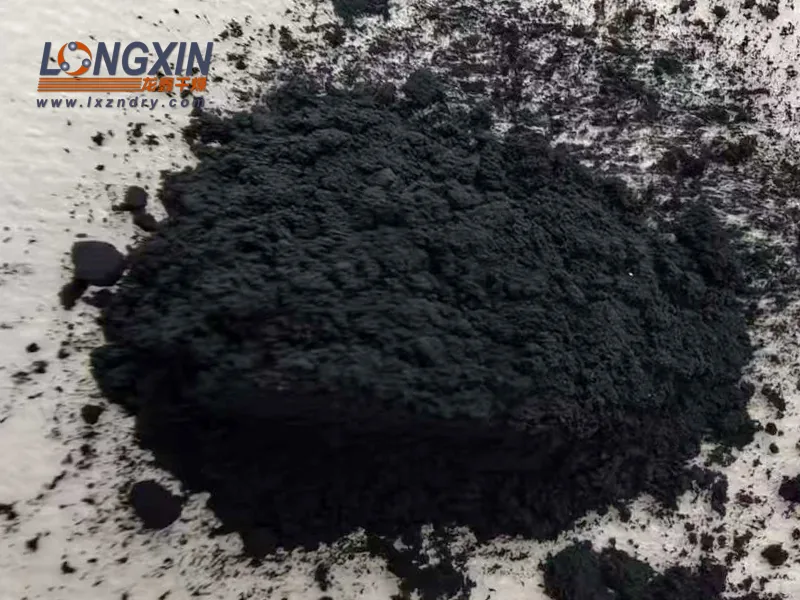
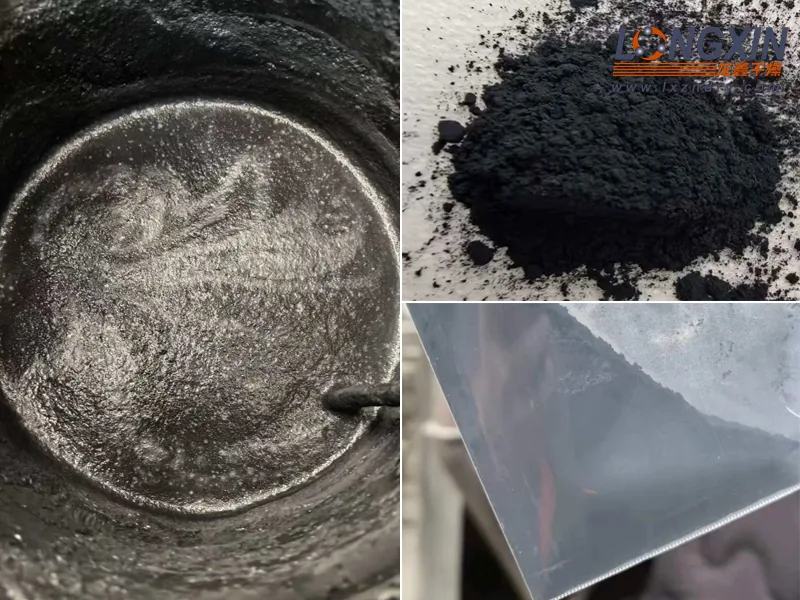
Carbon nanotubes (CNTs), including single-wall carbon nanotubes (SWCNTs), are increasingly used as conductive additives in lithium-ion batteries and other advanced energy-storage materials. Their high aspect ratio and conductive network performance make them attractive for applications where low additive loading and efficient electron transport are required.
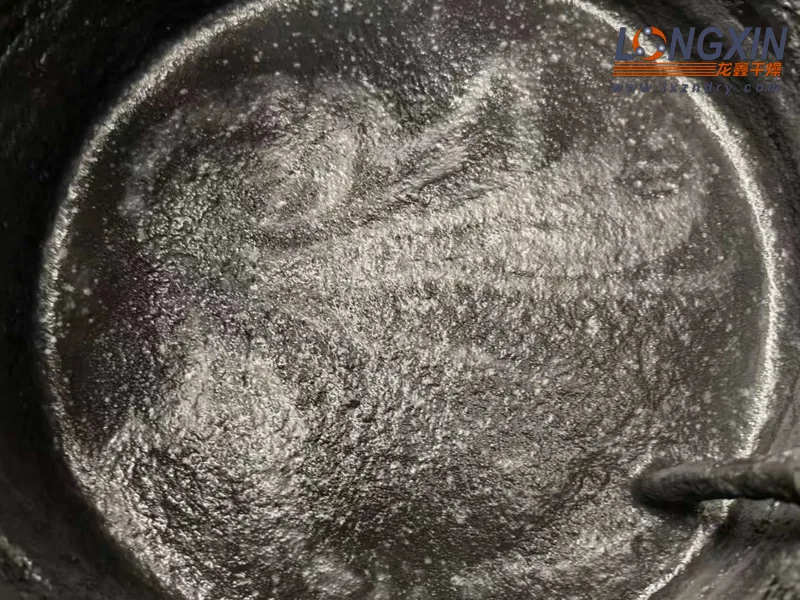
Drying CNT slurry, however, is technically demanding. The material can be highly viscous, extremely light after drying and prone to secondary agglomeration. Conventional oven or flash-drying routes may also create feeding, wall-deposition and powder-recovery problems.
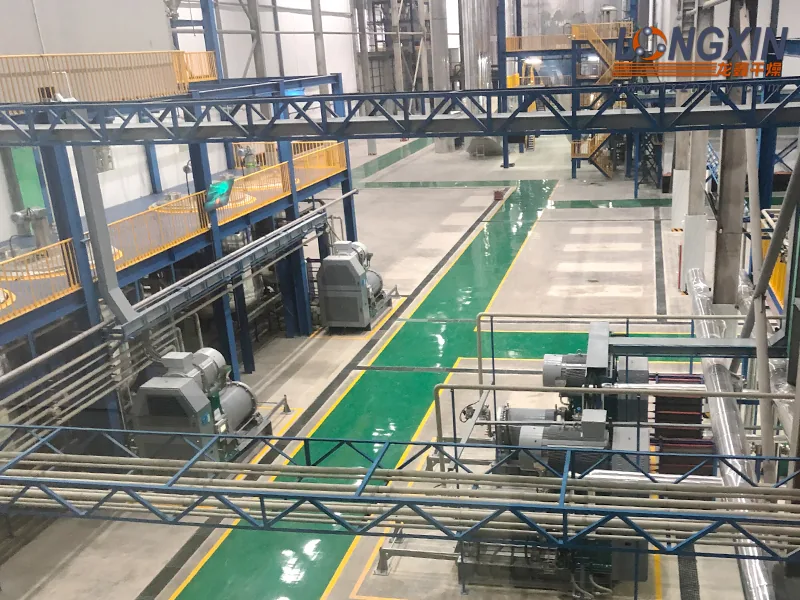
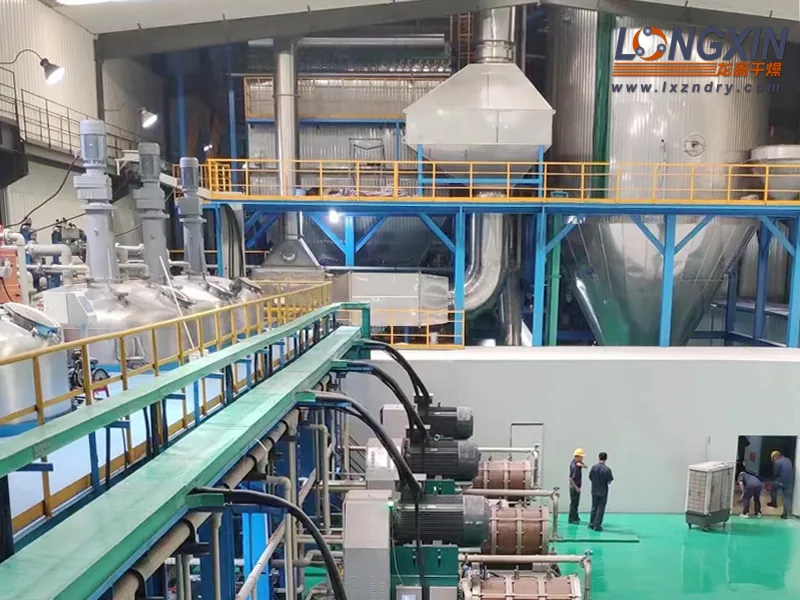
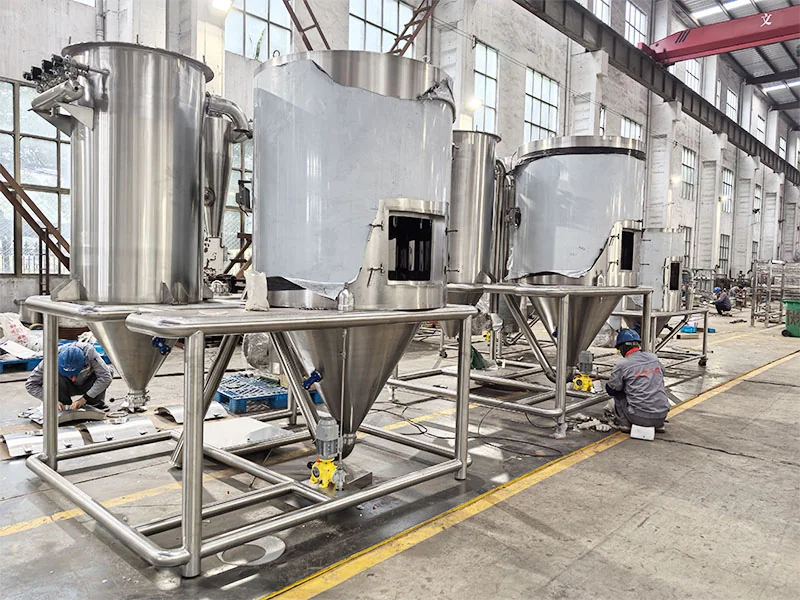
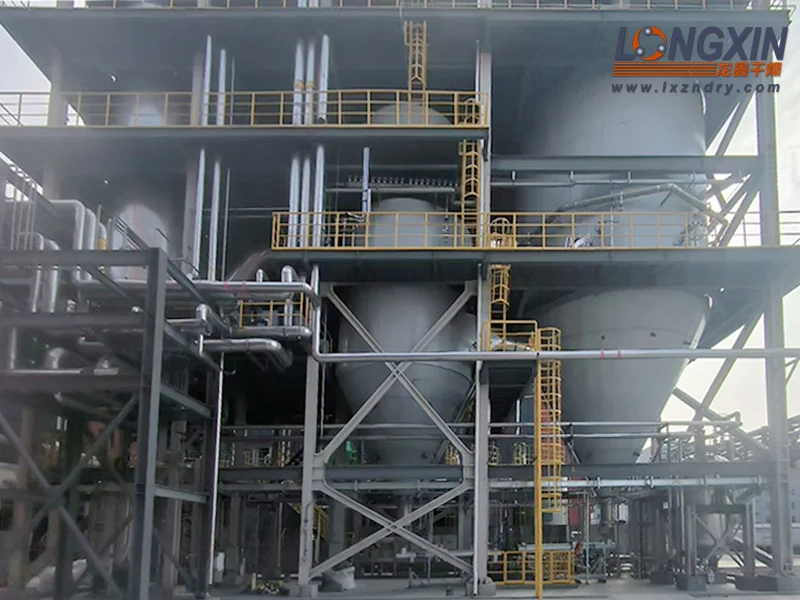
Longxin has developed a pneumatic spray-drying solution for CNT conductive materials and has completed pilot testing with single-wall carbon nanotube slurry. The system is designed around slurry conditioning, stable atomization, controlled hot-air distribution and efficient fine-powder recovery.
Why CNT Drying Is Difficult
The drying stage must remove liquid while preserving the processability of the conductive material. Typical challenges include:
- High slurry viscosity: concentrated CNT feeds can be difficult to pump and atomize continuously.
- Secondary agglomeration: uncontrolled drying can produce hard agglomerates that are difficult to redisperse.
- Wall deposition: sticky or poorly atomized feed can accumulate on the drying chamber.
- Very low bulk density: dried CNT powder is easily entrained by the gas stream.
- Fine-powder collection: conventional cyclone separation alone may be insufficient for very light conductive powders.
- Open material transfer: filter-cake handling and multiple transfer steps can increase product loss and contamination risk.
Longxin Spray Drying Process
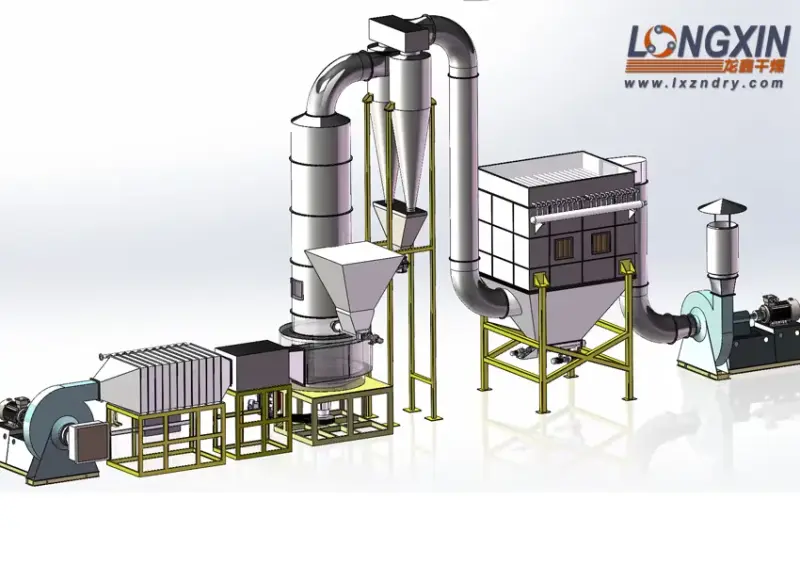
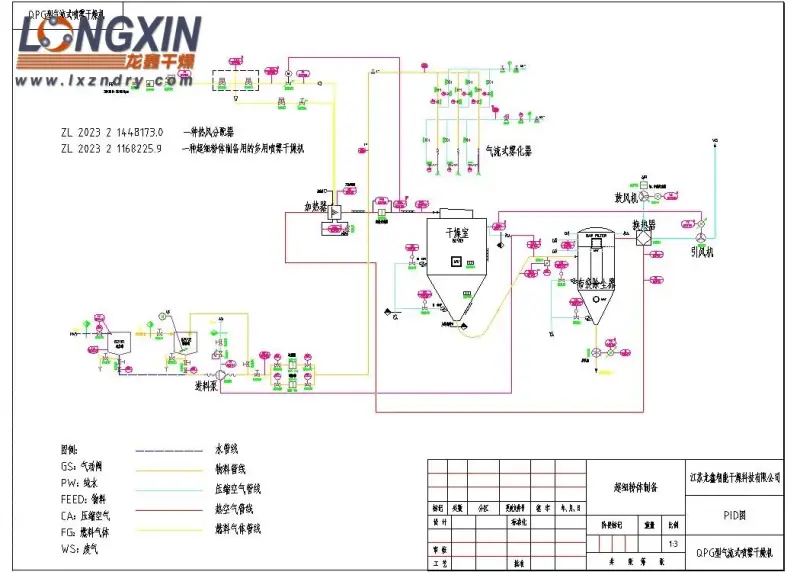
The Longxin process can convert a prepared CNT slurry directly into dry powder, reducing the need for intermediate filter-cake handling. The production route can be configured according to slurry viscosity, solids content, solvent system, required powder morphology and final moisture specification.
A typical system can integrate the following stages:
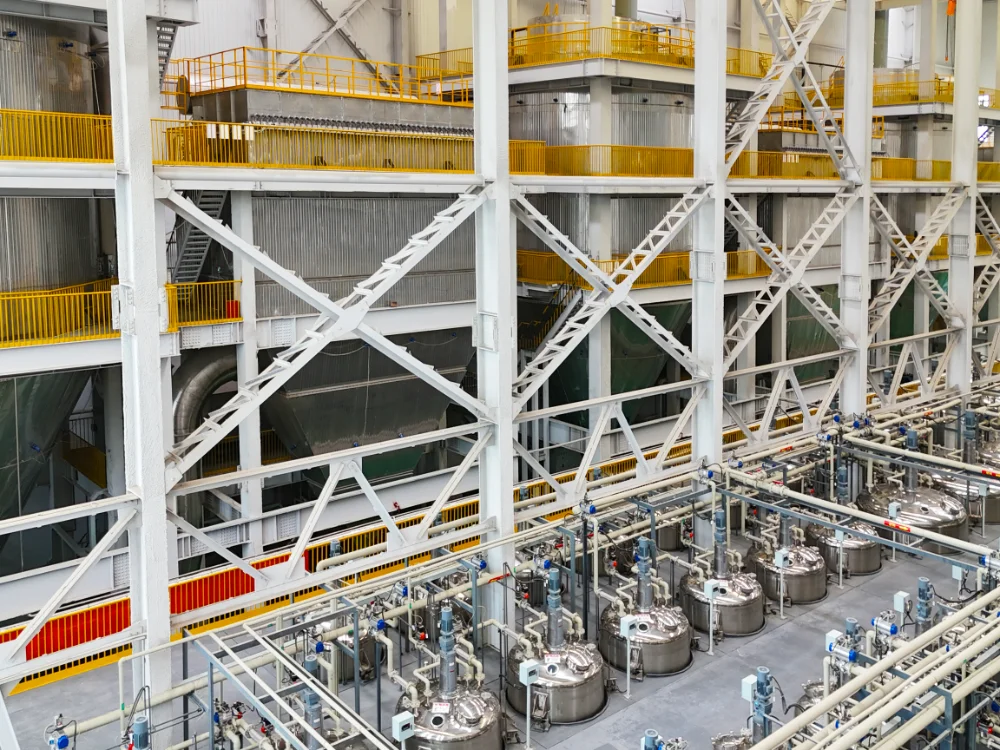
- Slurry preparation and pre-dispersion
- Controlled feed delivery
- Two-fluid or application-specific atomization
- Rapid spray drying in a controlled hot-air field
- Fine-powder separation and filtration
- Product collection and contained discharge
- Process monitoring and automated control
Key Engineering Features
1. Slurry Pre-Dispersion
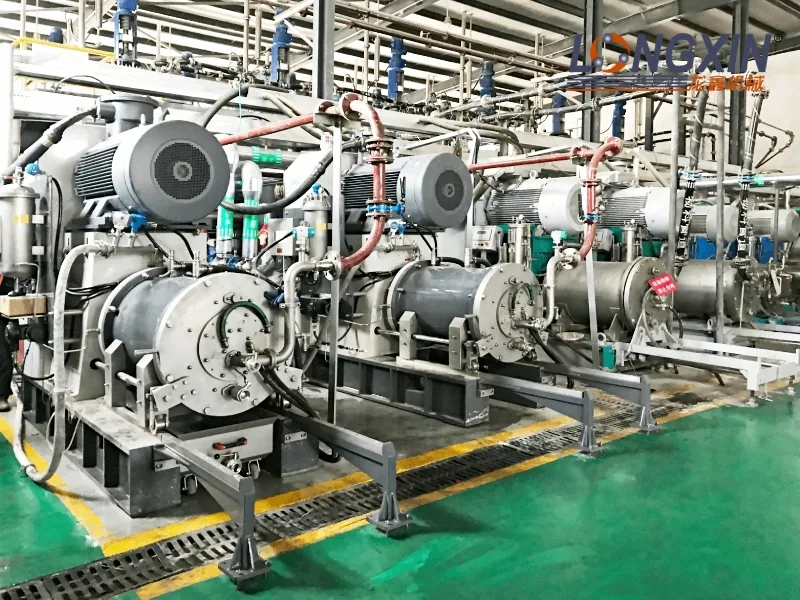
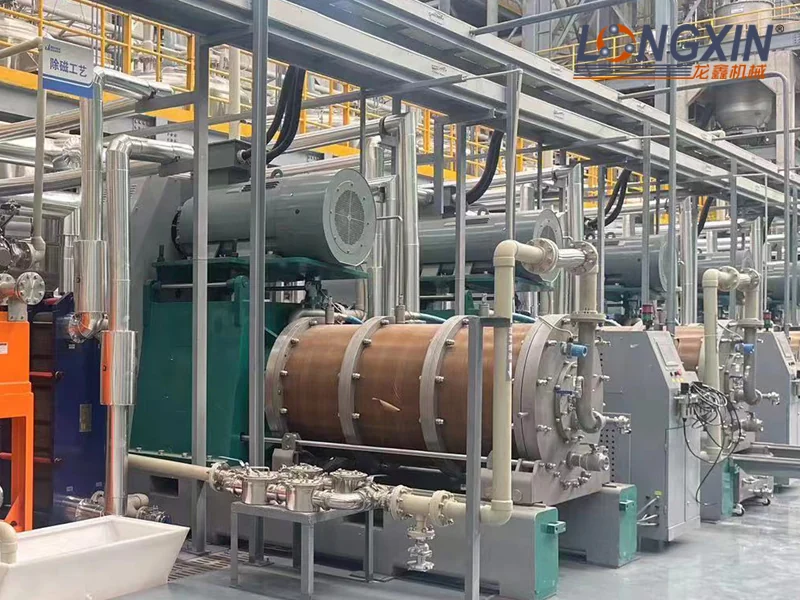
For feeds containing CNT agglomerates, a pre-dispersion step can be incorporated before spray drying. Wet grinding or high-shear dispersion helps improve slurry uniformity and provides a more stable feed for atomization.
2. Atomization for High-Viscosity Slurry
The atomization system is selected according to slurry rheology and production requirements. For difficult CNT feeds, a two-fluid atomizer can use high-velocity gas to break the liquid stream into fine droplets and improve evaporation efficiency.
3. CFD-Assisted Air Distribution
Airflow distribution inside the drying chamber can be optimized through computational fluid dynamics (CFD). The objective is to improve contact between droplets and drying air while reducing local overheating, recirculation and material deposition on the chamber wall.
4. Fine-Powder Recovery
Because CNT powder is extremely light, the collection system is an important part of the overall process. Longxin can configure filtration and pulse-cleaning systems to improve powder recovery and maintain stable exhaust conditions.
Applicable Conductive Materials
The same engineering platform can be adapted for a range of conductive and nano-carbon materials, including:
- Single-wall carbon nanotubes (SWCNT)
- Multi-wall carbon nanotubes (MWCNT)
- CNT conductive additives
- Conductive carbon black
- Conductive graphite
- Vapor-grown carbon fibers (VGCF)
- Graphene
- Graphene oxide
Spray Drying or Flash Drying?
The appropriate route depends on the feed form. Spray drying is generally more suitable when the material is supplied as a pumpable slurry and the customer wants direct conversion from liquid feed to powder. Flash drying can be considered when the process begins with a dewatered filter cake or other mechanically dewatered material.
Longxin can evaluate both routes through material testing before the final process is selected.
From Pilot Test to Production Line
Nano-carbon materials can behave very differently depending on purity, surface treatment, dispersant, solids concentration and slurry viscosity. For this reason, Longxin recommends process testing before industrial-scale equipment is finalized.
Our engineering support can include:
- Material and slurry evaluation
- Laboratory and pilot drying tests
- Atomization and temperature optimization
- Powder collection trials
- Process scale-up
- Complete production-line design
- Installation and commissioning support
Develop a CNT Drying Process for Your Material
If you are developing a CNT conductive additive, graphene-based material or other nano-carbon powder, Longxin can evaluate your feed characteristics and recommend a suitable drying route based on the required capacity and final powder properties.
Selection Questions
Is a two-fluid nozzle required for every CNT slurry?
No. Two-fluid atomization is an option for difficult feeds; the nozzle and gas-to-liquid conditions are selected from slurry viscosity, solids content, solvent and desired powder properties after testing.
When is spray drying preferred over flash drying?
Spray drying can be considered for a pumpable slurry that is to be converted directly to powder. Flash drying can be evaluated when the feed is a dewatered filter cake or another mechanically dewatered material.
Related Equipment and Applications
Discuss your material and request an equipment recommendation.