Solid-state battery scale-up changes the requirements placed on upstream material-processing equipment. Sulfide electrolytes need strict moisture and oxygen control, oxide electrolytes are hard and abrasive, polymer systems can be heat sensitive, and high-nickel cathode materials require careful control of moisture and contamination.
These differences make it difficult to use one standard grinding-and-drying configuration for every chemistry. Longxin approaches solid-state battery processing as a combination of particle-size engineering, contamination control, atmosphere management, precision drying and integrated automation.
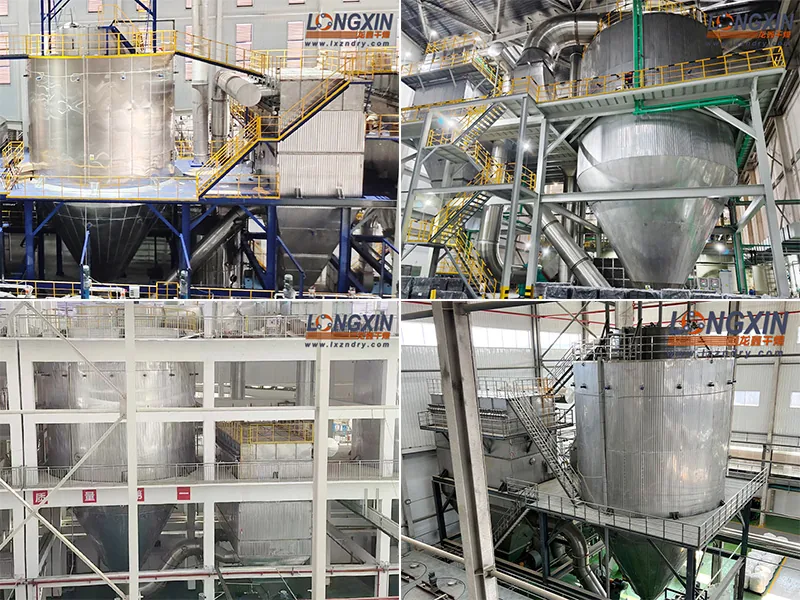
Different Solid-State Battery Materials, Different Process Windows
• Sulfide electrolytes: highly sensitive to water and oxygen, often requiring sealed equipment and inert-gas protection.
• Oxide electrolytes: high hardness and abrasion can accelerate wear of conventional metal grinding chambers.
• Polymer electrolytes: drying temperature and residence time must be controlled to protect heat-sensitive components.
• Silicon-carbon anodes: require nano-scale dispersion plus oxygen-controlled drying to reduce oxidation and agglomeration.
• High-nickel cathode materials: moisture and impurity control are important through drying and post-treatment.
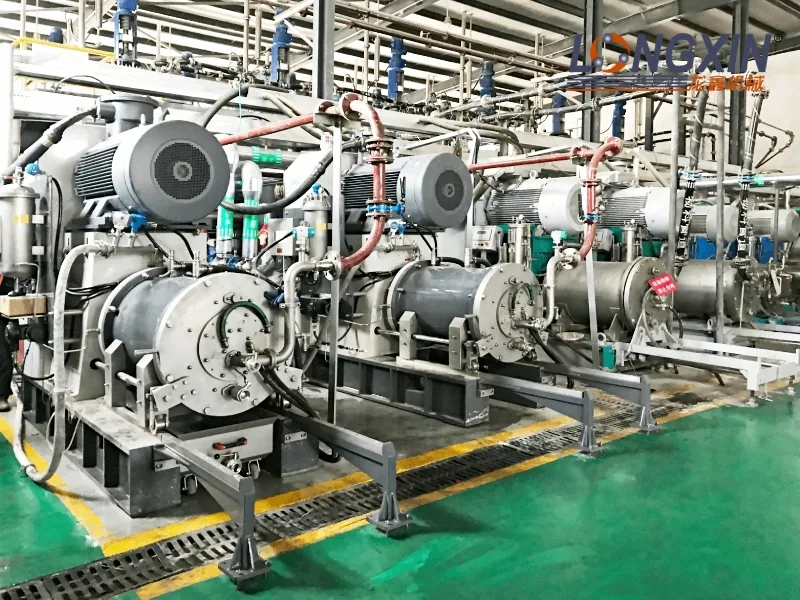
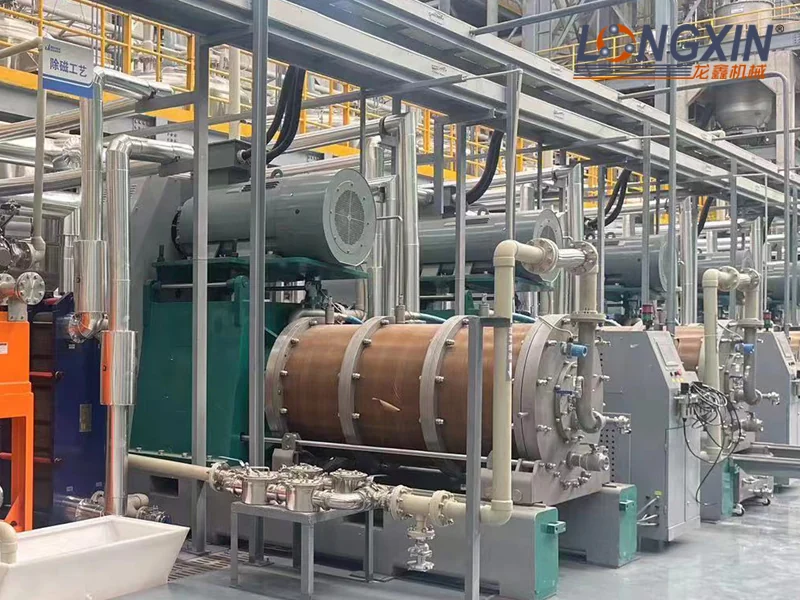
Nano Grinding: Narrower Particle Distribution with Lower Contamination Risk
For solid-state battery materials, grinding performance should be evaluated by more than final D50. The process must also consider heat generation, bead separation, wear, sealing and contamination from product-contact surfaces.
• Ceramic, zirconia and silicon-carbide contact components can be selected for materials with strict metal-contamination limits.
• Multi-stage cooling is used to control temperature and protect sensitive materials during extended circulation.
• Fine zirconia media can be applied for nano grinding; the source technical route uses approximately 0.3-0.5 mm beads for selected materials.
• Turbine-pin and pin-type grinding structures provide high shear and energy density while allowing the process to be tuned to slurry viscosity and solids content.
• Dynamic separation is designed to retain fine grinding media while supporting higher-flow continuous operation.
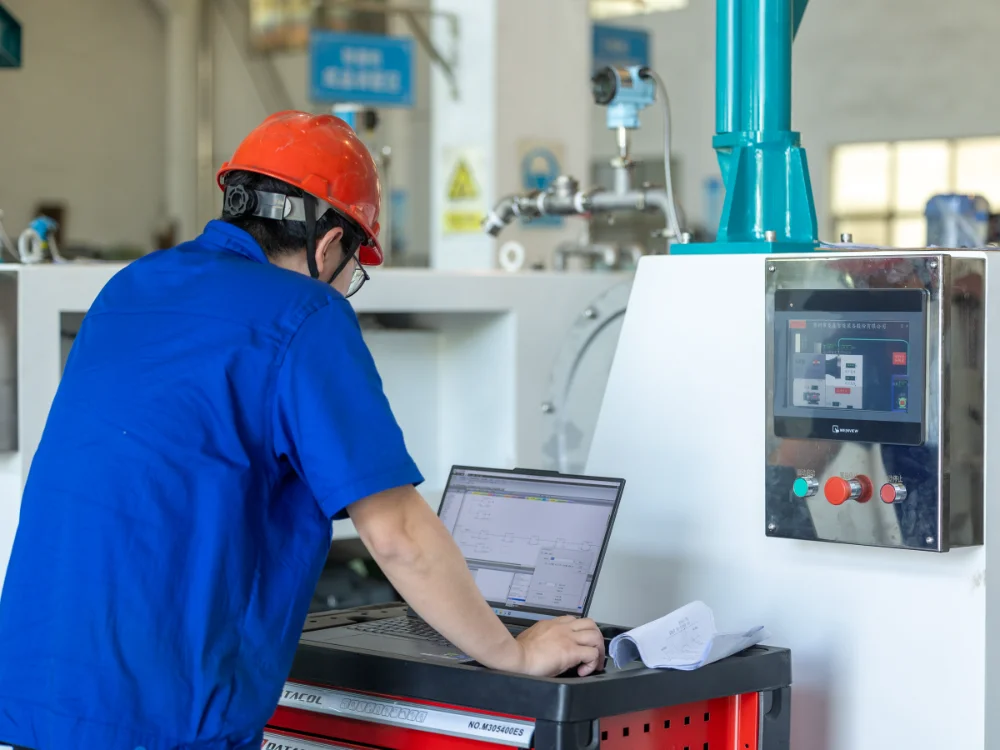
• PLC and MES connectivity can link flow rate, speed, temperature and particle-size monitoring for more repeatable production.
For suitable formulations, the source process data describes D50 control from the sub-micron range down toward approximately 100 nm. Actual results depend on feed size, material hardness, solids content, dispersant system, bead size and residence time, so material testing is recommended before final equipment selection.
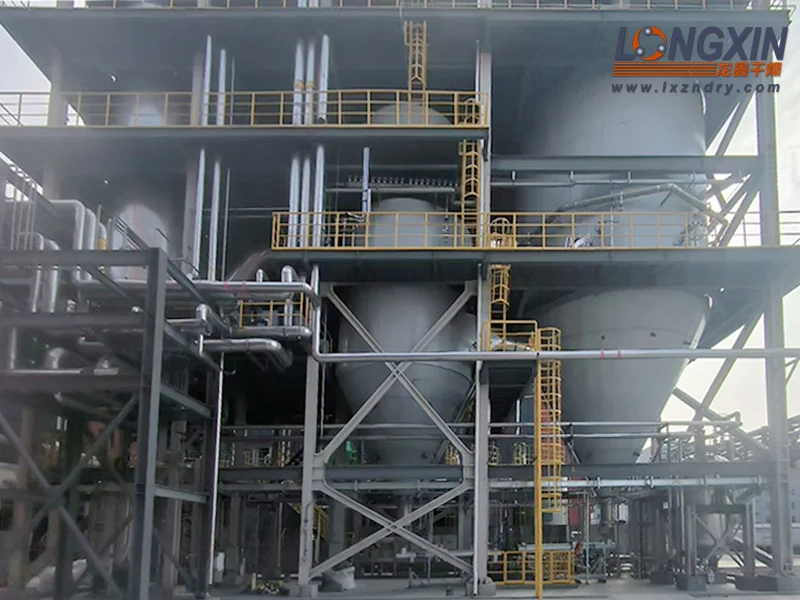
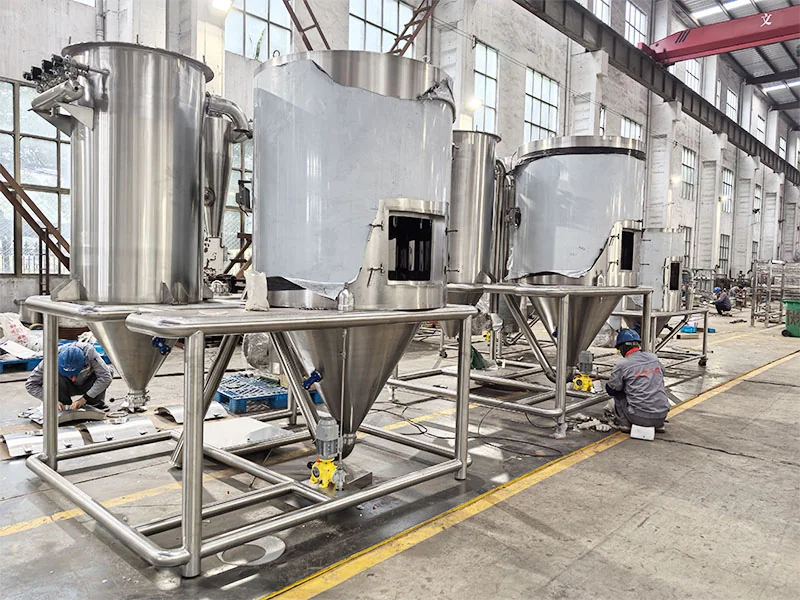
Precision Spray Drying and Controlled Atmosphere Processing
The spray dryer must convert a stable slurry into powder without creating a new problem at the drying stage. Atomization, gas flow, temperature distribution, wall deposition and powder collection all influence final granule morphology and residual moisture.
• High-speed centrifugal atomization for controlled granule formation across a range of slurry viscosities.
• Air-assisted atomization for feeds that require different droplet-generation behavior.
• Closed-loop nitrogen systems for materials that cannot be exposed to oxygen or ambient moisture.
• CFD-optimized hot-air distribution to improve temperature-field uniformity inside the drying chamber.
• Integrated cyclone and bag-filter recovery for fine powder collection.
• Variable-frequency drives and sensor-based controls for adapting airflow, feed rate and atomizer operation to production load.
The source equipment range covers laboratory and pilot systems through industrial spray-drying capacities, with stated evaporation rates extending from approximately 25 kg/h to large systems up to 12,000 kg/h depending on configuration and material.
Application Routes Across the Solid-State Battery Material System
Cathode materials
Lithium-rich manganese and related cathode precursors can use a process route combining high-flow nano grinding with spray drying to improve dispersion and create more uniform precursor powder. High-nickel ternary materials can also require enclosed low-temperature vacuum drying to control moisture without excessive thermal exposure.
Silicon-carbon and graphite anodes
Closed-cycle spray drying is suitable for silicon-carbon systems that need inert-gas operation or solvent recovery. The closed loop reduces direct contact with oxygen and can recover condensed organic solvent for reuse. Artificial graphite processes can be combined with controlled thermal treatment according to the required material route.
Solid electrolytes
Sulfide electrolytes can be processed in a sealed inert-gas loop to minimize exposure to moisture. Oxide electrolytes need abrasion-resistant grinding and controlled particle-size distribution. Polymer-containing electrolyte systems require lower thermal load and careful control of residence time.
Binders and conductive additives
PAA-type binders can use low-temperature spray drying with anti-wall-deposition measures. Conductive additives such as carbon nanotubes or graphene can use flash-drying routes where rapid dispersion, corrosion-resistant contact materials and fine-powder recovery are important.
EPC Integration from Material Test to Industrial Line
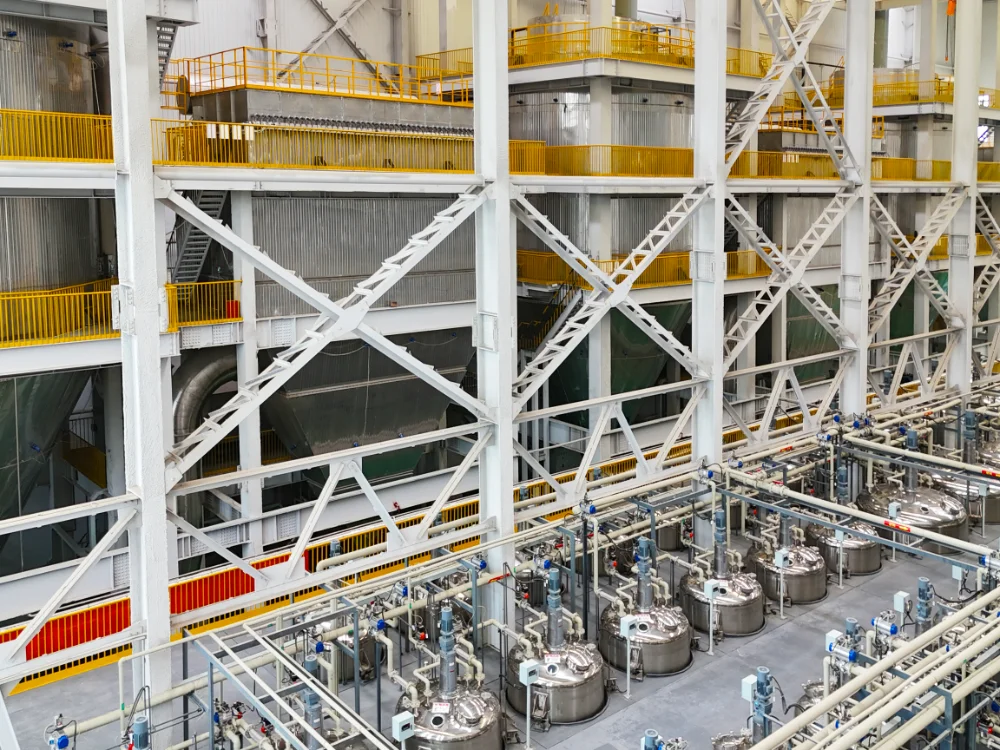
Longxin supplies systems from laboratory-scale grinding equipment to industrial high-flow units and can integrate complete battery-material production lines. The engineering scope can include material feeding, dosing, grinding, spray drying, powder recovery, inert-gas circulation, dust control, automation, process data recording and plant-layout coordination.
• Process trials before equipment selection to reduce scale-up uncertainty.
• Modular line design for easier expansion and recipe changes.
• Closed transfer between process steps to reduce manual handling.
• Safety interlocks, process monitoring and batch-data traceability.
• Remote monitoring and maintenance support where required.
Why Pilot Validation Matters for Solid-State Battery Projects
Solid-state battery materials are still evolving rapidly, and the same equipment settings cannot be transferred blindly from one formulation to another. Pilot tests allow the customer and equipment supplier to establish the relationship between feed properties, grinding energy, particle-size distribution, drying conditions, powder morphology and recovery yield.
For manufacturers moving from R&D to commercial production, this data-driven scale-up route is often more valuable than simply choosing a larger machine. It helps establish a repeatable process window and reduces the risk of equipment changes after the plant is commissioned.