
Erythritol is typically handled as a crystalline product after crystallization and solid-liquid separation. Before packaging or downstream processing, residual moisture must be removed and the product must be cooled to a stable temperature without causing excessive crystal breakage, moisture re-absorption or caking.
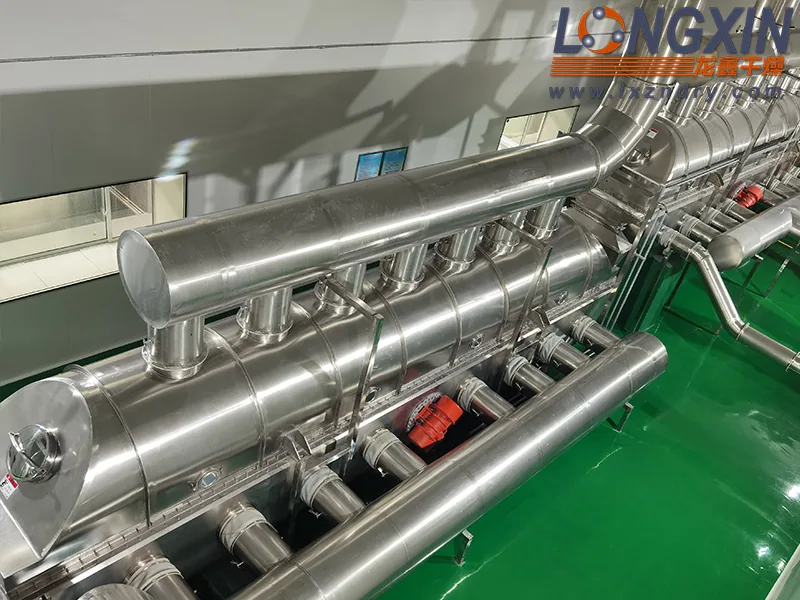
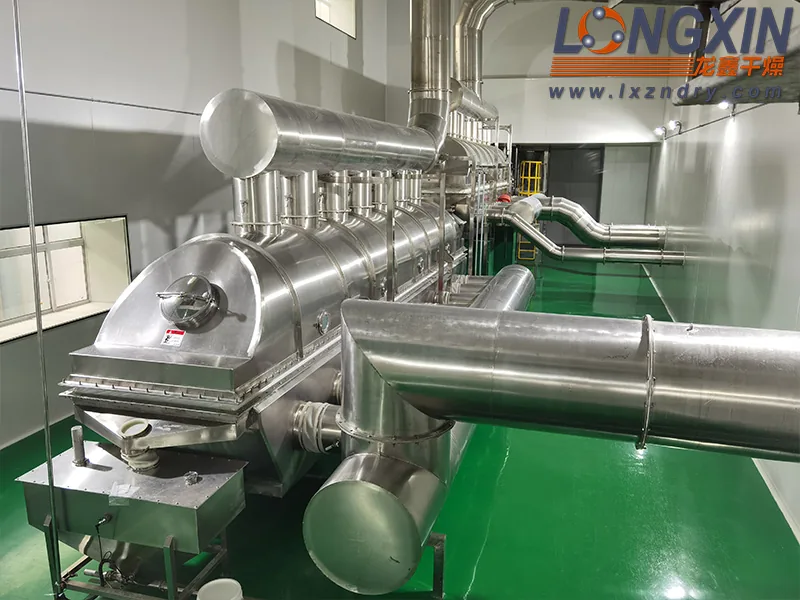
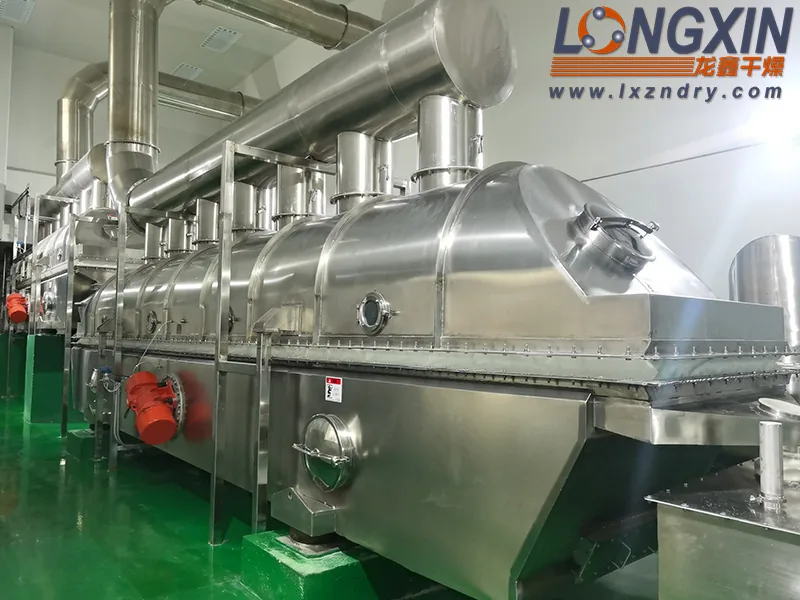
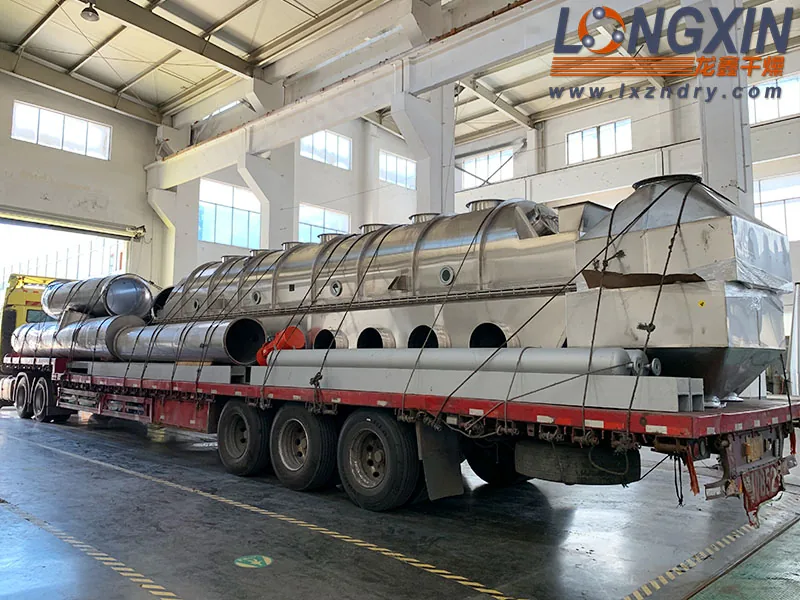
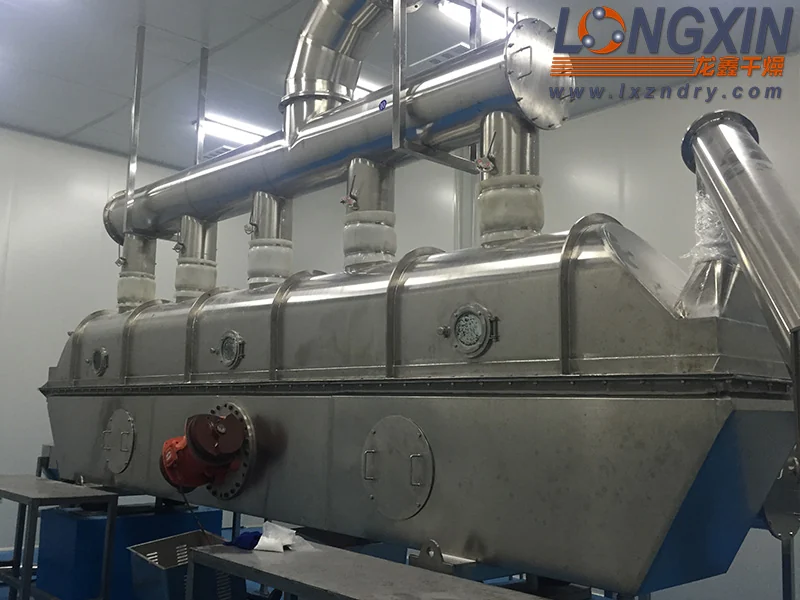
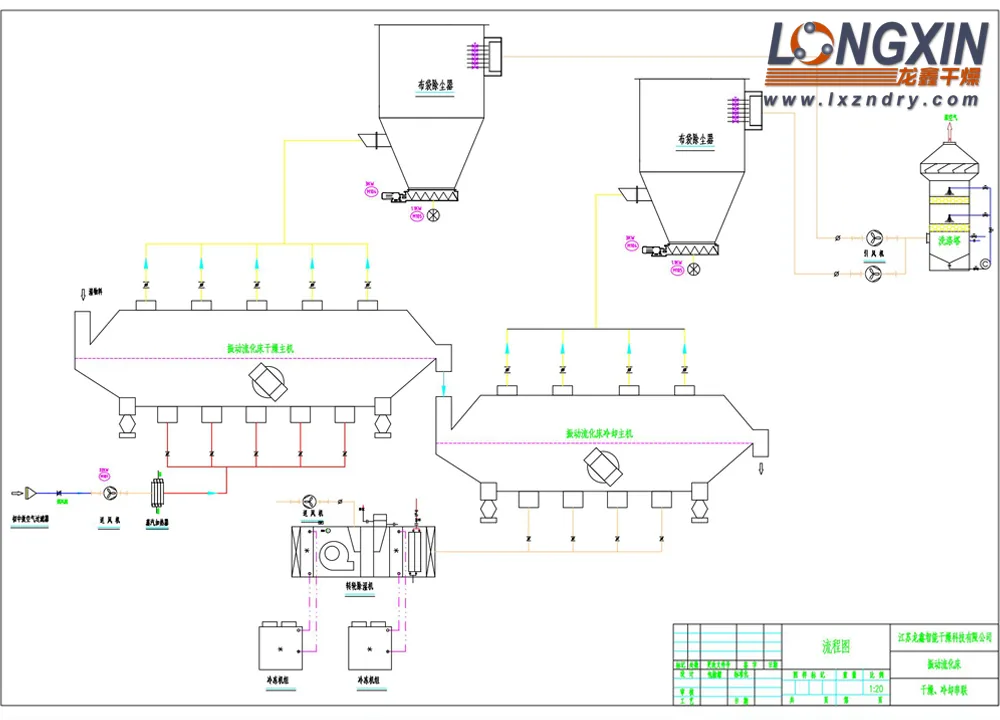
Longxin's erythritol drying solution combines a vibrating fluid-bed dryer with a downstream vibrating fluid-bed cooler. The system is designed for continuous drying and cooling, with dehumidified cooling air, controlled material residence time and dust recovery.
Why Combine Drying and Cooling?
Drying alone may leave the product at an elevated temperature. If hot erythritol crystals are exposed directly to humid ambient air, moisture can condense or be re-absorbed on the crystal surface. This can affect flowability and increase the risk of caking during storage and packaging.
By connecting the drying and cooling stages in series, the material can move continuously from moisture removal to controlled cooling. Dehumidified cooling air is especially important where ambient humidity is high or the product has strict storage requirements.
Typical Process Flow
1. Wet Erythritol Feeding
Wet crystalline erythritol is fed continuously into the vibrating fluid-bed dryer. The supplied project documentation uses approximately 3% inlet moisture as a reference condition. Actual feed moisture should be confirmed for each production line.
2. Vibrating Fluid Bed Drying
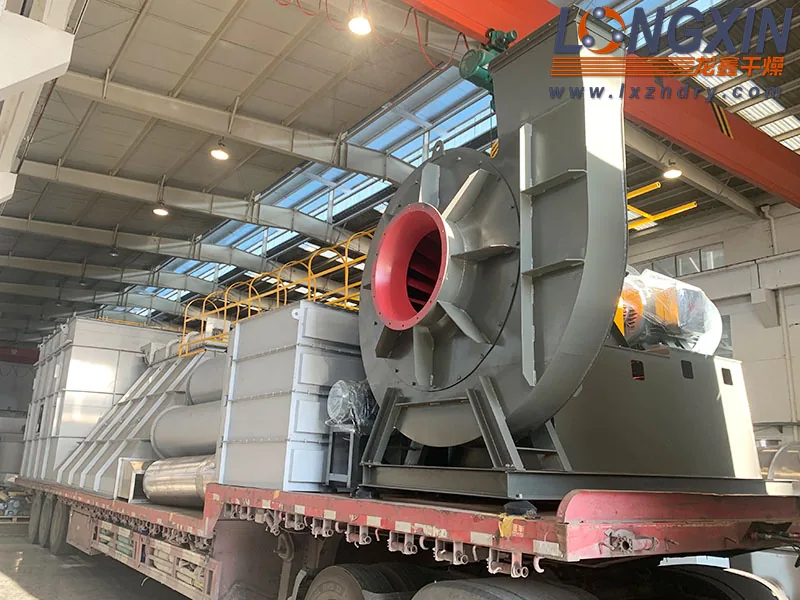
Heated process air enters from beneath the perforated bed. Vibration moves the crystals forward while promoting fluidization and intensive gas-solid contact. Moisture evaporates as the material travels through the drying section, and humid exhaust air is removed by the induced-draft system.
The supplied process description gives approximately 50–90°C as a reference drying-air inlet range. Steam or electric heating can be used depending on the site's utility conditions and process requirements.
3. Controlled Drying Discharge
After drying, the product is discharged to the cooling section. The original project description specifies final moisture of ≤0.12% as a reference target. This value should be treated as project-specific and verified according to product specification and operating conditions.
4. Dehumidified Air Cooling
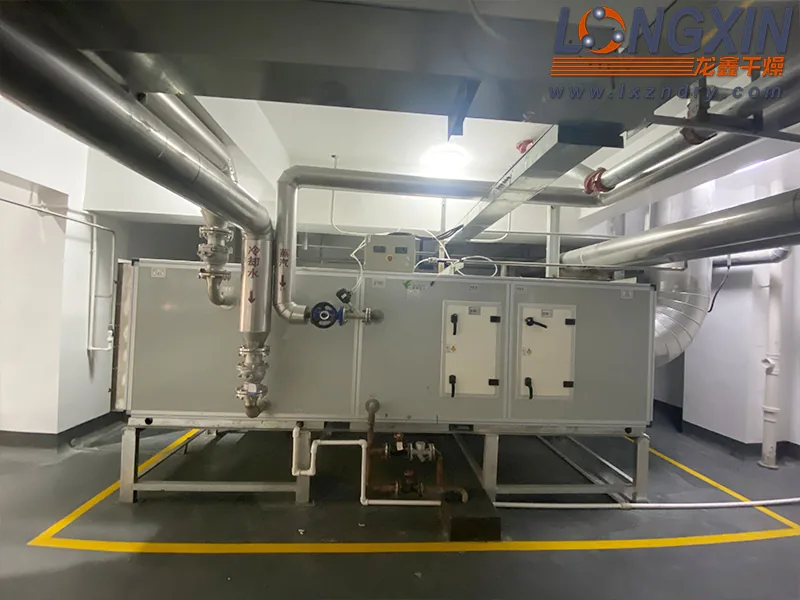
Fresh cooling air is dehumidified before entering the vibrating fluid-bed cooler. The supplied project description uses approximately 15°C cooling-air temperature as a reference. Dry, conditioned air helps reduce the risk of condensation and moisture re-absorption on the warm crystal surface.
5. Final Product Cooling
The product moves through the cooler under controlled vibration while exchanging heat with the conditioned air. The original project description gives ≤25°C as a reference final product temperature before collection or packaging.
6. Dust Collection
Exhaust air from the drying and cooling sections can carry fine erythritol particles. A pulse-jet bag filter is used to separate entrained powder from the air stream, helping recover product and control dust emissions. Additional separation stages can be configured where required by the project.
Reference Process Parameters
| Material | Erythritol crystals |
|---|---|
| Reference inlet moisture | Approx. 3% |
| Reference drying-air temperature | Approx. 50–90°C |
| Reference final moisture | ≤0.12% |
| Reference cooling-air temperature | Approx. 15°C after dehumidification |
| Reference final product temperature | ≤25°C |
These values come from the supplied project description and are reference conditions, not fixed specifications for every erythritol production line. Final parameters depend on feed condition, crystal size, ambient humidity, throughput and product requirements.
Key System Features
- Continuous drying and cooling: the dryer and cooler can operate as a coordinated continuous process.
- Uniform gas-solid contact: vibration and fluidization promote even heat and mass transfer across the product bed.
- Gentle crystal handling: controlled vibration reduces unnecessary mechanical stress compared with more aggressive solids-handling methods.
- Dehumidified cooling air: helps limit moisture pick-up and condensation during final cooling.
- Adjustable operation: bed depth, material travel speed and vibration parameters can be adapted to the process requirement.
- Dust recovery: fine product entrained in the exhaust air can be recovered through the filtration system.
- Enclosed process design: product-contact sections can be configured for cleaner food-processing operation and easier integration with upstream and downstream equipment.
Equipment Selection Considerations
For a new erythritol project, the dryer and cooler should be selected using actual process data rather than only nominal capacity. Important inputs include:
- Required throughput
- Feed moisture and feed temperature
- Crystal size distribution and crystal strength
- Target final moisture
- Target discharge temperature
- Ambient temperature and relative humidity
- Available heat source and cooling/dehumidification utilities
- Downstream screening, conveying and packaging requirements
Longxin can evaluate these conditions through process testing and engineering design before the final industrial system is confirmed.