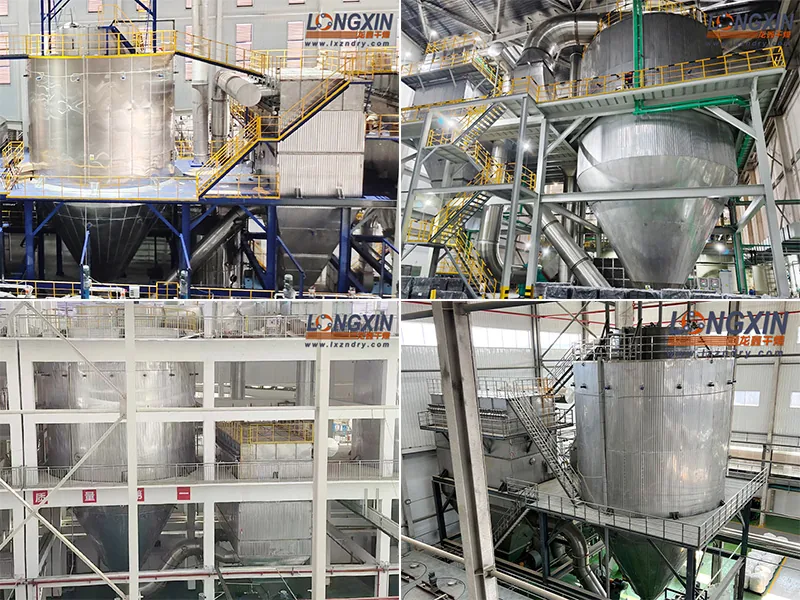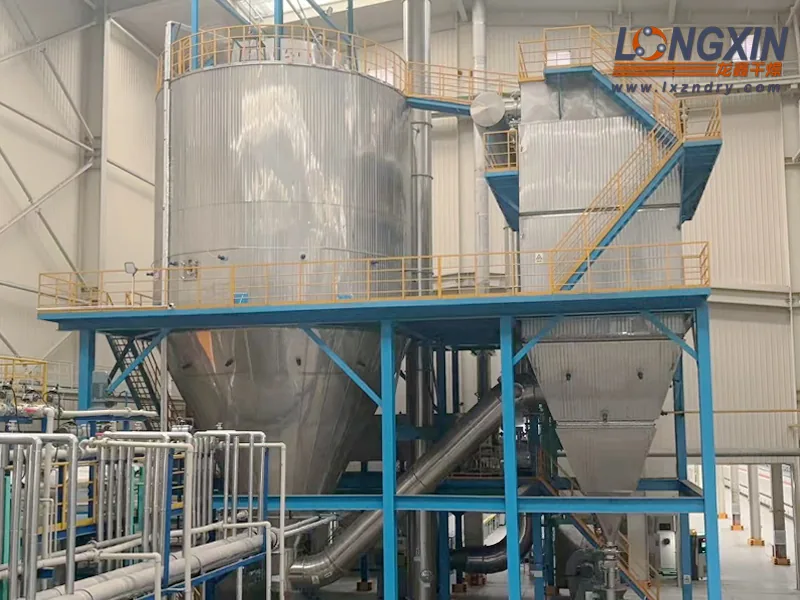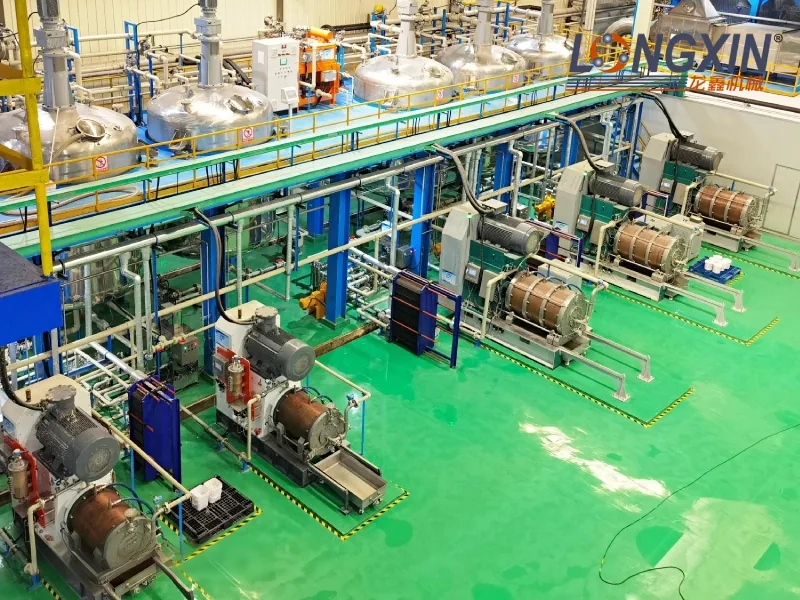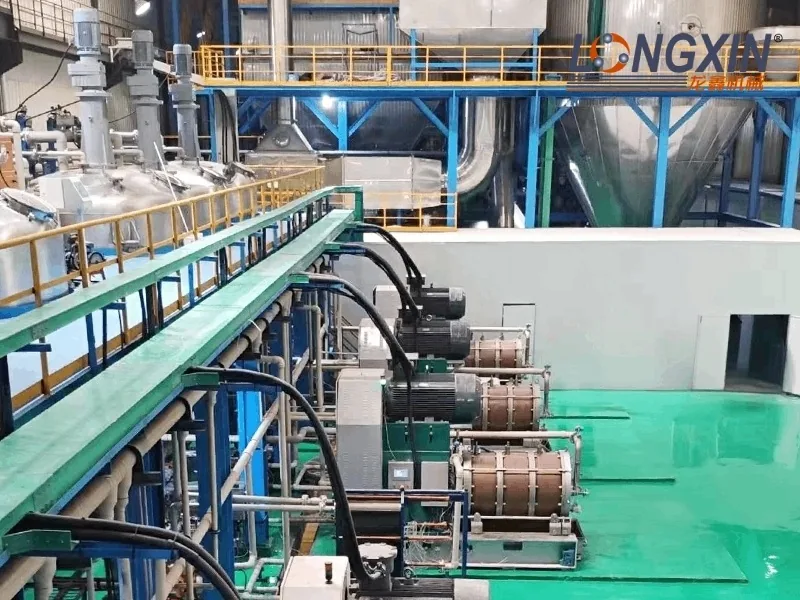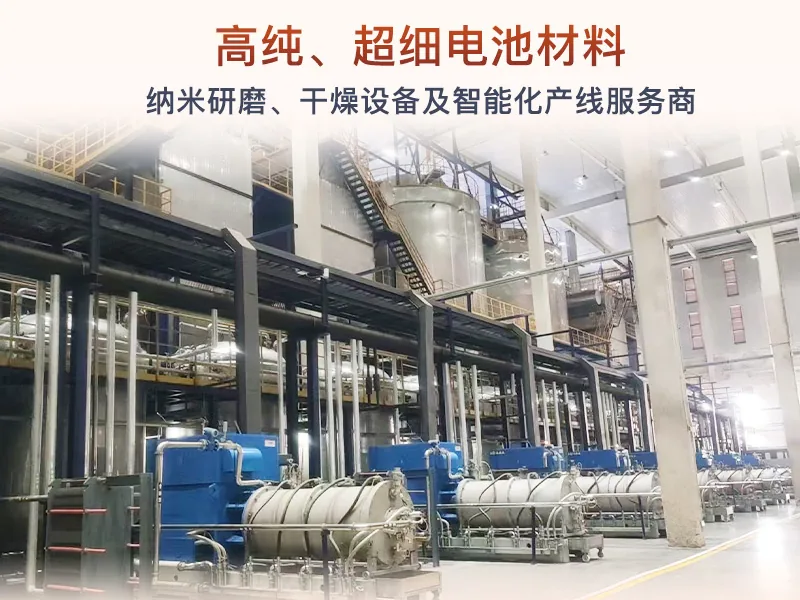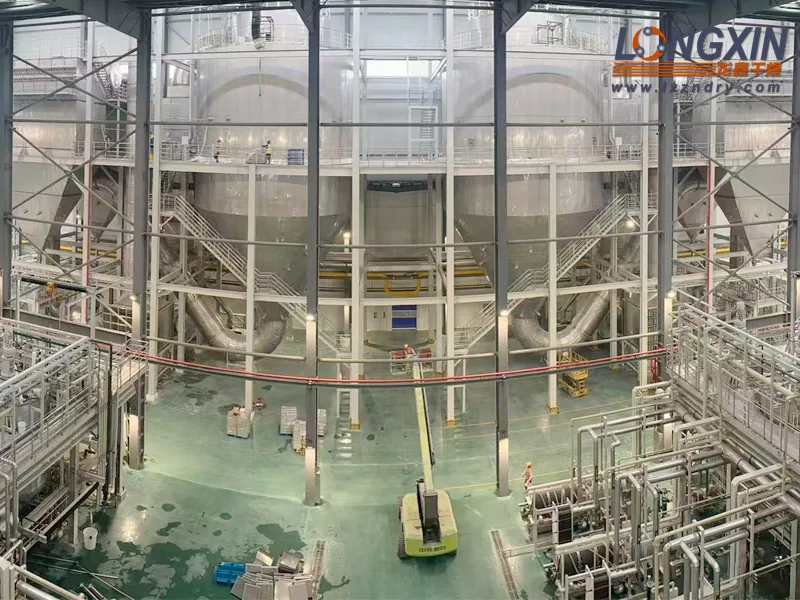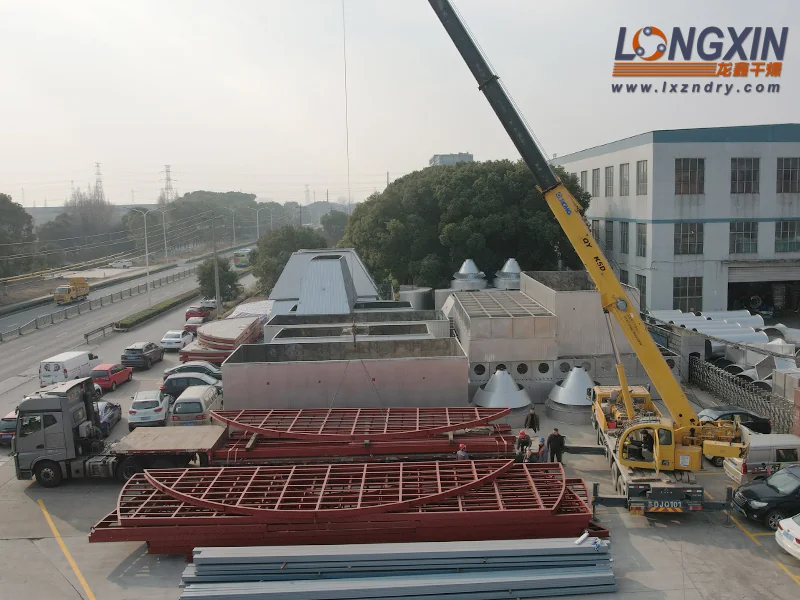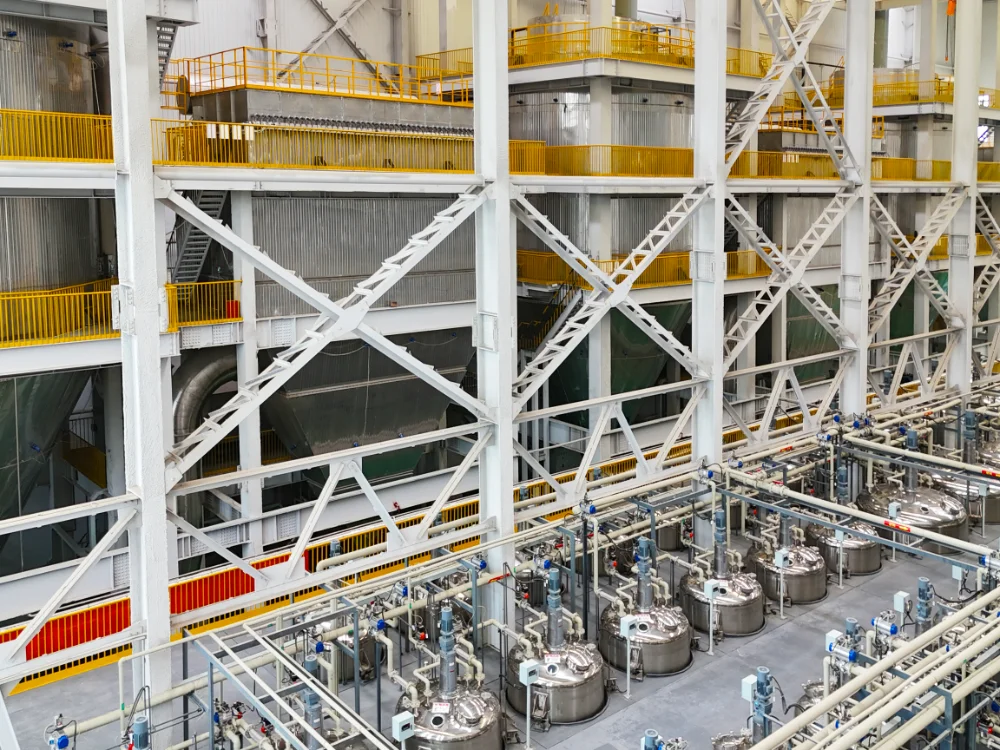
Longxin's battery material grinding and drying production line integrates material feeding, slurry preparation, nano grinding, spray drying and related downstream handling into a coordinated process system for industrial battery-material production.
The solution is intended for customers who need more than individual machines. By connecting the major process stages through controlled conveying and centralized automation, the line can reduce manual handling, improve recipe repeatability and provide a more stable transition from slurry preparation to dried powder.
Complete Process Integration
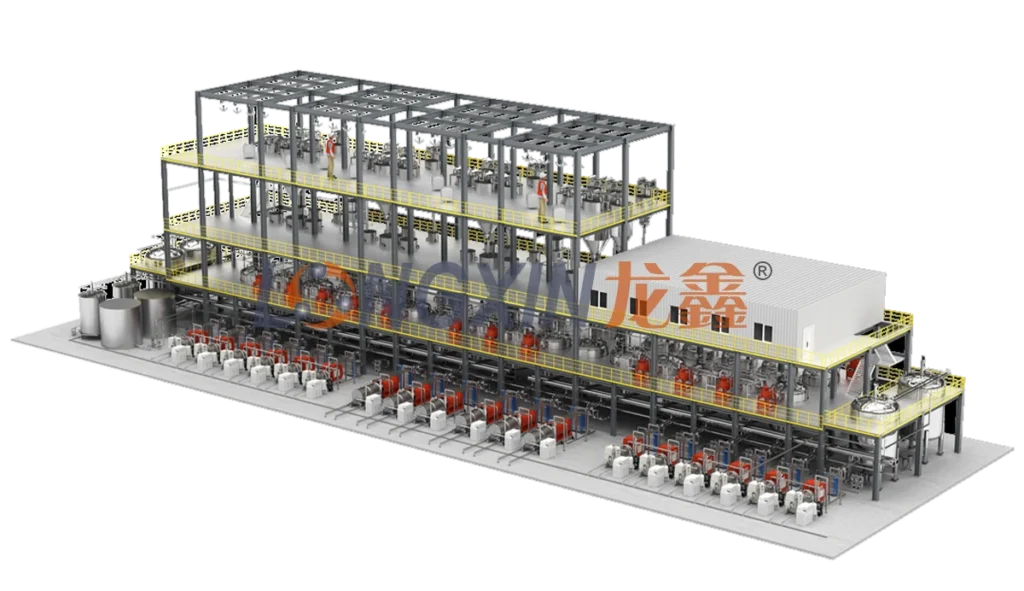
A typical production line can be configured around the following process sequence:
- Raw-material feeding and batching
- Slurry preparation and mixing
- Nano grinding and dispersion
- Slurry storage and circulation
- Spray drying and secondary-particle formation
- Powder collection and closed conveying
- Optional calcination / thermal processing interface
- Optional fine grinding, classification and screening
- Packaging and production-data management
Main System Modules
Automatic Feeding and Batching
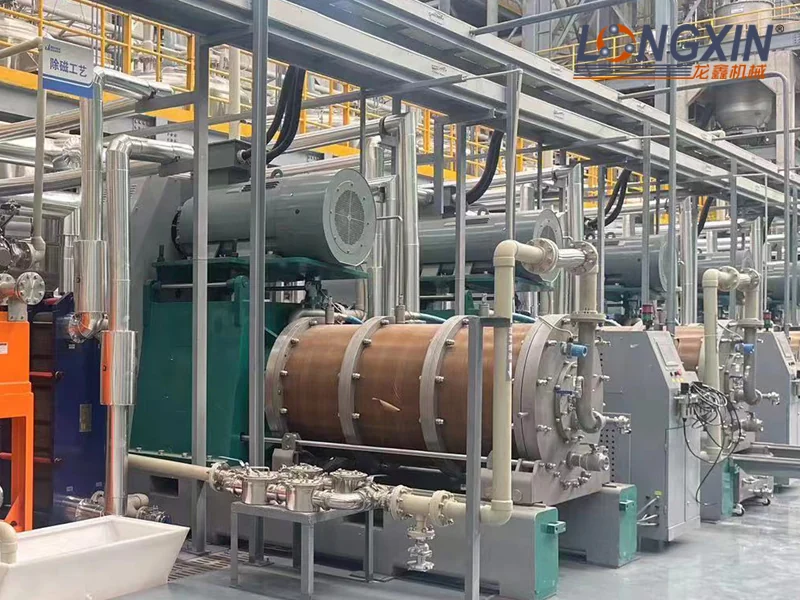
Bag handling, vacuum conveying and gravimetric or other controlled batching methods can be integrated according to the raw materials. Magnetic separation and contamination-control measures can be added where battery-material purity requirements demand them.
Nano Grinding System
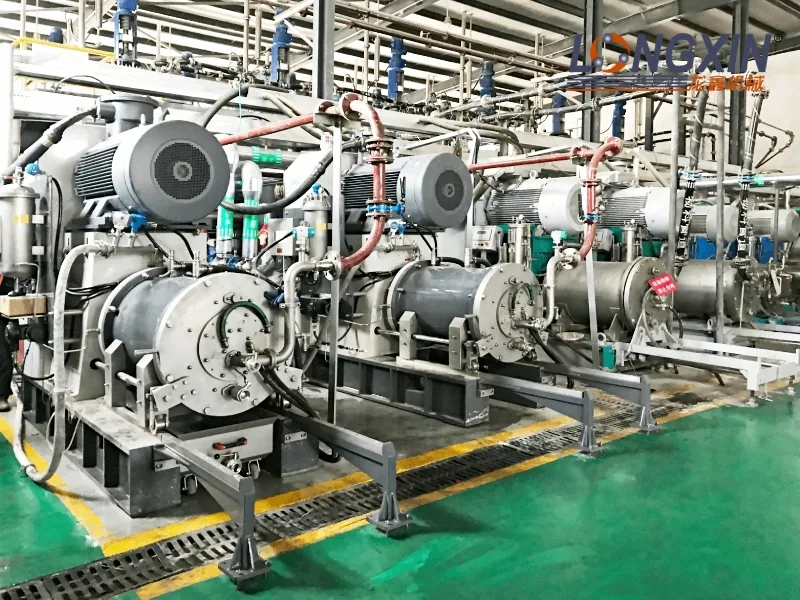
The grinding section can use high-flow pin-type nano mills with fine zirconia media and wear-resistant wetted parts. For suitable LFP processes, project data indicates industrial units can be configured for approximately 100–500 L/h per machine, with nano-scale particle-size targets selected according to formulation and downstream requirements.
Spray Drying System
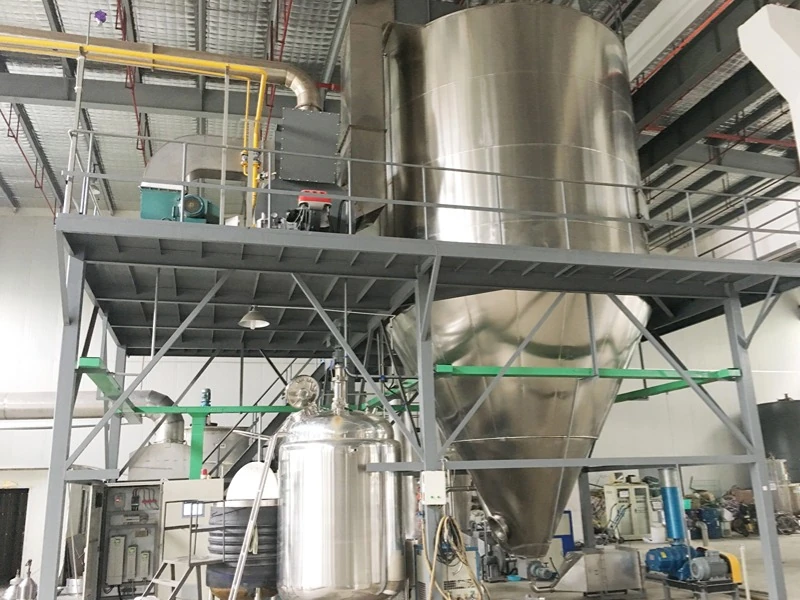
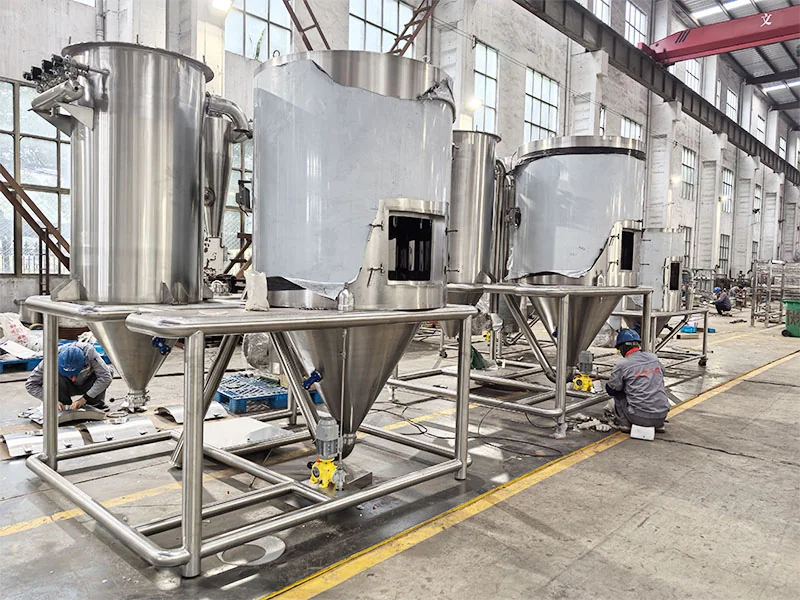
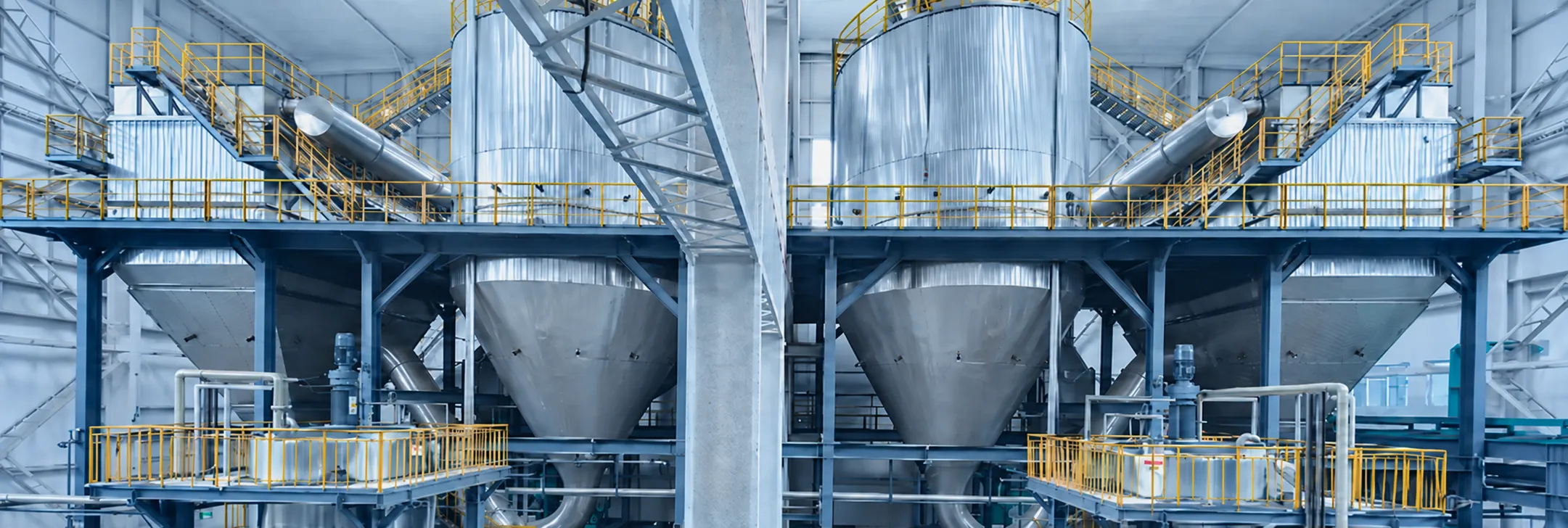
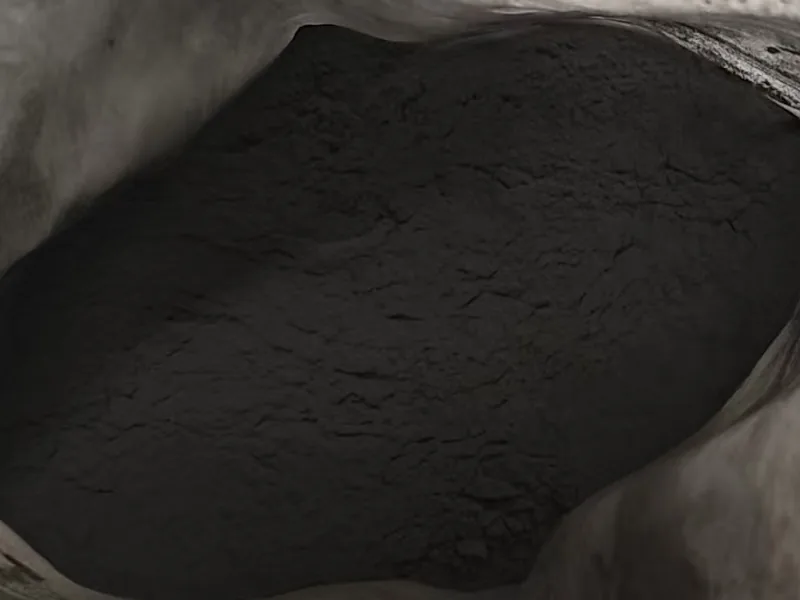
The spray-drying section converts prepared slurry into free-flowing powder with a controlled secondary-particle distribution. High-speed centrifugal atomization, engineered hot-air distribution, powder collection and dust filtration are coordinated through the process-control system.
Thermal Processing Interface
Where the production route includes calcination, the drying section can be engineered to provide a stable powder feed to the furnace process. Conveying and buffer design can be coordinated with downstream thermal equipment and plant layout.
Powder Handling and Packaging
After drying or downstream processing, screening, closed powder transfer, intermediate storage and quantitative packaging can be integrated to reduce open handling and support cleaner production.
Centralized Automation
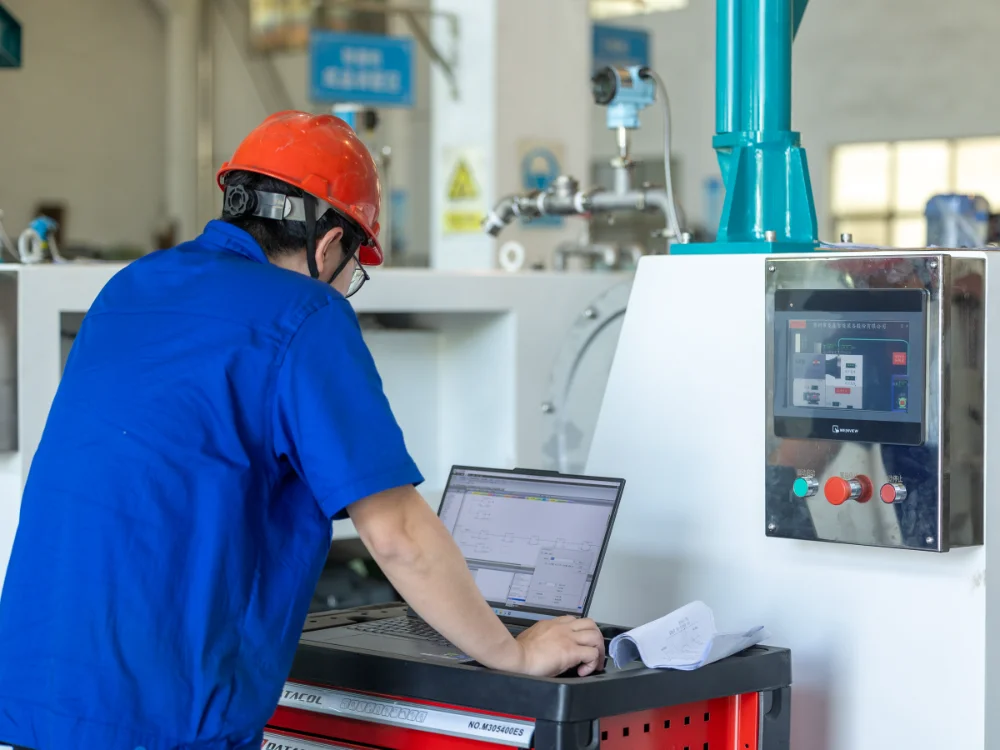
PLC-based control can coordinate flow, temperature, equipment status, interlocks and production recipes. The system can also be designed for higher-level data exchange with plant MES or other production-management systems where required.
Why Integrate Grinding and Drying?
For battery materials, slurry particle size and rheology directly affect atomization. If the grinding section produces inconsistent particle size, solids content or viscosity, the spray dryer must operate with a moving process target. Integrating both stages allows the production line to manage them as one process rather than as isolated machines.
This is particularly useful for LFP and related cathode materials where stable slurry preparation is required to support consistent secondary-particle formation.
Scalable Production-Line Engineering
Reference line capacities and module-level specifications are provided in the Technical Specifications tab. Final values should be confirmed through process design and project engineering.
The supplied project image set includes industrial lines associated with annual production scales of approximately 10,000, 20,000, 30,000 and 50,000 tonnes. These figures represent project references rather than fixed standard capacities. Final line capacity depends on formulation, solids content, evaporation load, operating schedule and downstream process conditions.
Materials and Applications
- Lithium iron phosphate (LFP)
- Lithium manganese iron phosphate (LMFP)
- Selected ternary cathode materials
- Other battery-material slurries requiring nano grinding and spray drying
Engineering Scope
Longxin can support the project from process definition through equipment engineering and line integration. Typical scope can include process-flow development, equipment sizing, plant layout coordination, piping and conveying design, control philosophy, factory testing, installation guidance and commissioning support.
For a complete-line proposal, provide the material system, annual target capacity, slurry solids content, feed and final particle-size targets, moisture requirement, available utilities and plant layout. This information allows the grinding load, evaporation load and equipment configuration to be evaluated together.
Selection Questions
Which process stages can the battery-material line integrate?
A project can connect batching, slurry preparation, nano grinding, slurry circulation, spray drying, powder collection and conveying. Calcination interfaces, classification, screening and packaging are specified when required.
What data is needed for a complete-line proposal?
Provide the material system, annual target capacity, slurry solids content, feed and final particle-size targets, moisture requirement, utilities and plant layout so grinding and evaporation loads can be assessed together.
Related Equipment and Applications
Discuss your material and request an equipment recommendation.