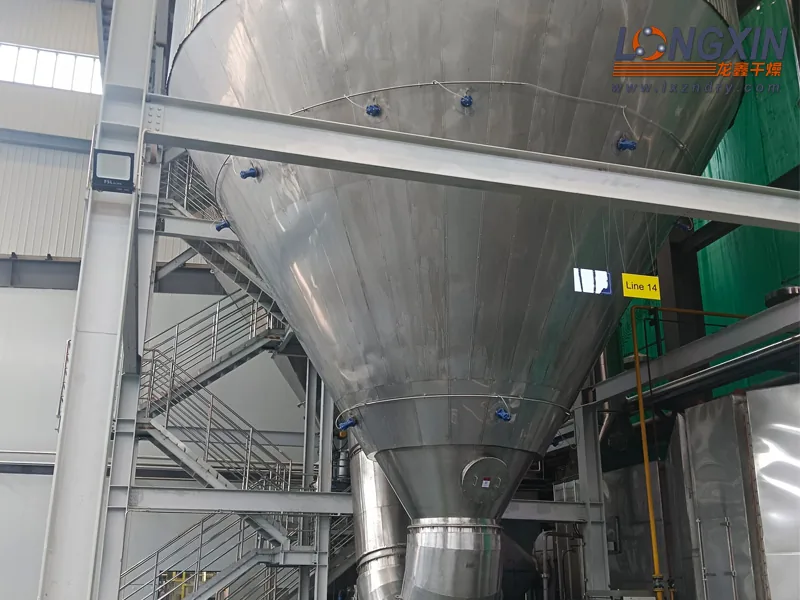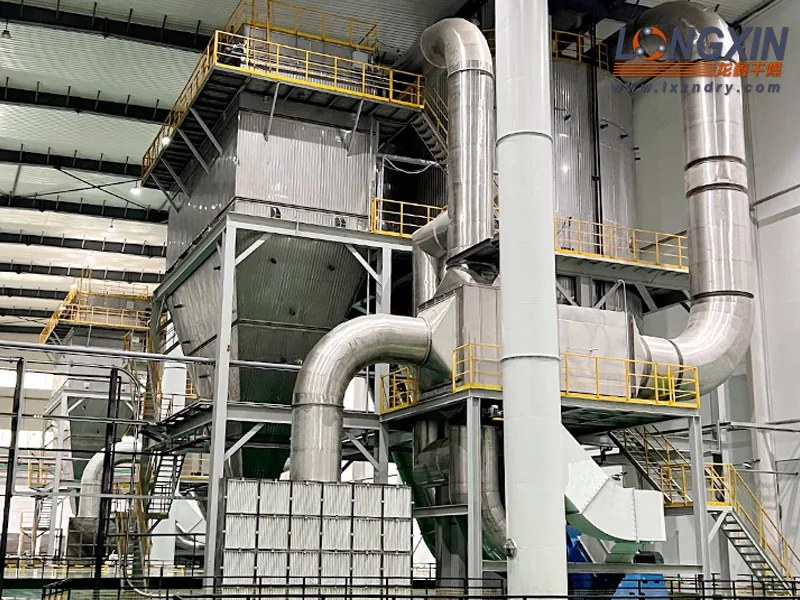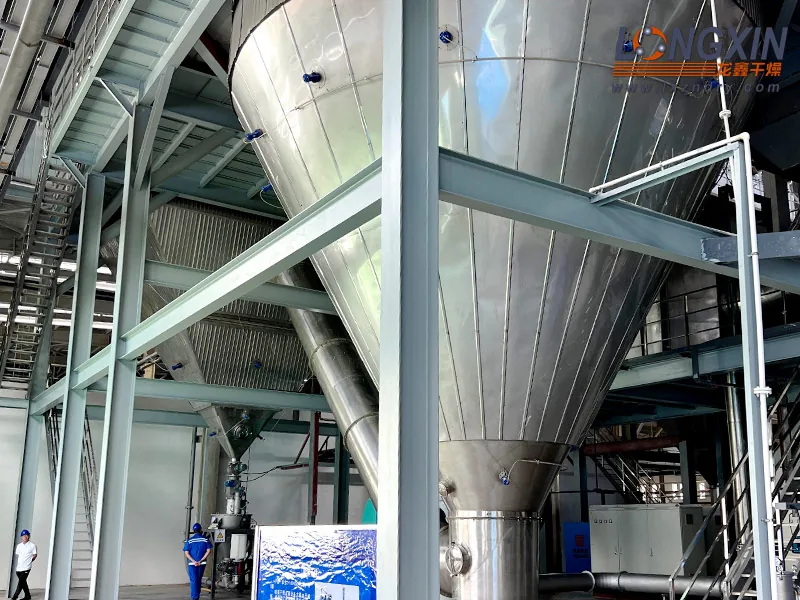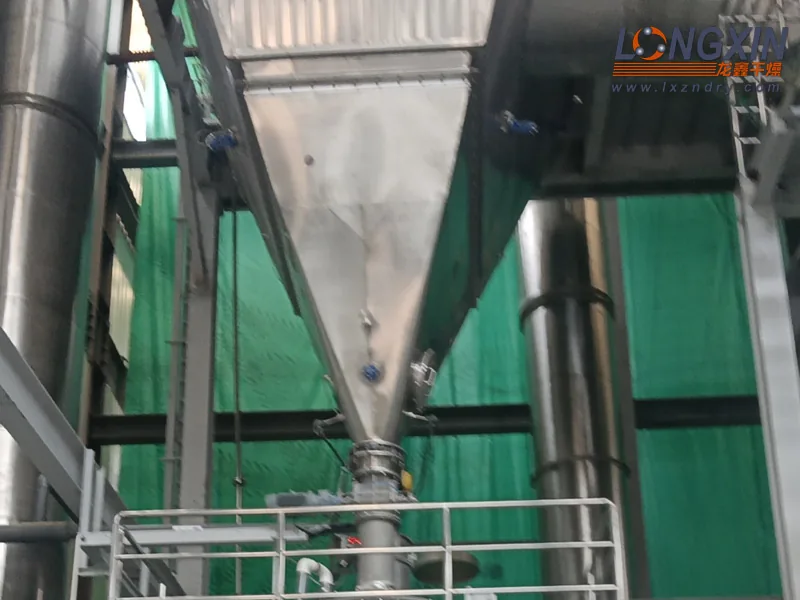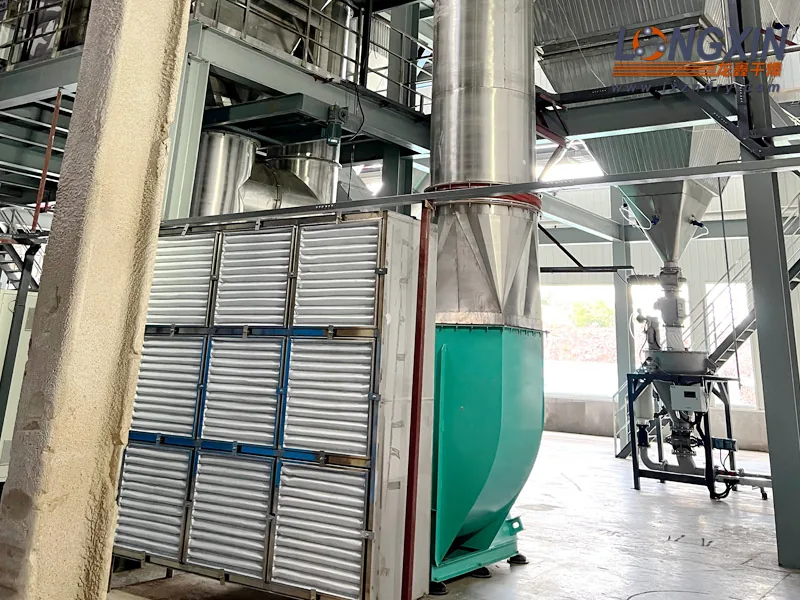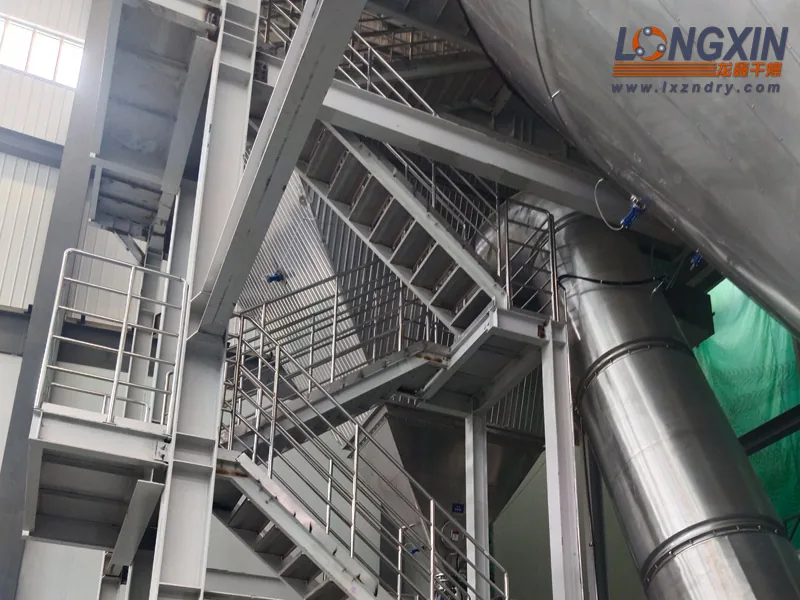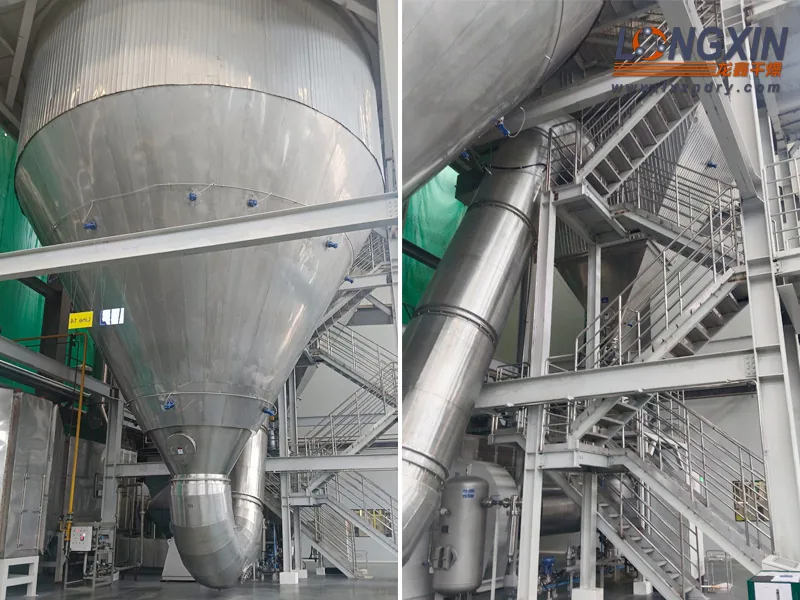
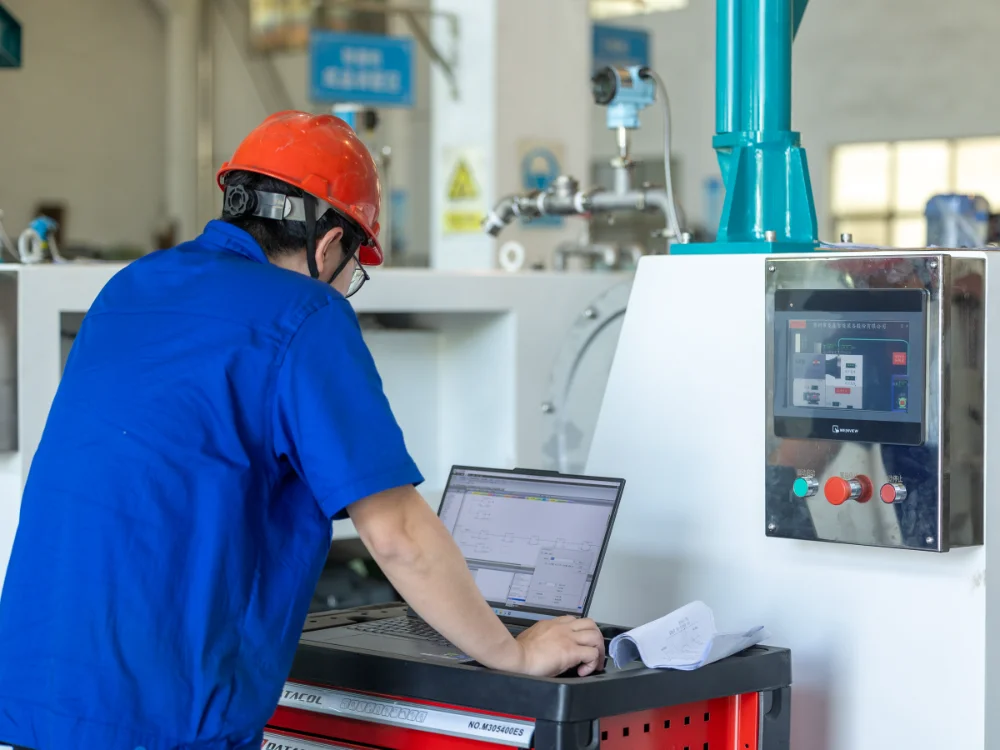
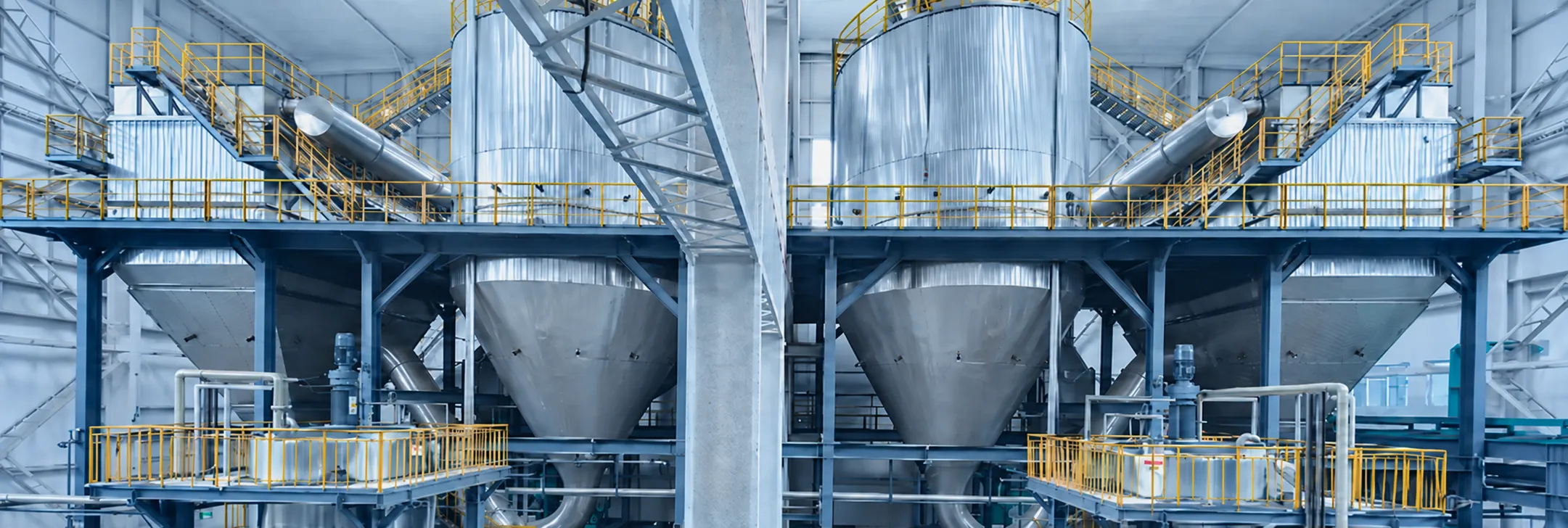
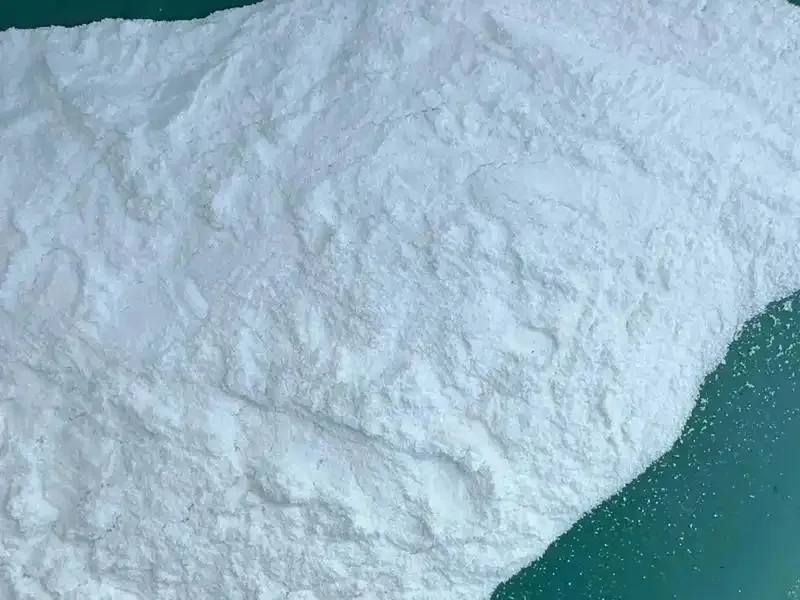
Longxin's PVC paste resin spray drying system is designed for continuous drying of PVC paste resin emulsions and dispersions where particle-size distribution, powder flowability, thermal stability and batch consistency are critical to downstream processing.
PVC paste resin is widely used in artificial leather, coatings, automotive interior materials, gloves and other plastisol applications. Because product performance is strongly influenced by the drying stage, the spray-drying process must provide stable atomization and precise thermal control while minimizing wall sticking and heat damage.
Drying Challenges in PVC Paste Resin Production
PVC paste resin is sensitive to both atomization quality and drying conditions. Inadequate droplet control can create a broad particle-size distribution, while local overheating can contribute to agglomeration, wall deposition or thermal degradation. Large production lines also require stable continuous operation and consistent powder properties over long campaigns.
The drying system therefore needs to coordinate feed delivery, high-speed atomization, hot-air distribution, temperature control, powder recovery and anti-sticking measures as one integrated process.
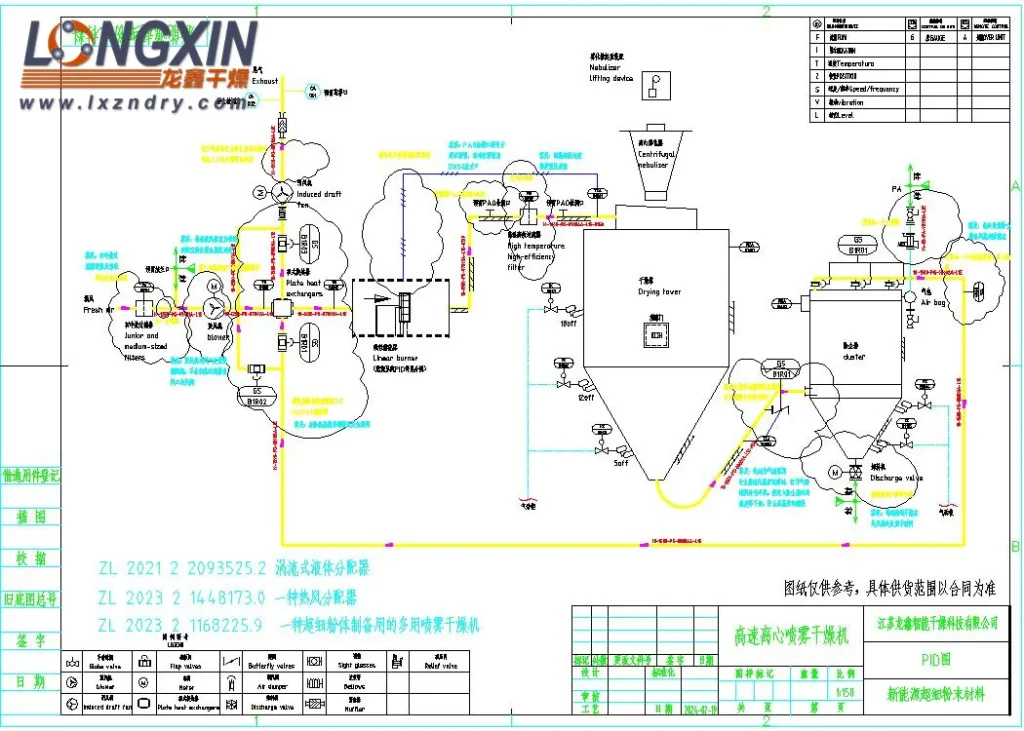
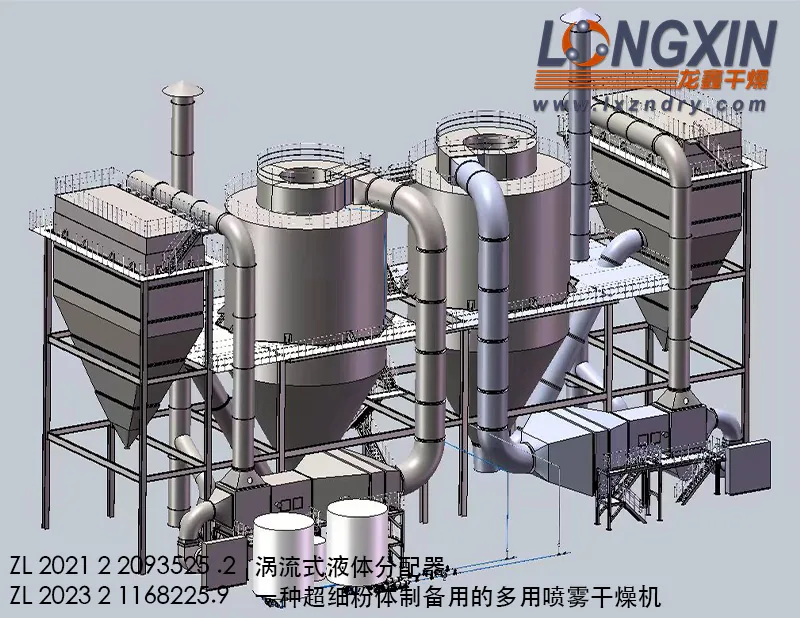
Longxin High-Speed Centrifugal Spray Drying Solution
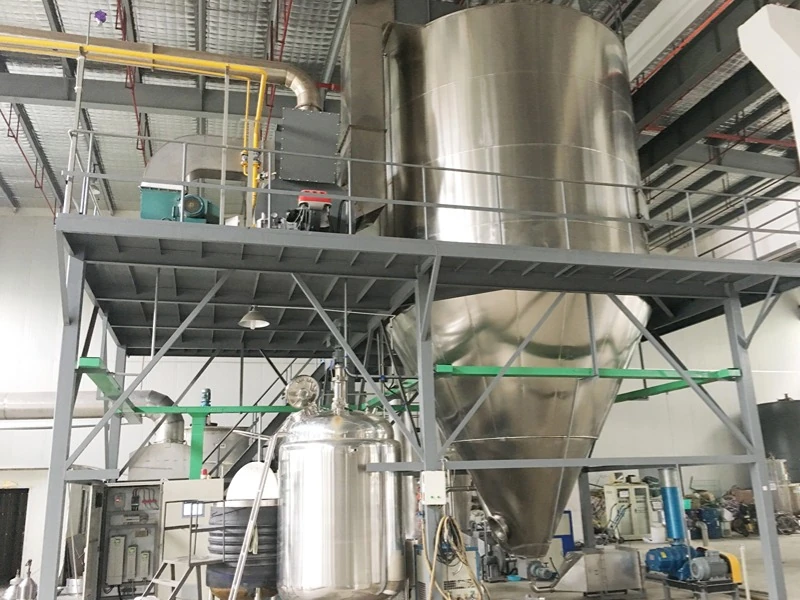
Longxin configures high-speed centrifugal spray drying systems for industrial PVC paste resin production. The system combines high-speed atomization with multi-zone air and temperature management so that the feed is rapidly converted into free-flowing powder under controlled conditions.
High-Speed Centrifugal Atomization
A high-speed atomizer breaks the PVC dispersion into fine and relatively uniform droplets, increasing the available surface area for rapid drying. In the reference design supplied with the source documentation, the atomizer can operate at speeds up to approximately 25,000 rpm, with a stated disc-tip speed around 226 m/s. Final atomizer selection and operating speed are determined by feed properties and the target powder specification.
Controlled Temperature Distribution
Hot-air distribution and PID-based temperature control are used to maintain a stable drying environment. The objective is to achieve sufficient moisture removal without exposing the resin to unnecessary thermal stress. Temperature settings are selected according to feed solids, resin grade, heat sensitivity and required residual moisture.
Anti-Sticking Design
For sticky or low-softening polymer powders, air-sweep or wall-protection measures can be incorporated around the drying chamber. These features help reduce wall build-up, support longer operating cycles and improve product recovery.
Heat Recovery and Energy Integration
Where plant conditions allow, exhaust heat can be recovered and reused to reduce the thermal demand of the drying process. The final heat-recovery scheme is evaluated according to exhaust temperature, humidity, product characteristics and local energy conditions.
Typical Process Flow
- PVC paste resin emulsion or dispersion preparation
- Feed filtration and metered pumping
- High-speed centrifugal atomization
- Controlled hot-air contact and rapid moisture evaporation
- Powder separation and collection
- Fine-powder recovery and dust filtration
- Optional cooling and downstream conveying
- PLC-based monitoring and process control
Reference Industrial Scale
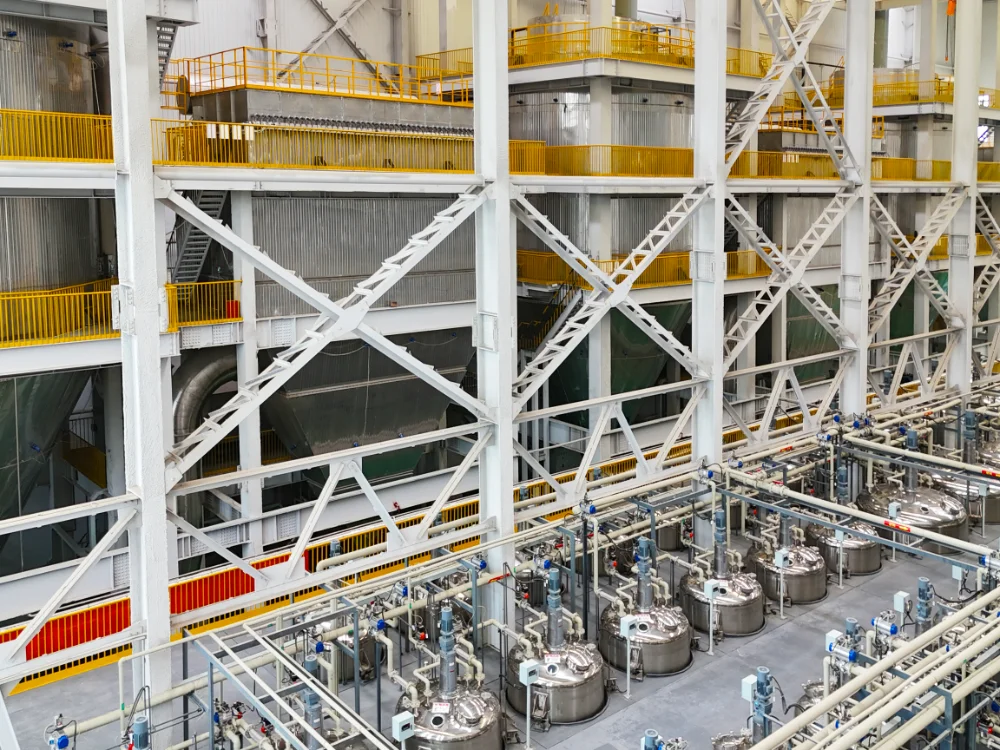
The source project information describes a large PVC paste resin line designed for continuous industrial production, including a reference output of approximately 60 tonnes per day and a production scale in the 20,000-tonne-per-year class. These figures should be treated as project-specific references rather than fixed equipment ratings.
Actual capacity depends on feed solids, evaporation load, inlet and outlet temperatures, required residual moisture, atomization conditions and product specification. Longxin sizes the dryer and auxiliary equipment after reviewing the customer's process data.
Key Engineering Features
- High-speed centrifugal atomization for controlled droplet formation
- Multi-zone hot-air distribution and PID temperature control
- Anti-sticking measures for low-softening or adhesive powders
- Integrated cyclone and/or filtration systems for powder recovery
- Optional heat recovery for improved energy utilization
- Automated feed, temperature and airflow control
- Modular configuration for different production capacities
Typical Applications
- PVC paste resin for artificial leather
- Plastisol and coating grades
- Automotive interior and sealing materials
- Glove and flexible-product grades
- Other emulsion or micro-suspension PVC grades requiring spray drying
Project Information Required
For equipment selection, provide the feed solids content, viscosity, throughput, evaporation capacity, target moisture, particle-size requirement, bulk-density requirement and available heat source. Material testing can be arranged when the drying behavior or powder specification needs to be verified before scale-up.
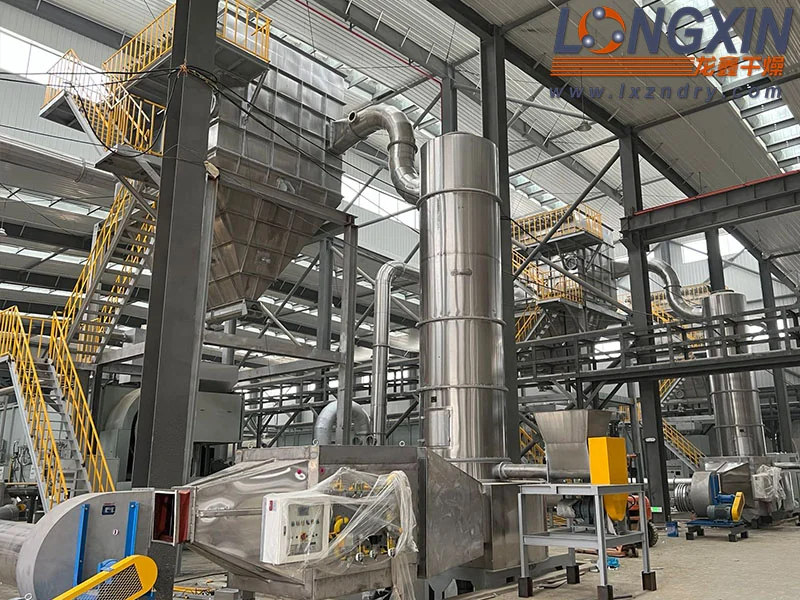
Longxin can supply the spray dryer as an individual unit or engineer an integrated line including feed preparation, air heating, atomization, powder recovery, heat recovery, conveying and automated control.
Selection Questions
Which PVC feeds are considered for this route?
The described route addresses PVC paste resin emulsions and dispersions. Solids content, viscosity, resin grade and heat sensitivity determine the feed, atomizer and drying conditions.
What data is needed to size a PVC paste resin dryer?
Provide feed solids and viscosity, throughput, evaporation load, target moisture, particle-size and bulk-density requirements, and the available heat source. Material trials can verify drying behavior before scale-up.
Related Equipment and Applications
Discuss your material and request an equipment recommendation.