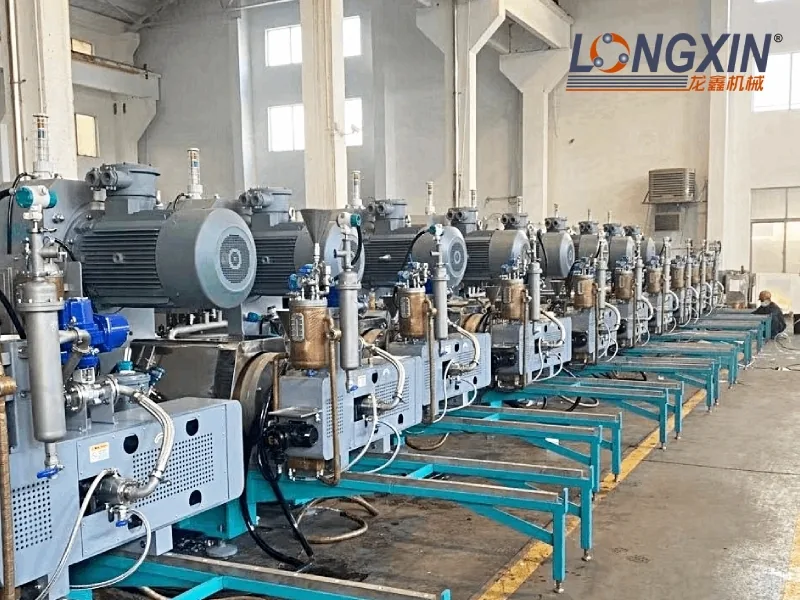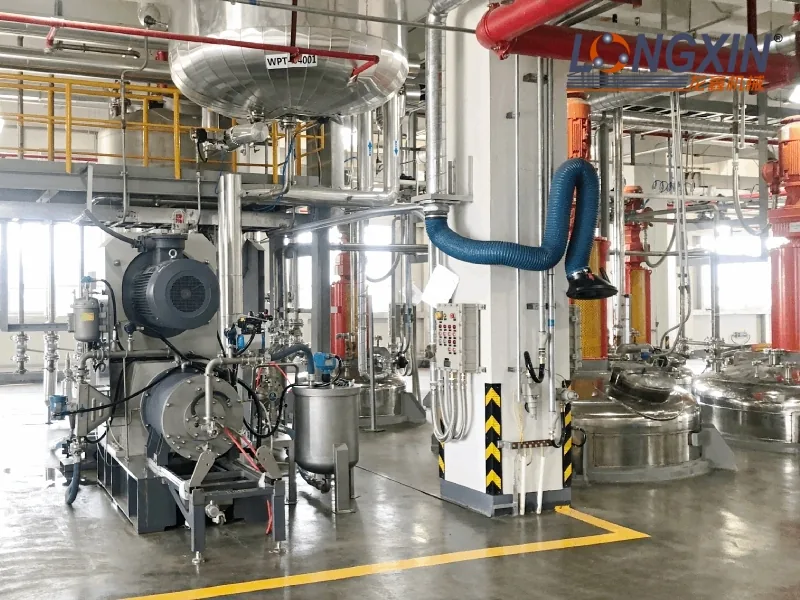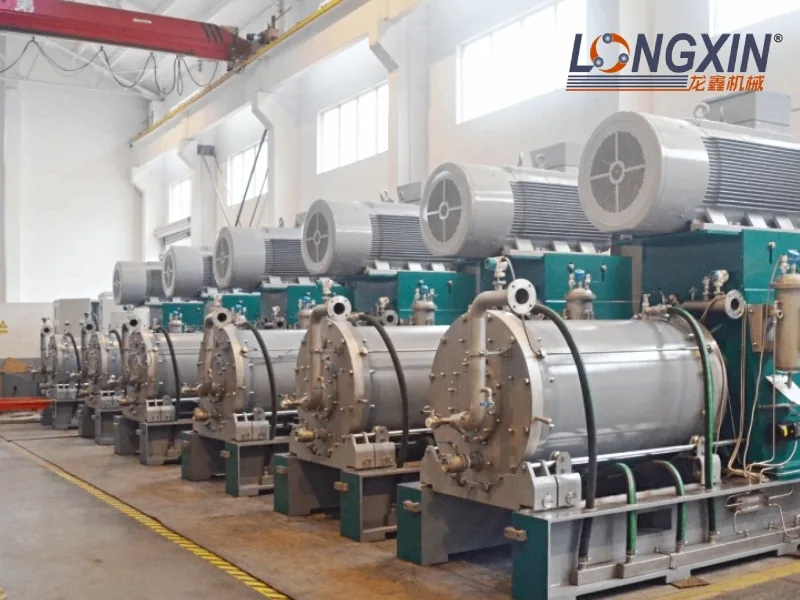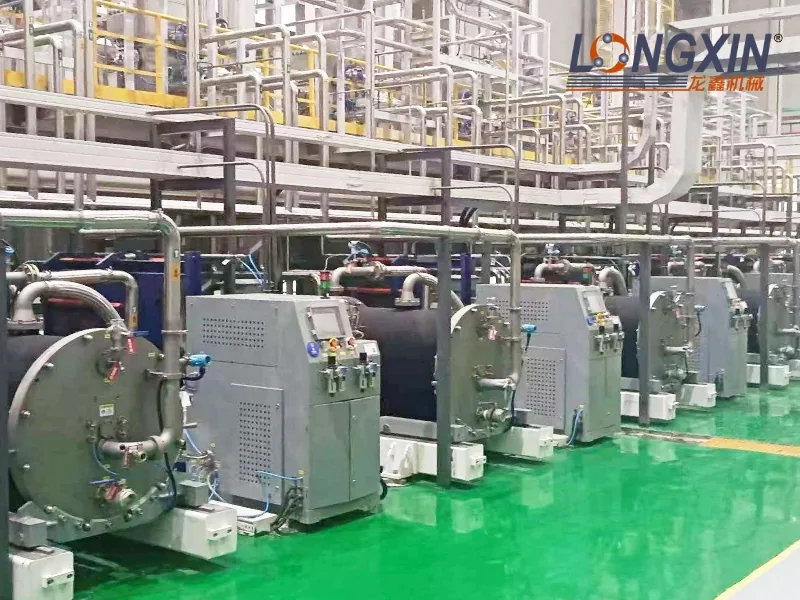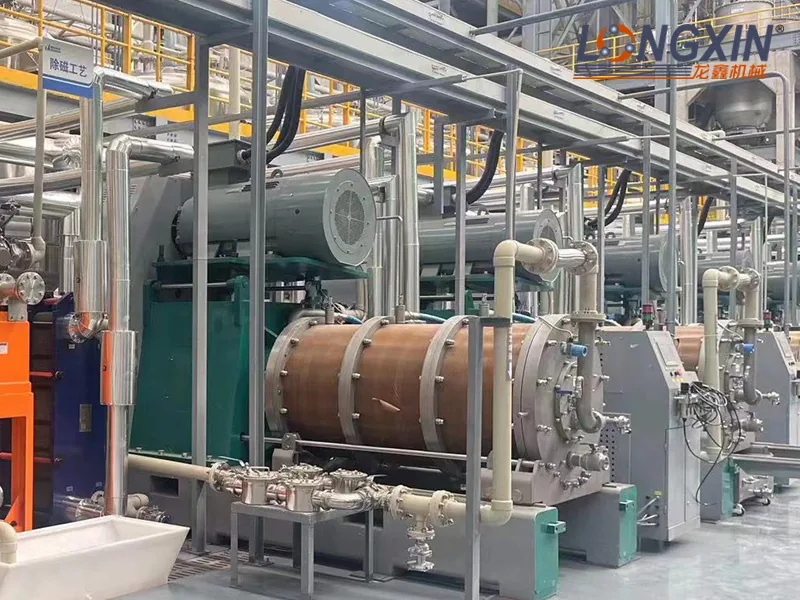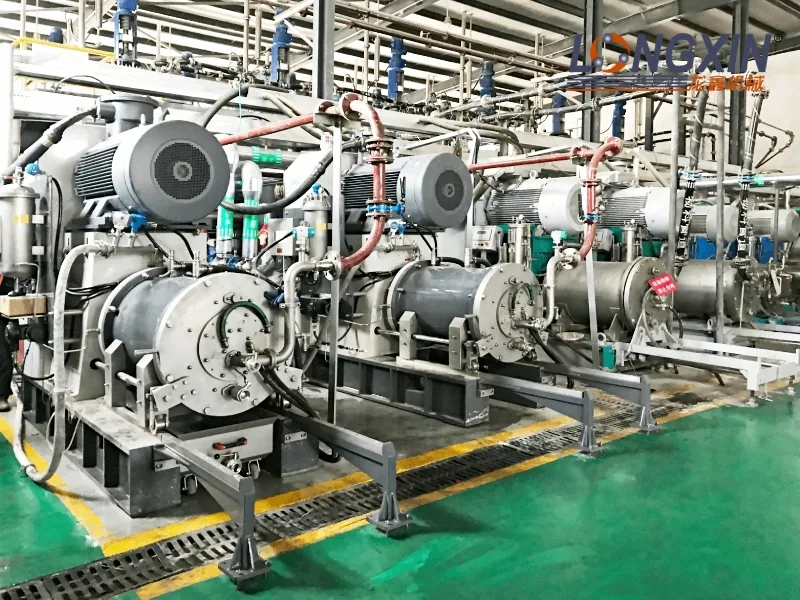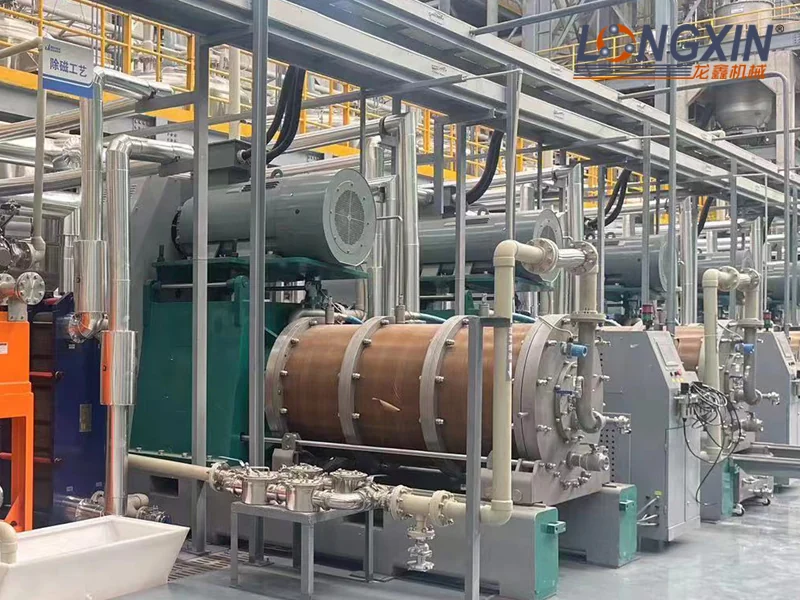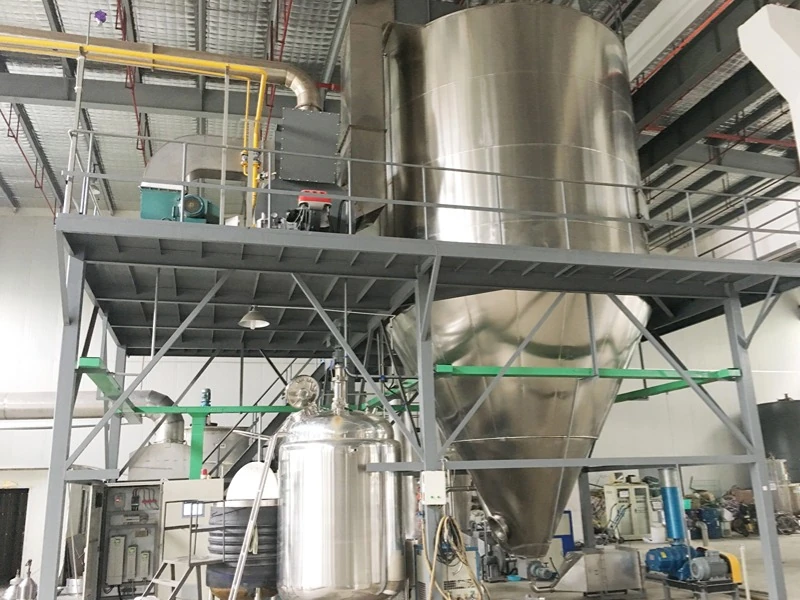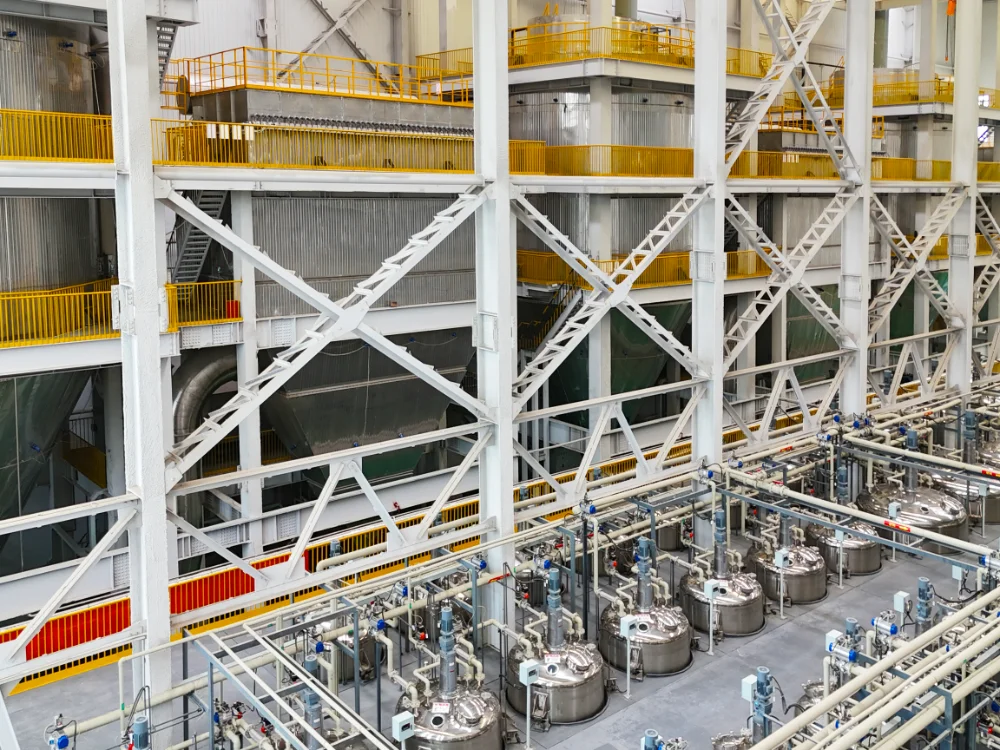
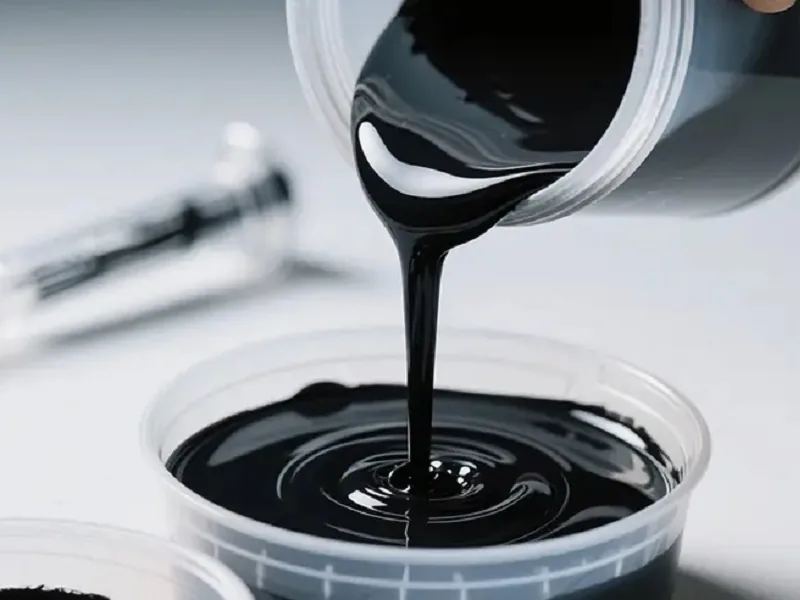
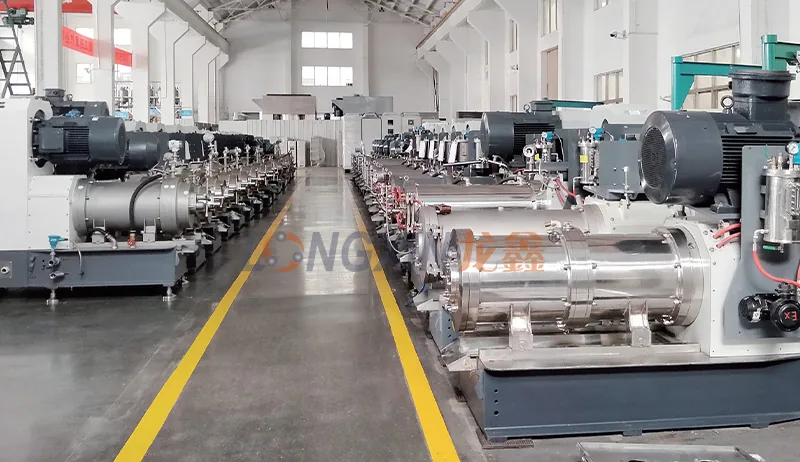
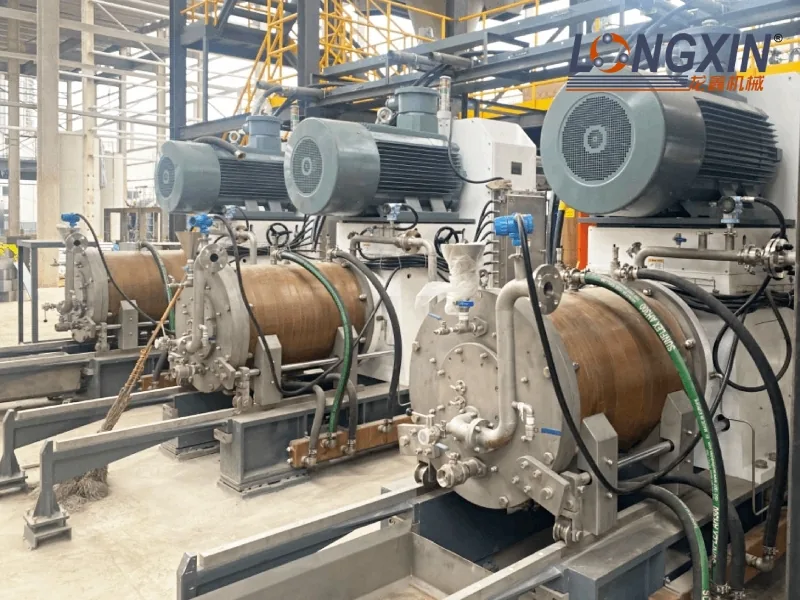
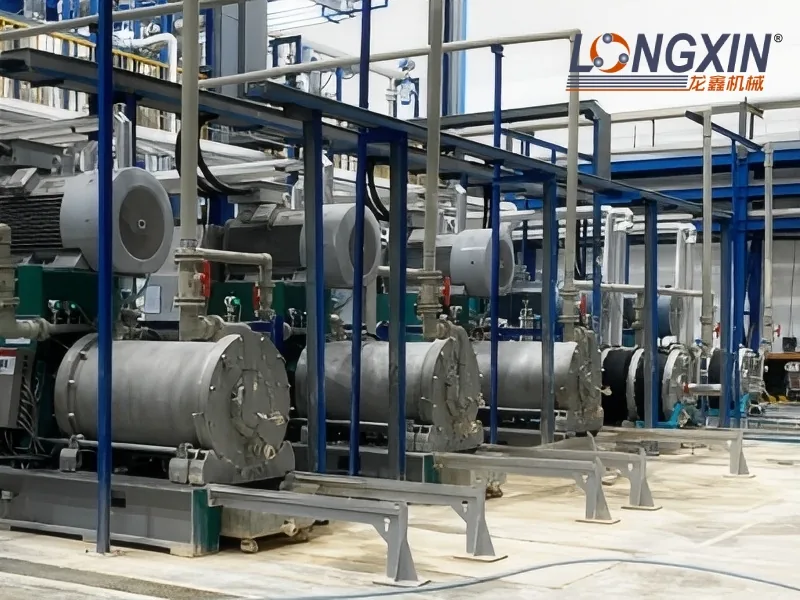
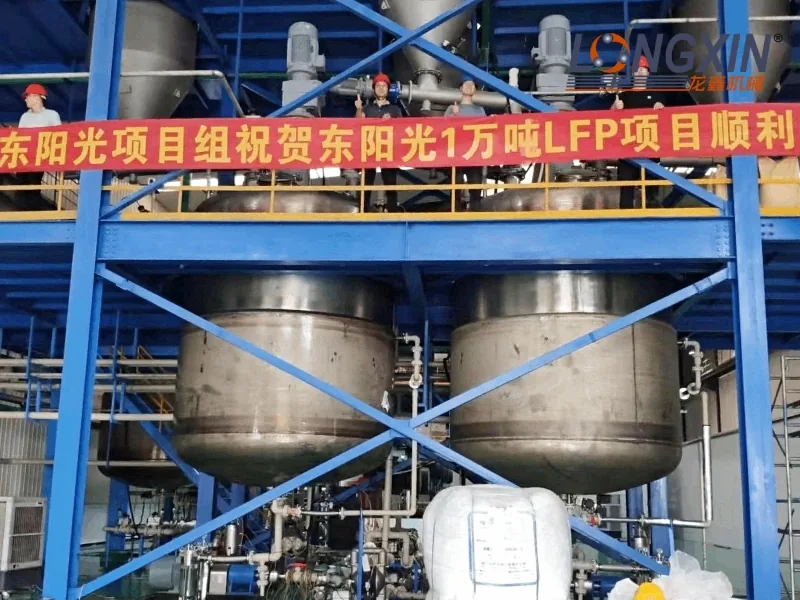
Longxin's high-flow nano grinding system is designed for lithium iron phosphate slurry preparation where production scale, particle-size consistency, temperature control and contamination management must be balanced in one continuous process.
The system uses a pin-type high-energy grinding structure with efficient media separation and cooling. It can be configured from pilot-scale validation to industrial production, with equipment sizes including WSP-150, WSP-400 and WSP-1000 class systems.
Key Challenges in LFP Nano Grinding
In LFP production, grinding affects slurry uniformity and the particle-size distribution entering spray drying. Industrial systems therefore need to address several practical issues at the same time:
- High throughput for large production lines
- Stable nano-scale particle-size control
- Low and controllable grinding temperature
- Reduced contamination from wetted and wear parts
- Reliable separation of fine grinding media
- Continuous operation with low blockage risk
- Recipe repeatability between product grades
How the Grinding System Works
Slurry is fed into the grinding chamber at a controlled flow rate. The internal pin and rotor structure transfers energy to fine grinding media, producing repeated shear, impact and compression forces on the suspended particles. This progressively reduces particle size while maintaining continuous slurry flow through the chamber.
At the discharge side, the separation system retains the grinding media while allowing the processed slurry to leave the chamber. The separation design is selected according to media size, slurry viscosity and required throughput.
Core Equipment Design
Silicon-Carbide Grinding Chamber
Silicon carbide can be used for the grinding chamber where high wear resistance and efficient heat transfer are required. Its thermal conductivity supports faster heat removal from the grinding zone, while its wear resistance helps reduce contamination risk in battery-material processing.
Pin-Type Grinding Rotor
The pin configuration is designed to create a high and relatively uniform energy density in the chamber. Tungsten-carbide wear parts can be selected for demanding applications. Rotor design and operating speed are matched to the slurry and target particle-size range.
High-Efficiency Cooling
The chamber jacket and internal cooling design support continuous heat removal. Multi-point temperature monitoring can be integrated so cooling conditions respond to the actual process load.
PLC Process Control
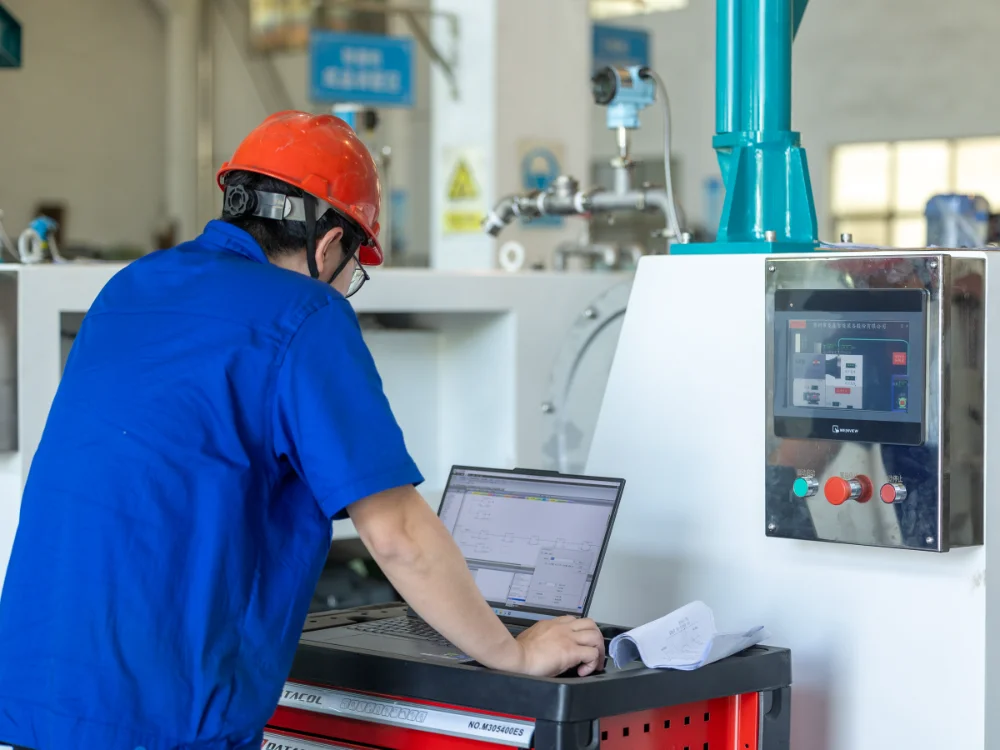
Flow, speed, temperature and other operating parameters can be monitored through the control system. Recipes can be stored for repeated production of different LFP grades or related battery-material formulations.
Reference technical parameters are provided in the Technical Specifications tab. Final values should be confirmed through material testing and project engineering.
Equipment Options for Scale-Up
The image set supplied for this solution includes WSP-150, WSP-400 and WSP-1000 high-flow nano pin mills, as well as permanent-magnet direct-drive and dual-power configurations. This allows the grinding section to be selected around target throughput, energy input and plant layout rather than forcing one machine size across all projects.
Integration with Spray Drying
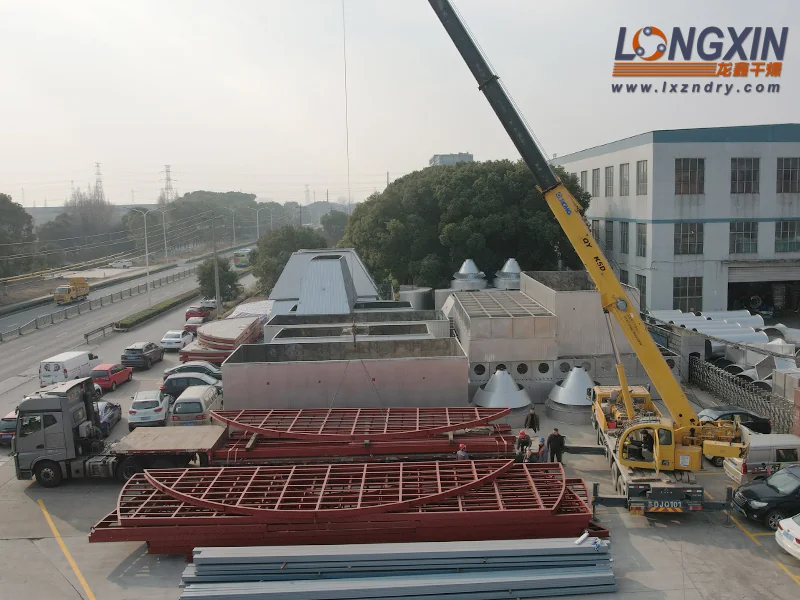
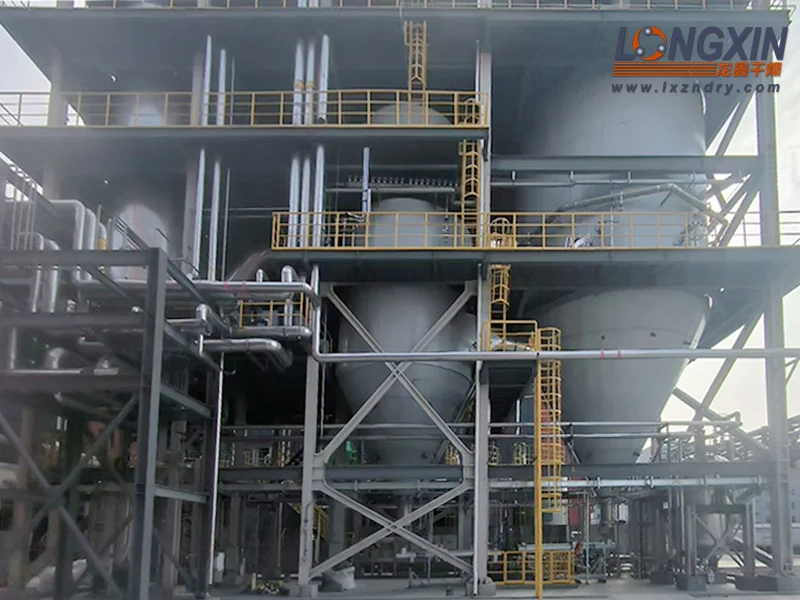
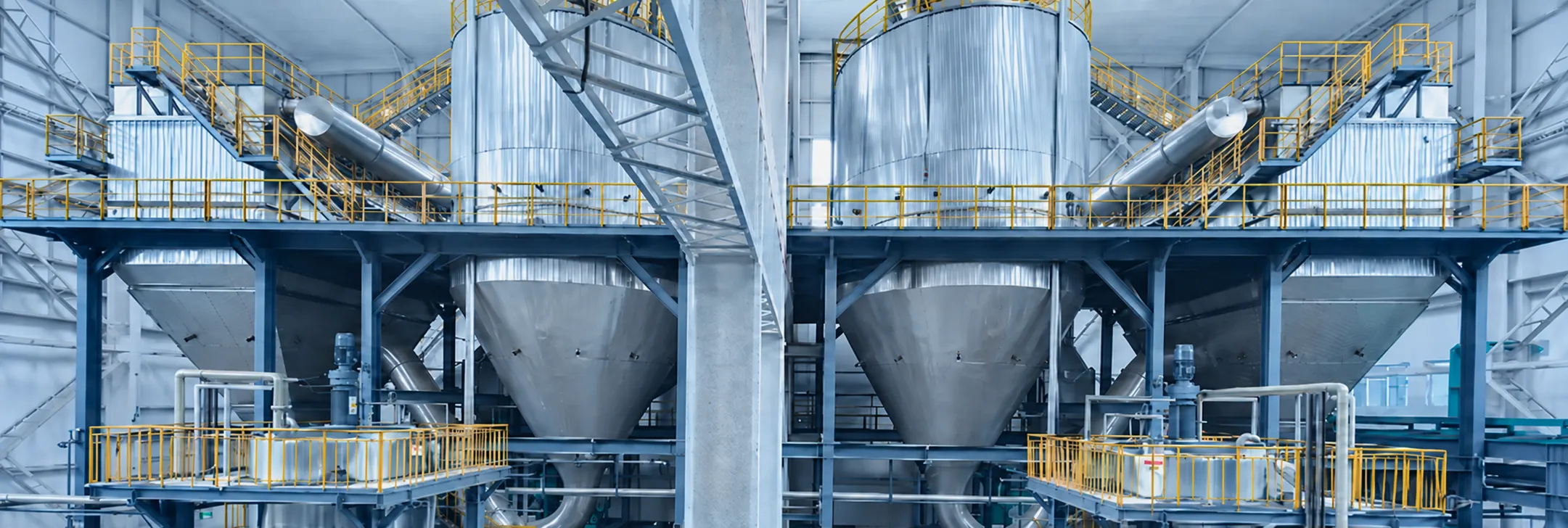
Nano grinding is usually only one part of the cathode-material process. Longxin can integrate the grinding section with slurry storage, circulation, magnetic separation, spray drying, powder collection and automated conveying. This helps reduce manual transfer and gives the drying stage a more stable slurry feed.
Suitable Applications
Although this solution is focused on lithium iron phosphate, the grinding platform can also be configured for LMFP, selected ternary cathode materials, silicon-carbon systems and other advanced slurries after material compatibility and process testing.
For equipment selection, provide the feed particle size, solids content, viscosity, required D50, hourly flow rate and material compatibility requirements. Longxin can recommend a suitable grinding chamber, media size, rotor configuration and number of grinding stages.
Selection Questions
Can LFP grinding connect to spray drying?
The grinding stage can be integrated with slurry storage, circulation, magnetic separation, spray drying, powder collection and conveying. The final route is specified for the project.
What data is required to size the grinding system?
Provide feed particle size, solids content, viscosity, required D50, hourly flow rate and material compatibility requirements. Testing informs chamber, media, rotor and stage selection.
Related Equipment and Applications
Discuss your material and request an equipment recommendation.