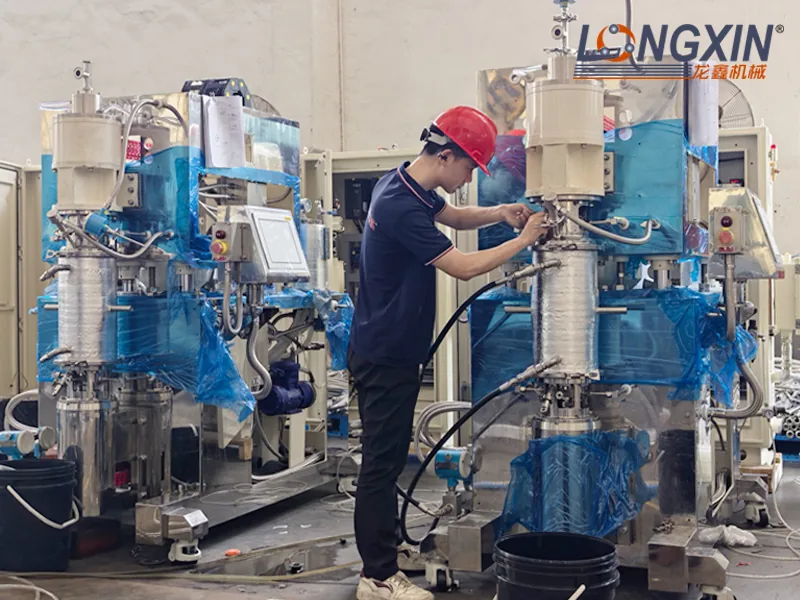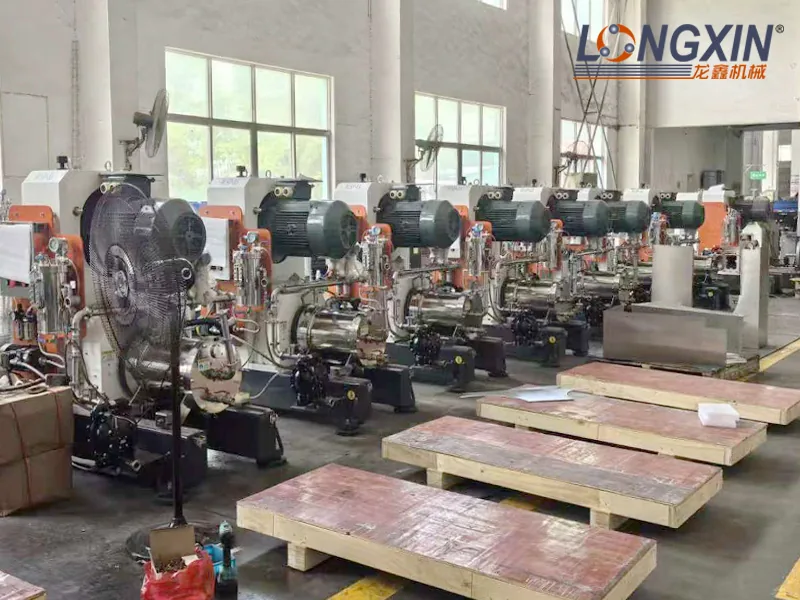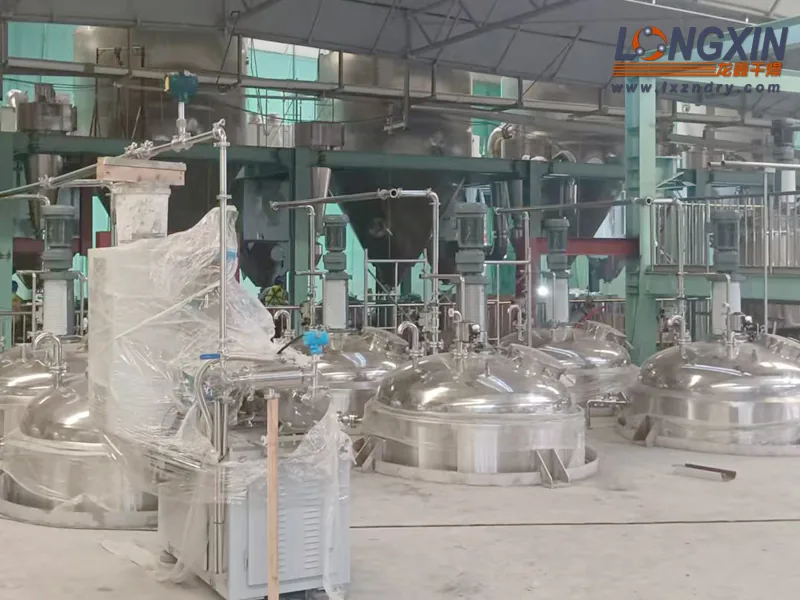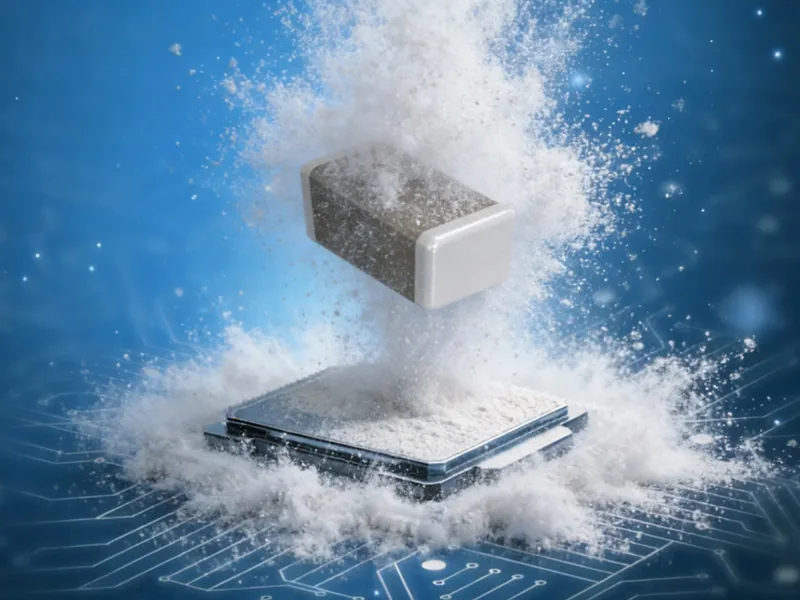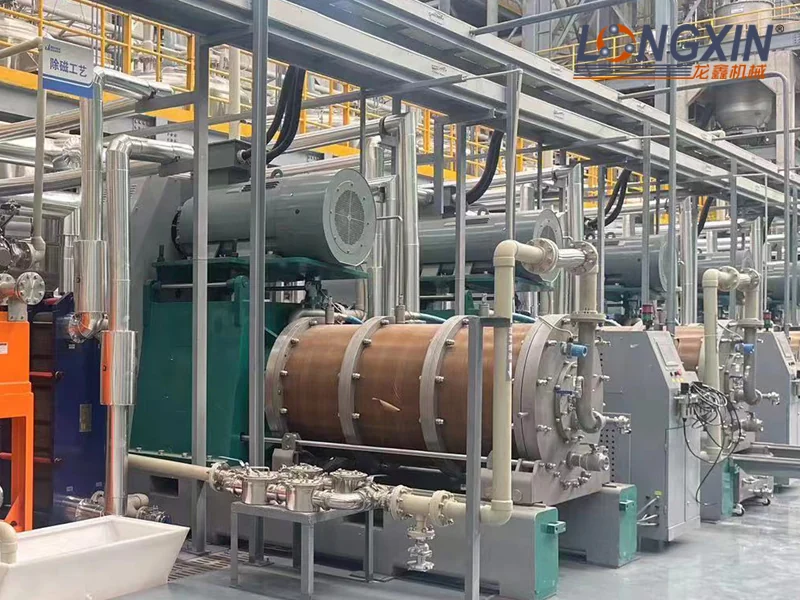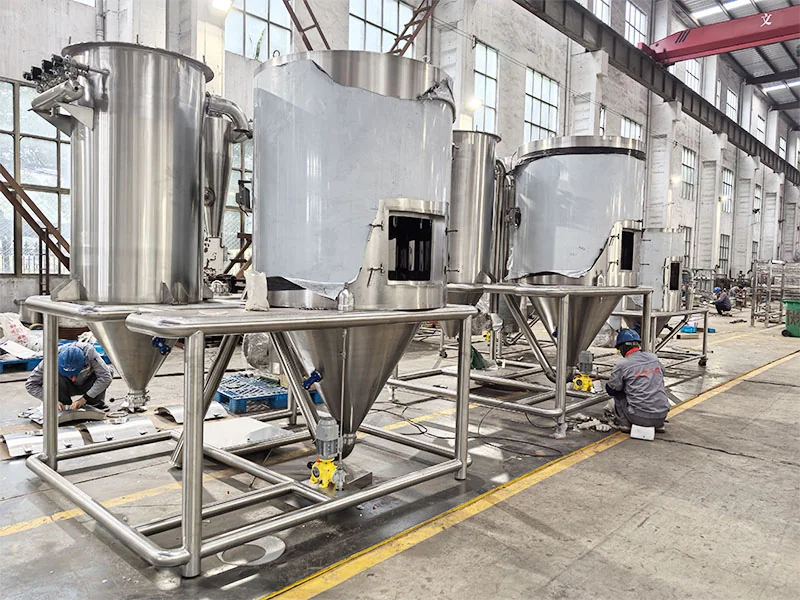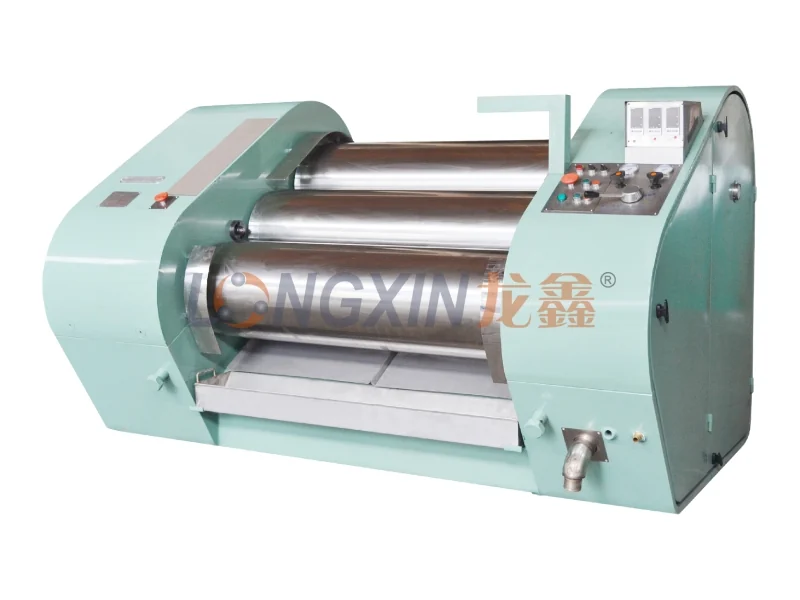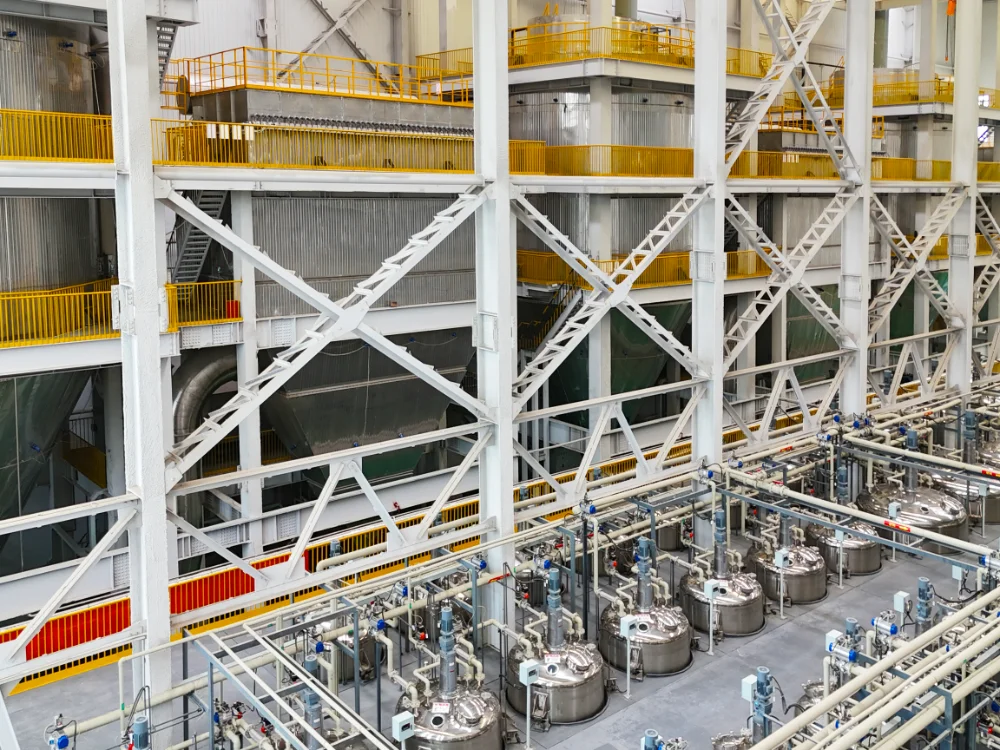
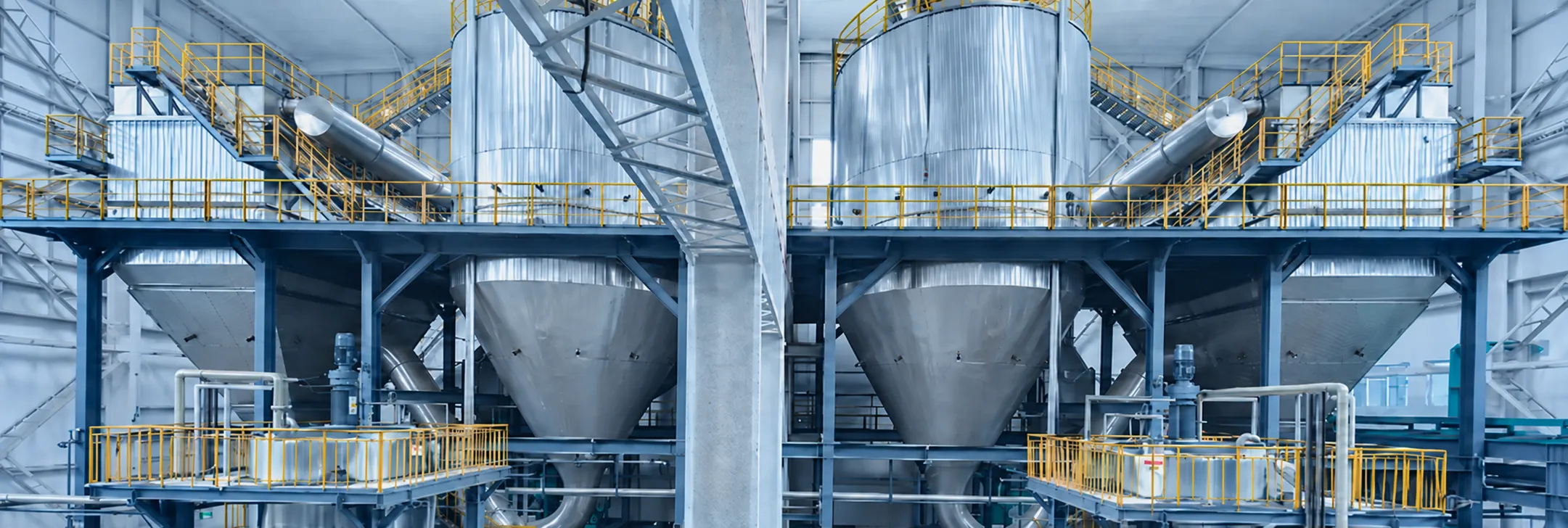
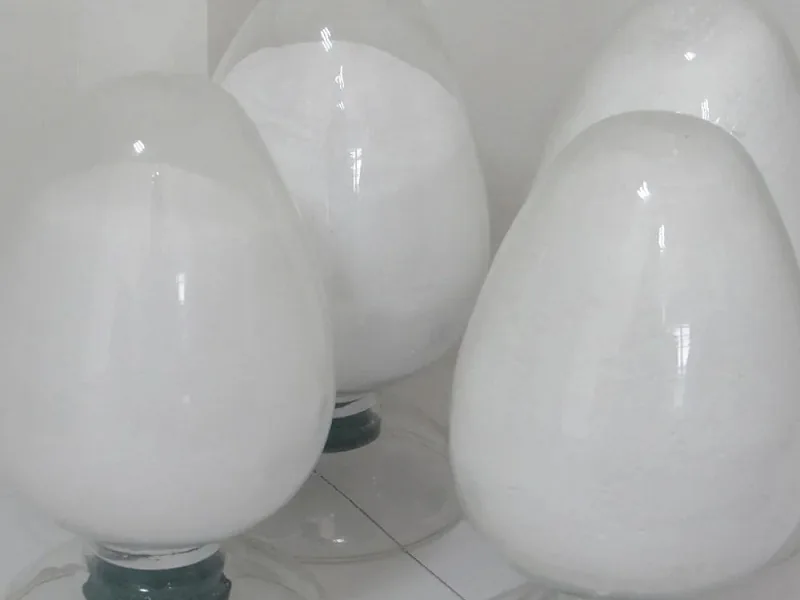
Longxin's MLCC and barium titanate grinding and spray-drying production line integrates nano grinding, slurry dispersion, spray granulation and powder collection for electronic ceramic and advanced ceramic powder manufacturing.
The system is designed for applications where fine particle size, narrow particle-size distribution, low contamination and stable granule characteristics are critical. Typical materials include barium titanate, MLCC formulation powders, LTCC/HTCC materials, microwave dielectric ceramics, piezoelectric ceramics and other functional ceramic powders.
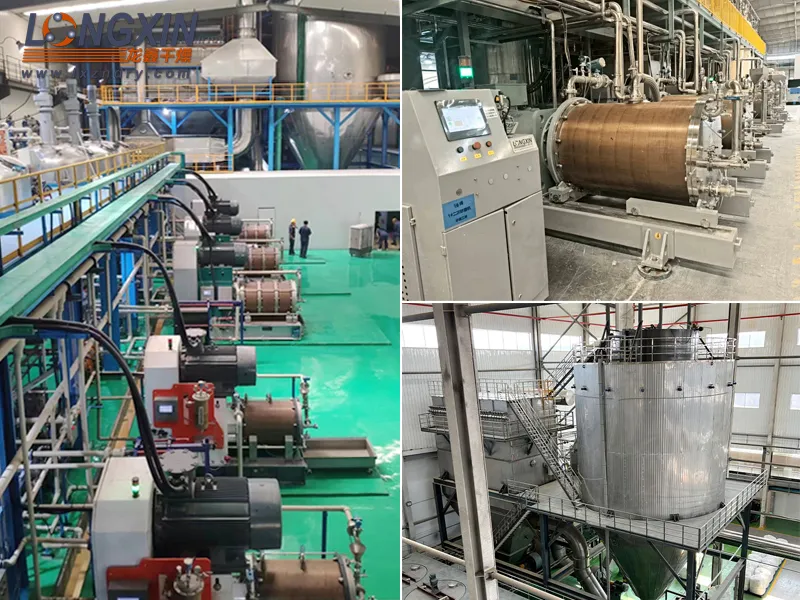
Why MLCC Ceramic Powder Processing Is Challenging
Modern MLCC materials require increasingly fine and consistent ceramic powders. As the primary powder moves from submicron toward nanoscale sizes, conventional ball milling or general-purpose grinding can struggle with agglomeration, broad particle-size distribution and unstable dispersion.
After grinding, the slurry must also be converted into granules with suitable flowability, bulk characteristics and redispersibility. This makes nano grinding and spray granulation two closely connected stages in the production of high-quality electronic ceramic powders.
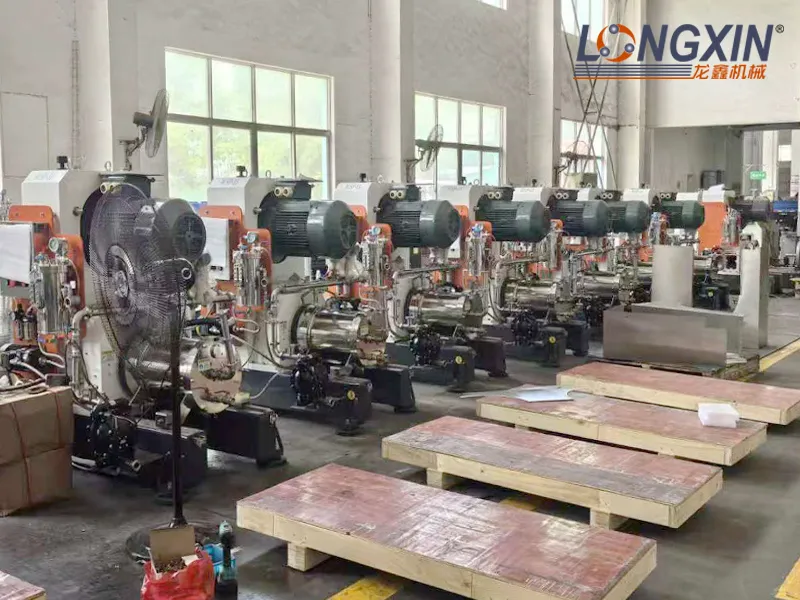
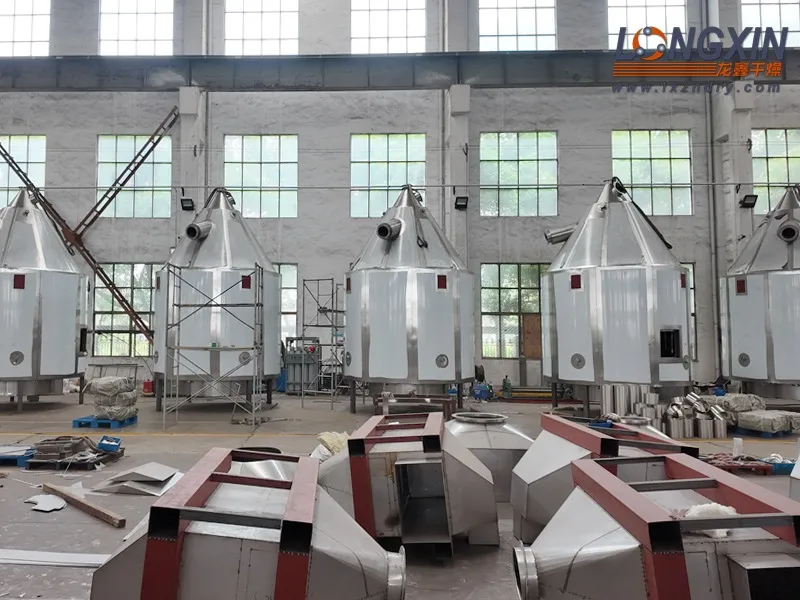
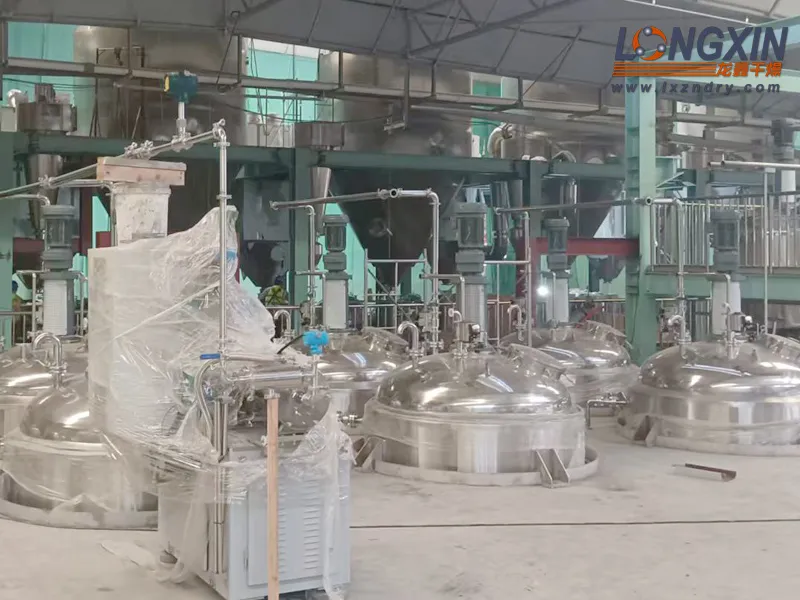
Integrated Process Route
A typical Longxin ceramic-powder production line can be configured around the following process:
- Raw material batching and slurry preparation
- Wet nano grinding and dispersion
- Slurry circulation and homogenization
- Controlled atomization
- Spray granulation and drying
- Powder separation and collection
- Conveying and downstream handling
- PLC-based process monitoring and control
Upstream pre-processing, calcination or downstream packaging can be integrated when required by the customer's complete production route.
Nano Grinding for Barium Titanate and MLCC Materials
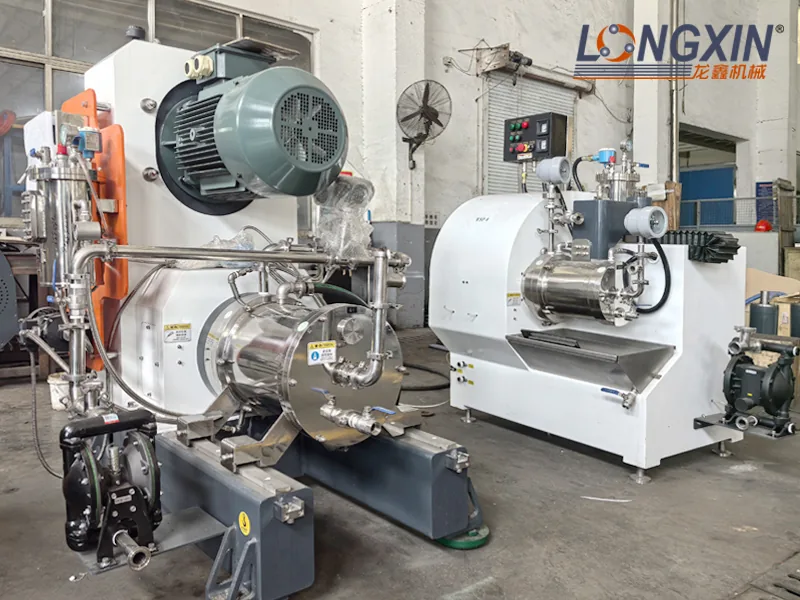
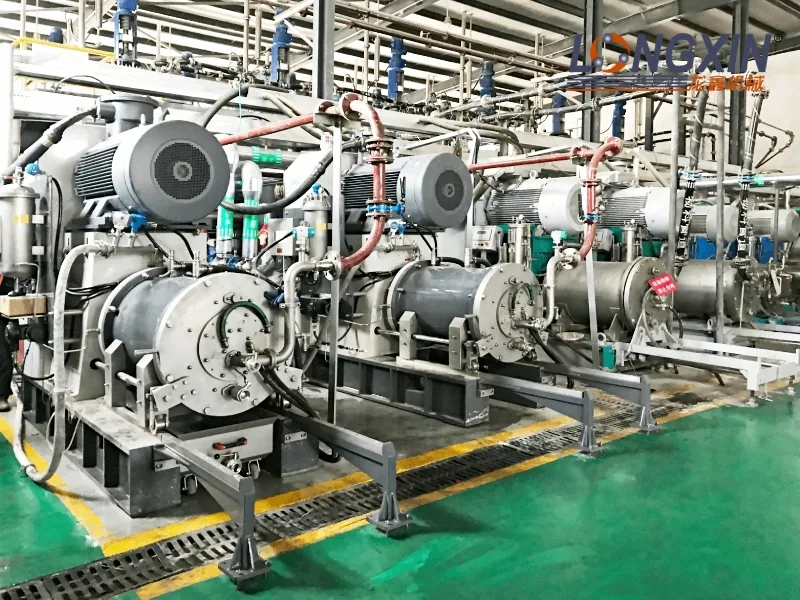
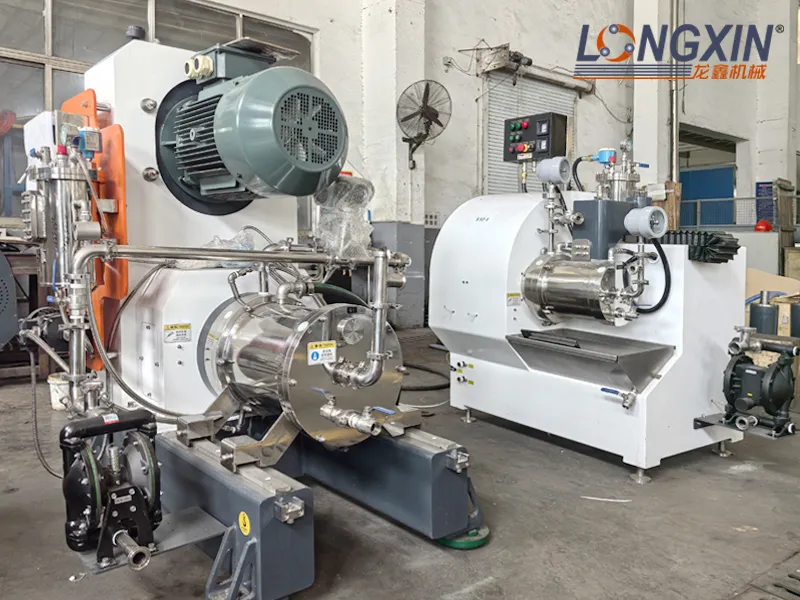
Pin-Type Nano Grinding Mill
The pin-type nano mill uses a high-energy grinding chamber and high-flow circulation to support submicron and nanoscale ceramic slurry processing. For suitable formulations, the equipment can use approximately 0.3 mm zirconia grinding media to improve fine grinding efficiency and narrow the particle-size distribution.
- Zirconia or silicon-carbide ceramic contact materials can be selected to reduce metal contamination.
- Jacketed cooling helps control slurry temperature and protect temperature-sensitive material properties.
- Equipment is available from laboratory and pilot scale to continuous industrial production.
- High-flow circulation helps improve dispersion consistency and reduce hard agglomeration.
Dual-Drive Nano Grinding Mill
Dual-drive configurations provide additional process flexibility for higher-viscosity or higher-solids slurries. Dynamic separation and adjustable operating parameters allow the same platform to be adapted for different ceramic formulations and dispersion requirements.
This type of system is suitable where the process requires a balance between fine grinding, throughput and gentle dispersion rather than simply maximizing grinding intensity.
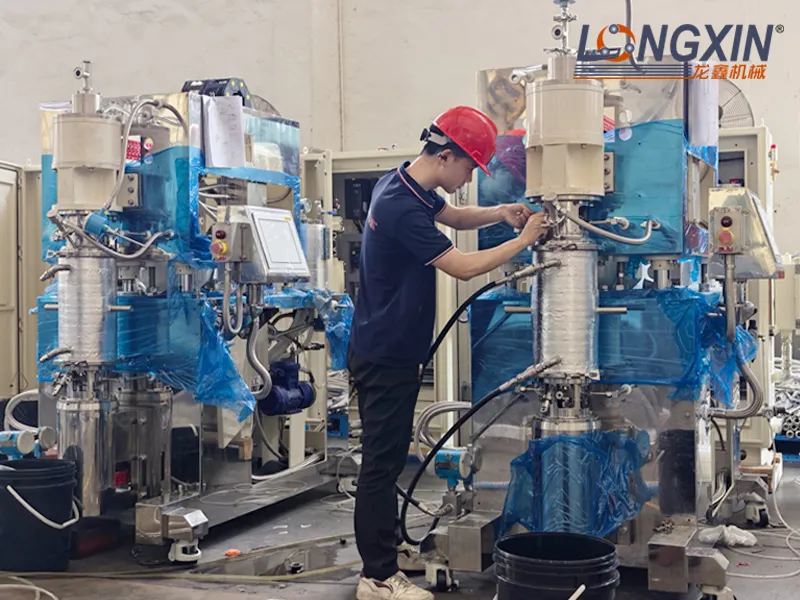
Vertical Nano Grinding Mill
Vertical nano grinding configurations can be selected for long-term continuous operation, fine media separation and controlled thermal management. Depending on material properties and the process setup, suitable systems can target particle-size ranges in the approximately 50–200 nm region.
Final particle size must be confirmed through material testing because ceramic composition, feed size, slurry concentration, viscosity and grinding media all influence the achievable result.
Spray Granulation for Electronic Ceramic Powders
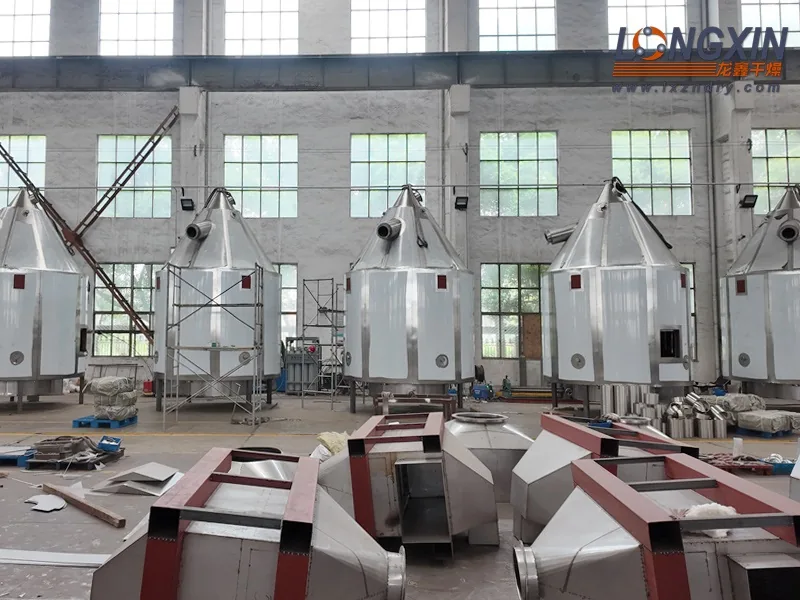
Once the ceramic slurry reaches the required particle-size and dispersion condition, spray drying converts it into free-flowing granules for downstream forming and thermal processing. Compared with static drying methods, spray granulation provides continuous processing and better control of granule size and morphology.
Centrifugal Spray Drying
A high-speed centrifugal atomizer can be used to produce relatively uniform, spherical granules with good flowability. This route is suitable for MLCC ceramic powders, microwave dielectric ceramics, piezoelectric ceramics and LTCC materials.
Pressure Spray Drying
Pressure atomization can be configured for higher-solids ceramic slurries or processes requiring larger granules. Wear-resistant nozzle and material-contact designs can be selected for abrasive ceramic systems.
Two-Fluid Spray Granulation
Two-fluid atomization uses compressed gas to create fine droplets and can be applied when the process requires finer granules or a specific particle-size distribution.
Process Control and Powder Recovery
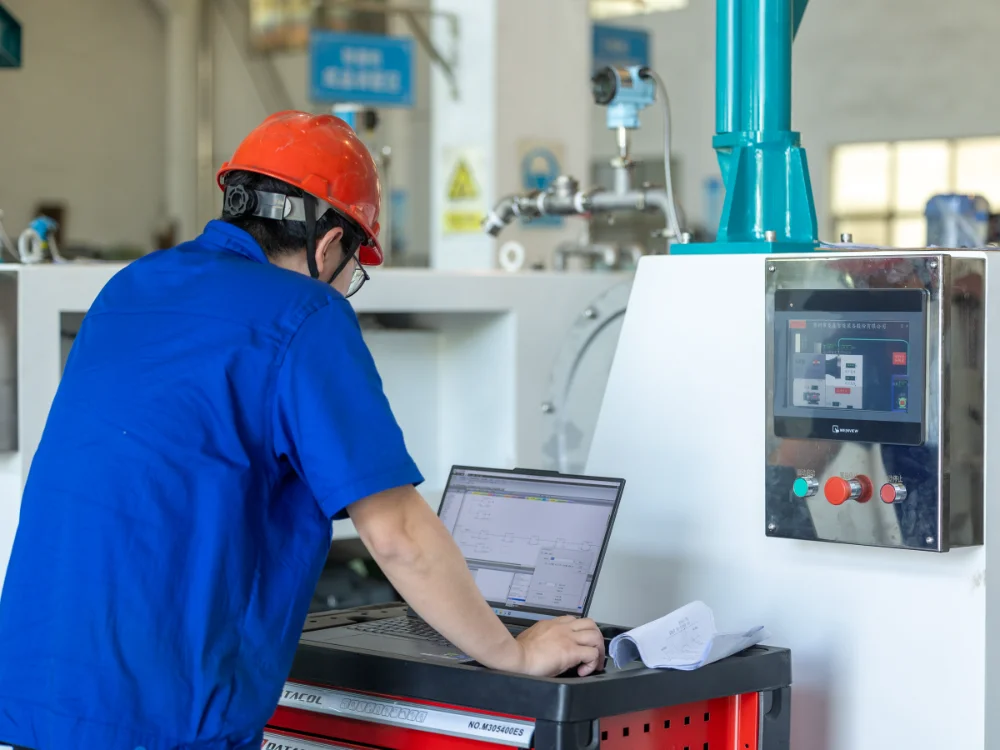
The production line can incorporate automated monitoring and control of key process variables including inlet and outlet temperature, airflow, pressure, slurry feed rate and atomizer operating parameters.
Cyclone separation and bag filtration can be combined for efficient powder recovery and dust control. The final collection configuration is selected according to powder fineness, product value and plant environmental requirements.
Applications
- MLCC dielectric ceramic formulation powders
- Barium titanate ultrafine powders
- LTCC and HTCC substrate materials
- Microwave dielectric ceramic powders
- Piezoelectric ceramic powders
- Rare-earth oxide functional materials
- Supercapacitor electrode materials and other specialty powder systems
From Process Testing to Complete-Line Delivery
Longxin can supply individual nano grinding or spray-drying equipment, or engineer an integrated line from slurry preparation through granulation and powder collection. Laboratory and pilot testing can be used to verify grinding fineness, slurry behavior, atomization conditions and final powder characteristics before industrial scale-up.
For a new MLCC, barium titanate or advanced ceramic powder project, provide your feed material, solids content, target particle size, contamination limits, required granule characteristics and production capacity. Our engineering team can evaluate the process and recommend a suitable equipment configuration.
Selection Questions
Which spray atomization options are described for ceramic powders?
Centrifugal, pressure and two-fluid atomization are possible configurations. The choice depends on slurry behavior and the required granule properties.
What material data is needed for a new MLCC powder line?
Provide feed composition and solids content, target particle size, contamination limits, required granule characteristics and production capacity. Laboratory or pilot tests can verify the process route.
Related Equipment and Applications
Discuss your material and request an equipment recommendation.