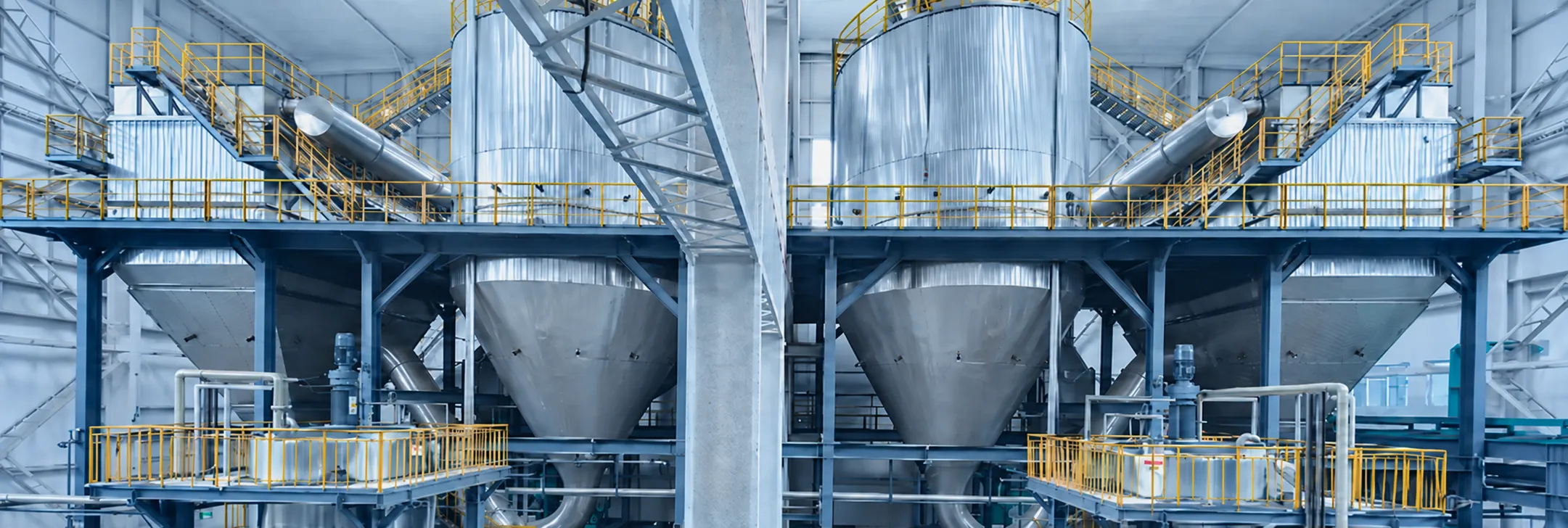
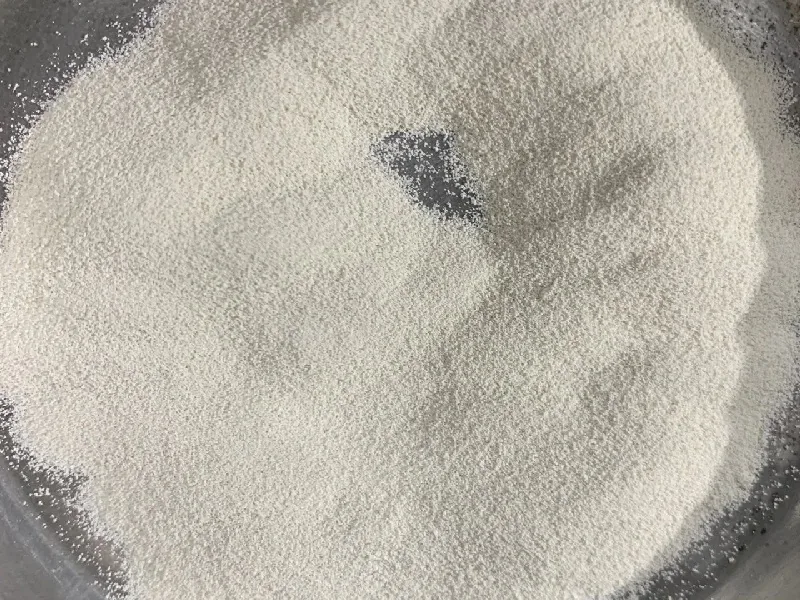
Dry Flowable (DF) formulations combine the handling advantages of a solid product with the dispersion characteristics required for aqueous pesticide application. Producing a consistent DF product requires coordinated control of wet grinding, slurry stability, atomization, drying and granule recovery.
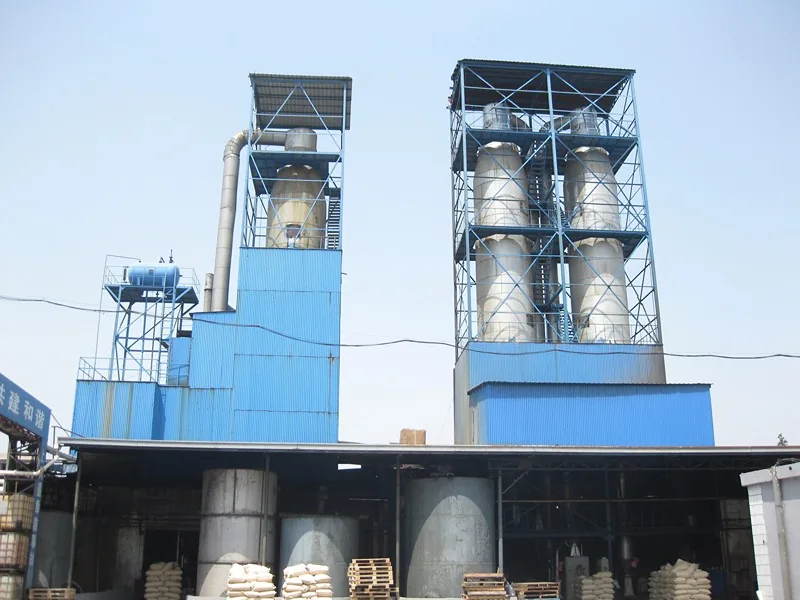
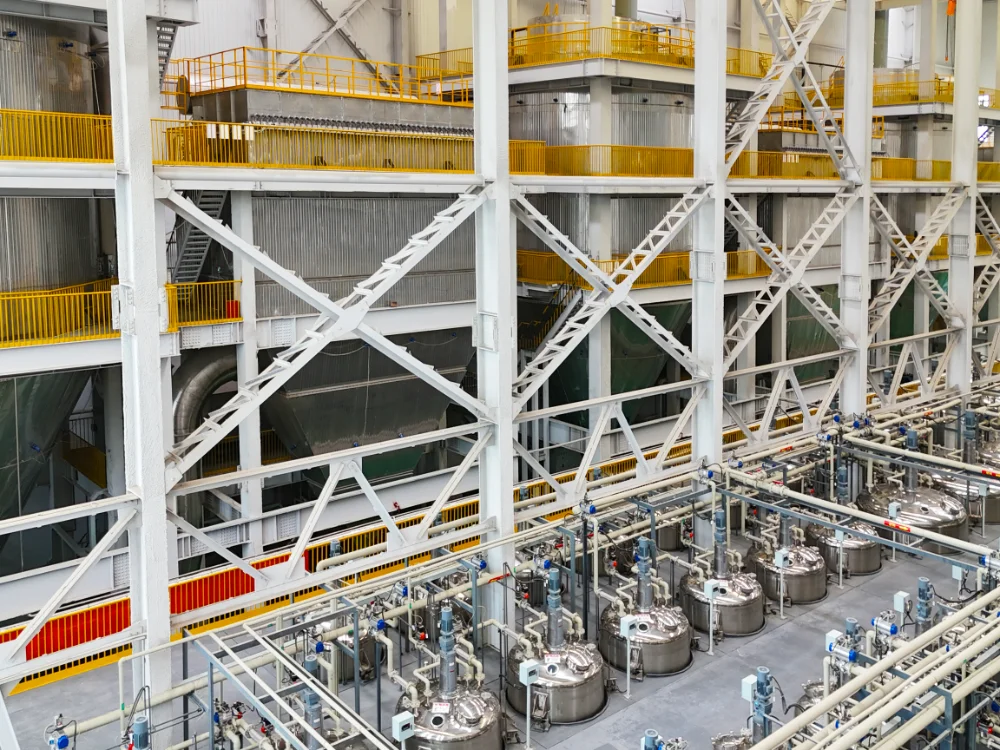
Longxin provides an integrated DF production route combining high-flow wet grinding with pressure spray granulation and drying. The system can be configured for insecticide, fungicide and herbicide formulations according to active ingredient properties, slurry solids, target particle size and final granule requirements.
Typical DF Production Process
- Raw-material weighing and premixing
- Wet grinding and fine dispersion
- Slurry stabilization and intermediate storage
- Pressure atomization
- Spray granulation and rapid drying
- Powder/granule recovery
- Screening and final product handling
The wet-grinding and spray-drying sections are designed as one coordinated process. Stable slurry particle size and rheology help improve atomization, while controlled air distribution and residence time help produce granules with suitable moisture, flowability and redispersion behavior.
High-Flow Wet Grinding
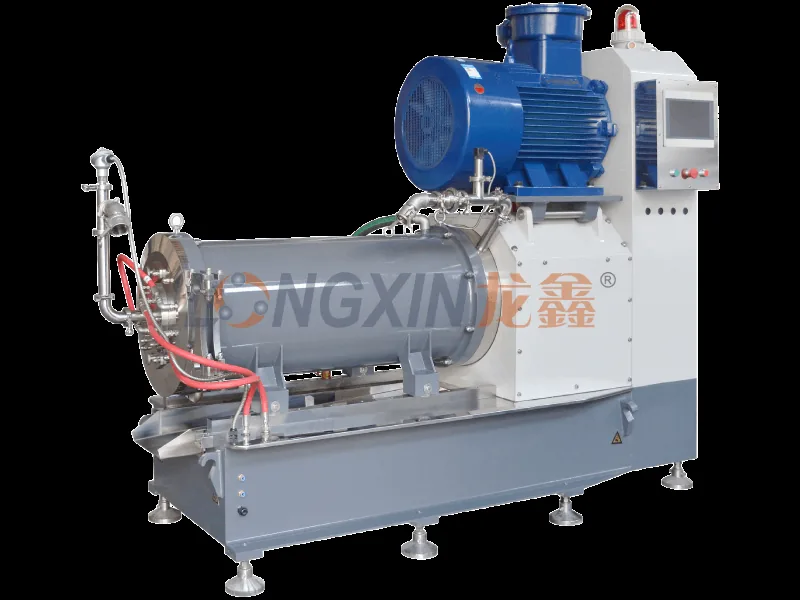
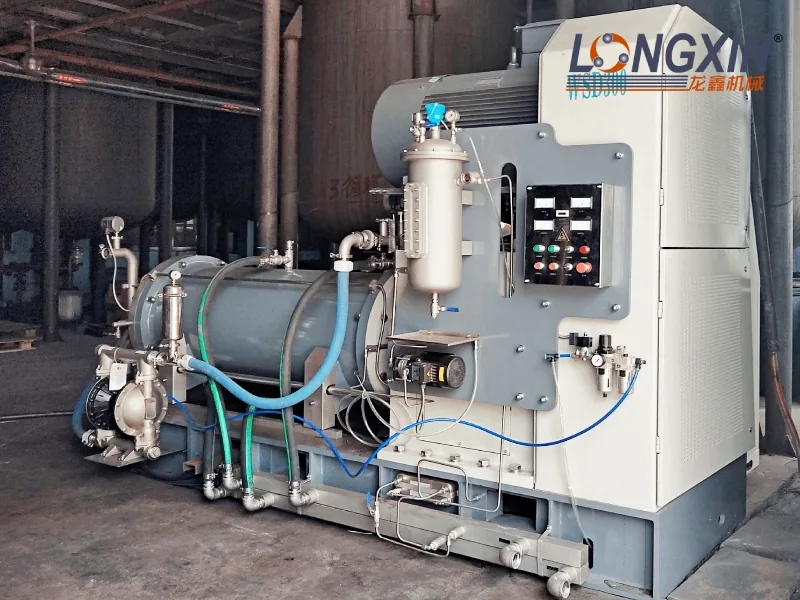
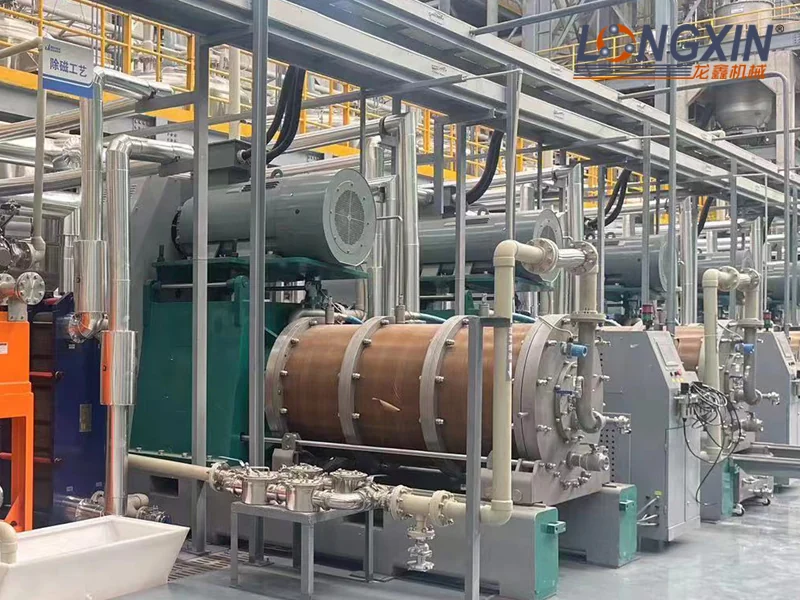
The front-end grinding section can use a high-flow disc bead mill for pesticide suspensions with relatively high solids content or viscosity. The grinding configuration is selected according to the formulation, required fineness and throughput.
Key engineering considerations include:
- Wear-resistant wetted parts and grinding media
- Cooling for temperature-sensitive active ingredients
- Stable continuous circulation
- Controlled slurry temperature and viscosity
- Easy access for cleaning and product changeover
The supplied project documentation describes DF slurry grinding targets in the micrometre range. Final particle-size targets should be confirmed by formulation testing because different active ingredients and dispersant systems behave differently.
Pressure Spray Granulation & Drying
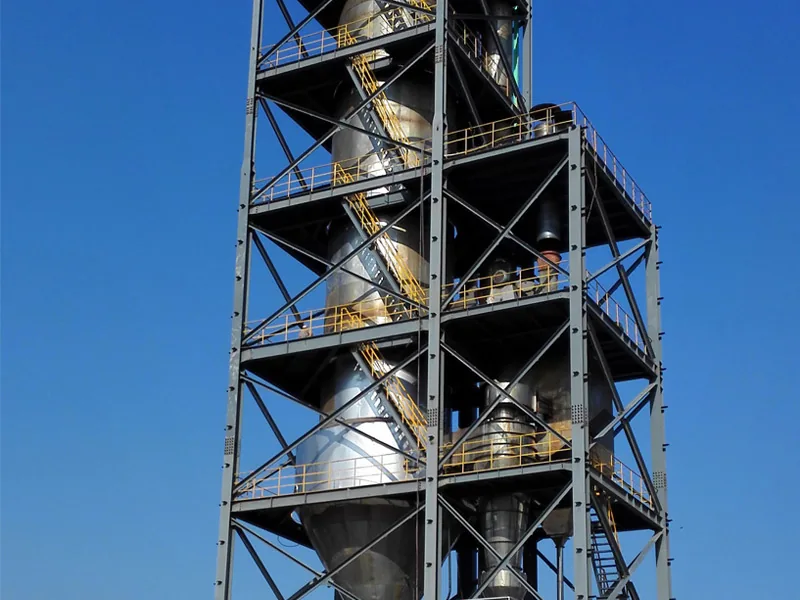
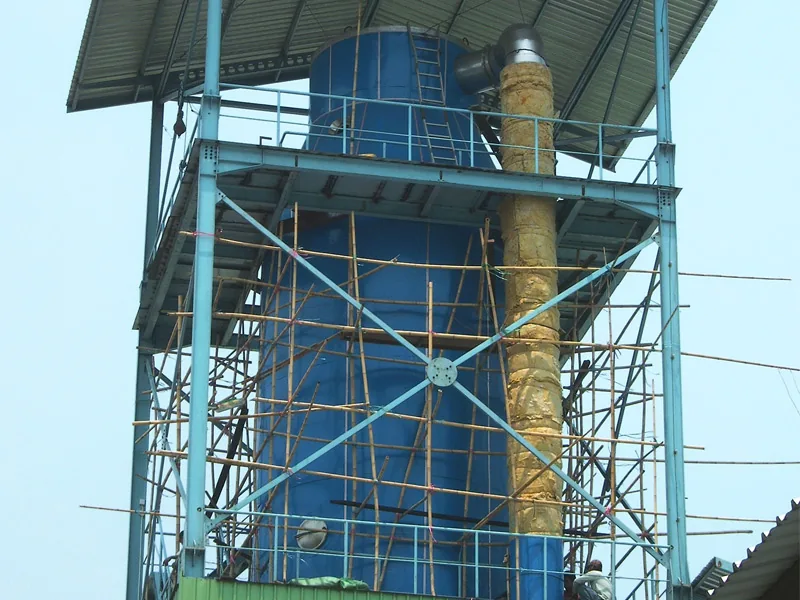
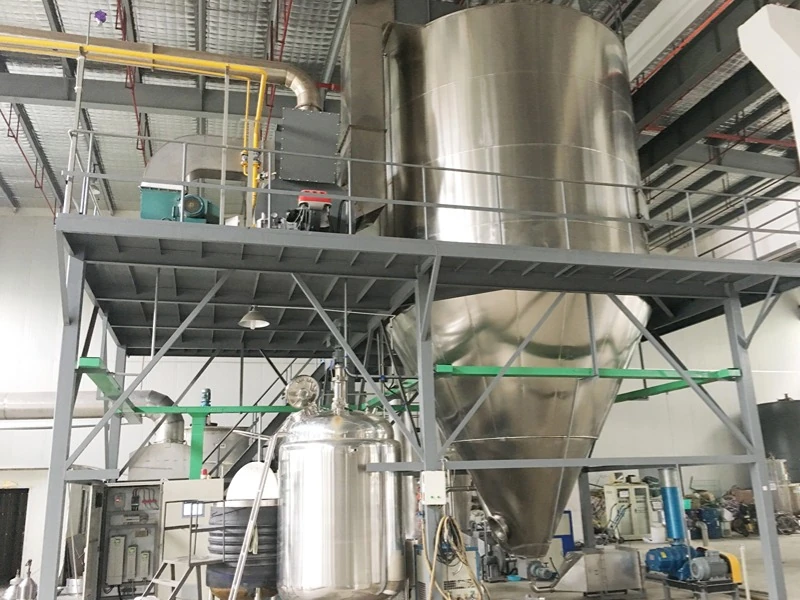
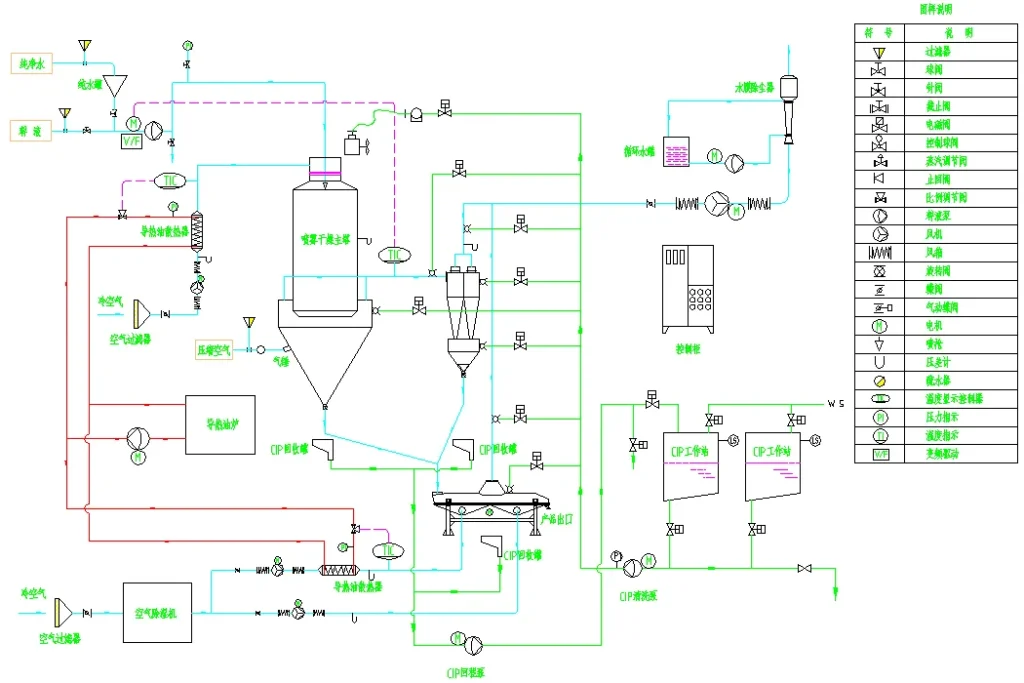
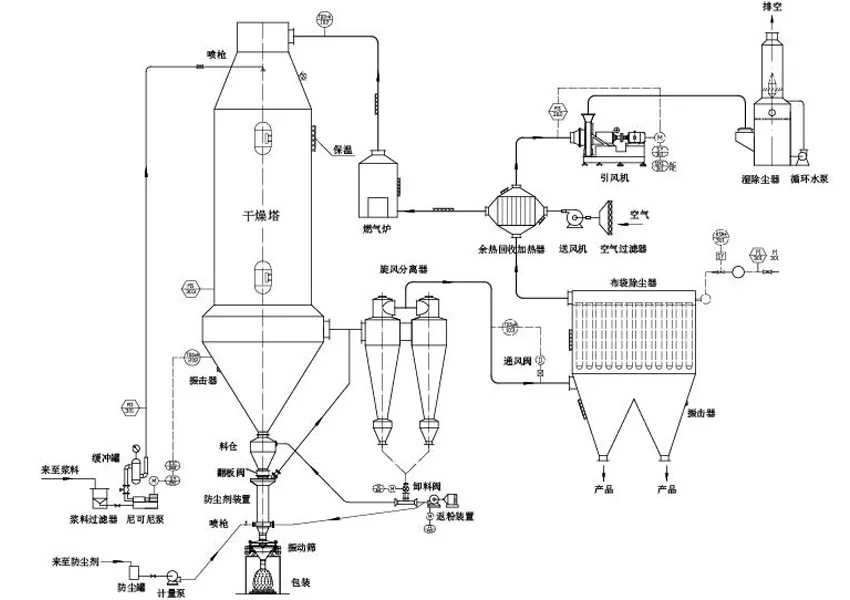
After grinding and conditioning, the stable slurry is fed to a pressure atomizer. Droplets are contacted with controlled hot air inside the drying chamber, where moisture is rapidly removed and the suspended solids form dry granules.
The system can incorporate:
- Pressure atomization with application-specific nozzles
- Adjustable hot-air distribution
- Wall-deposition control
- Cyclone and bag-filter powder recovery
- Optional wet scrubbing where required
- Automated temperature and pressure monitoring
- CIP-oriented cleaning design for multi-product production
Reference DF Project Parameters
The following data comes from a thiamethoxam DF project included in the supplied technical material. It is provided as a reference only; final parameters depend on the customer formulation and test results.
| Material | Thiamethoxam Dry Flowable formulation |
|---|---|
| Design dry-product capacity | 1,000 t/year at 7,000 operating hours |
| Initial moisture | 50–55% wet basis |
| Final moisture | Approx. 3% wet basis |
| Dry-product output | 143 kg/h |
| Water evaporation | 165 kg/h |
| Wet-feed rate | 308 kg/h |
| Inlet air temperature | 160–180°C |
| Outlet air temperature | 90–110°C |
| Heat source | Steam + electric heating |
| Reference dryer model | LPG-165 |
| Reference tower diameter | Ø3000 mm |
| Product recovery train | Main tower + cyclone + bag filter + wet scrubber |
Integrated Controls and Cleaning
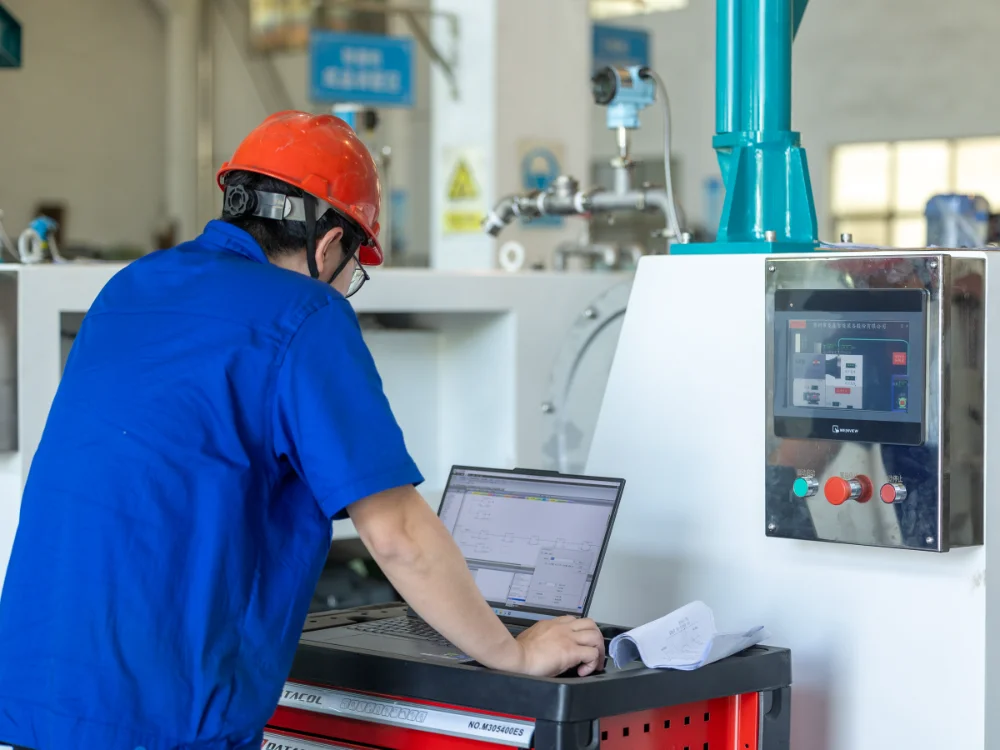
For industrial DF production, the grinding and drying sections can be linked through a central control system. Process variables such as feed rate, grinding conditions, inlet/outlet temperature, airflow and system pressure can be monitored as part of one production line.
Where frequent product changeover is required, the line can also be designed with cleaning access and programmed flushing for the grinding chamber, transfer piping and atomization system.
Develop a DF Process for Your Formulation
DF formulations differ in active ingredient, dispersant system, solids content, viscosity and target granule properties. Longxin can evaluate the material through process testing and recommend a grinding, atomization and drying configuration for the required capacity.
Selection Questions
What are the main stages of the DF line?
The route covers weighing and premixing, wet grinding, slurry stabilization, pressure atomization, spray granulation and drying, recovery, and final handling.
Can the reference project parameters be used for every formulation?
No. The listed thiamethoxam project figures are a reference only. Final grinding, drying and capacity settings depend on the active ingredient, dispersants, solids and formulation testing.
Related Equipment and Applications
Discuss your material and request an equipment recommendation.