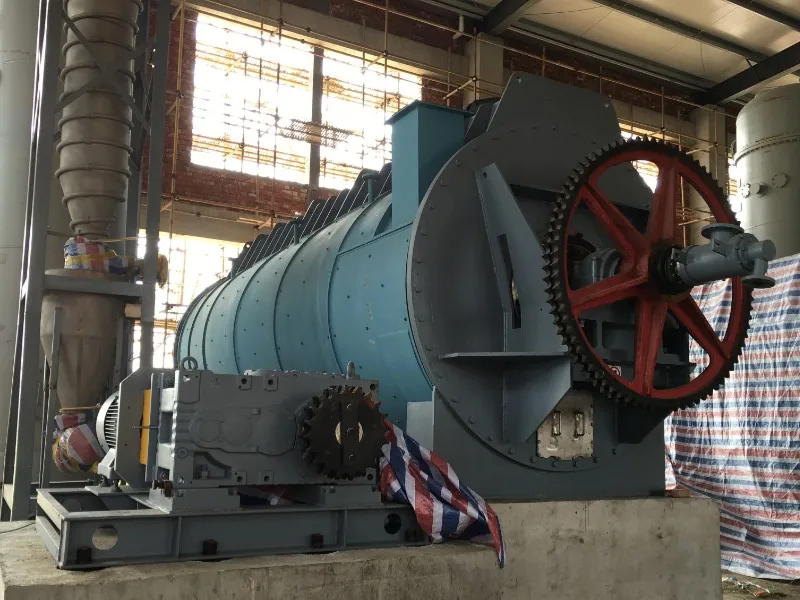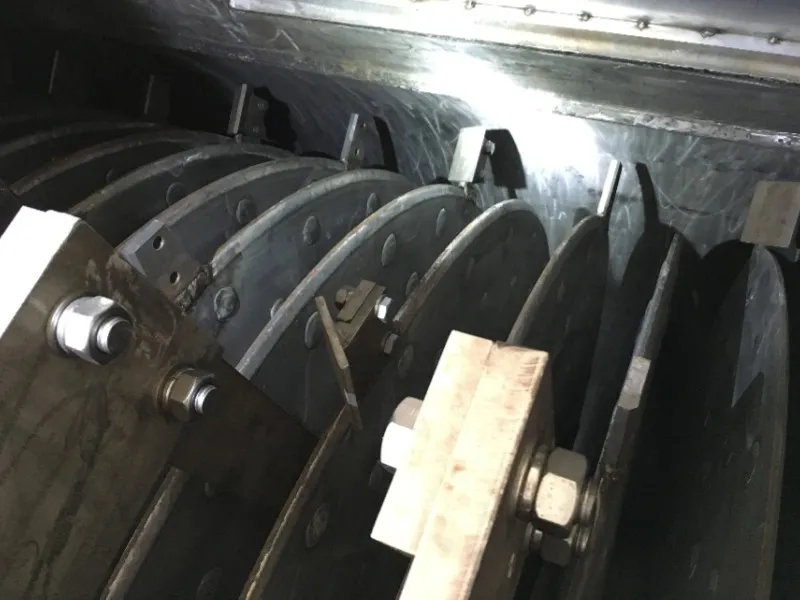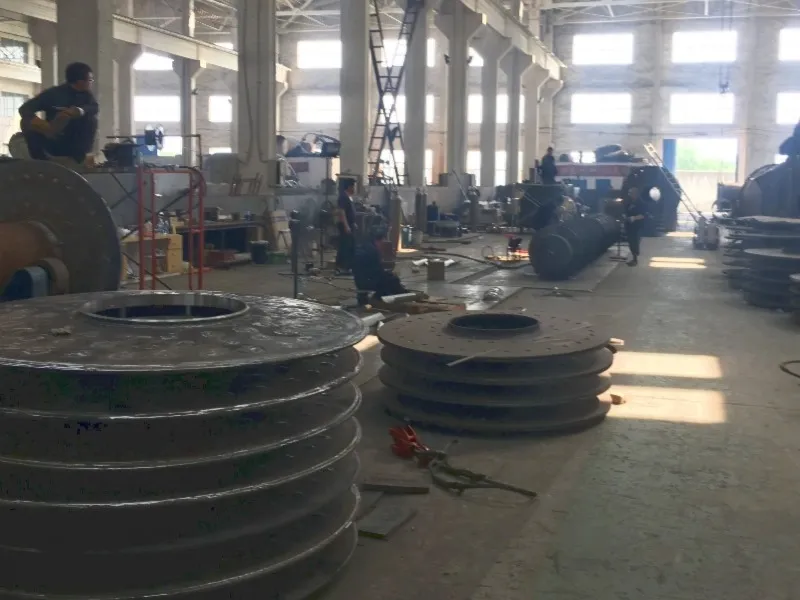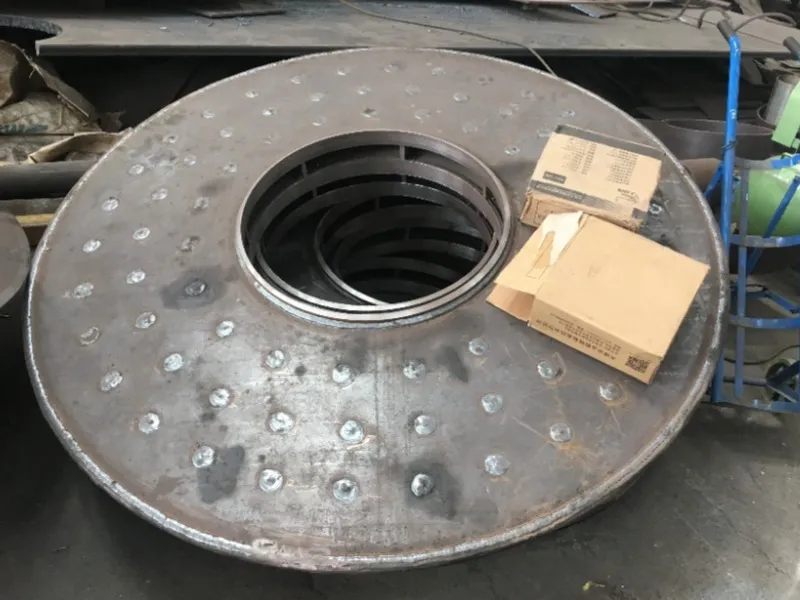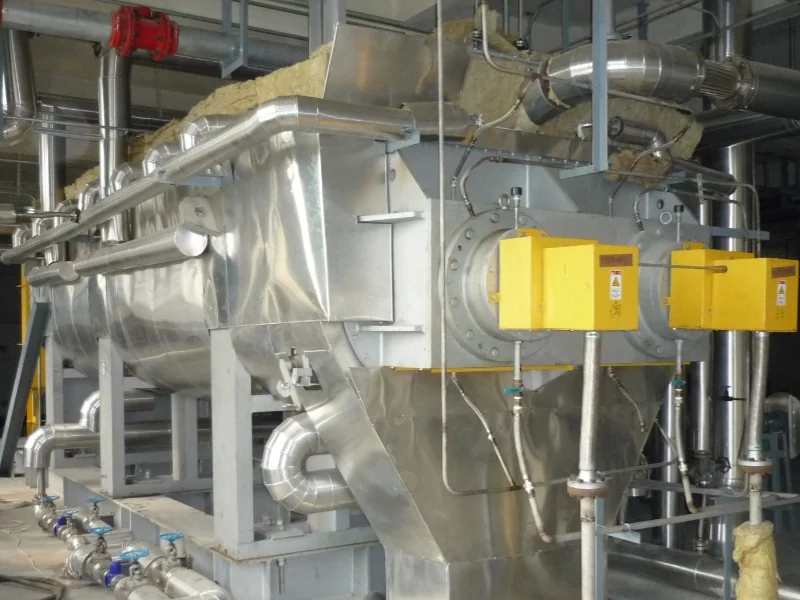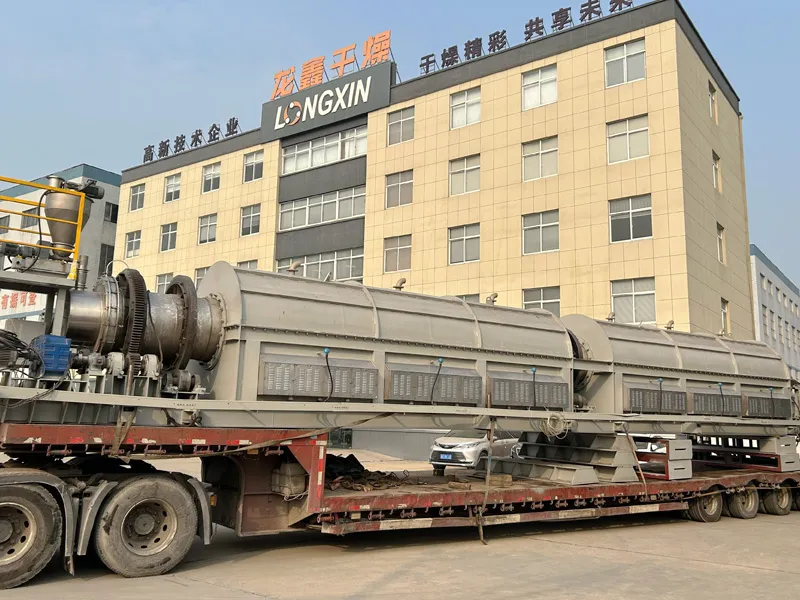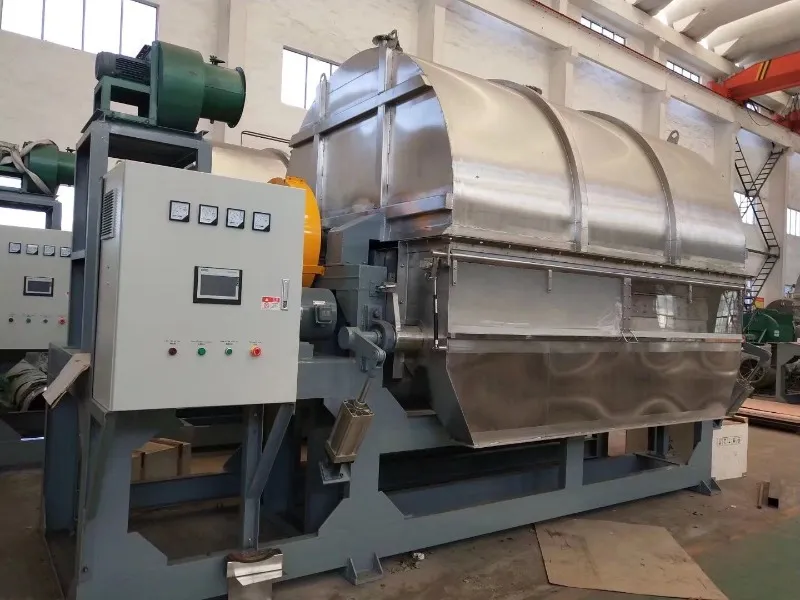
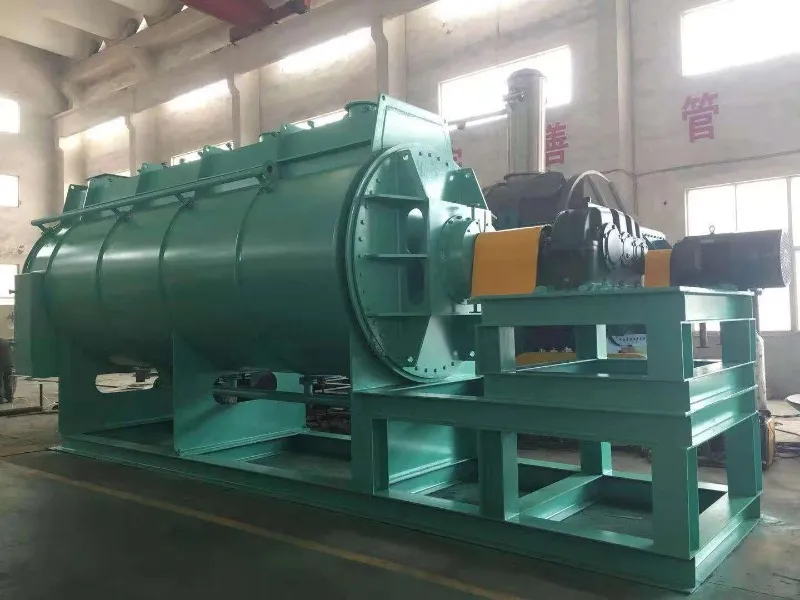
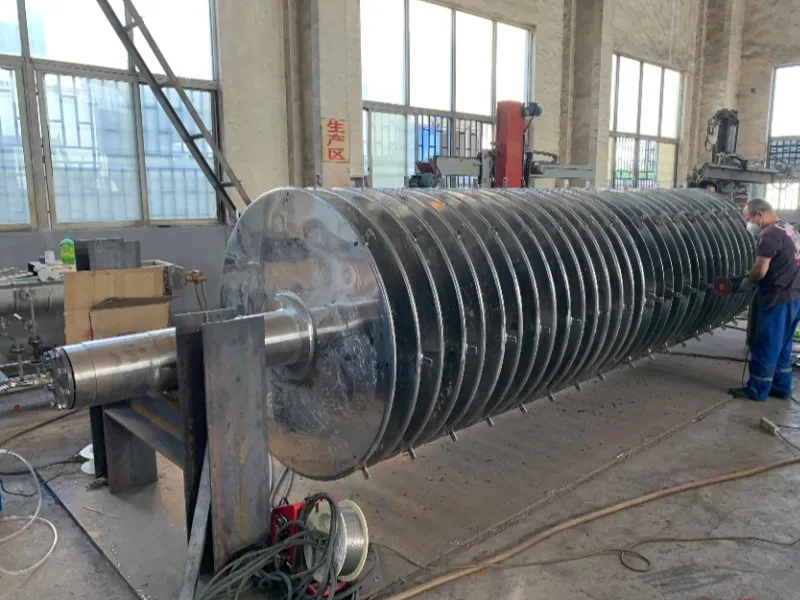
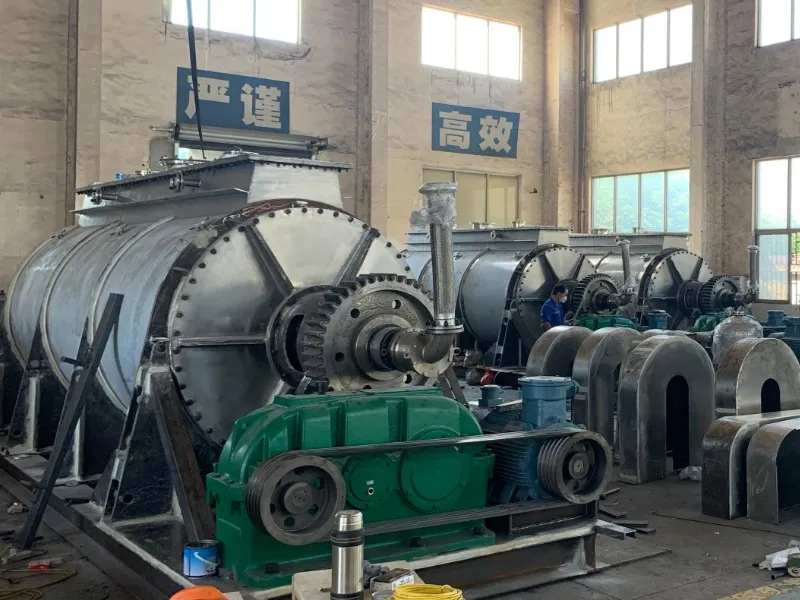
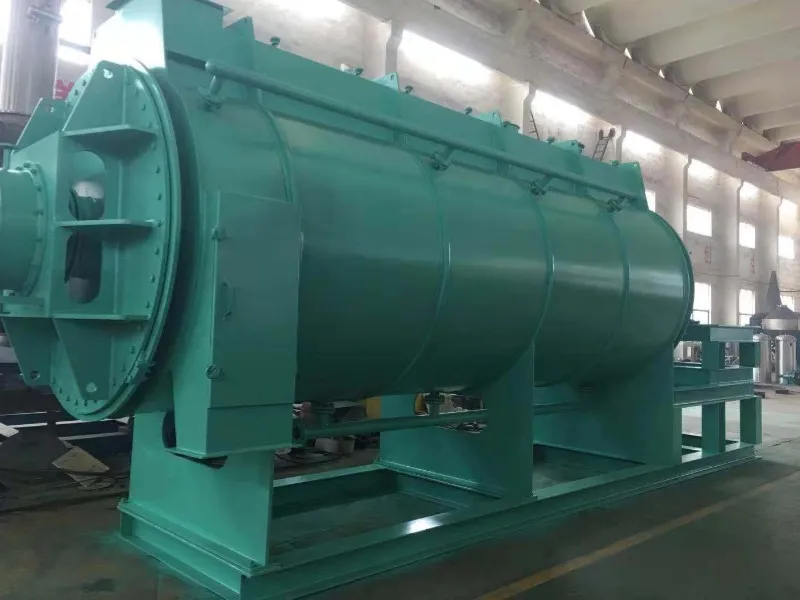
As an indirect-heating drying system, the DYG Series Disc Dryer has been used in the chemical, food and feed industries for decades. Its main body consists of a cylindrical shell and a set of discs mounted on a central shaft. The heating medium flows through the hollow disc assembly and transfers heat indirectly to the material through the disc surfaces. Material passing between the discs and the shell is heated by conduction, causing its moisture to evaporate. The vapour generated during drying collects in the dome above the discs and is carried out of the unit by a small flow of hot air. Because each disc transfers heat from both faces, a large heat exchange area is packed into a small space, giving the disc dryer a compact footprint.
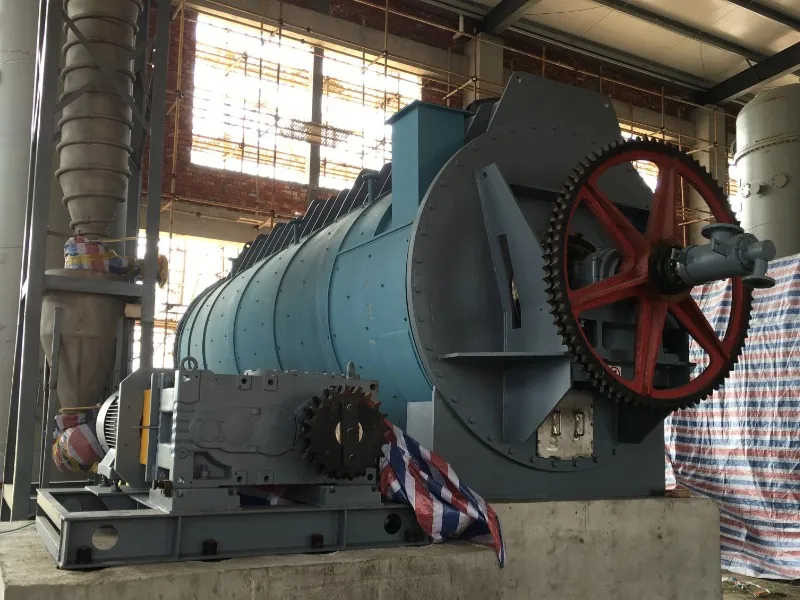
DYG Series Disc Dryer — Working Principle
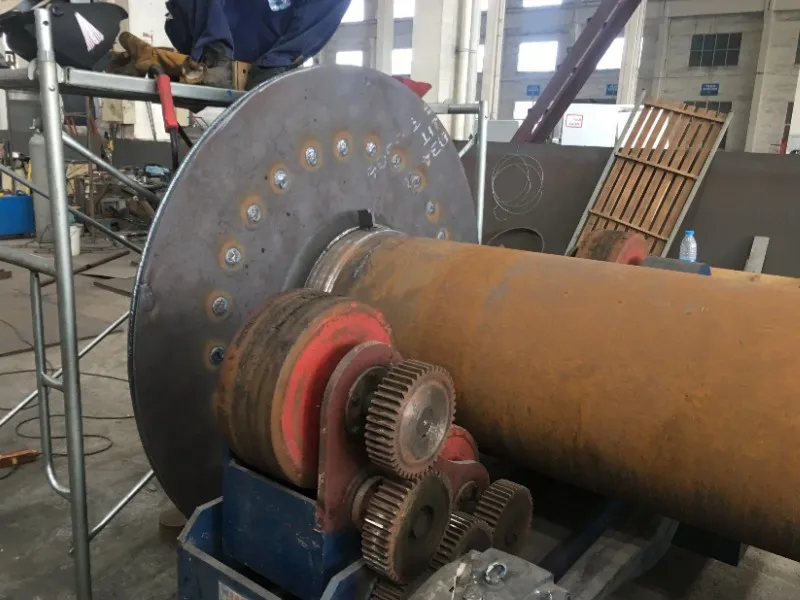
The disc dryer consists mainly of a stator (shell), a rotor (disc assembly) and a drive unit. The rotor’s central shaft, which is the load-bearing component of the drying discs, is a hollow shaft to which all discs are welded.
Rotation of the discs pushes and agitates the wet material, conveying it evenly and slowly through the entire dryer, where it is dried by thermal contact with the disc surfaces. During drying, the heating steam condenses on the inner wall of the disc cavities, forming condensate. The condensate is led through a pipe into the central shaft and finally discharged from the dryer through an outlet trough.
Scrapers are fitted between every two discs and are fixed to the shell (stator). These scrapers loosen the material between the discs and allow the waste vapour to leave the sludge quickly.
DYG Series Disc Dryer — Performance Features
- The rotor and shell are compactly and rationally designed, with a low space requirement, a large heat transfer area per unit volume and fast drying. The largest heat exchange surface per unit effective volume allows smaller equipment and shorter processing times.
- The main shaft rotates at a constant speed, agitating the material uniformly, so the drying intensity is even and the product particle size is uniform.
- By adjusting the rotational speed, the process mode (batch or continuous) and the drying time, the final moisture content of the dried sludge can be controlled — for example, reducing the sludge moisture content from about 80 % to 40 %, 30 % or 25 %.
- Thermal efficiency is high and the agitation, mixing and turning action is effective. Four to eight lifting plates per disc give better turning performance, and the counter-rotating discs of the twin-shaft design, together with the lifting plates, provide automatic self-cleaning.
- The dried particles move in a highly regular manner, causing little wear on components, making the unit well suited to drying sludge-type materials.
- The heating discs are integrally pressed with few weld seams, offering strong corrosion and wear resistance, low rotational resistance and low vibration.
- The intermeshing arrangement of the two shafts enables the blades to carry the material into a thin layer, achieving thin-layer heat exchange.
- The relative rotation of the two shafts, together with the scrapers, removes most of the sticky material adhering to the rotor, automatically keeping the heat transfer surface clean and ensuring stable heat transfer.
- A wide range of materials can be handled: granular, powdered and sticky materials, as well as materials with high or low moisture content. The unit can operate continuously or in batch mode, making it a highly adaptable and energy-efficient drying system.
- Energy consumption is low. The main shaft runs at low speed, the material conveying system requires little power and electricity consumption is low. Conduction drying delivers high thermal efficiency and low energy use, requiring 1.1–1.2 kg of steam per kilogram of water evaporated.
DYG Series Disc Dryer — Key Technical Innovations and Design Improvements
- Foreign disc-and-paddle technology has been introduced, then improved, and the design is now in volume production with successful applications.
- The bearing housing is designed as an integral pipe section and machined in one piece, with an added cooling device.
- The shell, bearings and shafts are designed for free thermal-expansion sliding, and the main frame is of integral design, so the unit does not deform and is easy to transport and operate.
- The integral, reinforced design of the equipment provides greater strength and a longer service life.
- The heating plates have been replaced by integrally welded discs, giving higher strength and reducing the risk of wear and leakage. Scraper plates can be added according to the condition of the material. Four to eight lifting plates per disc improve the turning action, while automatic cleaning of sludge from the shaft and discs maintains heat transfer performance.
- The structure is more compact, and single units with an area of ≥400 m² can be designed, making a large-capacity paddle dryer possible.
- The gear-drive arrangement runs more smoothly and eliminates the swaying and slack associated with chain drives.
- Longxin’s proprietary machining and assembly processes ensure better concentricity and superior sealing at both ends of the unit.
- Half-pipe jacket heating and full-jacket heating designs are both available to suit different requirements.
- The heating medium enters through a rotary joint on the shaft — steam in at one end and condensate out at the other. This arrangement eliminates the short-circuit that leaves the blades at the drive end inadequately heated.