
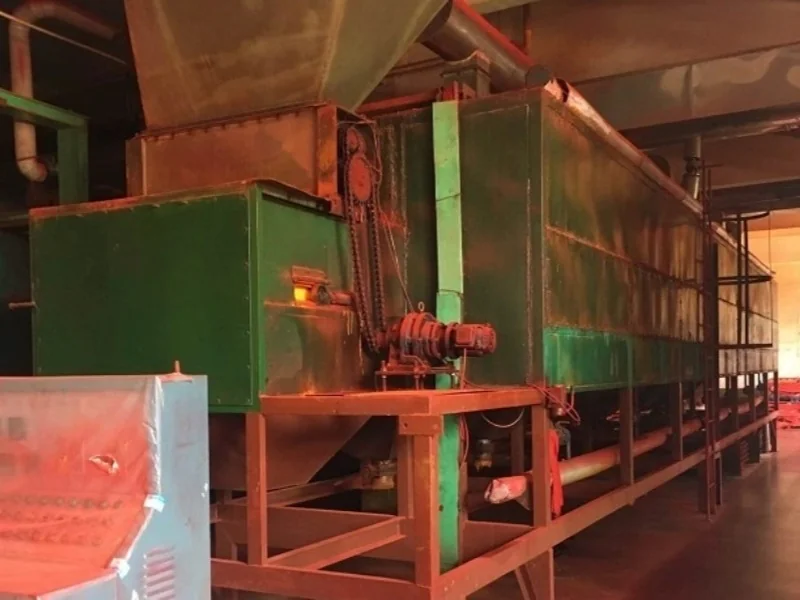
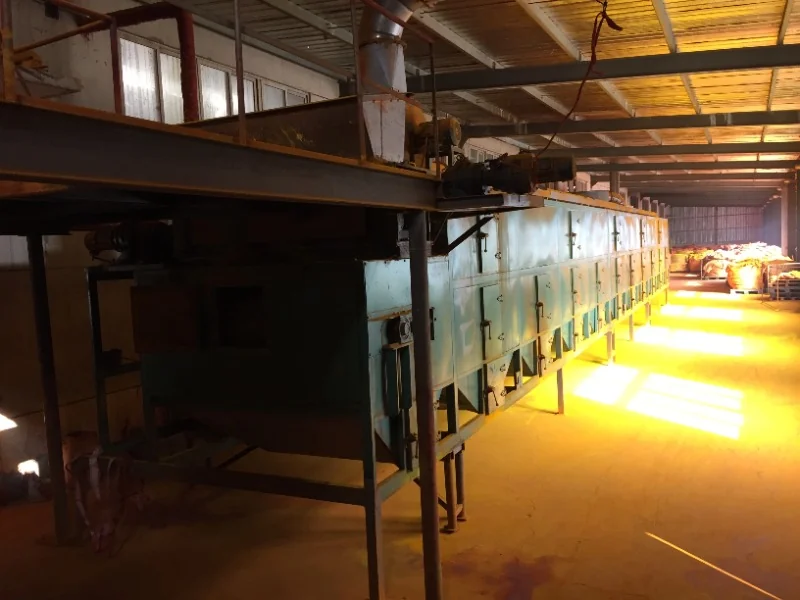
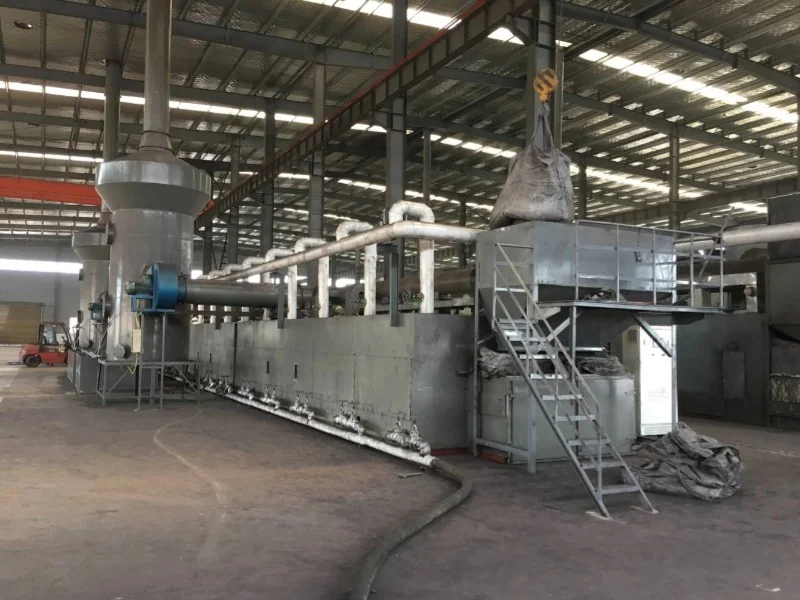
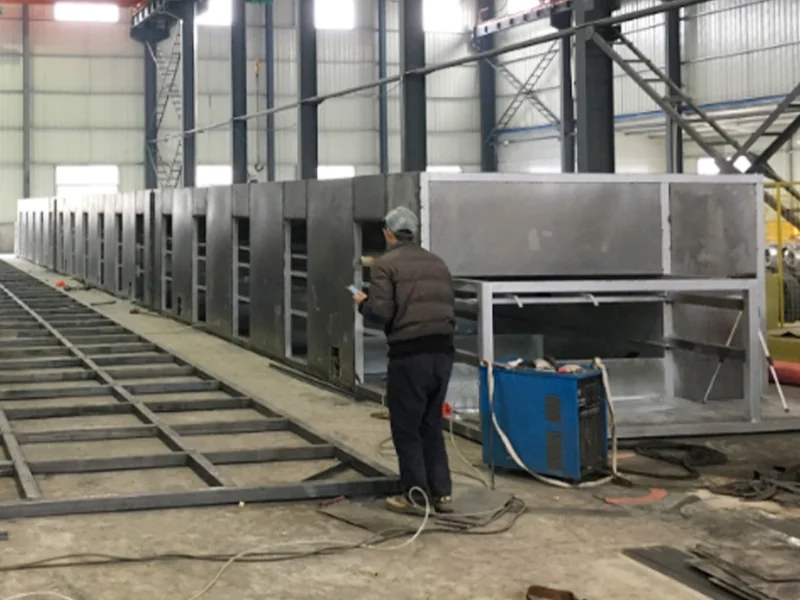
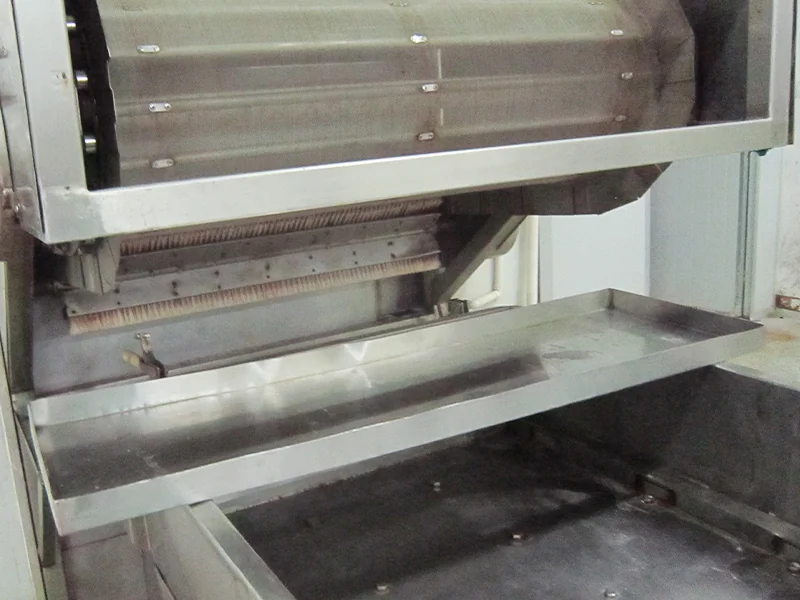
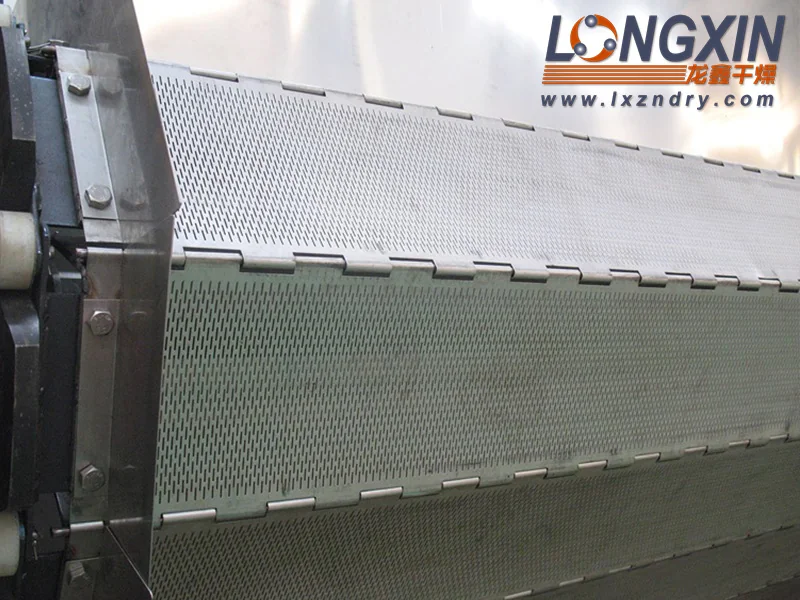
Equipment Overview
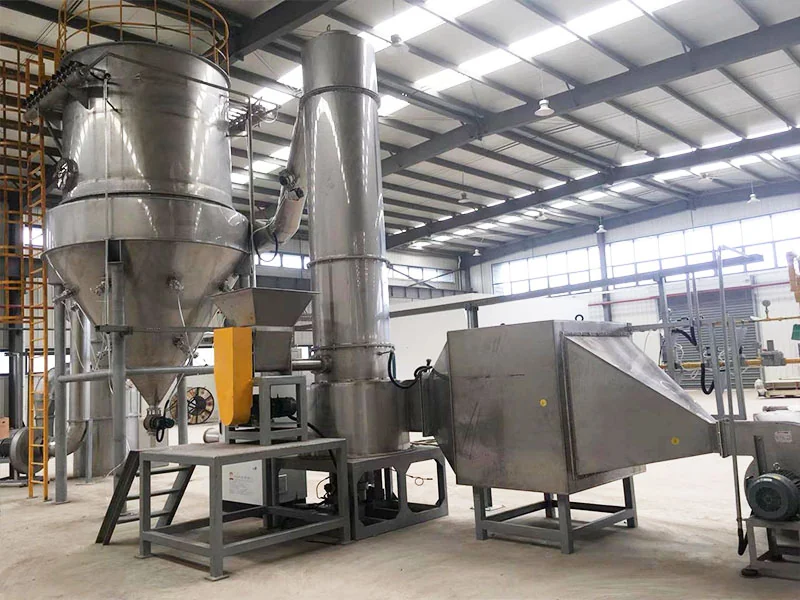
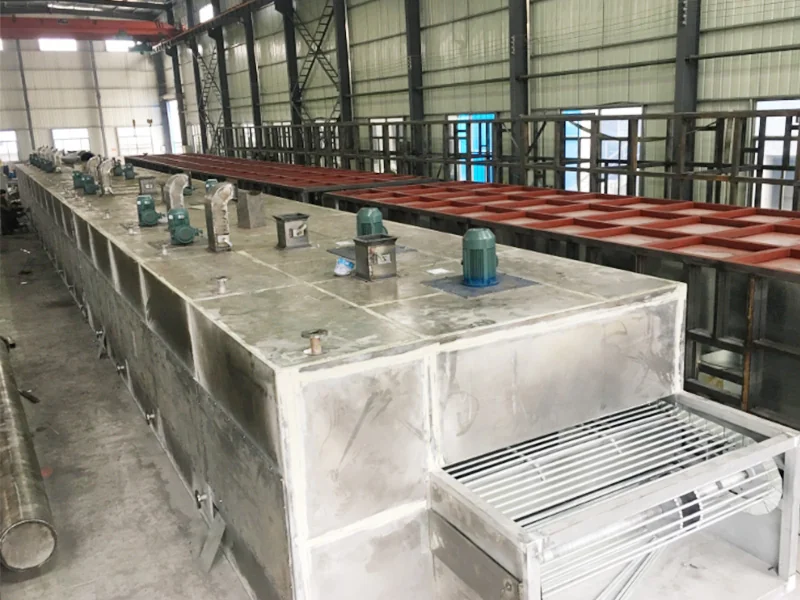
The hollow paddle dryer is a horizontal, agitated continuous drying unit that relies mainly on heat conduction. Because its agitation blades are shaped like boat paddles, it is called a paddle dryer; overseas it is also known as a trough dryer or an agitated dryer. The heat required for drying is supplied by indirect heat conduction, so the process needs no gas — or only a small amount — to carry away moisture. This sharply reduces the heat carried off by the gas stream and raises heat utilization efficiency, making it an energy-saving drying unit. Paddle dryers are widely used in the petrochemical, chemical, metallurgical, food, pharmaceutical and pesticide industries for drying powdery, granular, filter-cake and slurry materials.
The hollow paddle dryer was designed and built by Longxin on the basis of absorbing and adapting advanced paddle dryer technology from abroad. Over many years of production and commissioning we have accumulated extensive experience and have repeatedly improved the structure of the paddle dryer, making this product more practical and more stable in performance.
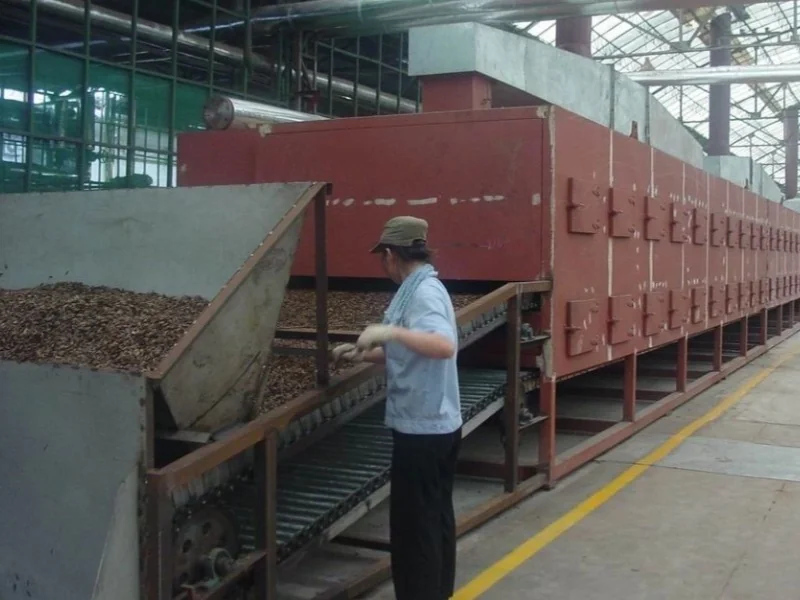
Hollow Paddle Dryer — Working Principle
The hollow paddle dryer consists of a jacketed shell with a W-shaped end profile, an upper cover, two hollow shafts fitted with blades, end covers at both ends, rotary joints through which the heating medium is fed, metal flexible hoses, and a transmission mechanism comprising gears and sprockets.
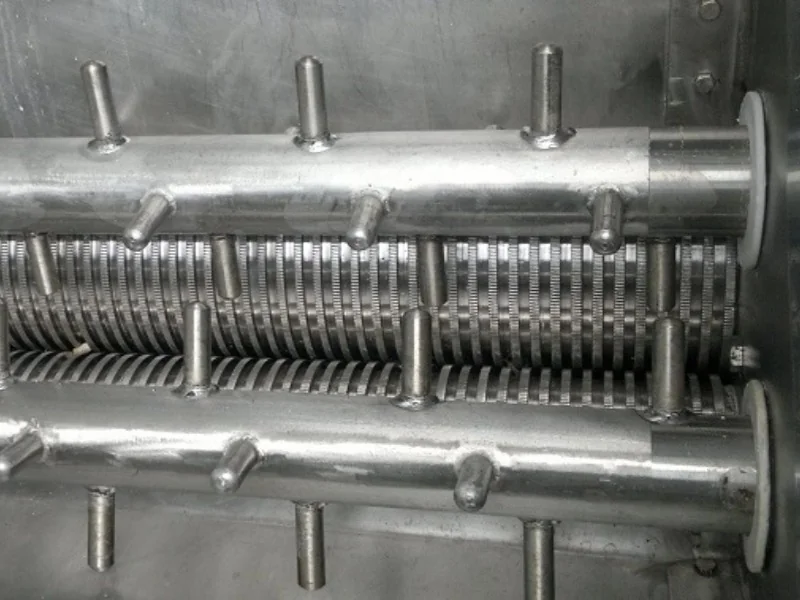
The core of the dryer is the two hollow shafts and the hollow agitation paddles welded onto them. Each paddle is a wedge-shaped hollow half-round form through which the heating medium can flow. Besides agitating the material, the paddles are also the heat-transfer bodies of the equipment. The two principal heat-transfer faces of each paddle are inclined, so that when material meets an inclined face, the particles slide off quickly as the blade rotates; the heat-transfer surface is thus continually renewed and heat transfer is intensified. A scraper is fitted at the triangular base of each paddle to lift material settled on the bottom of the shell and prevent dead zones.
The arrangement of the paddles and the dimensions of each part are subject to specific requirements, and in addition to the paddles, auxiliary mechanisms are provided in the feed zone, drying zone and discharge zone to ensure stable operation of the whole machine and uniform drying. Retention time is also adjustable.
Hollow Paddle Dryer — Structure Diagram
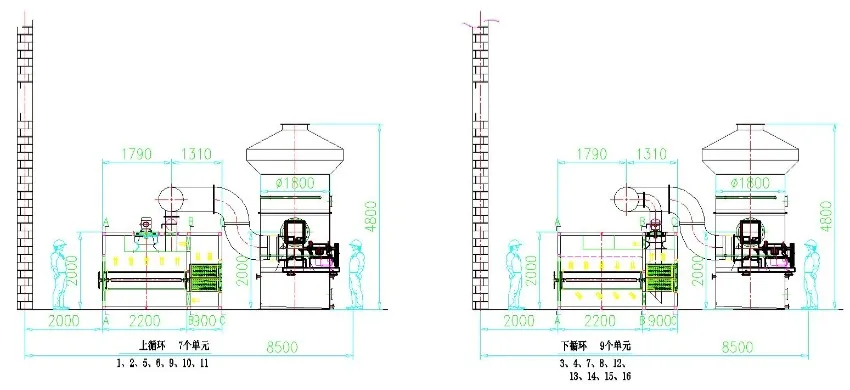
Hollow Paddle Dryer — Performance Features
(1) High heat utilization. The dryer heats by conduction, so the heat required for drying is not supplied by hot gas and the heat carried away by hot gas is reduced; because the equipment is compact and has few auxiliary devices, heat losses are also lower. Heat utilization reaches 90%.
(2) Compact structure and small footprint. The heat needed for drying is supplied mainly through the walls of the many hollow paddles densely arranged on the hollow shaft; the jacket wall accounts for only a small part of the heat transfer. Heat-transfer surface per unit volume of equipment is therefore large, which saves floor space and reduces civil-works investment.
(3) Very wide range of materials handled: both heat-sensitive materials and materials requiring high-temperature treatment can be dried using different heating media. Common heating media include steam, thermal oil, hot water and cold water. Operation may be continuous or batch, and the unit is widely used in many fields.
(4) Steam does not come into contact with the sludge, and the steam condensate can be reused, fully conserving energy.
(5) Because of its high torque, the hollow paddle dryer can effectively overcome the resistance arising in the plastic phase of the material, drying it to a moisture content below 40% without back-mixing and thereby reducing system complexity.
(6) The hollow paddle dryer rotates very slowly — below 4 r/min — which effectively prevents wear on the dryer wall.
Hollow Paddle Dryer — Application Range
Paddle dryers have been successfully applied in food, chemical, petrochemical, dyestuff and industrial sludge fields. The heat-transfer, cooling and agitation characteristics of the equipment allow it to carry out the following unit operations: calcination (low temperature), cooling, drying (solvent recovery), heating (melting), reaction and sterilization.
(1) Using thermal oil as the heating medium, the paddle dryer can perform low-temperature calcination — for example, calcining calcium sulfate dihydrate (CaSO₄·2H₂O) into calcium sulfate hemihydrate (CaSO₄·½H₂O), or calcining sodium bicarbonate (NaHCO₃) into soda ash (Na₂CO₃).
(2) With a cooling medium such as water or chilled brine fed in, the unit can be used for cooling — for example, the paddle-type soda ash cooler used in the soda ash industry, which replaces the older air-cooled soda ash cooler, saving energy and eliminating tail-gas treatment equipment while lowering operating costs. It can also cool titanium dioxide, ferronickel alloy powder and various powdery and granular materials. A single unit can cool material from 1000 °C down to below 40 °C.
(3) The equipment's main function — operating without hot air — puts solvent recovery, energy consumption and environmental control into an easily manageable, ideal state. It is particularly suited to materials requiring solvent recovery and to flammable, readily oxidized and heat-sensitive materials, and is widely used in fine chemicals, petrochemicals and the dyestuff industry.
(4) The uniformity of temperature, moisture and mixing degree along the axial direction allows the equipment to be used for heating or melting, or for carrying out certain solid-material reactions. It has been used successfully in the compound fertilizer and modified starch industries. Paddle dryers can also be used to sterilize food and flour: the large heating area per unit effective volume quickly brings the material up to sterilization temperature, avoiding the long heating times that would alter material quality.
Hollow Paddle Dryer — Technical Parameters
Hollow Paddle Dryer — Process Flow Diagram 1 — Atmospheric Operation
Hollow Paddle Dryer — Process Flow Diagram 2 — Vacuum
Hollow Paddle Dryer — Process Flow Diagram 3 — Paddle and Disc Dryer in Series