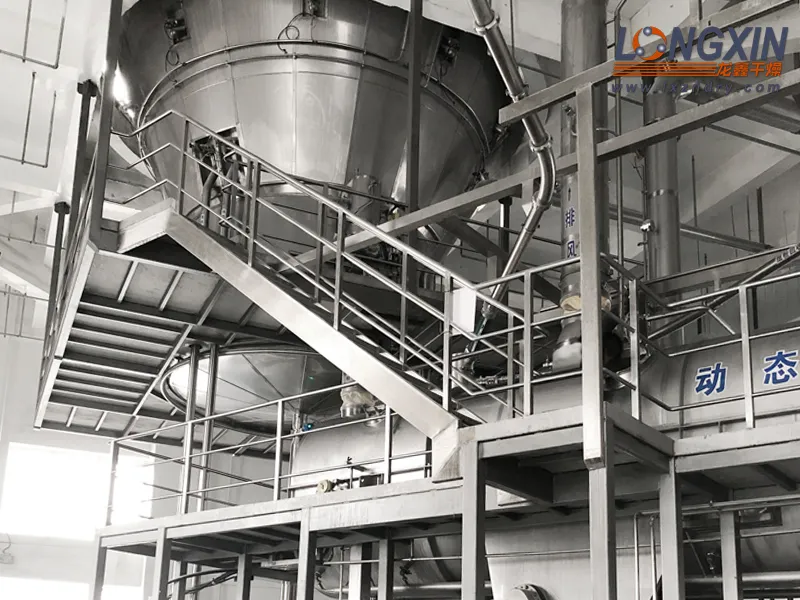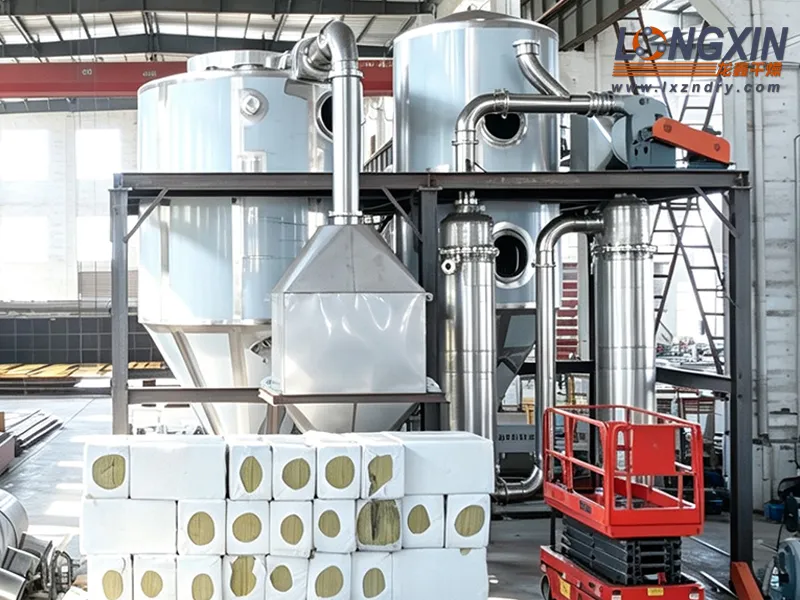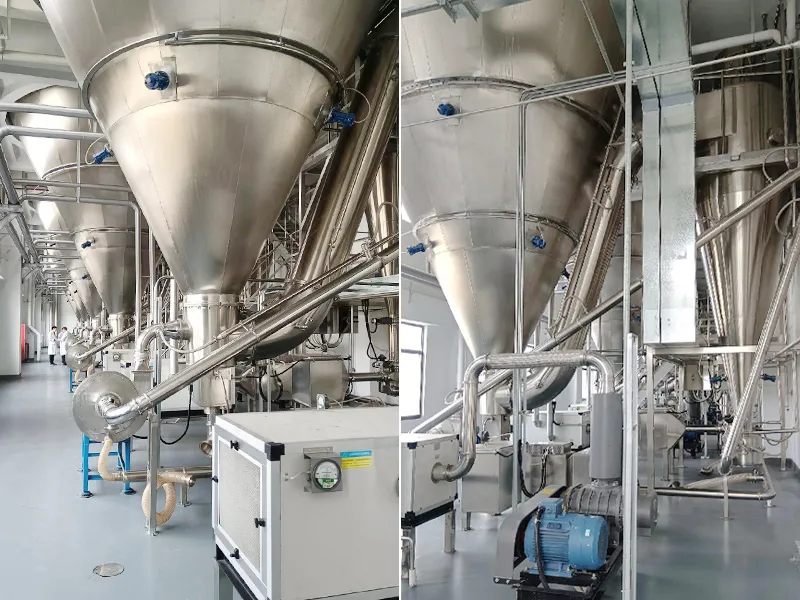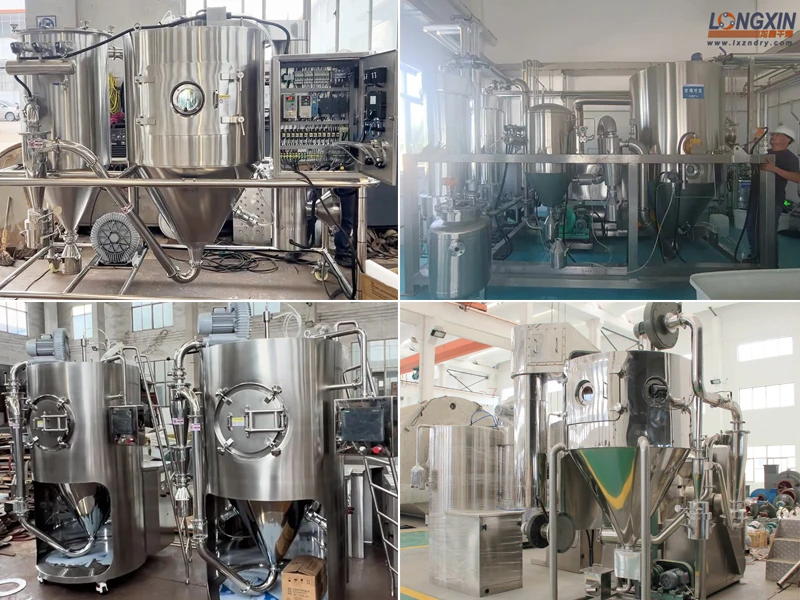
Equipment Overview
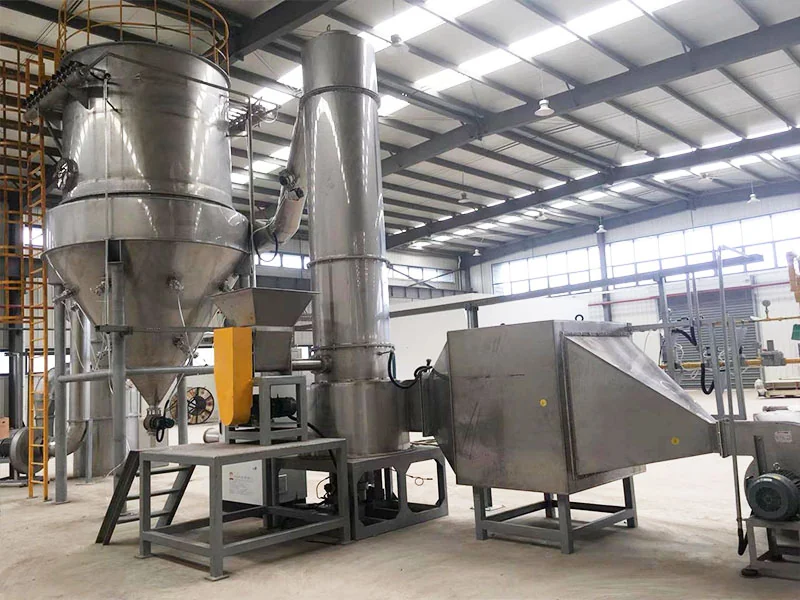
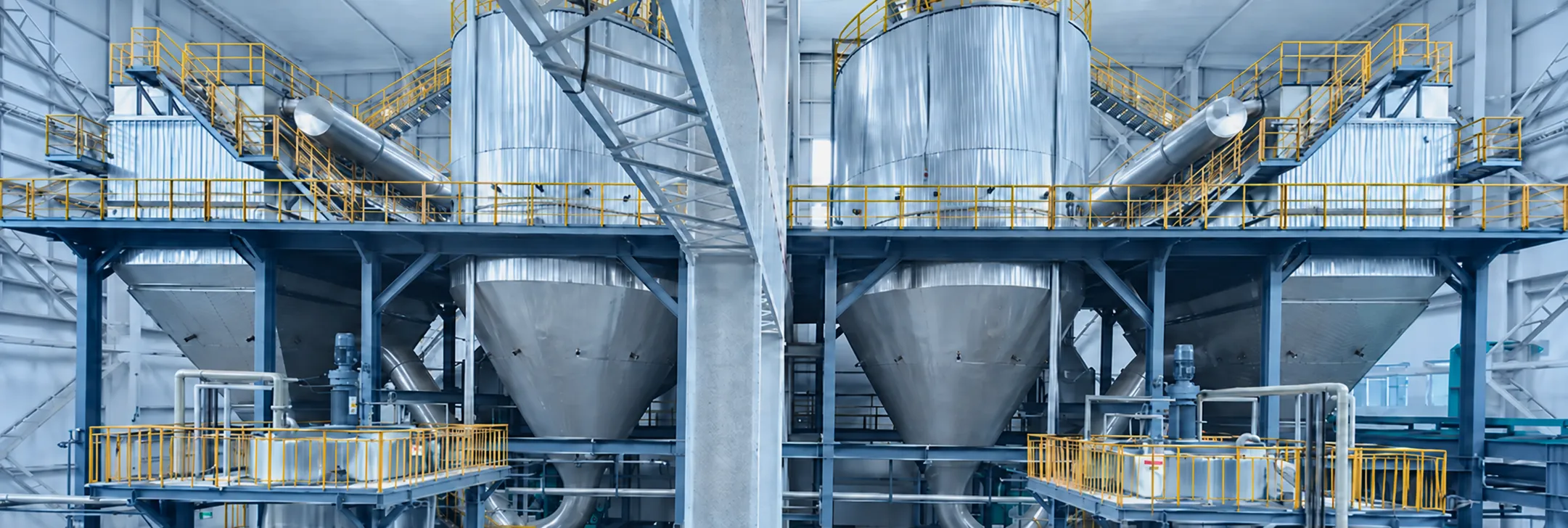
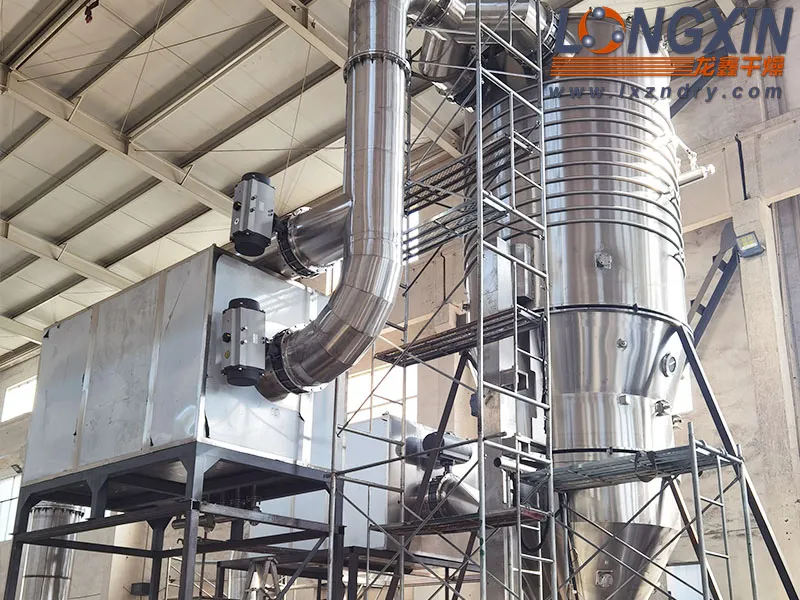
The nitrogen closed fluid bed dryer is drying equipment specially designed for handling materials that are oxygen-sensitive, easily oxidized, or flammable and explosive. It uses nitrogen as the drying medium and operates in a completely closed system to ensure that the material does not come into contact with oxygen in the air during drying, thereby avoiding oxidation reactions or explosions, while the solvent is recovered. Because of its unique working principle, the closed-cycle fluid bed dryer is widely used in the chemical, pharmaceutical, food and other industries. By controlling the drying environment, it can not only improve drying efficiency but also guarantee the quality of the dried product.
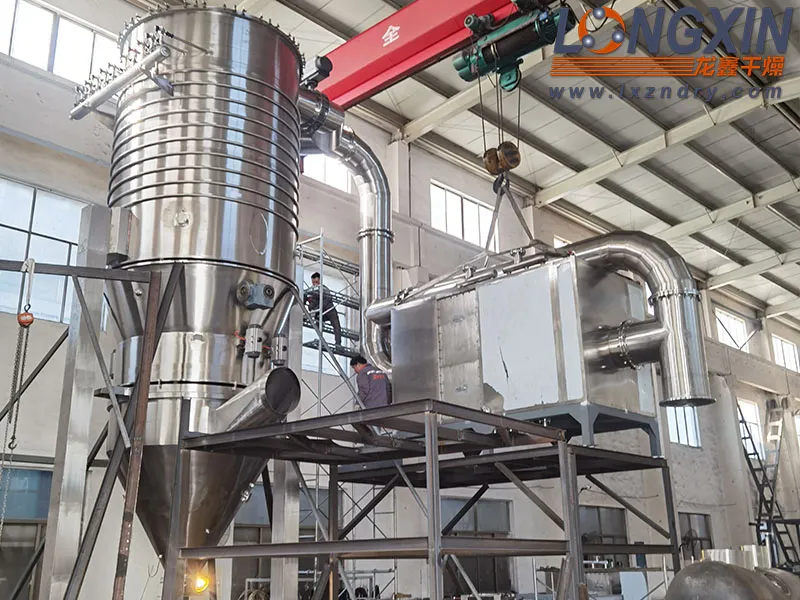
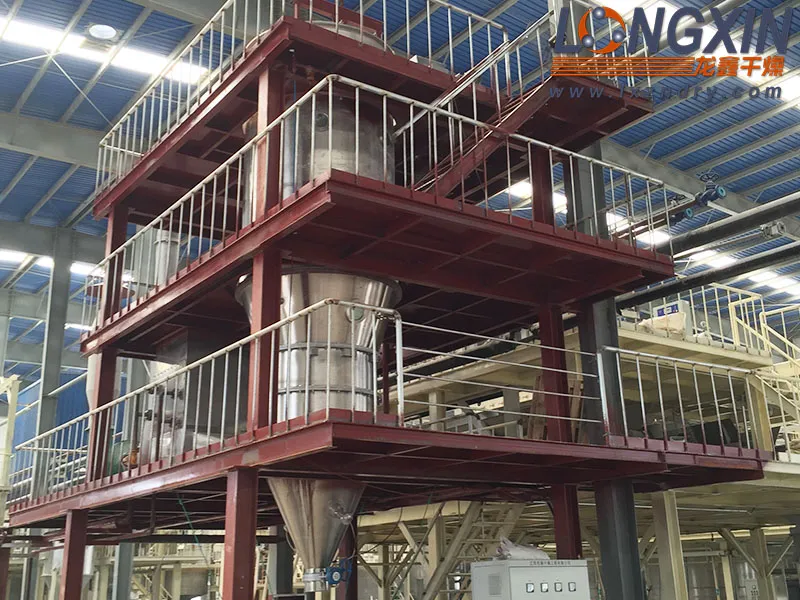
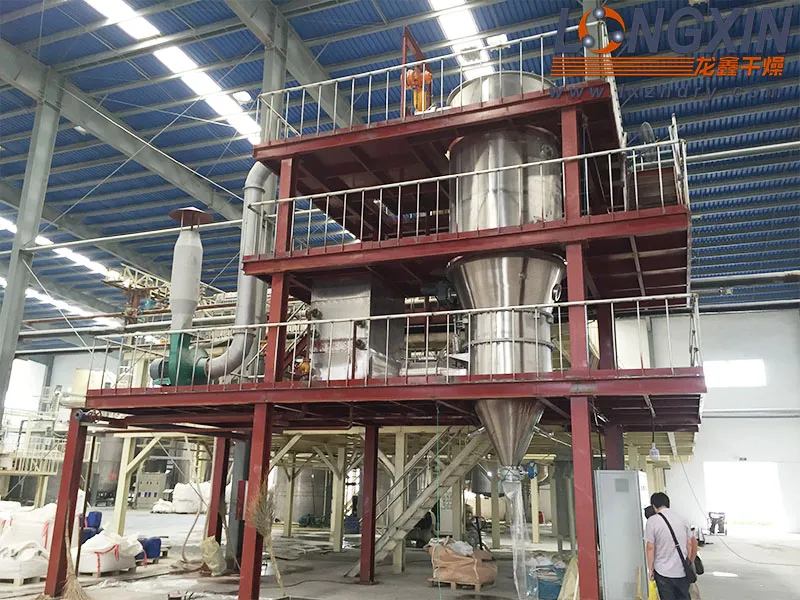
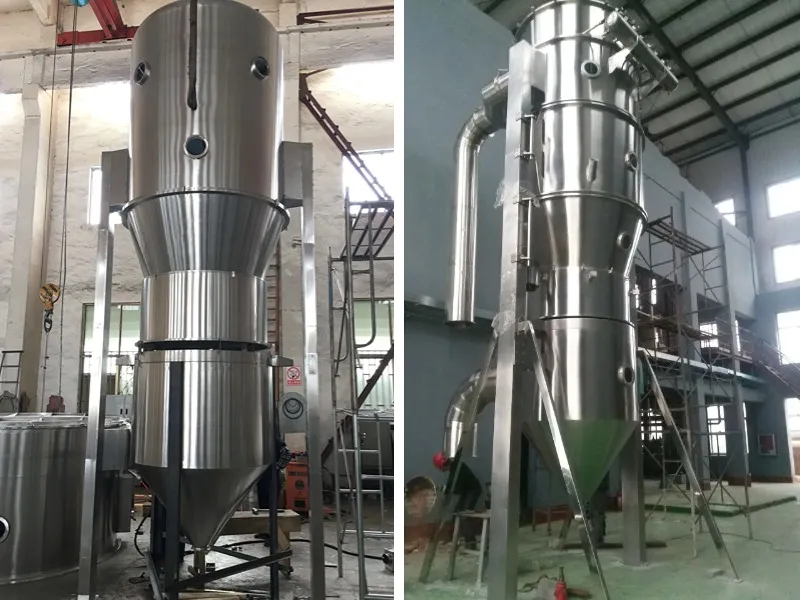
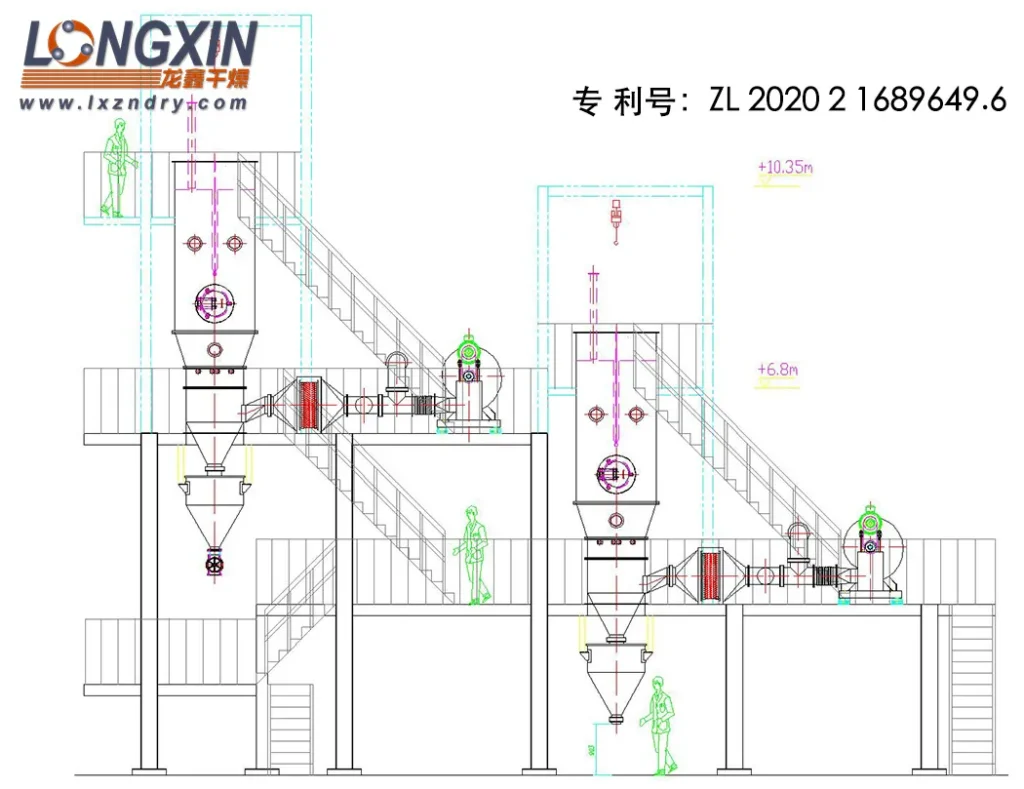
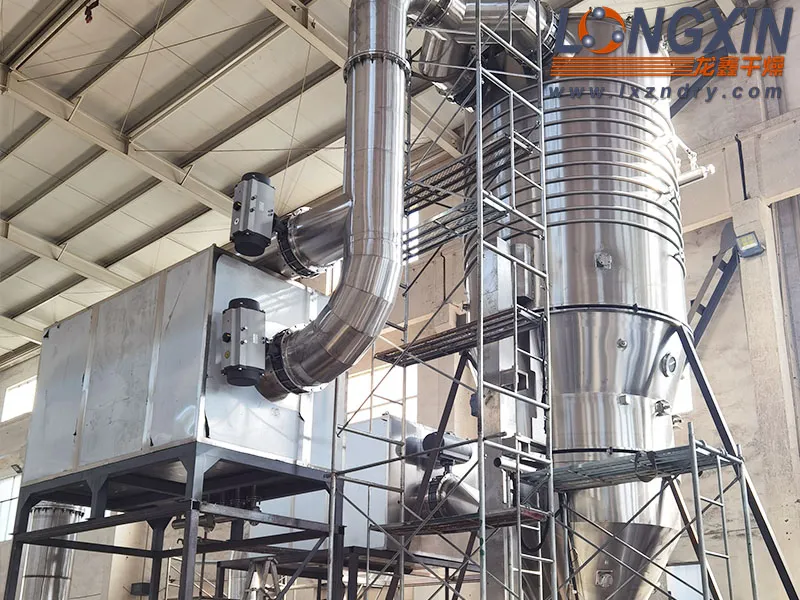
The closed-cycle fluid bed dryer mainly consists of the main drying unit, gas-solid separator, surface cooler, circulation fan and heater. It is aimed mainly at drying materials that contain solvents, or are anaerobic, toxic, or release odorous gases. Existing drying systems are not closed-loop, produce waste water and waste gas emissions, release solvents that pollute the environment, and use circulating feeding, which causes wet material to mix together so that the uniformity of the final moisture content cannot be guaranteed; moreover, over-temperature and over-oxygen during operation carry the risk of spontaneous combustion of the solvent inside the equipment. In response to these problems, Longxin Drying developed a new type of closed-cycle fluid bed drying system (Patent No.: ZL 2020 2 1689649.6). This equipment runs fully enclosed, with inert gas charged inside for protection, effectively isolating air, and features explosion protection, odour prevention and prevention of solvent gas leakage. After the solvent gas is recovered in a closed manner, it not only protects the environment with the advantage of no waste water, waste gas or odour emissions, but also brings high economic benefits through the reuse of the recovered solvent.
Closed-Cycle Fluid Bed Dryer — Working Principle
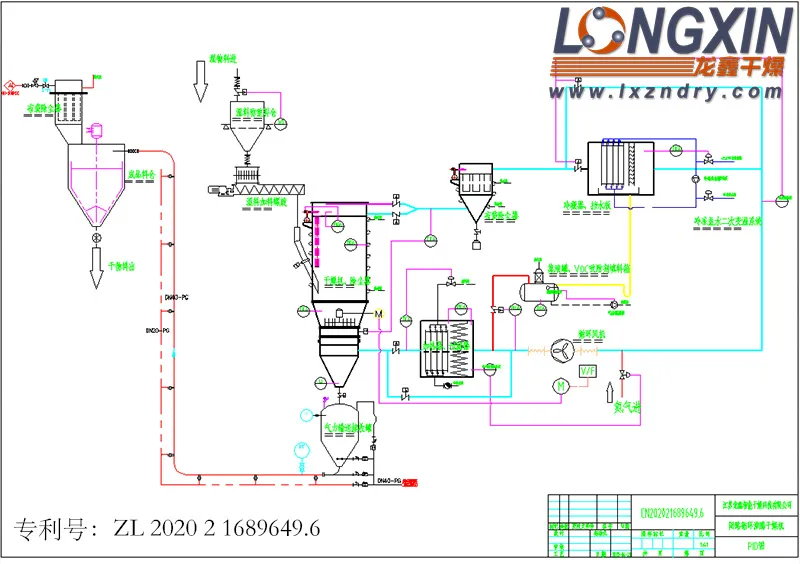
The nitrogen closed fluid bed drying system comprises a dryer, a feeding mechanism, a discharging mechanism, a closed-cycle mechanism and a solvent collection mechanism. The outer shell of the dryer is fitted with hot water tracing pipes to keep the cylinder at a certain temperature and prevent condensation of the solvent inside caused by the ambient environment. The hopper is fitted with an on-line sampler, which can be used in the early commissioning stage to check and determine whether the final moisture content of the material meets the standard. The dryer is provided with a built-in bag filter using high-pressure pulse off-line dust cleaning, so that no dust is present in the discharged gas, ensuring a dust collection rate of above 99.5% and effectively protecting the surface cooler and the heater. The feeding mechanism and the discharging mechanism use intermittent automatic feeding and discharging, which can effectively control the final moisture content of materials with low temperature and low moisture content and ensure that no wet material is back-mixed in the drying equipment, so that the uniformity of the final moisture content of the material is guaranteed. The closed-cycle mechanism ensures that the equipment runs fully enclosed, with inert gas charged inside for protection, effectively isolating air and providing explosion protection, odour prevention and prevention of solvent gas leakage; after the solvent gas is recovered in a closed manner, it not only protects the environment and ensures no waste water, waste gas or odour emissions, but the recovered solvent also has very high economic benefits. The closed-cycle mechanism comprises the No. 1 bag filter, condenser, circulation fan, filter and heater. The dryer and the No. 1 bag filter are connected by piping; the wet exhaust gas and part of the dust produced after the wet material is dried in the dryer enter the No. 1 bag filter through the piping for dust removal. A differential pressure sensor is arranged inside the No. 1 bag filter to detect the bag differential pressure; when the differential pressure reaches a certain value, the pulse cleaning valve is opened, reducing the pulse frequency and lowering the amount of nitrogen discharged to the outside. The No. 1 bag filter and the condenser are connected by piping; the wet exhaust gas dedusted by the No. 1 bag filter enters the condenser for condensation, where a baffle plate separates the condensed solvent from the nitrogen. The condensed solvent is collected into the solvent collection mechanism through piping. The condensing medium of the condenser is chilled brine. A humidity sensor is arranged on the piping between the condenser and the circulation fan to detect whether the humidity of the separated nitrogen meets the standard; if it does not, the nitrogen is fed back into the condenser for dehumidification. After dehumidification by the condenser, the nitrogen is a dry gas with low moisture content, and the nitrogen also has the effect of displacing the solvent, which can improve drying efficiency and prevent the final drying moisture content of some materials from being affected by weather conditions. The condenser and the circulation fan are connected by piping, and the nitrogen separated by the condenser enters the circulation fan through the piping. The circulation fan is a sealed fan. The circulation fan and the filter are connected by piping; the separated nitrogen, driven by the circulation fan, enters the filter for further dust filtration, ensuring the purity of the circulating nitrogen. The filter and the heater are connected by piping; the nitrogen filtered by the filter enters the heater for heating. The heater and the dryer are connected by piping; the heated nitrogen enters the dryer to displace the moisture in the wet material, forming a closed-cycle drying system.
Closed-Cycle Fluid Bed Dryer — Process Flow Chart
Closed-Cycle Fluid Bed Dryer — Key Features
The nitrogen closed fluid bed dryer is widely used in pharmaceuticals, chemicals, food processing and other fields, especially where drying must be carried out under aseptic, oxygen-free or explosion-proof conditions. For example, in the pharmaceutical industry, when drying pharmaceutical ingredients containing volatile organic solvents, using this type of equipment can avoid loss of solvent and ensure the safety of the production environment.
(1) Fully closed circulation: the system is completely sealed, preventing the material from contacting outside air and improving the safety of the drying process.
(2) Zero emissions: the system produces almost no waste gas during operation, which is beneficial to environmental protection.
(3) Solvent recovery: for materials containing solvent, the solvent can be recovered efficiently during drying, which not only saves costs but also reduces environmental pollution.
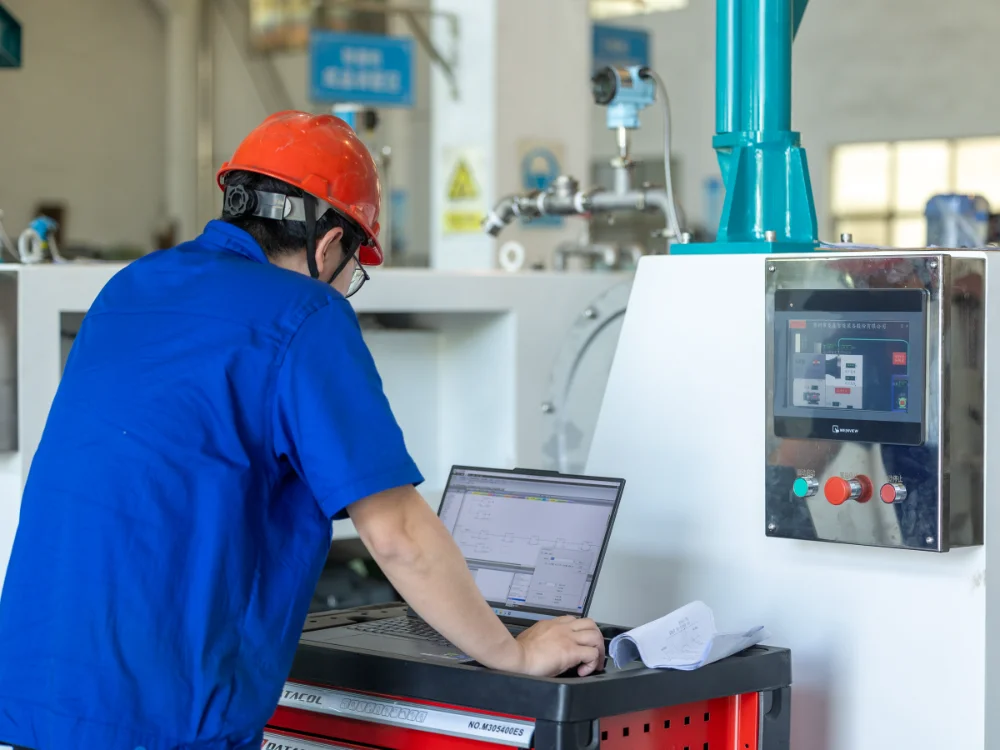
(4) High degree of automation: it is usually equipped with an automatic control system that can monitor and regulate parameters such as temperature, oxygen content and system pressure, ensuring the controllability and safety of the drying process.
(5) Energy saving and environmentally friendly: energy consumption is reduced by recirculating the inert gas.
(6) Improved product quality: contact between the material and oxygen is prevented, which helps maintain the chemical stability of the material.
(7) Compliance with safety standards: the risk of fire and explosion is reduced, especially when handling flammable substances.
(8) Strong applicability: suitable for drying a wide range of materials, particularly those that must be dried under a specific atmosphere.
Nitrogen Circulation Fluid Bed Dryer — Technical Improvements
(1) PLC + touch screen operation; convenient and stable, with strict interlock functions that prevent human error in operation.
(2) Dust cleaning is by pulse bag cleaning, with continuous off-line cleaning and dust removal during operation. The cleaning effect is far superior to on-line pulse cleaning and cylinder bag-shaking cleaning, and it prevents material dead-bed during drying.
(3) Equipped with top-withdrawal rigid-cage filter bags, which ensure bag area and cleaning effect while reducing the poor working conditions workers face when removing and washing the bags. The bags can be easily removed from the equipment without anyone having to climb inside the cylinder.
(4) The equipment feeds material automatically under negative pressure through its own induced draft fan, reducing manual operations and easing workers' labour intensity.
(5) Through the automatic discharge device, the equipment achieves automatic, enclosed discharge, reducing cross-contamination of materials and workers' labour intensity.
(6) The equipment incorporates a stirring structure that prevents material bridging and dead-bed, giving better material fluidization and drying results.
(7) The equipment adopts a closed circular structure with no dead corners; cleaning is convenient and quick, with no cross-contamination, meeting GMP requirements.
(8) When docked with a pneumatic conveying system, it can achieve unattended, fully automatic continuous operation (optional).
(9) A drainage device is provided at the bottom of the main unit, which can quickly drain the accumulated water when cleaning the machine;
(10) The whole unit is easy to operate, easy to disassemble and easy to clean, and meets "GMP" requirements;
(11) The whole machine has good sealing performance and operates under negative pressure, in better conformity with "GMP" specifications;
(12) Between the double bag-shaking antistatic filter bags (or a stainless steel reverse-jet filter where special requirements apply) and the filter chamber, inflatable rubber sealing rings are used, with a compressed-air detection function to ensure reliable sealing. A dust sensor is installed in the exhaust duct and interlocked with the PLC control system to ensure product safety during production.
(13) A 2 bar or 10 bar dust-explosion design can be selected to protect personnel, equipment and the environment, with reliable earthing.
(14) A lift-and-tilt on-line dry granulation unit for discharging, or a vacuum-discharge on-line granulation unit, can be provided to achieve dust-free discharging and meet current GMP dust-free production requirements.
Commitment
Jiangsu Longxin is committed to driving technological innovation in drying equipment, industrial thermal energy systems and intelligent equipment, and values the full trust placed in it by customers. Intellectual property is the lifeline shared by Longxin Drying and its customers. At Longxin Group, we uphold honest and dedicated work as the foundation of our business, maintain zero tolerance for infringement, and crack down hard on any criminal act that infringes intellectual property rights. This is the highest responsibility, duty and commitment of Jiangsu Longxin. We must sincerely repay our customers' trust and completely eliminate any infringement.