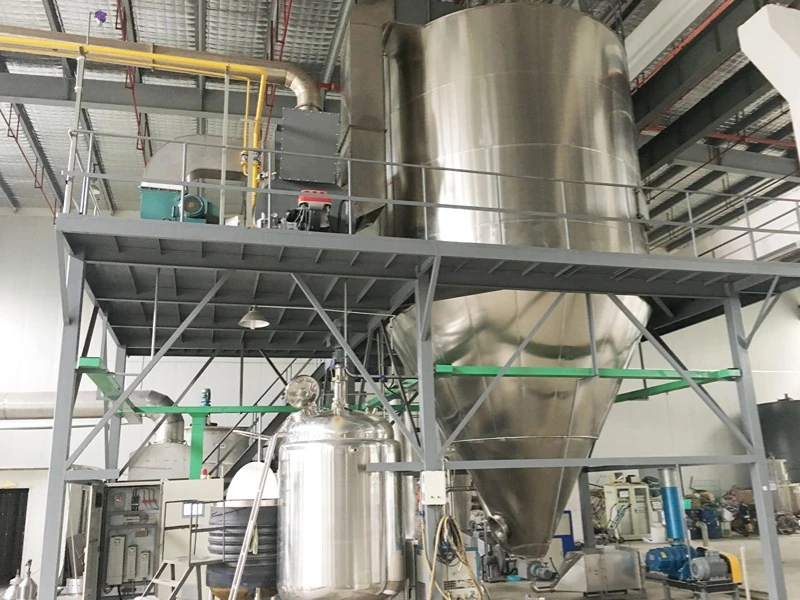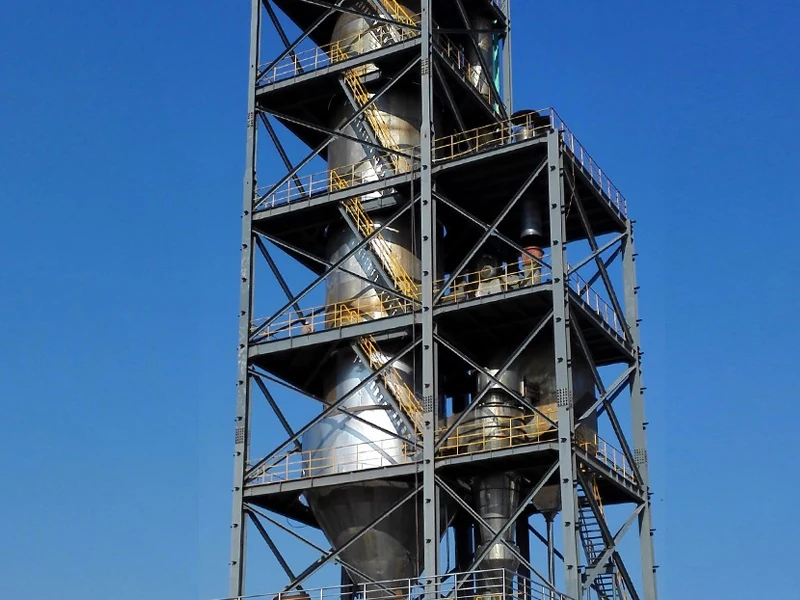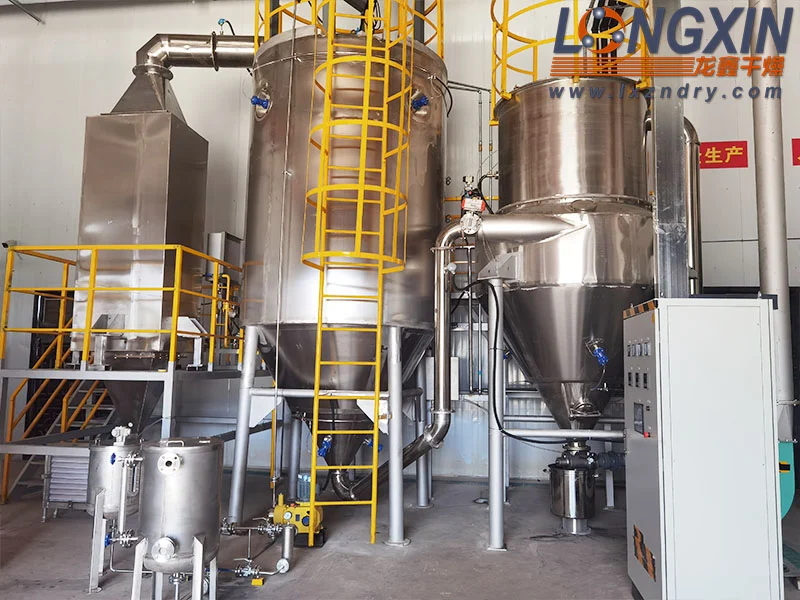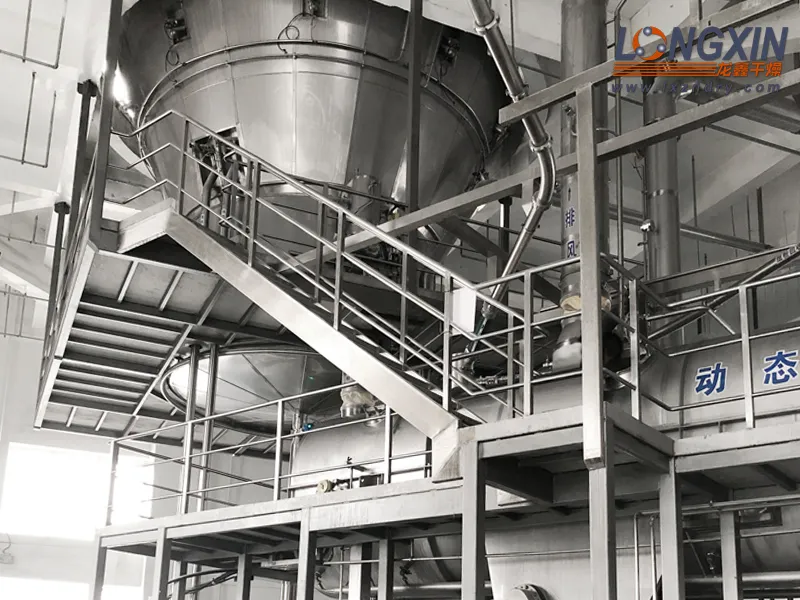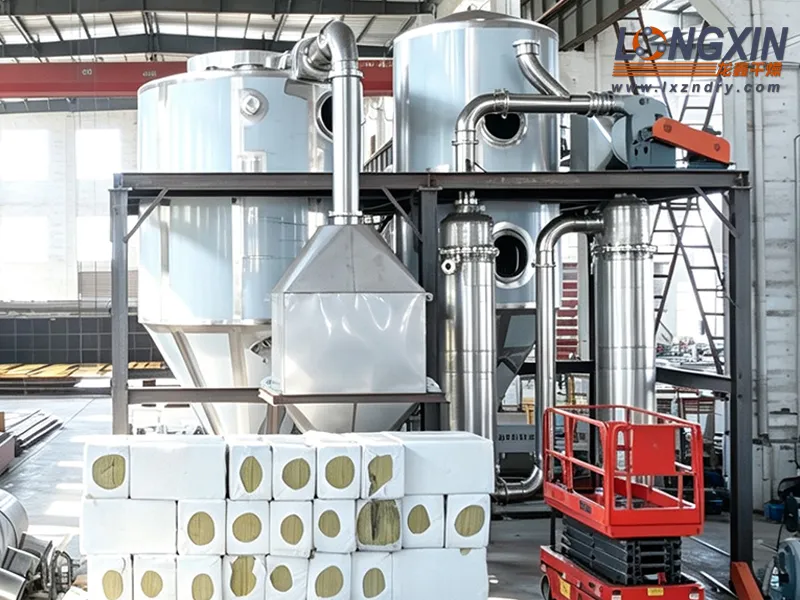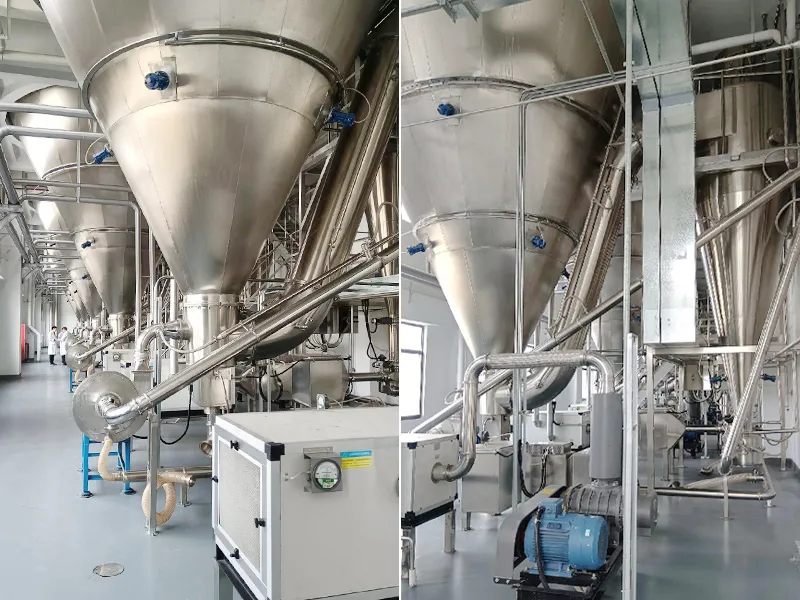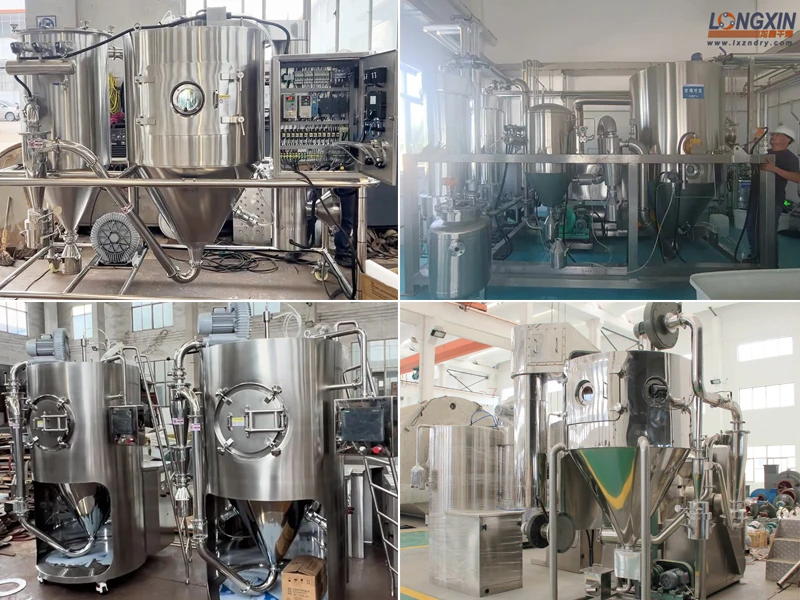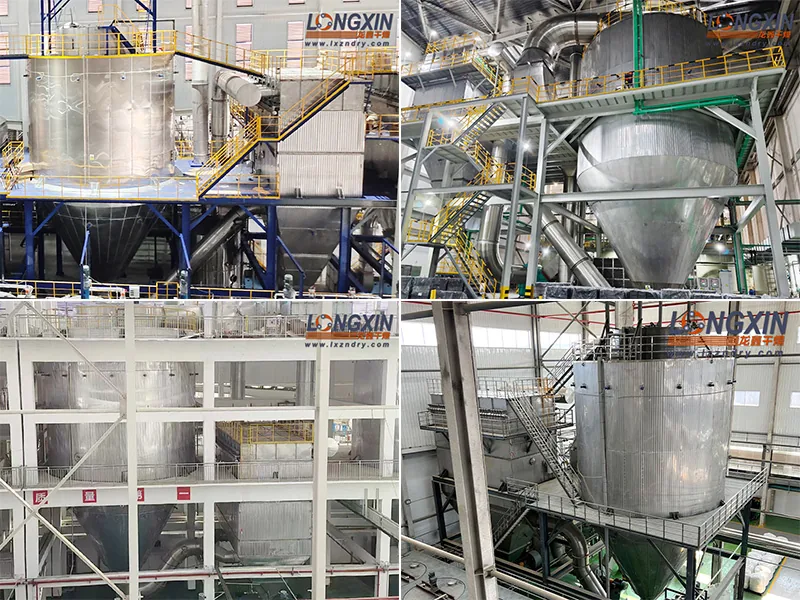
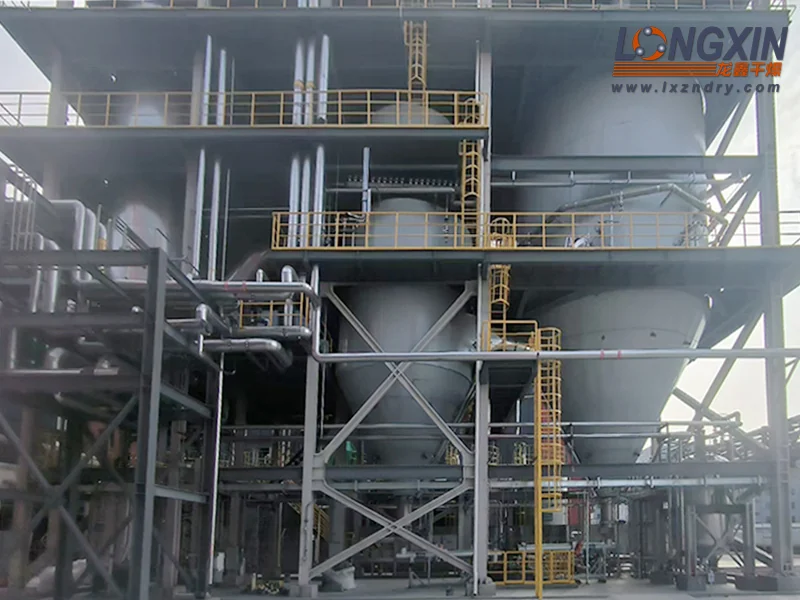
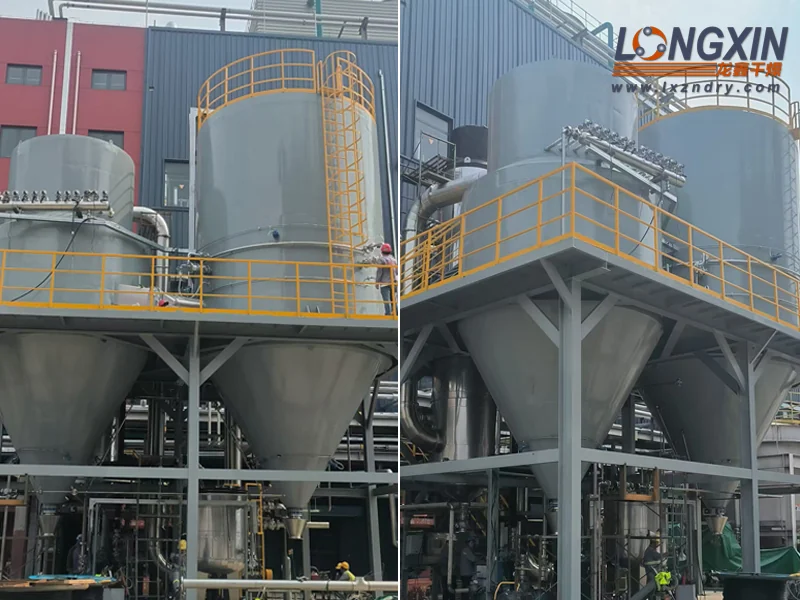
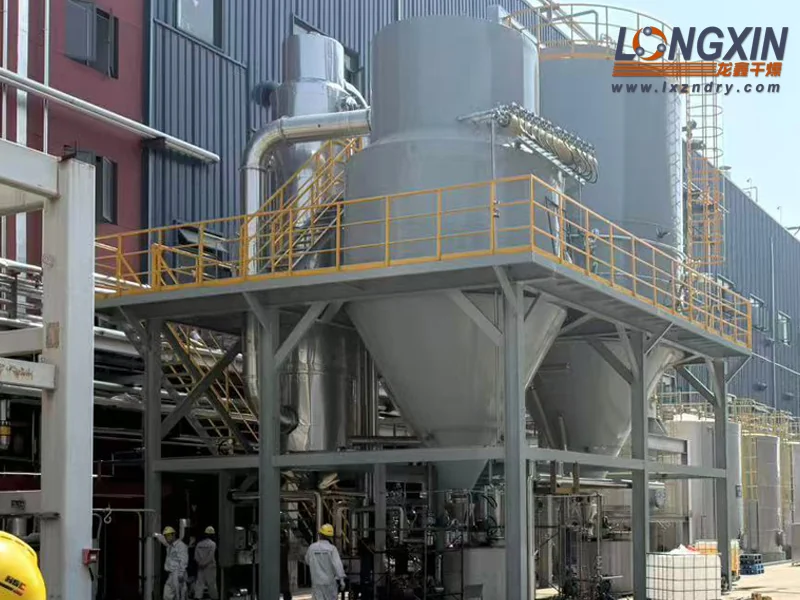
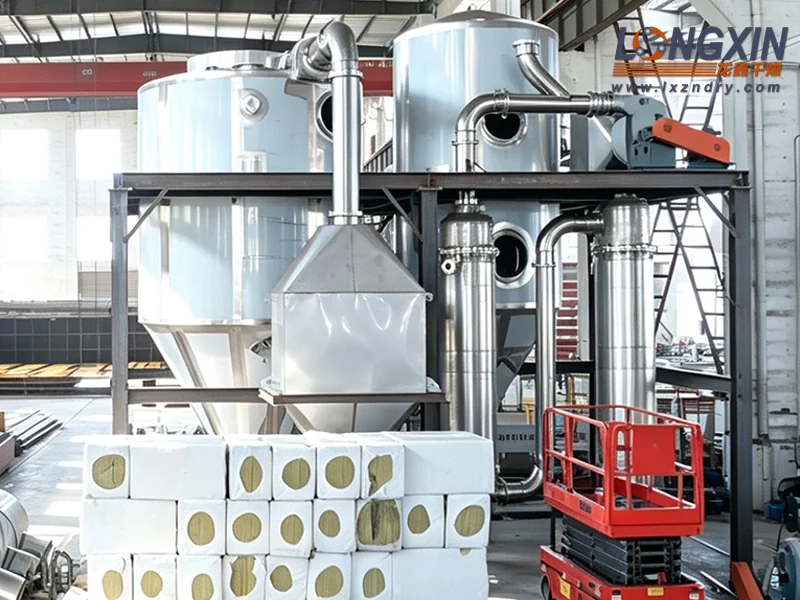
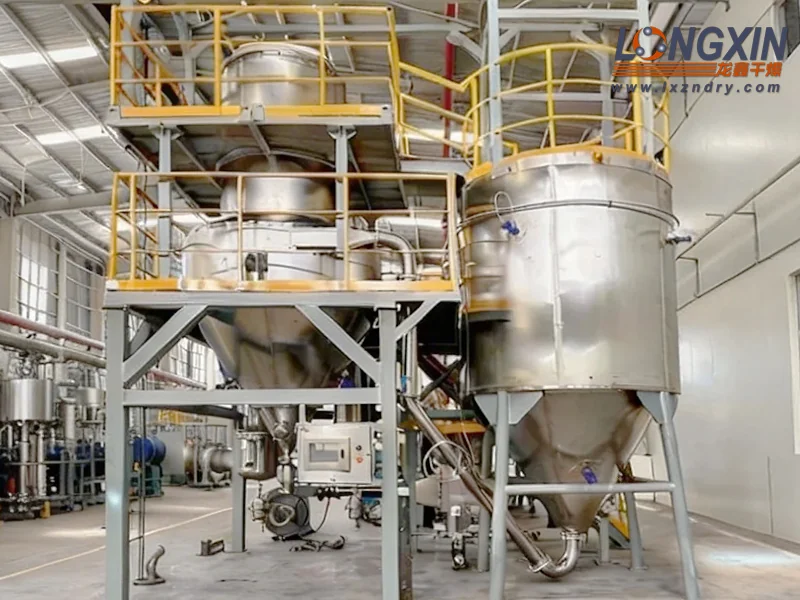
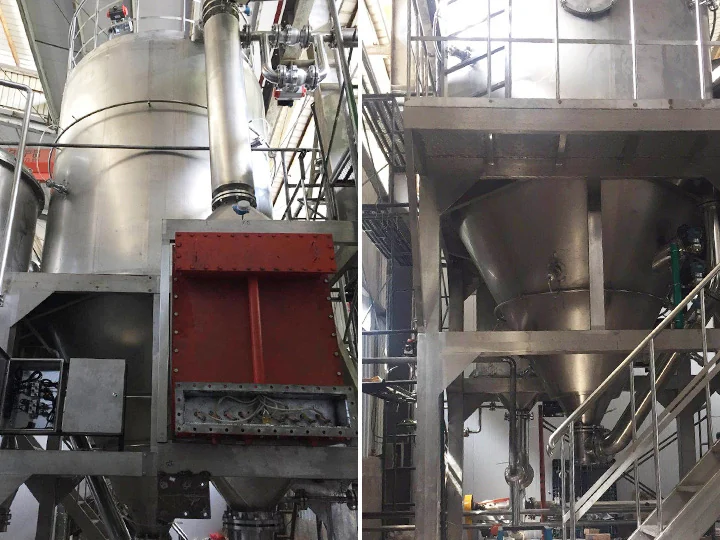
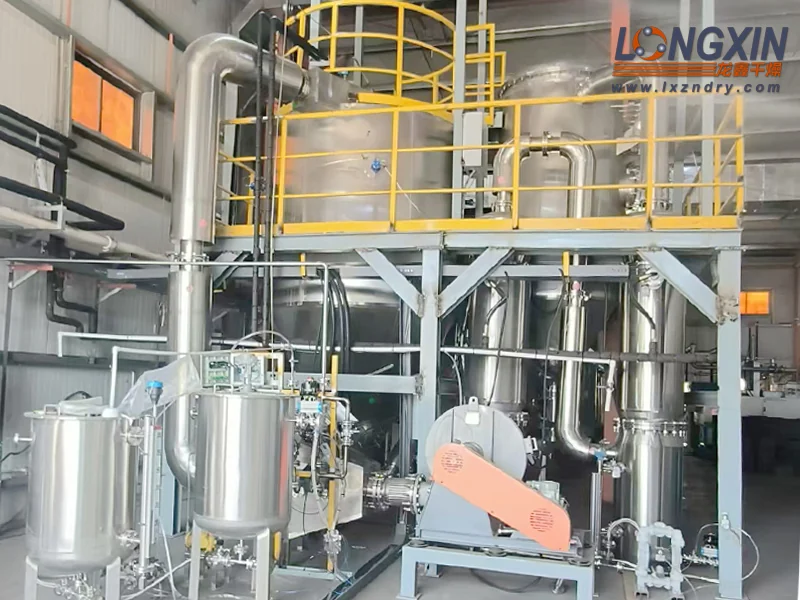
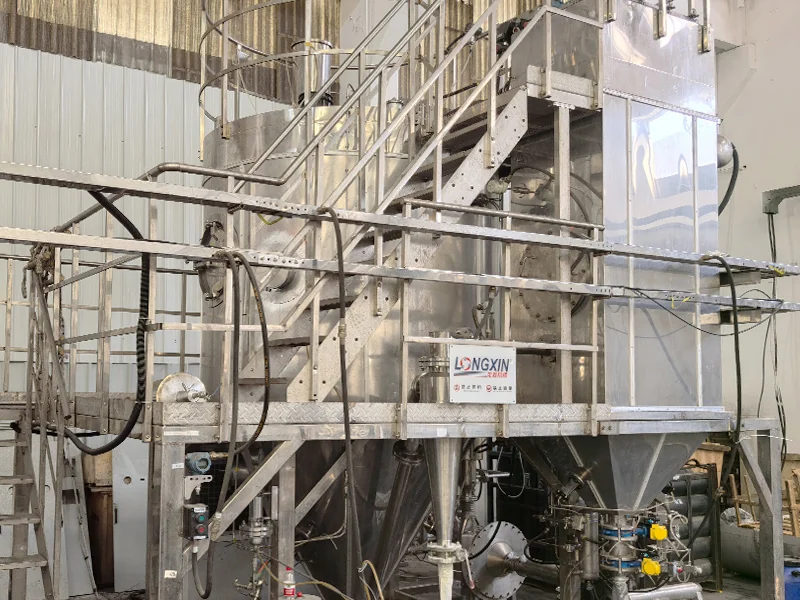
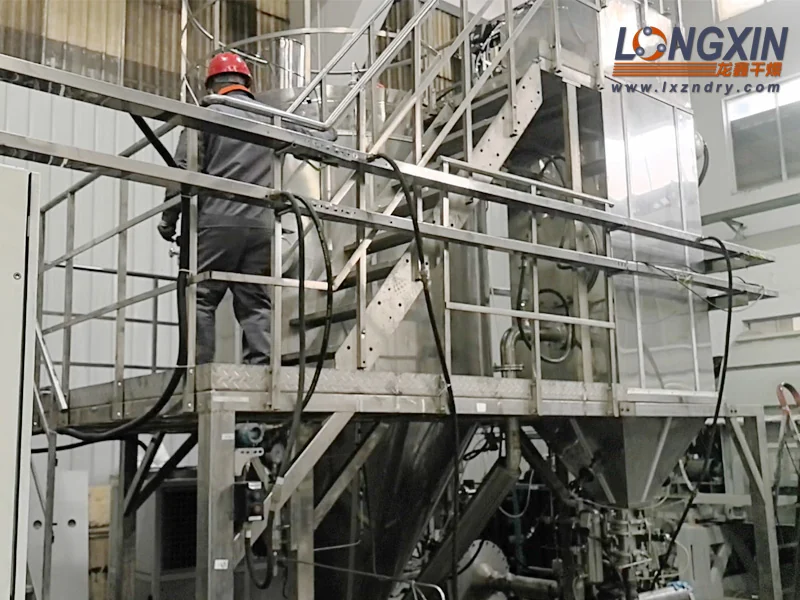
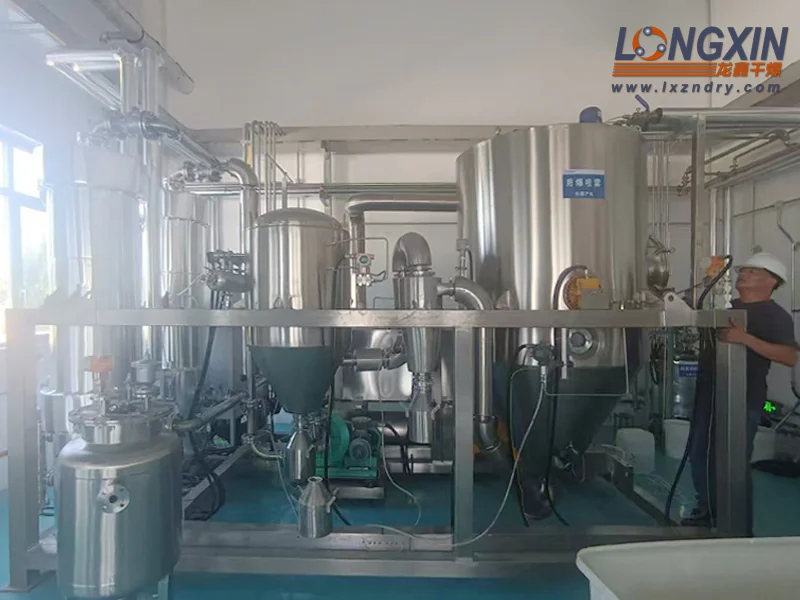
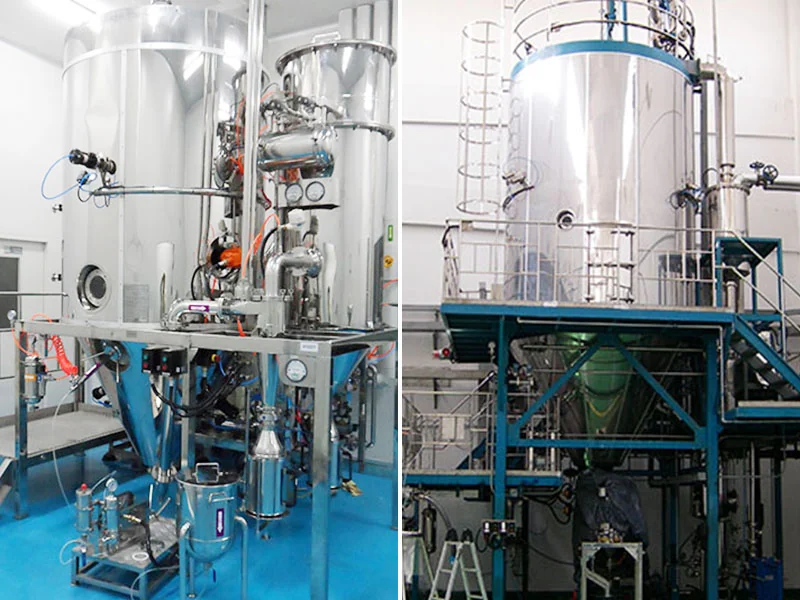
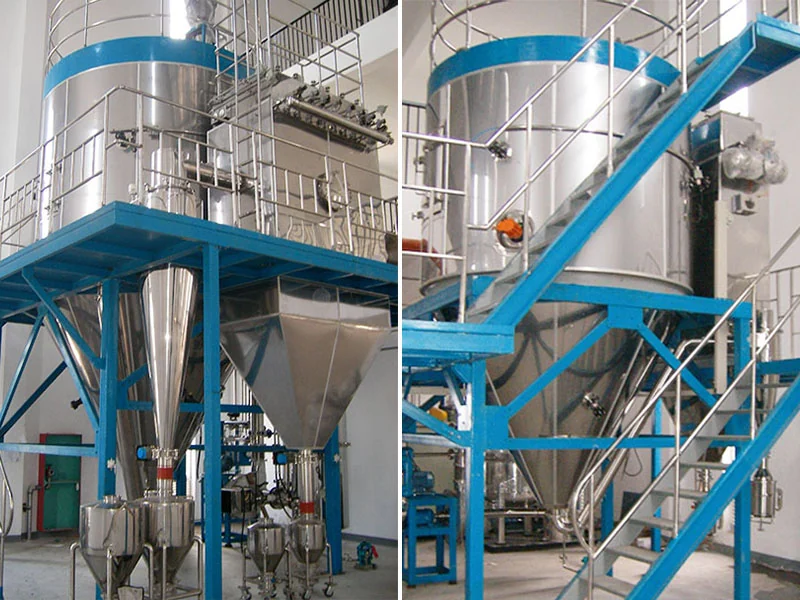
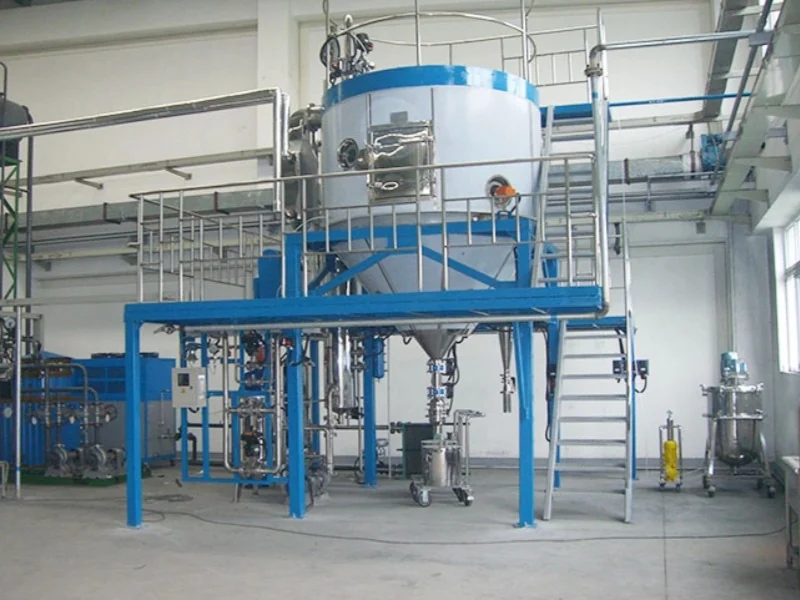
Equipment Overview
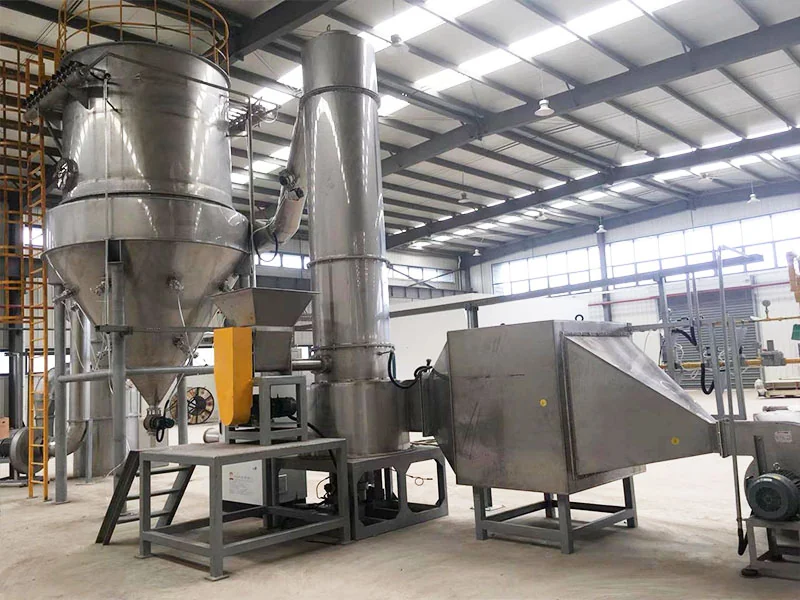
The Closed-Loop Spray Dryer is suitable for drying solutions, emulsions, suspensions and pastes that contain organic solvents, volatile toxic or harmful gases, or materials that are prone to oxidation — and for feed liquids from which the solvent must be recovered. It not only retains all the advantages of a spray dryer, but also releases no powder at all during the drying operation, achieving a finished-product yield of almost 100%. The solvent recovered by the recovery system can be reused after secondary treatment, greatly reducing production costs. It is especially suitable for the pharmaceutical industry's drying and granulating of drugs containing organic solvents, traditional Chinese medicine extracts and biological solvent-based materials, as well as for the drying of fine chemicals and polymer materials such as petroleum catalysts and silicon carbide, and for solvent recovery.
Jiangsu Longxin's Closed-Loop Spray Dryer solves the difficult problems of organic solvent recovery and of drying easily oxidized or toxic materials, improves material recovery, and achieves safety, environmental protection and energy savings; its technical performance indices and process design concepts offer clear advantages.
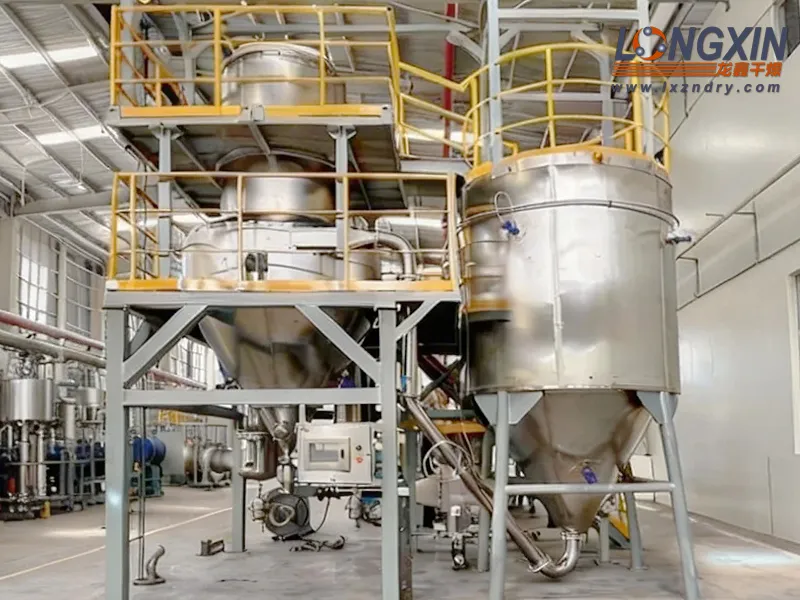
Closed-Loop Spray Dryer — Working Principle
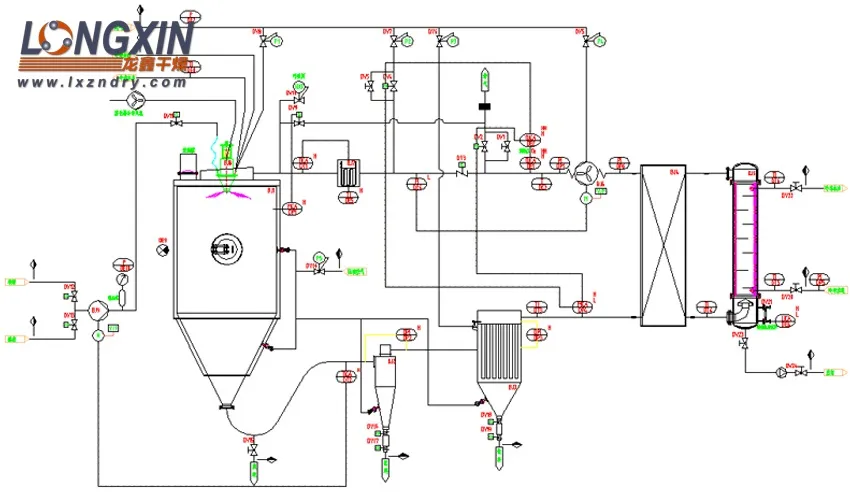
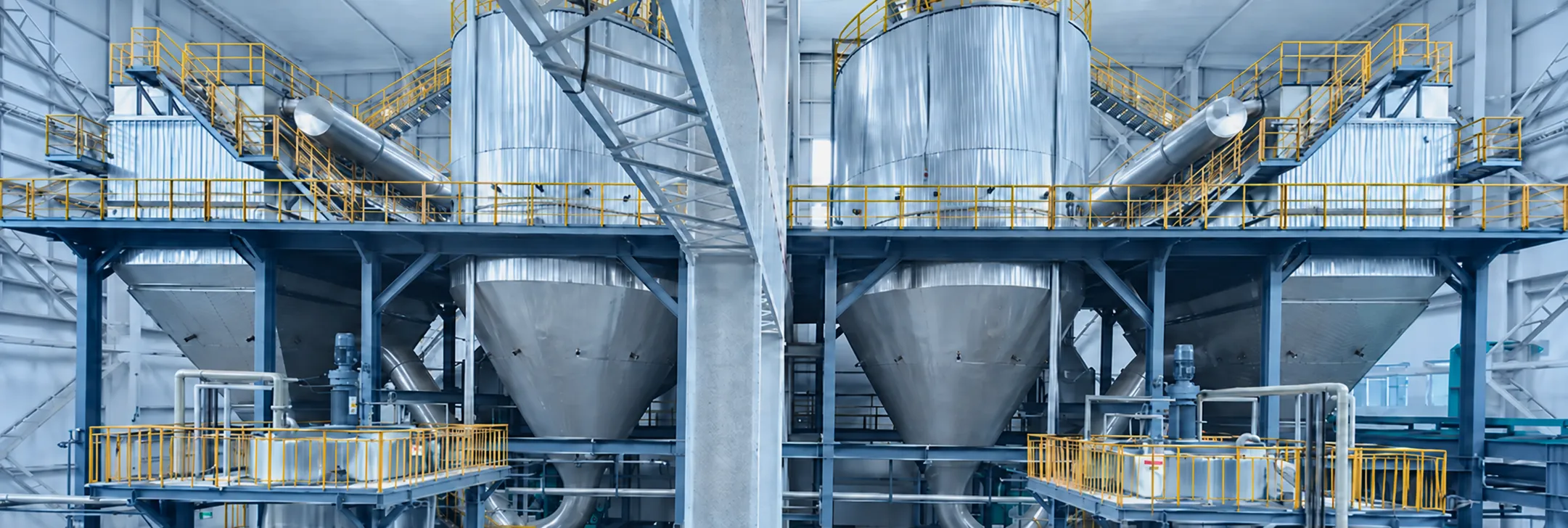
Closed-loop inert gas spray drying project — the Closed-Loop Spray Dryer unit consists of the following main components: a nitrogen closed-loop circulation system, the spray dryer, solid-gas separation, nitrogen reverse-jet dust removal, condensation and cooling solvent recovery, and a heating system.
First, heated nitrogen is introduced into the drying tower. The liquid material to be dried is delivered by the feed pump to the centrifugal nozzle, where it is atomized by the atomizer into fine droplets. Inside the drying tower the droplets undergo full heat exchange with the hot nitrogen; the liquid part of the material evaporates instantly, and the solid part forms a powdery material that settles at the bottom of the tower. Finally, the dried powdery material is discharged from the bottom of the tower.
The evaporated organic solvent gas, driven by the fan, passes through a cyclone separator, bag filter and other devices, where the dust adhering to the gas is removed. The dedusted saturated organic solvent gas then passes through a condenser, where it is condensed into liquid and discharged from the condenser. To prevent liquid from being carried out, a gas-liquid separator is added downstream. Meanwhile, the inert gas used as the drying medium is continuously heated and recirculated within the system as the drying carrier. The explosion-proof closed-loop centrifugal spray drying system operates in a sealed environment, with an inert gas such as nitrogen as the drying medium. The drying tower operates under positive pressure: if the internal pressure drops, a pressure transmitter automatically controls the amount of nitrogen entering, keeping the system pressure balanced.
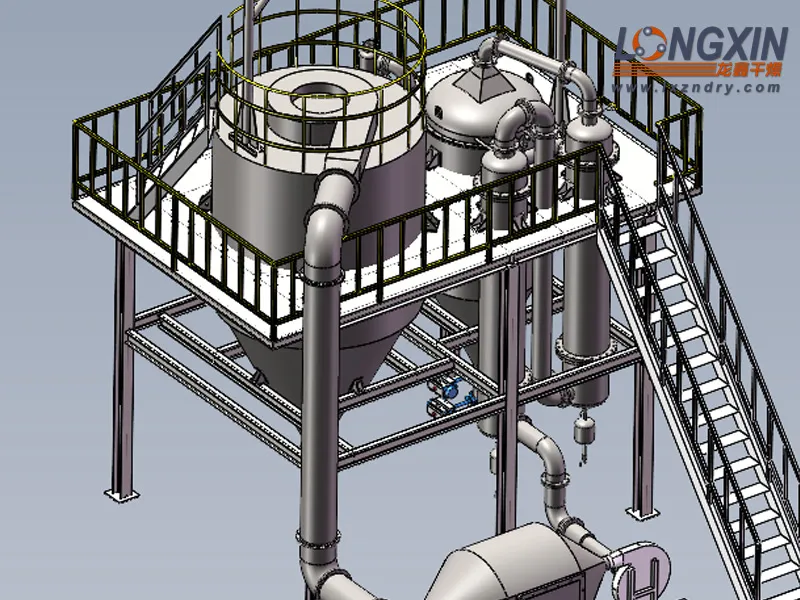
Technical Comparison between Open-Cycle and Closed-Loop Spray Dryer Systems
(1) The closed-loop system uses far less heat-carrying medium than the open type and is an energy-saving design;
(2) The closed-loop system is suitable for materials containing organic solvents, for materials that are easily oxidized, flammable or explosive, and for toxic materials. This range of application cannot be achieved by the open type; the closed-loop system is therefore a safe design;
(3) Compared with the open type, the closed-loop system has an additional organic solvent recovery system, making it an environmentally friendly design;
(4) The open-type drying tower must maintain a certain negative pressure, whereas the closed-loop drying tower must maintain a certain positive pressure.
Closed-Loop Spray Dryer — Performance Features
(1) The pipe connections of the closed system use a unique sealing structure; sealing performance is good, ensuring that the system does not leak under a positive pressure of 10 kPa, with high thermal efficiency;
(2) Inert nitrogen is used as the drying medium gas, providing protection against toxicity, oxidation and explosion; after carrying and then releasing moisture, the gas can be recirculated and reused;
(3) The system is equipped with a condensation system and a recovery system for the solvent in the feed liquid, so that the solvent can be reused after secondary treatment. The material is dried (solvent removed) in a hot state within a closed system under a nitrogen atmosphere, and the solvent is recovered through the condenser, giving a high level of safety for the whole unit. At the same time, the equipment is of fully enclosed design with a high material recovery rate; the yield of this equipment system is higher than other types of dryers can achieve. Main technical indicators: dry powder material recovery rate ≥95%, residual solvent in the product ≤2%, thus greatly reducing production costs;
(4) Fast drying speed: after spraying, the surface area of the feed liquid increases, and in the high-temperature air stream 95%–98% of the moisture can evaporate instantly, with drying usually completed in only about 5–40 s;
(5) Spray drying is usually used to process solutions with a moisture content of 40%–60% and can dry them into a powdery product in a single pass; most products do not need to be crushed and screened after drying, which reduces production steps and simplifies the process flow. At the same time, the product has good dispersibility, flowability and solubility. Because the drying process is completed in air, the product can remain approximately spherical like the droplets, with good flowability;
(6) The equipment is provided with an on-line system pressure testing device, an on-line oxygen concentration detection and control device, and a clean-in-place device;
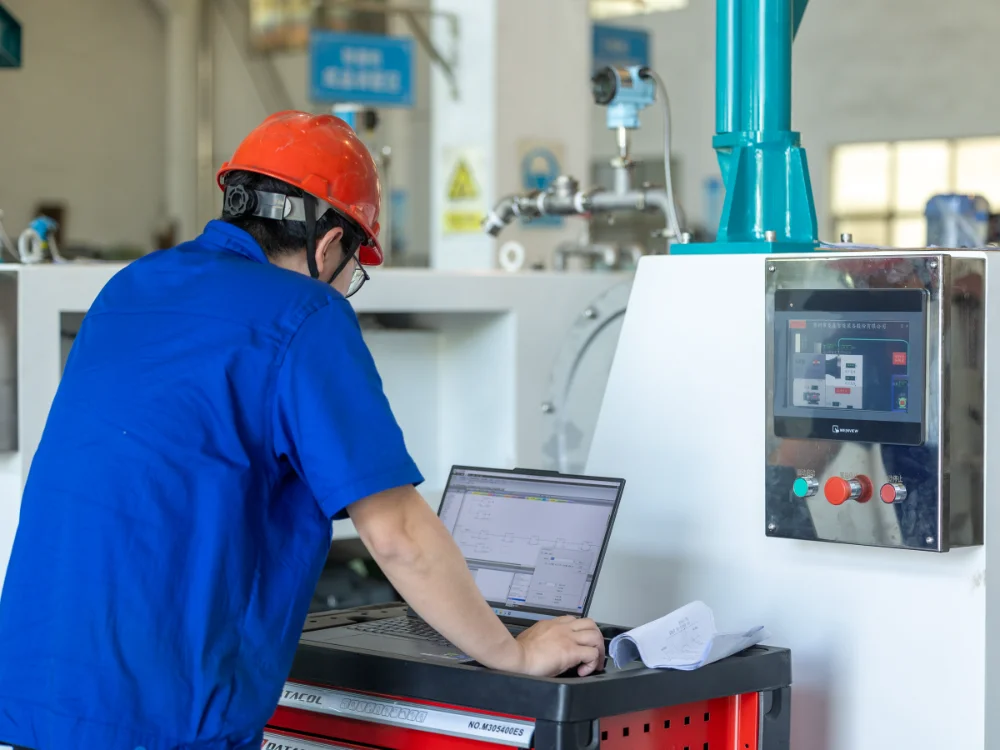
(7) The equipment control system adopts a human-machine interface, i.e. PLC + touch screen control, with the process flow displayed dynamically. The particle size, bulk density and moisture content of the product can be adjusted within a certain range by changing the operating conditions, which is relatively convenient to control.
Closed-Loop Spray Dryer — Application Conditions
The closed-loop centrifugal spray dryer is suitable for drying solutions, emulsions, suspensions and pastes that contain organic solvents, volatile toxic or harmful gases, or materials that are easily oxidized or light-sensitive, and for feed liquids from which the solvent must be recovered. Besides retaining all the advantages of the centrifugal spray dryer, the system releases no powder at all during the drying operation, achieving a finished-product yield of almost 100%. The solvent recovered by the recovery system can be reused after secondary treatment, thereby greatly reducing production costs.
The explosion-proof closed-loop centrifugal spray dryer can be used for spray drying in the following situations:
(1) The moisture in the material is an organic solvent that needs to be recovered;
(2) The solvent contained in the solid presents a risk of burning or exploding on contact with air;
(3) The solid is easily oxidized when it comes into contact with oxygen during drying;
(4) Bacterial contamination must be prevented during drying;
(5) After drying, odorous or toxic components are released that pollute the environment.
BLPG Type Closed-Loop Spray Dryer — Process Flow Chart 1: Conventional
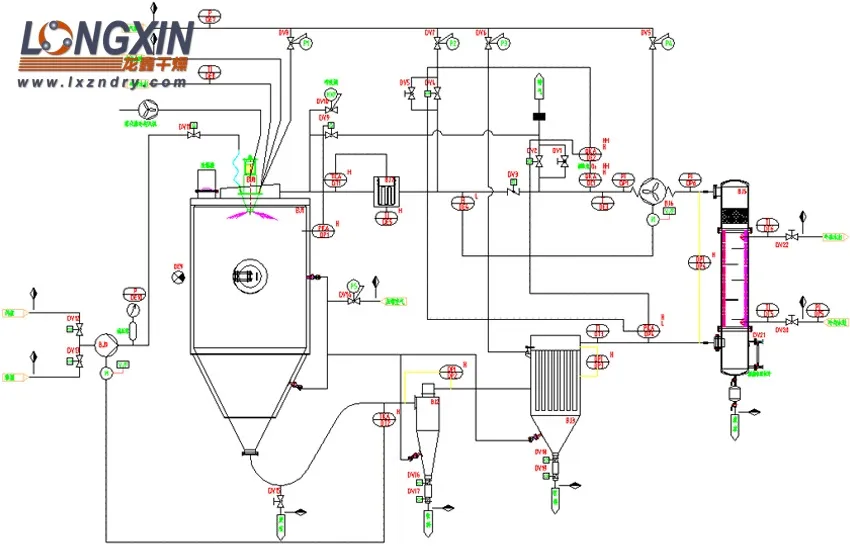
BLPG Type Closed-Loop Spray Dryer — Process Flow Chart 2: With waste heat recovery unit