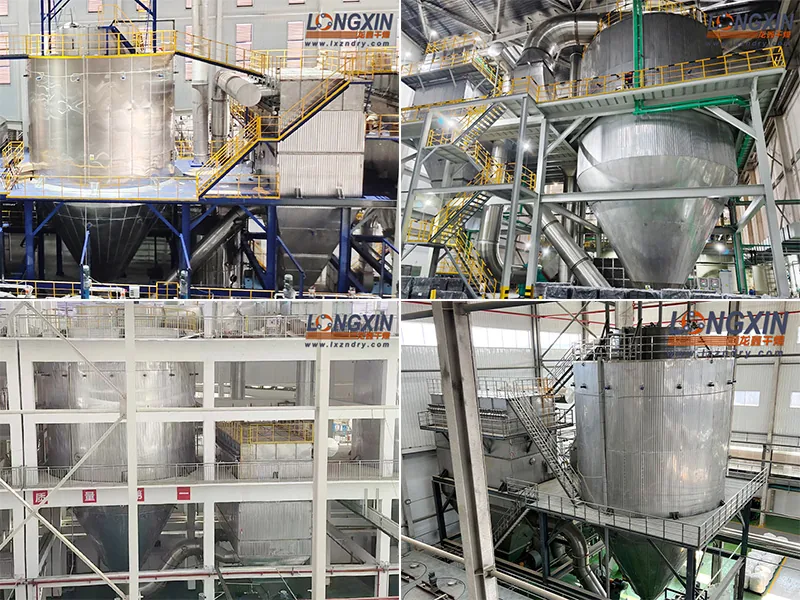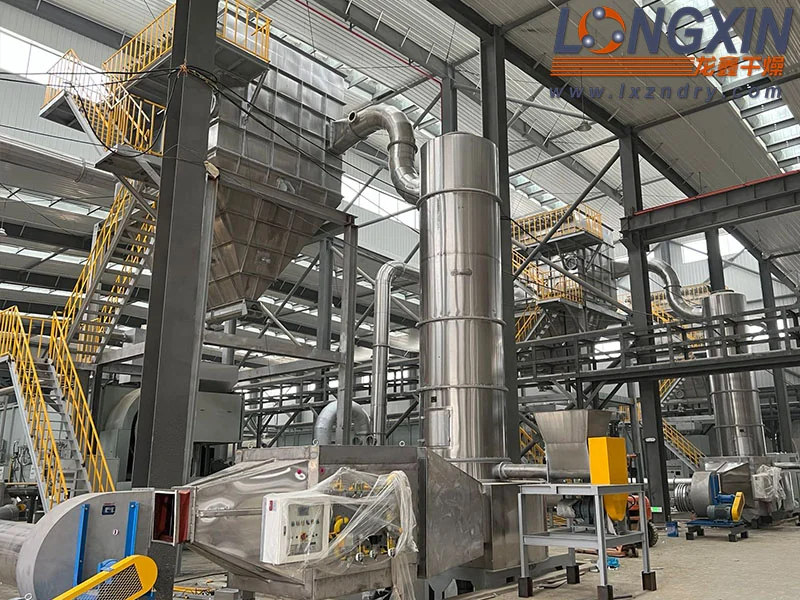
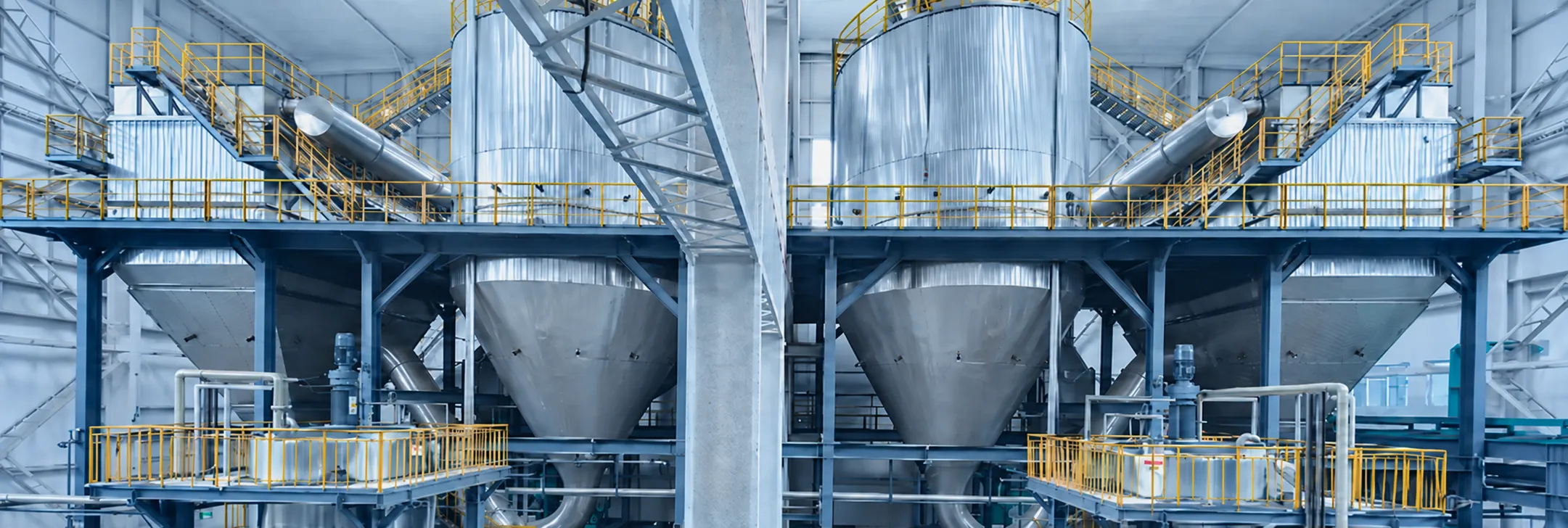
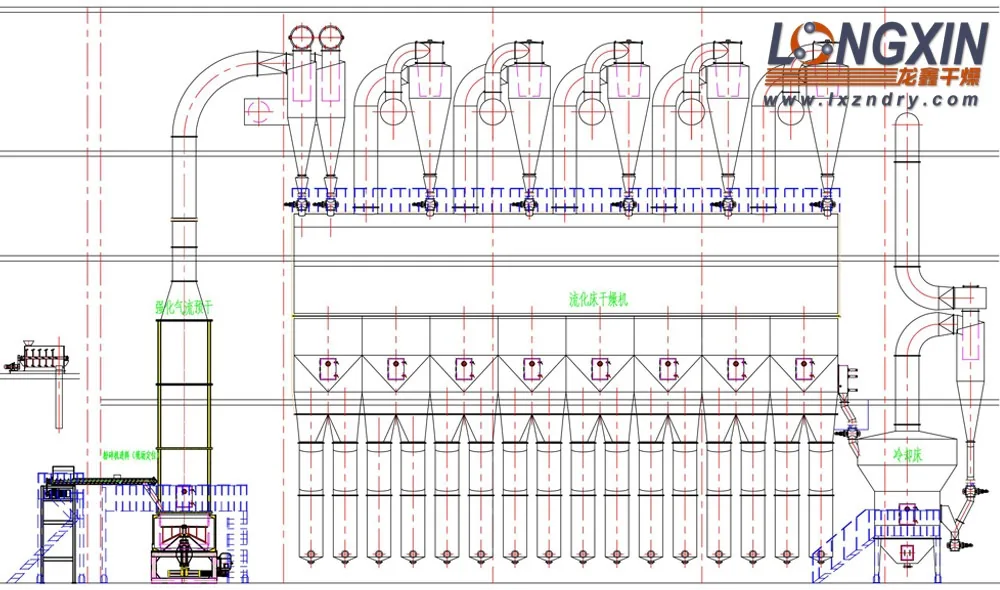
Longxin's CPE two-stage drying system combines an airflow or flash pre-drying stage with continuous fluid-bed drying and cooling. The process is designed for chlorinated polyethylene filter cake that enters the dryer with high moisture content and must be dried to a low final moisture level without excessive agglomeration or thermal damage.
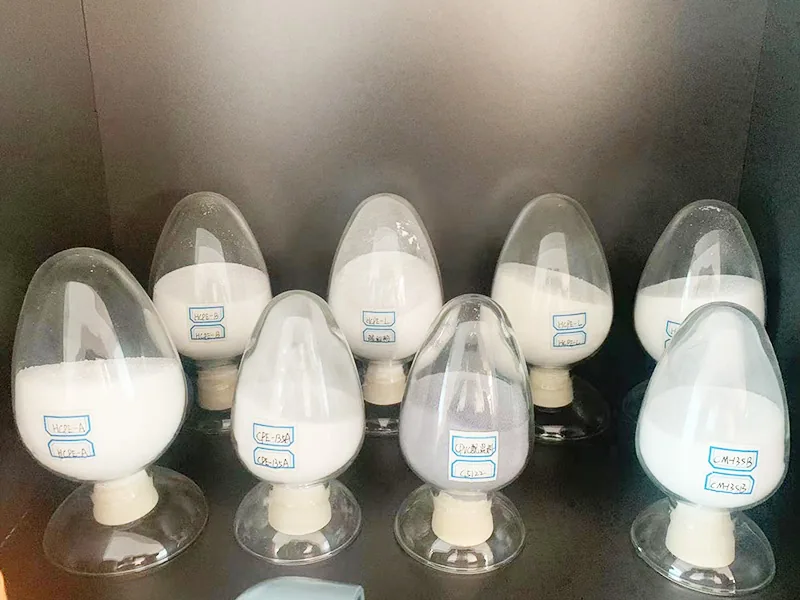
Chlorinated polyethylene (CPE) is used in cable compounds, hoses, automotive rubber products, PVC modification, magnetic materials and other polymer applications. After chlorination, separation and dewatering, the wet CPE cake can still contain a substantial amount of water. Because dry CPE can soften and agglomerate at elevated temperatures, moisture removal and product-temperature control need to be managed together.
Why CPE Drying Requires a Two-Stage Process
Single-stage airflow drying can remove surface moisture rapidly but may not provide enough residence time for deep drying. A batch fluid bed can reach a low final moisture, but sticky wet feed and temperature-sensitive dry powder can make continuous operation difficult.
Longxin therefore combines rapid pre-drying with a multi-zone continuous fluid bed. The first stage breaks up and pre-dries the wet cake; the second stage provides longer controlled residence time for final moisture removal. A separate cooling fluid bed then reduces product temperature before discharge.
Process Configuration
- Centrifuged CPE filter cake feeding
- Conditioned screw feeding and feed-rate control
- Airflow/flash pre-drying to remove a large portion of the free moisture
- Cyclone separation and continuous transfer to the fluid bed
- Multi-zone continuous fluid-bed final drying
- Independent fluid-bed cooling with dehumidified cold air
- Powder recovery and recycle where required
- Waste-heat recovery and centralized exhaust treatment
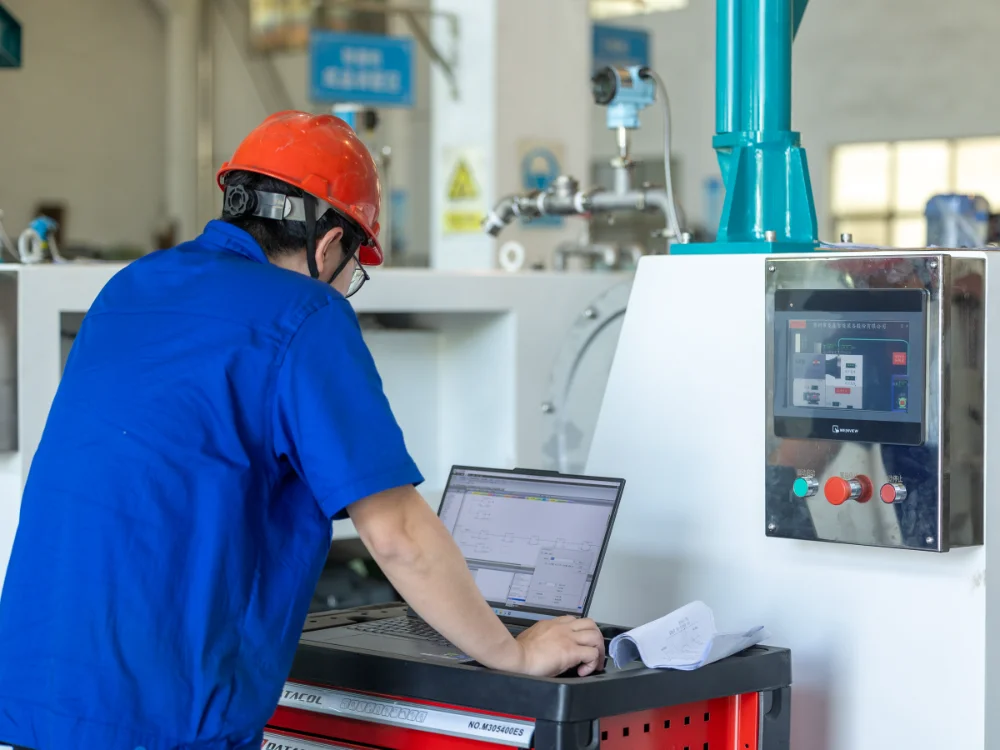
- PLC/DCS monitoring, interlocks and process recording
Reference Process Data
The following values come from one reference CPE production-line design and are provided to show the engineering range of the system. They are not universal specifications for every CPE grade.
| Reference feed moisture | Approx. 50% wet basis |
|---|---|
| Moisture after pre-drying | Approx. 35% wet basis |
| Target final moisture | Approx. 0.3% wet basis |
| Reference annual output | Approx. 15,000 t/year |
| Reference average product rate | Approx. 2,530 kg/h |
| Pre-dryer inlet temperature | Approx. 115–120°C |
| Fluid-bed drying profile | Multi-zone descending temperature profile, approximately 110–90°C inlet range in the reference design |
| Fluid-bed residence time | Approx. 2–2.5 hours in the reference design |
| Cooling-air temperature | Approx. 10–15°C with dehumidification |
| Product temperature after cooling | ≤40°C in the reference design |
| Heat source | Reference design uses saturated steam at approximately 0.6–0.8 MPa(g) |
Airflow / Flash Pre-Drying Stage
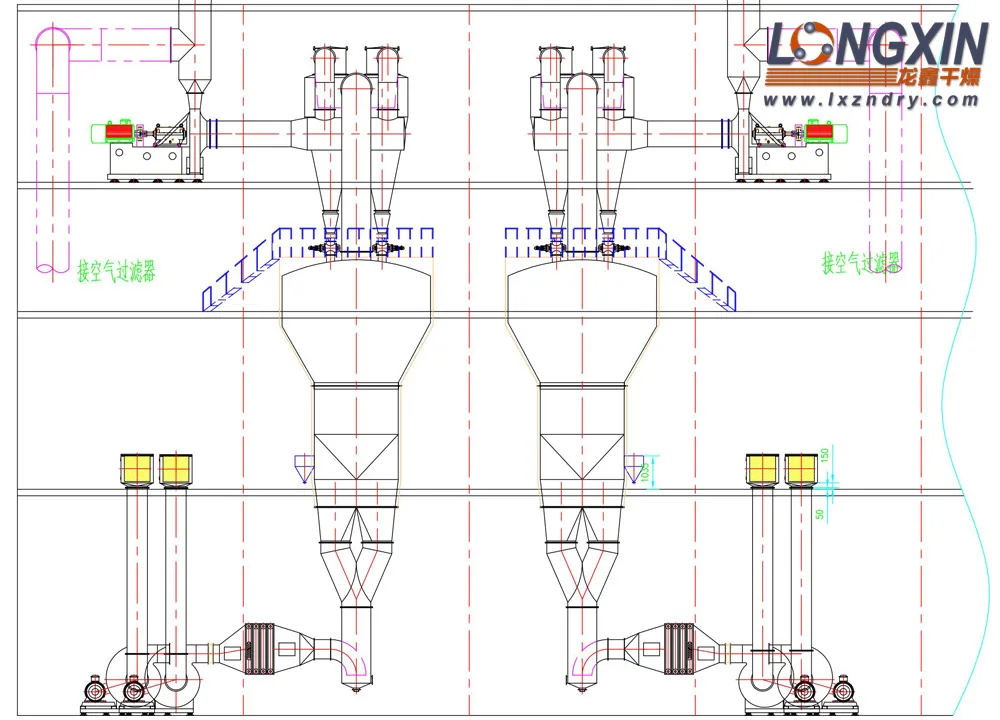
The wet CPE cake is metered into the first-stage dryer by a variable-speed screw feeder. The high-velocity hot-air stream disperses the feed, breaks up large wet agglomerates and rapidly removes part of the surface moisture. Feed rate can be linked to the dryer outlet temperature to improve moisture stability.
The pre-dried material is separated by cyclone and transferred directly into the fluid bed for final drying, minimizing manual handling and dust escape between stages.
Multi-Zone Continuous Fluid-Bed Drying
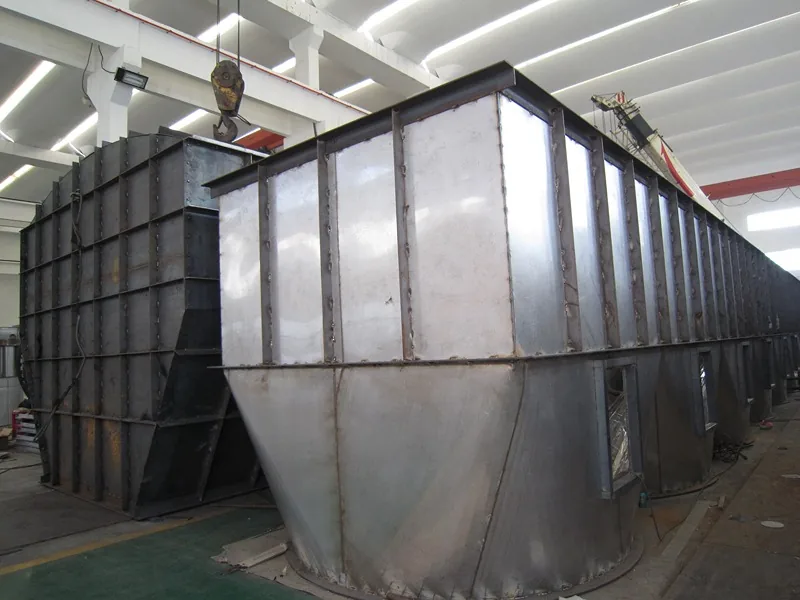
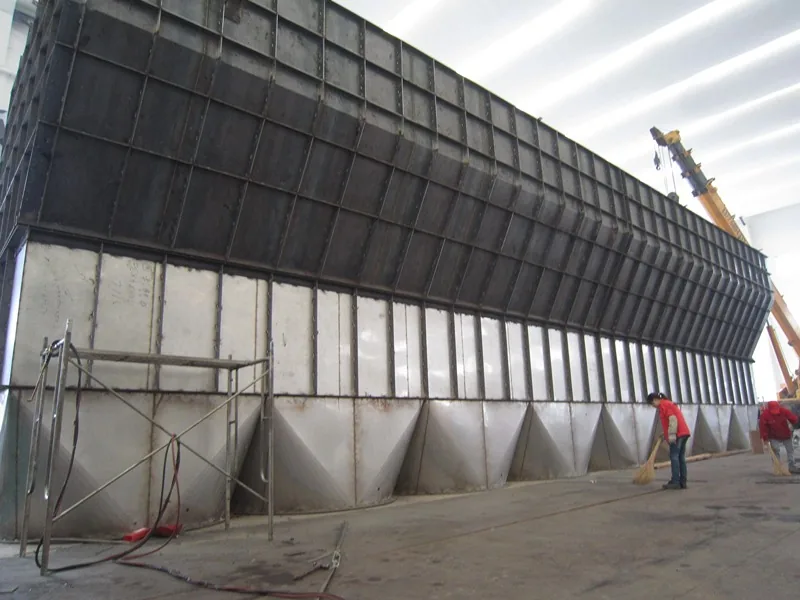
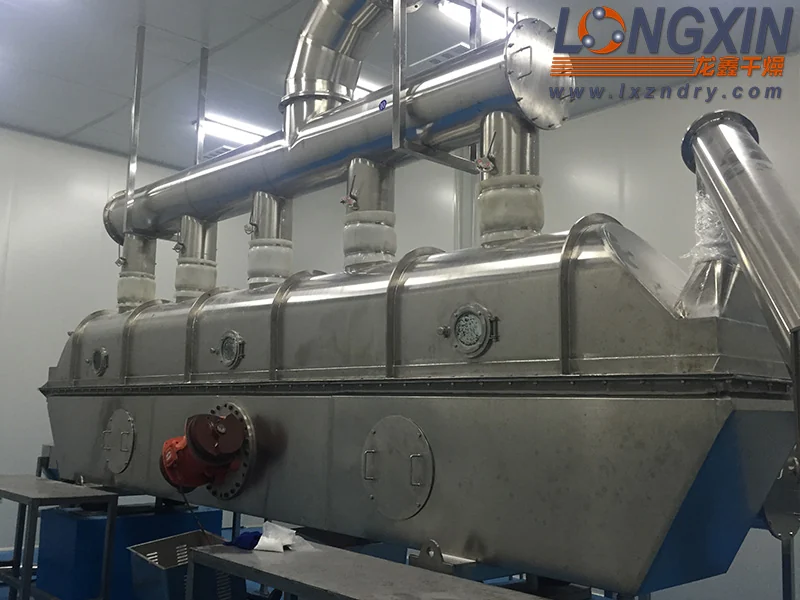
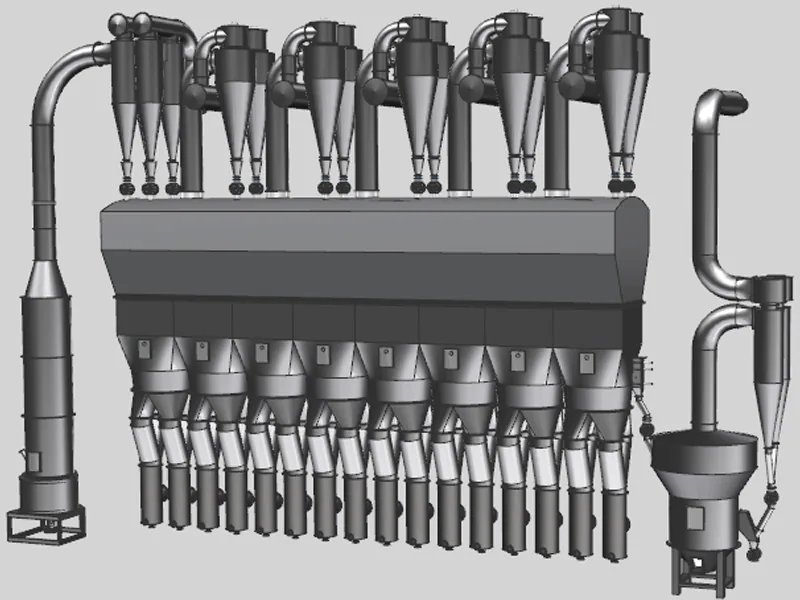
The reference system uses five independently supplied fluid-bed drying zones. Each section can have its own heater, blower and air filtration, allowing the airflow and temperature profile to be adjusted along the direction of material travel.
A gradually decreasing thermal profile helps balance deep moisture removal with protection against softening or agglomeration as the powder becomes drier. The enlarged separation section above the bed reduces gas velocity and limits product entrainment.
Fluid-Bed Cooling
After final drying, the product enters an independent cooling fluid bed operating continuously with the dryer. Chilled and dehumidified air can be used to reduce the powder temperature before storage or downstream packaging. This helps improve handling stability and reduces the risk of warm powder agglomerating after discharge.
Powder Recovery and Heat Integration
Cyclone separators recover entrained powder and can return suitable material to the drying process. In the reference design, heat from the final drying-zone exhaust is recovered as part of the fresh-air supply for the pre-drying stage. Final exhaust can be routed to the plant's required environmental treatment system.
Automation and Process Control
- Variable-frequency control of supply and exhaust fans
- PID control of inlet temperature through proportional steam-valve regulation
- Monitoring of inlet, bed and outlet temperatures
- Differential-pressure monitoring across the fluid bed and cyclone system
- Interlocked start-up and shutdown sequences
- Alarm and protection functions for abnormal operating conditions
- Optional connection to a plant DCS for real-time recording and traceability
The reference project specifies inlet-temperature control within approximately ±2°C under stable operating conditions. Final control accuracy depends on the complete steam, instrumentation and process configuration.
Design for Continuous Operation and Cleaning
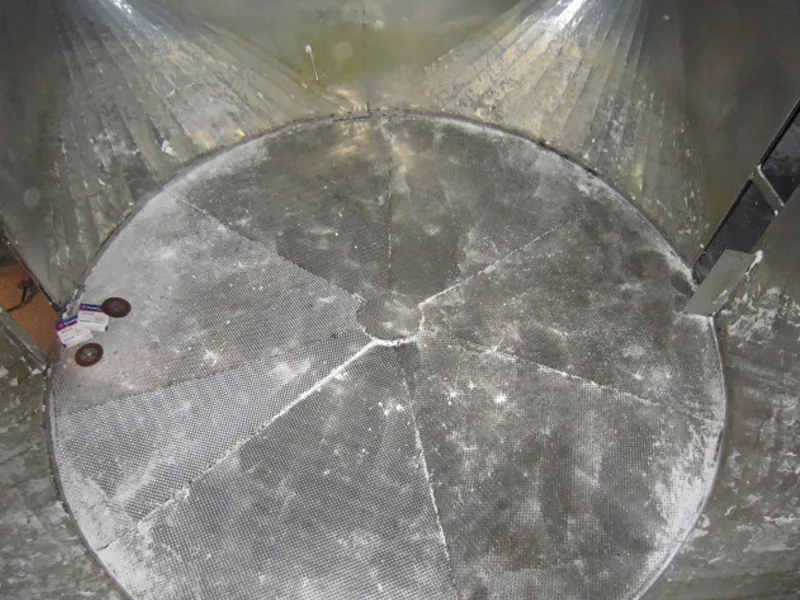
The fluid-bed structure is designed to reduce dead zones and material accumulation. Tongue-type perforated bed plates distribute air across the bed, while access ports and cleaning openings support maintenance. High-humidity contact areas can be configured with corrosion-resistant materials or protective lining according to the process environment.
Anti-static grounding is incorporated throughout the system. Final material selection, exhaust treatment and safety design are determined from the actual CPE formulation, additives, plant conditions and local regulations.
Suitable Applications
- Chlorinated polyethylene (CPE) powder
- Rubber-grade CPE
- CPE used for cable and hose compounds
- PVC modification grades
- Other heat-sensitive polymer powders requiring high-moisture pre-drying followed by deep drying
Engineering a CPE Drying Line
For a new or upgraded CPE line, provide the wet-cake moisture, hourly throughput, target final moisture, particle-size distribution, bulk density, softening behavior, available steam conditions and required product discharge temperature. Longxin can evaluate the drying load and configure the pre-dryer, fluid-bed zones, cooling section, powder recovery and automation around the project requirements.
Selection Questions
Why does the CPE line use two drying stages?
Airflow pre-drying disperses wet cake and removes much of the free moisture. A continuous fluid bed then provides longer controlled residence time for final drying, followed by separate cooling before discharge.
What information is required to engineer the line?
Provide wet-cake moisture, hourly throughput, target final moisture, particle-size distribution, bulk density, softening behavior, steam conditions and required discharge temperature.
Related Equipment and Applications
Discuss your material and request an equipment recommendation.